

Nigeria’s headline inflation rate eased to 14.06 per cent in October 2026 from 14.63 per cent in September, but rising food inflation and faster monthly price increases suggest that the cost-of-living challenge remains far from over.
The National Bureau of Statistics (NBS) disclosed this in its October 2026 Consumer Price Index (CPI) and Inflation Report released in Abuja on Monday.
The latest figure represents a 4.91 percentage-point decline from the 18.97 per cent recorded in October 2025, indicating a moderation in the country’s annual inflation rate.
However, the month-on-month headline inflation rate increased to 0.43 per cent in October from 0.06 per cent in September, suggesting that prices rose at a faster pace during the review period.
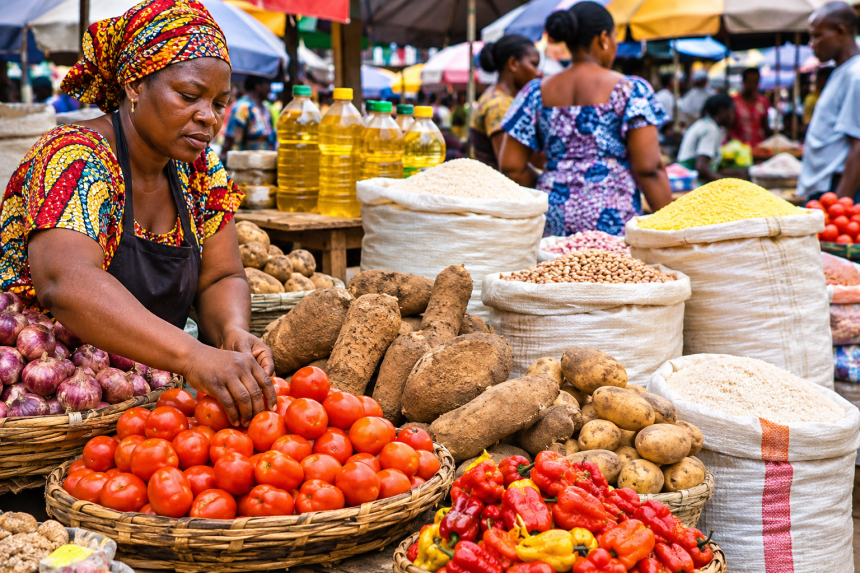
Food inflation remained a major concern, climbing to 19.13 per cent year-on-year in October from 16.30 per cent in the corresponding period of 2025.
On a month-on-month basis, food inflation stood at -0.75 per cent, compared with -1.55 per cent in September. Although food prices continued to decline on average, the pace of the decline slowed.
The NBS attributed the movement in food prices to changes in the costs of vegetable oil, sardines, green peas, frozen mackerel, croaker, local rice, fresh catfish, beef, palm oil and millet flour.
Meanwhile, core inflation, which excludes volatile agricultural produce and energy prices, declined significantly to 10.78 per cent year-on-year from 21.25 per cent in October 2025.
On a month-on-month basis, core inflation recorded -0.53 per cent, compared with 1.11 per cent in September.
The report further showed that urban inflation stood at 14.84 per cent, while rural inflation was 12.17 per cent year-on-year.
A state-by-state analysis revealed significant disparities in inflationary pressures. Imo recorded the highest headline inflation at 28.66 per cent, followed by Enugu at 22.81 per cent and Kaduna at 21.55 per cent.
Taraba recorded the lowest headline inflation at 6.12 per cent, followed by Sokoto at 6.68 per cent and Ekiti at 7.64 per cent.
For food inflation, Ondo led with 31.74 per cent, followed by Lagos at 31.43 per cent and Imo at 29.75 per cent.
The October figures present a mixed picture of Nigeria’s inflation outlook: annual inflation continues to moderate, but the slower monthly decline in food prices underscores the persistent pressure on household budgets and purchasing power.
The figures also highlight the need for sustained efforts to improve food production, strengthen agricultural supply chains and address transportation and distribution costs to translate declining inflation into meaningful relief for consumers.