Ugly optics from Turkiye and return of our visiting president

Portrait of Ugo Onuoha, Nigerian writer and public affairs commentator.

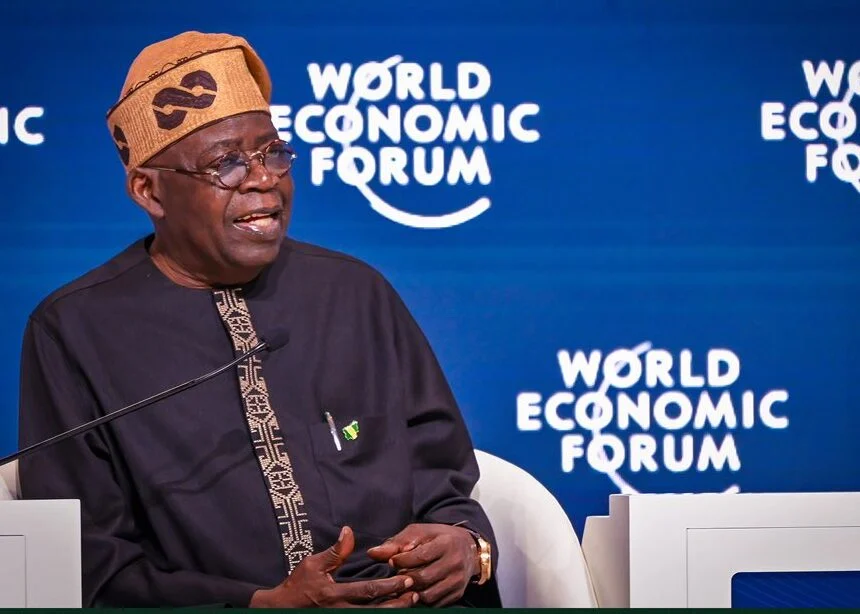
Nigeria’s president has spent an extraordinary amount of time abroad since assuming office. The optics from his recent Türkiye visit have reignited concerns about leadership capacity, governance priorities, and the image of Nigeria on the global stage.

NIA 2024 Digest: NEM Insurance Tops Motor Insurance Market as Competition Intensifies

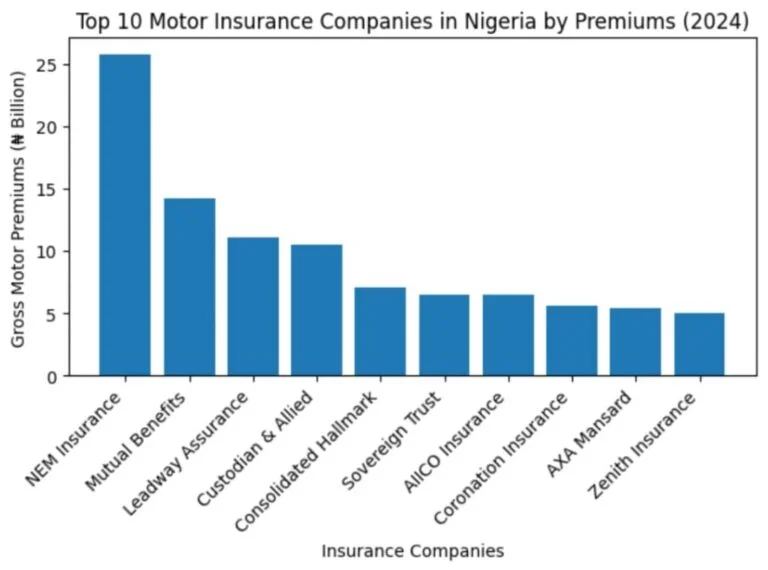
Bar chart showing top Nigerian insurance companies ranked by motor insurance premiums in 2024.

Lagos — The Nigerian Insurers Association (NIA) has released its 2024 Digest, ranking the top 10 insurance companies by motor insurance underwriting and revealing sustained growth and heightened competition in the segment over the past five years. According to the report, which was made available to journalists on Thursday in Lagos, NEM Insurance Plc retained its position as Nigeria’s leading motor insurance underwriter in 2024, recording the highest premium income in the category. NEM Insurance posted ₦23.483 billion in comprehensive motor premiums, ₦2.148 billion in third-party premiums and ₦156.8 million from third-party fire and theft policies, bringing its total motor insurance premium to ₦25.8 billion for the year. This represents a significant increase from ₦20.1 billion recorded in 2023 and ₦10 billion in 2020. The insurer first emerged as the market leader in motor insurance underwriting in 2015 and has maintained the top position for more than a decade, steadily widening its lead over competitors. Mutual Benefits Insurance Plc and Leadway Assurance Ltd. followed with strong performances. Mutual Benefits generated ₦14.05 billion in comprehensive premiums and ₦157.08 million in third-party premiums, bringing its total motor premium to ₦14.21 billion, while Leadway recorded ₦11.05 billion. Custodian and Allied Assurance Ltd. ranked fourth with ₦10.48 billion, closely followed by Consolidated Hallmark Insurance Ltd., which posted ₦7.02 billion, placing both companies among the top five motor insurance underwriters in 2024. Other insurers that featured prominently in the ranking included Sovereign Trust Insurance Plc, AIICO Insurance Plc, Coronation Insurance Plc, AXA Mansard Insurance Plc and Zenith Insurance Ltd., all of which recorded varying levels of growth during the review period. The NIA data showed that comprehensive motor insurance premiums among leading insurers more than tripled between 2020 and 2024, with NEM Insurance accounting for a substantial share of the expansion. Industry analysts attributed the growth in the motor insurance segment to stronger regulatory enforcement, rising vehicle ownership and increasing awareness of the importance of motor insurance among Nigerians. They noted that the segment remains one of the most competitive in the industry and is expected to continue expanding in the coming years, supported by consistent year-on-year growth among major players.

Forgeries, taxations and the reign of Rehoboam

Ugo Onuoha is a Nigerian journalist and columnist who writes FINGERPRINTS, a commentary on governance, power and social justice in Nigeria.

By UGO ONUOHA “A profligate regime should not expect Nigerians to willingly submit to a new tax regime that looks like an exercise in extortion. The administration gets its priorities wrong. At a time that virtually all federal highways have collapsed and become deathtraps, this government prioritises the construction of a N15 trillion coastal highway from Lagos to Calabar.” A little over three months into the presidency of Alhaji Bola Ahmed Tinubu, on September 5, 2023, I wrote an opinion piece titled “100 days of Rehoboam” in this space and elsewhere. Rehoboam was a king of the divided kingdom of ancient Israel. He was the son of King Solomon and the grandson of King David, both of whom were also past rulers of a united Israel. Rehoboam caused Israel to be divided through policies that inflicted pains on his people. He was reckless. He was proud. He was unfeeling. He took counsel from his scatter head fellow young men. He told the Israelites that the privations they suffered under his father should be regarded as a child’s play. And that while his predecessors chastised them with a whip, he would chastise them with a scorpion. And he verily proceeded to do so. Rehoboam and Tinubu share similarities and dissimilarities. Rehoboam was a monarch. Tinubu is not a king in spite of his pretending to be one. Rehoboam was born into royalty. Tinubu was not. Indeed Tinubu’s birth and early years are still subjects of conjectures and controversies. Rehoboam was a young man when he ascended the throne of his fathers, and so could be excused on account of youthful exuberance. Tinubu was an old man when he was installed as president of Nigeria though his true age is only known to himself and himself alone. There’s no verifiable evidence of when he was born and where. Unlike Rehoboam, Tinubu takes no counsel from anyone. He said this much himself when, without consultations and without a Cabinet, he unilaterally removed the so-called petrol subsidy. Tinubu at 100 days in office] has been like that proverbial bird that perched on a tree branch—the branch has remained unsettled and the bird can’t stop dancing to unheard sounds. Since his inauguration on May 29, 2023, exacerbated hopelessness has been the lot of Nigerians. Tinubu himself can only pretend to have peace of mind…” On September 5, 2023, I wrote this about Tinubu and Rehoboam. “[Tinubu at 100 days in office] has been like that proverbial bird that perched on a tree branch – the tree branch has remained unsettled and the bird can’t stop dancing to unheard sounds. Since his inauguration [as president] on May 29 [2023], exacerbated hopelessness has been the lot of Nigerians and Tinubu himself can only pretend to have had peace of mind. If he has had the presence and prescience of mind, he would not have been enmeshed in serial fumbling from one policy somersault to another from the removal of the so-called petrol subsidy, [devaluation of the Naira], student loan and [the] proposed payment of N8,000 per month for six months to a specified number of poor Nigerian families, and planning to lead the Economic Community of West African States [ECOWAS] to war on Niger Republic [when the military in that country seized political power]”… In Igbo Tinubu is a classical case of ‘akwu rere ere n’ikwo puru epu’ which transliteration in English language will roughly read: rotten palm fruits being pounded inside a decayed mortar. The finished product is better left to the imagination…” When Rehoboam became the king, the older advisers in the palace pleaded with him “to heed the cry of the people and lighten the heavy load of labour and taxes that Solomon had laid on them, but the younger elements who had grown up with the new king counselled otherwise. He took the counsel of his mates. The consequences of the actions of the new and rash King Rehoboam are well documented in the chronicles of the kings of Israel in the Holy Bible book of 1Kings. In Tinubu’s rash and irrational decisions [on] the first day and [subsequent] weeks of his reign, he appears to have borrowed a leaf from the wicked and unthinking  King Rehoboam”. One of the undoings of Rehoboam was that he insensitively raised taxes on his people and so lost more than half of his kingdom. The northern part of Israel split away, taking its own path separate from the southern kingdom of Judah. But Nigeria is not a monarchy and bears no resemblance to the old kingdom of Israel. Does that mean that Nigeria splitting is unthinkable? With the new tax laws set to come into effect in a matter of days, Tinubu who rules like a monarch may yet be treading the path of King Rehoboam. Rehoboam raised taxes on his people at a time they were already complaining of privations and pains, Tinubu is poised to also raise taxes on Nigerians at a time the people are groaning under the weight of a multiplicity of harsh economic policies of the regime. And he appears not to be bothered. He is irritated by wise counsel that he steps on the brakes and allows Nigerians to breathe. Instead, he empowers the relevant agency of government to execute a secret contract with a so-called tax consultant in France which may lead to handing over Nigeria’s tax data to a foreign company. Tax data is a national security issue that should not be traded as a favour to a friend. Tinubu and the president of France, Emmanuel Macron, are known to be buddies. The frequent ‘working visits’ of our president since he assumed office a little over two years ago had been to Paris, France, unlike his predecessor, Muhammadu Buhari, who made London his tourism and medical destination, and the former archbishop of Canterbury his bosom friend. And a go-to man. A profligate regime should not expect Nigerians to willingly submit to a new tax regime that looks

Investors gain N308bn as equities market sustains rally

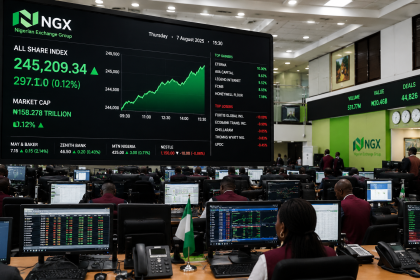
The Nigerian equities market on Thursday sustained its upward trend as investors recorded a gain of N308 billion. Specifically, the Nigerian Exchange Ltd. (NGX) market capitalisation, which opened at N92.490 trillion, appreciated by N308 billion or 0.33 per cent to close at N92.798 trillion. Similarly, the All-Share Index added 0.33 per cent or 485.25 points to close at 146,204.34, compared with 145,719.09 recorded on Wednesday. Sustained interest in Eunisell Interlinked, Caverton Offshore Support Group, Sunu Assurances, Industrial and Medical Gases, Mecure, and 27 other advancing stocks boosted market performance. The market breadth also closed positive with 32 gainers and 21 losers. Eunisell Interlinked and Caverton Offshore Support Group led the gainers’ chart by 10 per cent each, closing at N44 and N6.93 per share respectively. Sunu Assurances appreciated by 9.90 per cent to close at N5.77, while Industrial and Medical Gases rose by 9.10 per cent to finish at N35.95 per share. Mecure also gained 8.81 per cent, ending the session at N28.40 per share. READ ALSO: Council of State approves Prof Joash Amupitan as new INEC Chairman Conversely, FTN Cocoa Processors led the losers’ table by 6.67 per cent, closing at N5.60 per share. Tantalizer followed with a 3.35 per cent decline to close at N2.31, while Fidelity Bank shed 2.38 per cent to finish at N20.50 per share. PZ Cussons also dipped by 2.18 per cent to close at N38.15, while Veritas Kapital Assurance fell by 1.90 per cent to end at N2.06 per share. Market activity showed a decline in the number of deals and volume traded but an improvement in trade value. A total of 346.99 million shares worth N27.43 billion were traded in 24,691 deals, compared with 525.72 million shares worth N13.61 billion exchanged in 25,597 deals on Wednesday. Fidelity Bank topped the activity chart with 42.01 million shares valued at N861.54 million. Please Read: Stock Market Appreciates by N1.36Trillion in Three Days Dangote Cement followed with 20.9 million shares worth N11 billion, while Sterling Nigeria traded 19.8 million shares valued at N162.9 million. Jaiz Bank transacted 19.5 million shares worth N85.27 million, and CHAMS traded 17.69 million shares valued at N76.9 million. 

Nigerian stock market opens bullish with N193bn gain

The Nigerian stock market opened the week on a  bullish note on Monday, gaining N193 billion thereby sustaining the previous week’s gain. Specifically, the market capitalisation, which opened at N76,339 trillion, added 193 billion or 0.25 per cent to close at N76.532 trillion. The positive performance was driven by increased investors interest in large capitalised stocks like Cadbury, Ellah Lakes, Tripple Gee, UPDCreit, Red Star Express and 50 others. The All-Share Index also gained 0.25 per cent or 305.67 points, to settle at 121,295.33 against 120,989.66 recorded on Friday. Also, the market breadth closed positive with 55 gainers and 23 losers. Top gainers Cadbury Nigeria led the advancers chart, increasing by 10 per cent, closing at N53.35 and Ellah Lakes also soared by 10 per cent, settling at N8.91 per share. Tripple Gee rose by 10 per cent, ending the session at N2.97 while UPDCREIT also climbed by 10 per cent, finishing at N7.15 per share. Also, Red Star Express grew by 9.92 per cent, closing at N9.20 per share. Losers On the flip side, Sunu Assurances shed 10 per cent, settling at N4.50 while RT Briscoe declined by 9.59 per cent, finishing at N3.30 per share. Prestige dropped by 9.09 per cent, closing at N1.20 and UPDC fell by 8.23 per cent, ending the session at N4.35 per share. Berger Paints lost 7.58 per cent, closing at N30.50 per share. Cumulate performance Altogether, 824.10 million shares worth N14.44 billion were traded across 24,042 transactions, compared to Transactions in the shares of Universal Insurance topped the activity chart with 71.92 million shares worth N48.94 million. First City Monument Bank followed with 61.4 million shares valued at N564.78 million while Ja Paul Gold transacted 53.34 million shares worth N136.1 million. Access Corporation sold 42.02 million shares valued at N942.81 million and AIICO Insurance traded 40.10 million shares worth N64.84 million. 

NBS Q3 GDP Growth Report Excites President Tinubu

President Bola Tinubu has reacted positively to Nigeria’s economic growth report for the third quarter of 2024, released by the National Bureau of Statistics.  The report revealed a 3.46% GDP increase, marking a year-on-year improvement that surpassed earlier projections. The presidency attributed this growth to key sectors such as agriculture, ICT, trade, and manufacturing, which collectively played a significant role in driving the economy forward.  Tinubu reiterated his administration’s commitment to ensuring that these gains translate into better living standards for Nigerians. The government highlighted ongoing economic reforms, including proposed tax changes aimed at reducing burdens on small businesses and fostering a more equitable tax system.  These initiatives are part of a broader strategy to achieve Tinubu’s vision of a $1 trillion economy by 2030. As Nigeria prepares to rebase its economy in early 2025, officials anticipate that recent advancements across various industries will further position the nation for sustainable growth and shared prosperity. PLEASE READ: PH REFINERY BEGINS OPERATION: NNPCL GCEO TO OVERSEE FIRST PMS DISPATCH

Blaming the World Bank will not save our economy. Only us can

“Nigeria’s reform crisis is not about ideas, but about trust. Without it, even sound policies become liabilities.”

I stumbled on an article by one Mr. Ahmed Sule ( FCA). It is so disappointing to read. It is nothing but a regurgitation of the same well-worn World Bank blame game. There was not one single alternative policy prescription other than the usual finger pointing and externalization of our problem. Expectedly, Mr. Sule latched on the article in which the World Bank gave its analysis of the Tinubu reform, as the bogey-man. He did not even make an attempt to provide his own counter-point to the World Bank. He failed to provide his position on the Tinubu economic agenda other than a listing of the pains it has inflicted on the populace. The president in his inaugural address stated clearly that his proposed economic reform agenda was going to be excruciatingly painful. He stated unequivocally that he was going to remove fuel subsidy and that he was going to float the currency. He did not trick the electorate. He also told the citizens to render their judgement on the performance of his reform policy with their votes in 2027. Mr. Sule in his social media post pretended as if our economic nightmare began with or was precipitated by the Tinubu regime. He had nothing to say about our profligate and obscene economic mismanagement dating back to the mid 1970s-early 80s during which we frittered away our oil windfall like drunken sailors on a pirate ship. World Bank bashing has been our default excuse for our collective failure since the 1986 IMF SAP debacle. We focused on SAP rather than its predicate. We never asked ourselves the hard question about what we did wrong with all the stupendous oil windfall that accrued to our country, and why we ended ended up prostrate in 1986 crawling on our belly to the World Bank and IMF for a bail out. “Have we forgotten the commonwealth fund that was proposed by Sister Ngozi Okonjo Eweala during the President Jonathan regime to put away our excess oil revenue for the rainy day but rejected by the governors, or the hubris of young General Gowon who in the 70s declared that our country’s problem was not lack of money but how to spend it? Now we all have to endure the lean years we didn’t make provision for, in order for us to survive and be here when hopefully the years of abundance come back again.“ The World Bank does not force itself on any country. Countries choose membership of the World Bank out of their free will. They usually approach the World Bank for low interest loan when they are totally out of luck and option, unable to access finance through the open financial market because they have mismanaged their credit worthiness. That was the position Nigeria found itself in 1986. Even after General Obasanjo was able to get a big chunk of our debt written off by the World Bank and other multilateral financial institutions we were indebted to, did we take advantage of that? No, we didn’t. Our politicians continued unabatedly to plunder our commonwealth and they still do. The Bible says the debtor is a slave to his creditor. So, when countries like Nigeria have run out of options and are forced by their desolate and desperate circumstances to crawl on their bellies for financial life wire, of course like the slave described in the Bible to their creditors, they are forced to go on a forced diet (conditionalities) in order to access the low interest loan and sometimes outright grants that the World Bank offers due to the “generosity” of the donor members. We need to know that donors do not donate their fund to the poor out of philanthropy and benevolence. Foreign aids are a tool of promoting national hegemonic advantage. There are no free lunches in international relations. U. S and Europe are not funding the Ukraine war necessarily because of their love for the Ukrainians. They are dropping billions of ammunition and weapons of death into Ukraine to fight Russia because it advances their geopolitical agenda against Russia. It also creates opportunity for the military industrial complex to dispose their unused weapons, to test new one and create jobs in their local economies. We will be wise to understand that our economic success lies with us doing the hard work of national building and advancing our economic interest in an amoral, survival of the fittest, rigged global economic system. We should never again put our country in the position in which external financial institutions dictate or have a veto on our economic policies. China can tell the World Bank to go to hell with its economic prescriptions. In fact China has created its own alternative to the World Bank. As we romance China, we would be wise to learn that China like the West before it is not a benevolent Father Christmas doling out free money for its Silk Road project. “The capital asset of the “World Bank” is minuscule compared to those of global behemoths like the JP Morgan Chase, the China Bank of Industry, or the Bank of America. The world number one bank, China Industrial and Commercial Bank has total assets of $6.3 trillion. By comparison, the World Bank had just about $200 billion of assets under management. The World Bank would not rank among the top 50 banks in the world. In fact, there is a debate whether the term bank can truly be applied to the World Bank.“ The phrase “ World Bank” is in fact a gross abuse, misuse and exaggeration of the financial muscle of the “ World Bank”. When the phrase World Bank was used at its founding it represented an extreme case of hubris. The capital asset of the “World Bank” is minuscule compared to those of global behemoths like the JP Morgan Chase, the China Bank of Industry, or the Bank of America. The world number one bank, China Industrial and Commercial Bank has total assets

Again Nigeria’s inflation rate eases in August

Retain SSB Tax In 2024 Fiscal Policy, CSOs Tell FG

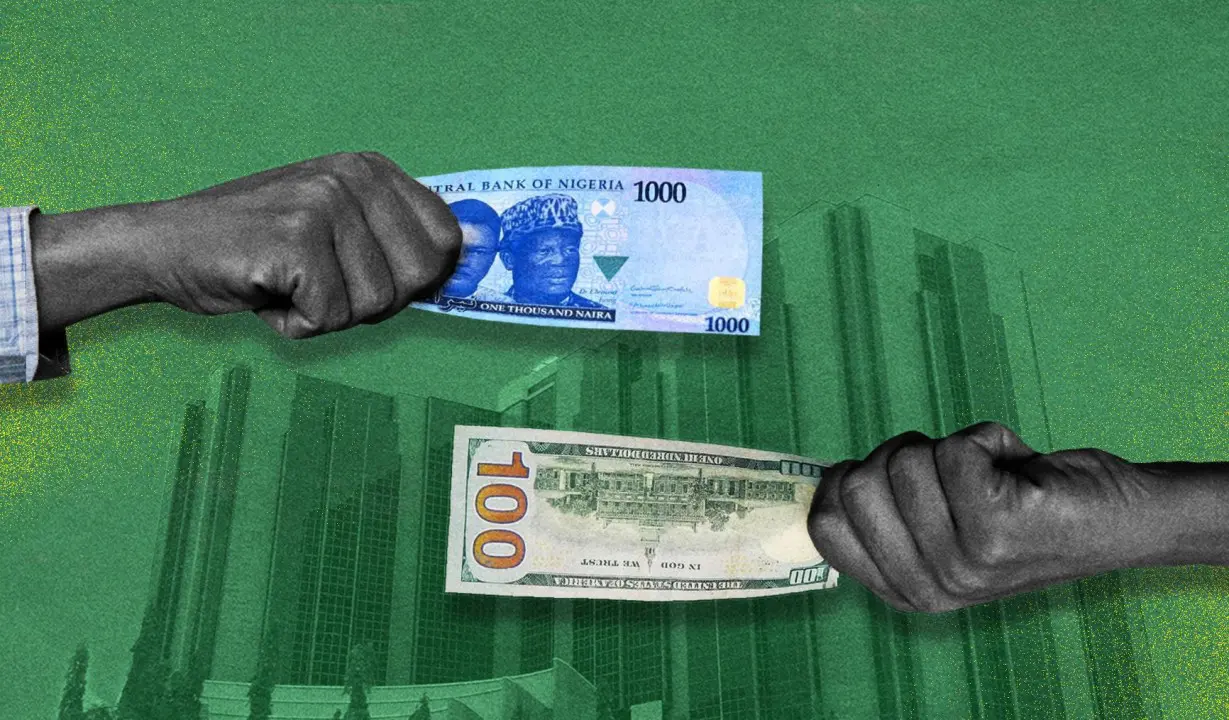
BREAKING! Again Nigeria’s inflation rate eases in Augus Nigeria’s annual inflation rate eased again in August after a persistent rise in nearly two years. Inflation rate eased further to 32.15 per cent in August 2024 relative to the July 2024 headline inflation rate of 33.40 per cent, the National Bureau of Statistics (NBS) announced Monday. Inflation indicators compare prices of goods and services in 12 months. A decline does not necessarily imply a reduction in prices; instead, it shows the rate of price increase had fallen compared to previous months. According to the NBS food inflation was 37.52 per cent in August 2024 as against 39. 53 per cent recorded in July.

Obasanjo proffers solutions to Nigeria’s economic woes

Former Nigeria President, Olusegun Obasanjo has told President Bola Ahmed Tinubu to ramp up activities around production and productivity to tackle Nigeria’s economic woes. Obasanjo disclosed this in a statement by his Media Aide, Kehinde Akinyemi, on Sunday, quoting the ex-president as having spoken at a Colloquium: “Nigeria’s Development: Navigating the Way Out of the Current Economic Crisis and Insecurity” delivered at the Paul Aje Colloquium (PAC) in Abuja. Obasanjo blamed fuel subsidy removal, the Harmonization of foreign exchange markets and dealing with a military coup in Niger for Nigeria’s economic hardship. However, as a solution, the former President said the government should focus on production, noting that there is no shortcut to economic progress. “The way forward is production and productivity, which belief and trust in government leadership will engender. No shortcut to economic progress but hard work and sweat. “The economy does not obey orders, not even military orders. I know that. If we get it right, we will begin to see the light beyond the tunnel in two years. It requires a change of characteristics, attributes and attitude by the leadership at all levels to gain the confidence and trust of investors who have alternatives,” he said. Recall that in June last year, Tinubu’s administration announced fuel subsidy removal and the Harmonization of Foreign exchange markets. In April, fuel pump price surged by 176.02 per cent on a year-on-year basis to N701.24 per litre compared to N255.06 last year. Similarly, the country’s Naira dropped to N1482.81 per dollar last Friday from N465.50 per dollar on June 14, 2023. This development has led to a surge in prices of goods and services, as headline and food inflation increased to 33.69 per cent and 40.53 per cent, respectively.