


The Federal Government is seeking to tackle longstanding bottlenecks in Nigeria’s export process through the expansion of the National Single Window (NSW), a digital platform designed to eliminate fragmented documentation procedures and improve coordination among trade regulatory agencies.
The initiative, which is entering its second phase, is expected to reduce the administrative burden on exporters by replacing multiple agency submissions with a centralised electronic system.
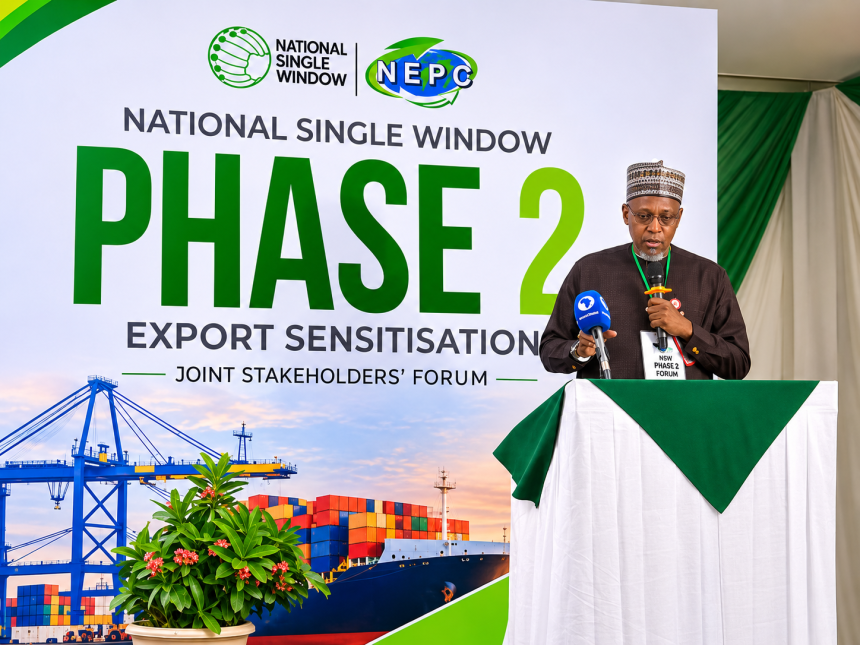
At an export sensitisation forum in Kano on Monday, the Director of the National Single Window Project, Tola Fakolade, identified unclear documentation requirements and the complexity of dealing with multiple regulatory institutions as major concerns raised by exporters.
He said the platform would provide a single entry point for submitting trade documents, allowing relevant government agencies to access the information without requiring exporters to make separate physical submissions.
Fakolade said the project was being implemented in collaboration with the Nigeria Export Promotion Council (NEPC), Nigeria Customs Service (NCS), National Agency for Food and Drug Administration and Control (NAFDAC) and other agencies involved in export regulation.
The reform is intended to improve operational efficiency, strengthen transparency and reduce procedural delays that could undermine the competitiveness of Nigerian products in international markets.
An NCS representative, Christopher Faheyan, said the sensitisation exercise was necessary to familiarise exporters with the transition to digital documentation and the new submission process.
Similarly, NEPC Regional Coordinator, Amina Abdulmalik, explained that exporters would no longer need to visit multiple agencies physically to submit product documentation, as relevant institutions would access the information through the central platform.
She urged exporters to register on the system and take advantage of its simplified procedures.
While the platform offers an opportunity to address administrative inefficiencies, its effectiveness will depend on seamless integration among participating agencies, reliable digital infrastructure and the capacity of exporters, particularly small businesses, to navigate the system.
The success of the reform will ultimately be measured by whether it translates into shorter processing times, lower compliance costs and improved access to international markets for Nigerian exporters.