 Dr. Wale Alonge
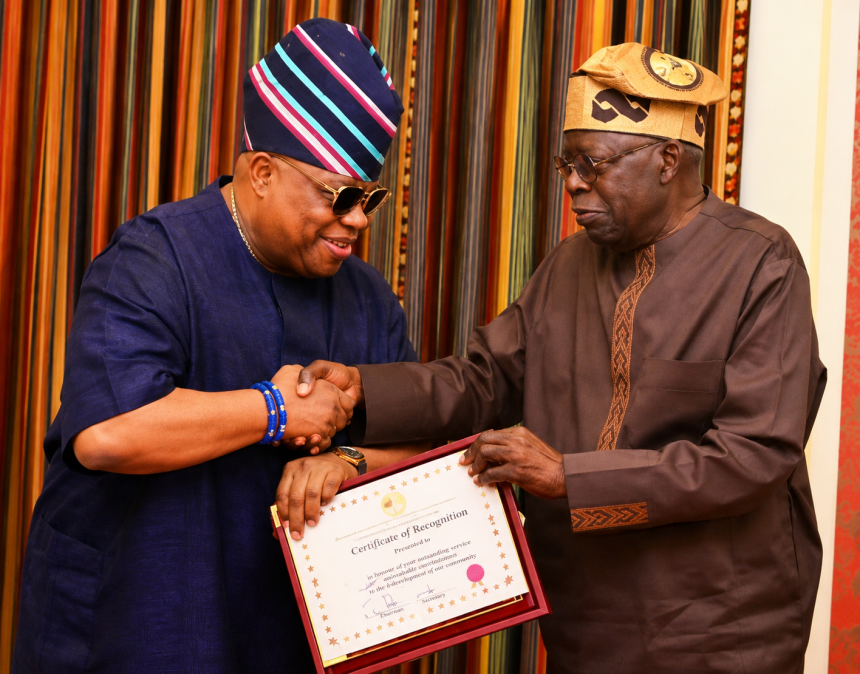
The juxtaposition of the pre-election violence that claimed lives among political partisans in Osun State, the heated rhetoric deployed during the contest, and the post-election backslapping, wining and dining, and rapprochement among political figures such as the Adelekes, President Bola Tinubu and Nyesom Wike captures one of the enduring tragedies and ironies of political competition in Nigeria.
The rich, the powerful and the politically connected understand the importance of preserving relationships and shared interests. They may bicker, exchange harsh words and appear to be bitter opponents during an election, but political differences do not necessarily destroy the relationships that exist within the political elite. Beyond party lines, many members of the political class have longstanding personal, family, social and business connections.
Party labels may matter greatly to politicians as instruments for gaining and retaining power, but they do not always erase these networks. Political parties in Nigeria have also experienced considerable movement of politicians across their ranks. Politicians have changed parties in response to changing political circumstances, alliances and calculations. In that sense, party affiliation can sometimes appear less permanent than the interests and relationships that surround political power.
It is often ordinary citizens who display the strongest emotional attachment to party labels. They are the ones who attend rallies, defend candidates passionately, confront opponents and, in some cases, become victims of political violence. The poor, the unresourced and the dispossessed can end up fighting one another over political contests whose ultimate benefits are often enjoyed by those who control political power.
This is perhaps one of the greatest ironies of Nigeria’s electoral politics. Those at the top of the political hierarchy are often better positioned to protect themselves from the consequences of the conflicts generated during elections. Ordinary citizens are not so fortunate. They are more likely to encounter the immediate consequences of political violence in their communities—injury, destruction of property, displacement, disruption of livelihoods and, in the worst cases, death.
The same citizens also have to live with the consequences of whatever governance follows an election. If government performs poorly, the ordinary citizen bears much of the burden. If public services deteriorate, unemployment rises or insecurity persists, it is the citizen who must confront those realities. Yet during elections, the same citizens may be encouraged to see one another as enemies simply because they support different candidates or political parties.
There is another irony. Political elites who appear irreconcilable during election campaigns can sometimes rebuild relationships after elections. Former adversaries can meet again, share platforms, negotiate and cooperate when political circumstances change. This does not mean that every politician maintains friendly relations with every opponent, nor does it suggest that political disagreements are always superficial. It simply demonstrates that political competition does not necessarily destroy the wider networks within which political elites operate.
For ordinary citizens, however, the consequences can be much more lasting.
That is the lesson one would hope the masses would learn: political competition should not require ordinary citizens to become mortal enemies on behalf of politicians who themselves may reconcile once the contest is over.
Sadly, the political system is structured in ways that make this lesson difficult to learn—and even harder to act upon. Poverty, unemployment, political patronage and the struggle for access to limited opportunities can make citizens particularly vulnerable to political mobilisation. Where political power is seen as a pathway to economic security and influence, elections can become matters of survival rather than simply contests over competing policy choices.
This is where the tragedy of political violence lies.
Citizens should be able to disagree passionately about political parties and candidates without turning those disagreements into personal warfare. They should be able to support different political interests without becoming enemies. Politicians will continue to compete, form alliances, change alliances and negotiate their interests. That is part of politics.
But ordinary citizens should not have to pay with their lives for those political calculations.
The political class may return to the table after the election. The ordinary citizen must still return to the consequences.