Taraba: Deputy Gov Alkali confident of victory at S’Court

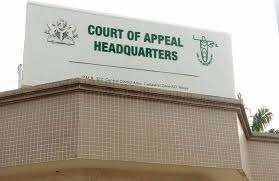
Deputy Governor of Taraba State, Aminu Abdullahi Alkali has expressed optimism that the People’s Democratic Party PDP and governor Kefas Agbu will emerge victorious in a legal battle against them at the Supreme Court. The New Nigeria People’s Party NNPP and its governorship candidate, Prof Yahaya Sani are contesting the victory of the governor and PDP in the last year March 18 gubernatorial election in Taraba State. The Deputy Governor, who was at the Apex Court on Wednesday to witness proceedings in an appeal filed by NNPP and Sani said that the coast has appeared very clear for the two respondents to be victorious. He praised the transparent and unambiguous ways and manners proceedings at the Supreme Court are being conducted adding that the court has shown that there can never be miscarriage of justice. The position of the Deputy Governor followed the request by the lead counsel to governor Agbu and PDP, Kanu Agabi SAN to the apex court to either strike out the case the appellants or dismiss it outrightly. Agabi who led a retinue of senior lawyers told Justice Kudirat Kekere-Ekun led panel of five Justices that the case of the NNPP and its governorship candidate was lacking in merit and substance. He said that the appeal of the appellants was grossly incompetent to be considered because of the several flaws in the way the case was couched and presented at the Apex Court. The Independent National Electoral Commission INEC adopted the arguments canvassed by the governor’s lawyer in resolving the dispute on the governorship election. However, lead counsel to the NNPP and Sani, Olusegun Jolaawo SAN appealed to the Justices to allow the case of his clients and grant all the reliefs they are praying. The Court of Appeal had in Abuja affirmed the election of PDP and Kefas Agbu as Governor of Taraba State. The three-member panel of the appellate court in two separate appeals held that Agbu, was lawfully declared winner of the March 18 governorship election in Taraba State. The appellate court held that the allegations of non-compliance, irregularities and other malpractices were not proved by the appellants in line with the provisions of the law. In a unanimous judgment delivered by Justice Peter Affen, the appellate court had faulted the appellants for dumping documents on the court, stressing that even if there was manifest incidents of malpractices or irregularities on the face of the documents, the appellants ought to have led oral evidence to support the allegations. Besides, the court of appeal had dismissed the appeal for being incompetent and lacking in merit on grounds that the record of proceedings transmitted to the appellate court was not complete. It will be recalled that a three-man panel of justices led by Justice G. A. Sunmonu of the Taraba State Governorship Election Petition Tribunal had on September 30 dismissed the petition filed by the NNPP and its governorship candidate for lacking in merit.

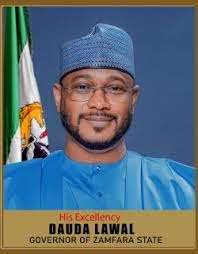
BREAKING: Supreme Court Affirms Lawal’s Election As Zamfara Governor 

The Supreme Court has upheld the election of Dauda Lawal as the duly elected Governor of Zamfara state. Justice Emmanuel Agim, who delivered the lead judgment, criticized the Court of Appeal’s earlier decision, describing it as “perverse.” Justice Agim emphasized that the allegations of over-voting failed to stand as the Independent National Electoral Commission (INEC) did not provide essential documents such as the voter register, polling unit officer report, and eyewitness testimony. The judge highlighted that BVAS machines alone could not establish electoral malpractices, and the petitioner, Mr Matawalle, did not provide sufficient evidence to support his claims. “The court is of the view that the tribunal was right. The judgment of the Court of Appeal was perverse because the petitioner failed woefully to prove his allegations,” declared Justice Agim.

Court decides whether elections, exams can hold saturdays, March 20

By Vivian Michael, Abuja Justice James Omotosho of the Federal High Court Abuja, will March 20, deliver judgment in a suit seeking to stop the conduct of elections and examinations on Saturdays. The court fixed the date, after listening to the arguments in the matter filed by a member of the Seventh-day Adventist Church, Mr Ugochukwu Uchenwa. The plaintiff, Uchenwa, who is an elder of the church, filed the suit on the grounds that fixing elections and examinations on Saturdays violated his rights and that of other members of the church, to freedom of worship. He is praying the court to declare the fixing of elections and examinations on Saturdays as unconstitutional. In the alternative, the plaintiff, prayed the court to order the defendants to allow him and other members of his church to vote or write examinations on any other day of the week including Sundays. Listed as defendants in the suit are the President, the Attorney-General of the Federation, the Independent National Electoral Commission (INEC) and the Minister of Internal Affairs. Others, are the Joint Admission and Matriculation Examinations, JAMB, the National Examination Council, NECO, West African Examination Council, WAEC, the National Business and Technical Examination Board, Council of Legal Education and the Ministry of Education. At Wednesday’s hearing, counsel to the plaintiff, Mr Benjamin Amaefule told the court that his client was only seeking an enforcement of his fundamentals right to freedom of education and freedom to participate in elections. Amaefule told the court that his client was seeking among others, a declaration that the schedule of elections in Nigeria on Saturdays, the “Sabbath day”, was a violation of his fundamental rights to freedom of worship. “It is also a violation of conscience, profession and free practice of faith and right to participate freely in the government of the applicant and that of entire members of the Seventh-day Adventist Church, Nigeria”. He maintained that fixing examinations and elections on the “Sabbath day of the Lord ”, was also a violation of right to freedom of education of the applicant and the members of the Seventh-day Adventist Church Nigeria. The plaintiff asked the court for some reliefs including a declaration that the actions of the 5th to 8th respondents fixing examinations on Saturdays, a “Sabbath day of the Lord” was unconstitutional. “It is a violation of the fundamental rights of freedom of conscience, profession and free practice of faith of the members of the Seventh-day Adventist Church Nigeria”. He prayed the court for an order restraining INEC from further violating the rights of members of the Seventh-day Adventist Church by holding elections on Saturdays. “In the alternative, order INEC to mark out a different day for the members of the church to participate in their own election if the INEC cannot schedule and hold the elections on a day other than on Saturdays”. “An order restraining the 5th to 8th respondents from scheduling and conducting compulsory public examinations on Saturdays, without making option for the members of the Seventh-day Adventist Church to write their exams on days other than Saturdays. “An order mandating the 10th respondent to cease from conducting any academic programme or activities on Saturdays, the Sabbath day of the Lord without giving members of the Seventh-day Adventist Church a different day to participate in such academic activities by itself or through any of its department.” The plaintiff also asked the court to make an order mandating the 1st and 2nd respondents (the President and the AGF) to declare Saturdays as public holiday just the same way Sundays are public holidays. Moreover, he insisted that Sunday was the first day of the week while Saturday was the seventh day of the week, hence the Sabbath day. Responding on behalf of the President and the AGF, Maimuna Shiru told the court that she filed a 17- paragraph affidavit on behalf of her client in opposition to the suit. She prayed the court to dismiss the suit for lacking in merit. For his part, counsel to WAEC, Mr Friday Chorio argued that Nigeria was a circular state as it had not adopted any religion as its own. According to Chorio, the constitution provides that Nigeria shall not adopt any religion as its own. “In this circumstance, the plaintiff is seeking for an interpretation of the law that Saturday should be fixed as a holy day for the Seventh-day Adventist church. “We have so many laws that provide for holidayw. Section 4 of the Public Holiday Act provides and declares Sunday as a public holiday so government activities cannot take place on Sundays. “Anybody can adopt Sunday as his or her own holiday so you cannot come to court and ask the court to declare Saturday as a public holiday.” For the Joint Admissions and Matriculation Board, (JAMB), Safinat Lamidi told the court that she filed a preliminary objection praying the court to dismiss the suit as it lacked the jurisdiction to entertain it. Meanwhile, the matter for adjourned till March 20 for judgment.