


The news that JPMorgan Chase has deposited ₦50 billion (approximately $38 million) with the Central Bank of Nigeria (CBN), fulfilling a major regulatory requirement for a licence to upgrade its existing representative office in Lagos into a full-fledged merchant bank, has generated a mixture of enthusiasm and cynicism on social media. The bank’s representative office has operated in Nigeria since the 1980s.
There is, of course, ample reason for scepticism when a global financial conglomerate such as JPMorgan Chase comes to town, given the long history of corruption-enabling practices and other forms of misconduct associated with some major international financial institutions.
However, we stand to lose much if we allow cynicism to cloud a clear-eyed assessment of what could signal a significant shift in the global investment community’s perception of opportunities in Nigeria.
With approximately $5 trillion in assets, JPMorgan Chase is one of the world’s largest financial institutions. Its scale and global standing suggest that its engagement with a market such as Nigeria is unlikely to be a casual undertaking. Decisions of this magnitude are rarely taken on a whim. They are informed by extensive risk assessments, financial projections and analyses of potential returns by some of the world’s most sophisticated financial minds.
JPMorgan Chase is not coming to Nigeria as an act of charity or a love offering. It is here to make money for its investors. History has taught us that Nigeria’s kleptocratic elite does not need a global financial institution to establish a physical presence in the country before facilitating the movement of illicit wealth across international borders. The repatriation of funds stolen during the Abacha era, among other cases, demonstrates the long-standing challenges associated with tracing and recovering illicit assets held abroad.
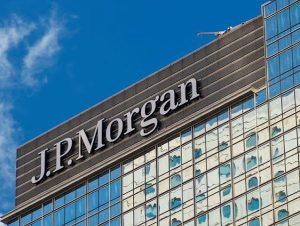
JP Morgan in Lagos, Nigeria
The questions that should engage our attention are these: What commercial opportunities does the institution see in Nigeria, and what might its entry signal about the country’s economic prospects? What, if anything, does this investment suggest about the broader investment community’s assessment of President Bola Tinubu’s second-term prospects and the sustainability of his macroeconomic reform agenda? These questions deserve consideration, although the bank’s decision should not be mistaken for evidence of any political or electoral calculations.
When this development is considered alongside interest from investors across the continent, including one of South Africa’s largest pension fund investors, and Kenyan President William Ruto’s interest in the Dangote Refinery, the broader investment sentiment towards Nigeria becomes worth examining. When global investors and political leaders of this stature turn their attention to a major industrial asset, it is important to understand the commercial opportunities and wider economic implications that may have attracted their interest.
Investment capital knows no national boundaries. It gravitates towards opportunity like a magnet drawn to metal.
The windfall, however, belongs to those with the vision and wherewithal to recognise opportunities before they become obvious to everyone else. Unfortunately, that is one of the harsher realities of capitalism: its tendency to concentrate wealth among those who already possess substantial resources, often to the detriment of those who have little.
That is also the irony of Nigeria’s ongoing, excruciatingly painful but potentially necessary macroeconomic reform agenda. While ordinary Nigerians bear the immediate costs of economic adjustment, investors from China, India, Europe, the United States and Nigeria’s own wealthy class are identifying opportunities to profit from the changes.
However, unless Nigerians emerge soon enough from the steep downward slope of the J-curve and begin the long upward climb towards recovery, with the benefits of reform translating into improved living standards and lifting more people out of hardship, the prospects for sustaining the reform agenda will grow increasingly uncertain.
This brings us to a fundamental question: How much longer can Nigerians endure the pain before the upward trajectory of the J-curve becomes visible in their daily lives?
Will prolonged hardship tempt the country to abandon the difficult process of economic restructuring in exchange for the seductive promise of immediate relief through the restoration of fuel subsidies, subsidised foreign exchange and the printing of money to finance government deficits?
Unless relief comes soon enough, it may become increasingly difficult to convince the public that a return to the old order would be counterproductive. Debt monetisation, subsidised fuel and artificially supported foreign exchange rates can mask underlying structural weaknesses and recreate the very distortions that the current reforms seek to correct.
The challenge for the President and his economic team, therefore, is not simply to tell Nigerians to endure the pain of economic adjustment. It is to demonstrate that the treatment is working, that progress is measurable and that the benefits of recovery are reaching the millions of Nigerians who have borne its heaviest costs.
Economic reform cannot be judged solely by the confidence it inspires among global investors. Ultimately, its success must be measured by whether it delivers a better life for the Nigerian people.
May Nigeria succeed.
Dr. Adewale Alonge is the Executive Director, Africa-Diaspora Partnership for Empowerment & Development (ADPED, Inc), Miami, Florida, United States.