Naira Extends Weekly Rally, Appreciates to ₦1,386.55/$ on CBN Reforms

The naira ended the week stronger at the official market, gaining 0.7% to close at ₦1,386.55 per dollar, according to CBN data.
FCMB jumps PBT 71% to N111.9bn in 2024

First City Monument Bank has recorded a 71 per cent rise in earnings to post N111.9 billion in gross profit for year end, December 31, 2024. The Nigerian Exchange Ltd confirmed the bank’s performance record through a corporate statement. The growth was impacted by a 56.6 per cent decline in revaluation income and a 1.9 per cent fall in Net Interest Margin. The Group’s gross revenue stood at N794.4 billion for December 2023 end, marking a 53.9 per cent jump from N516.4 billion in the previous year. This growth was driven by a 75.2 per cent rise in interest income and an 8.7 per cent increase in non-interest income. Non-interest income growth was constrained by a 55.7 per cent year-on-year drop in other gains, from N89.3 billion to N39.6 billion. Net interest income rose by 27.6 per cent, from N176.6 billion in the prior year to N225.3 billion by December 2024. Yield on earning assets improved to 16.2 per cent. However, Net Interest Margin declined by 1.9 per cent due to a 122 per cent rise in funding costs. Operating expenses increased by 45.7 per cent, year-on-year, to N229.1 billion. This was driven by higher personnel costs, regulatory costs, foreign currency-linked expenses, and inflationary pressures. The cost-to-income ratio closed at 59.9 per cent for the period ending December 2024. Net impairment loss on financial assets declined by 30.7 per cent year-on-year to N41.2 billion, down from N59.5 billion. Consequently, the cost of risk lowered to 1.8 per cent from 3 per cent. The Group’s divisions recorded year-on-year growth, with consumer finance rising by 83.5 per cent and investment management by 27.9 per cent, while the banking group declined by 7.7 per cent. Group earnings remained diversified, with non-bank subsidiaries accounting for over 30 per cent of profits. Loans and advances increased by 28 per cent year-on-year from N1.84 trillion to N2.36 trillion at the end of December 2024. Total assets grew by 59.5 per cent year-on-year, from N4.42 trillion to N7.05 trillion at the end of December 2024. Customer deposits rose by 39.4 per cent year-on-year, reaching N4.30 trillion from N3.08 trillion by December 2024. On recapitalisation, the statement read, “In line with the CBN’s directive, the Group focused on strengthening the banking franchise and building a more resilient balance sheet in 2024. “We completed the first phase of our capital-raising programme, securing N144.6 billion through a public offer. This doubled issued shares from 19.8 billion in 2023 to 39.6 billion in 2024, impacting EPS. “Subsequent phases of FCMB Group’s capital programme are in progress to ensure First City Monument Bank Limited meets the minimum capital requirement to retain its International Banking License. “The capital injection has enabled First City Monument Bank Ltd. to secure its National Banking License and raise its capital adequacy ratio to 18 per cent. “This has created essential buffers to support asset creation in select segments.”
Tinubu Unveils 2025 Budget

President Bola Ahmed Tinubu has presented the 2025 budget proposal to the National Assembly, marking a pivotal step in his administration’s efforts to stabilize and transform Nigeria’s economy. Dubbed “The Budget of Restoration: Securing Peace, Rebuilding Prosperity,” the plan lays out strategic investments to tackle economic challenges and rebuild critical sectors. The proposed N47.90 trillion expenditure includes key allocations for defense, infrastructure, education, and healthcare. READ ALSO: Insecurity: Nigerians Paid N2.3trn as Ransom in One Year – NBS Report Tinubu emphasized bolstering security, improving infrastructure, and fostering self-sufficiency in agriculture. Revenue projections stand at N34.82 trillion, while the budget deficit is pegged at N13.08 trillion. The president highlighted significant milestones achieved under the 2024 budget, such as a 3.46% economic growth rate in Q3 and robust foreign reserves nearing $42 billion. For 2025, the focus shifts to reducing inflation, enhancing trade, and driving industrial output. With plans to reduce dependency on food and oil imports while boosting exports, Tinubu assured Nigerians of a brighter future, calling for collective action to overcome challenges and build a more prosperous nation.
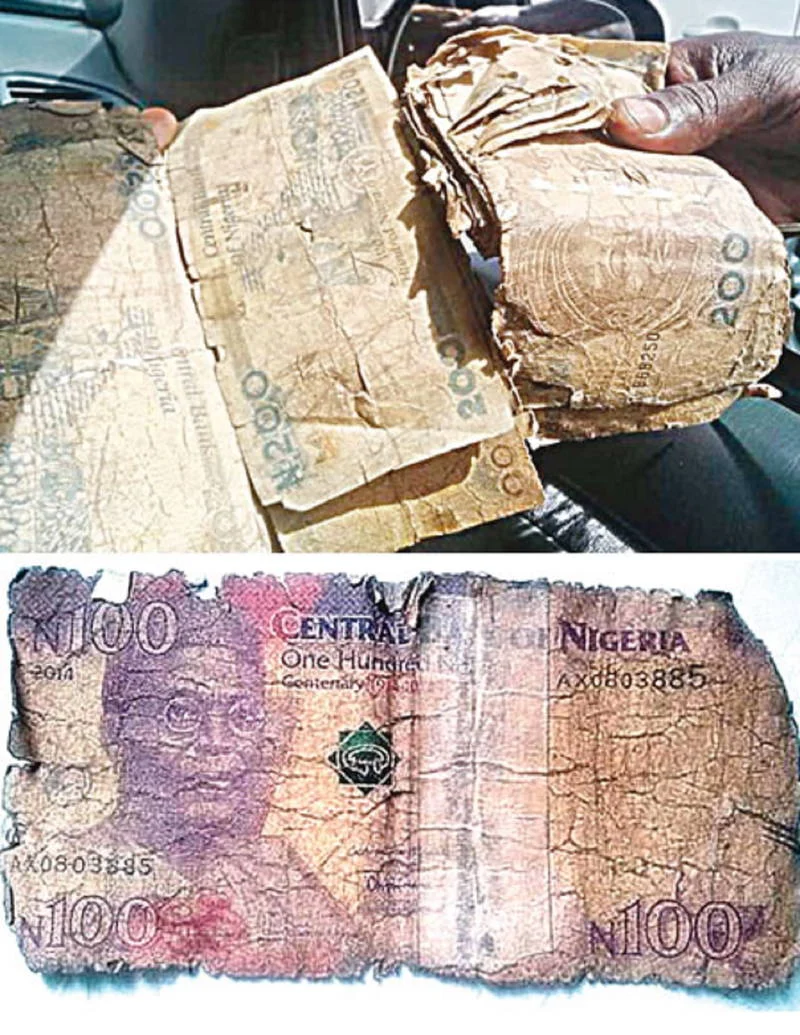
Old, dirty Naira notes: House of Reps demands immediate replacement by the CBN

The House of Representatives has urged the Central Bank of Nigeria (CBN) to ensure wide circulation of new notes of N200, N500 and N1000 as well as begin a gradual withdrawal of the old notes from circulation. This call was made after a motion raised by Adam Victor Ogene (LP, Anambra), demanding that the Central Bank of Nigeria (CBN) should kick-start awareness programmes for Nigerians to be aware and prepare for the deadline of December 31, 2024. Contributing to the discussion, the Labour Party lawmaker recounted the hardship, frustration, controversy and chaotic situation the implementation of the policy earlier caused in 2023. He added that the scarcity of the new currency notes led to untold hardship in the nation as a result of the CBN’s inability to supply new versions of the changed currency notes. “Going by the Supreme Court’s subsequent ruling and order, the N200, N500 and N1000 notes shall cease to be legal tender, medium of exchange for goods and services in Nigeria, and shall also cease to be in circulation as from January 1, 2025,” the lawmaker said. In 2022, a controversy erupted in Nigeria after the Central Bank of Nigeria (CBN), under the leadership of then-Governor Godwin Emefiele, announced plans to redesign and introduce new versions of three denominations of banknotes: N200, N500, and N1000. The existing notes were to remain valid until January 31, 2023. The move had sparked widespread debate and discussion across the country. According to Emefiele, the decision was reached due to persisting concerns around the number of naira notes outside the banking system. Over one year after, findings showed that the CBN policy which was reported to have gulped over N74 billion failed.
CBN Clarifies Status of Cybersecurity Levy

The Central Bank of Nigeria (CBN) has denied reintroducing the cybersecurity levy which collection was recently suspended. The levy, initially mandated at 0.5 percent for banks to collect on behalf of the National Security Adviser, was put on hold following backlash from the public and a directive from the Federal Executive Council. Despite ongoing rumors suggesting the levy’s reintroduction, the CBN firmly denied these claims in its recent Monetary, Credit, Foreign Trade, and Exchange Policy Guidelines for the 2024-2025 fiscal years. In a circular issued on September 17, the CBN addressed misunderstandings surrounding its guidelines, stating that the document reflects prior policies up to December 31, 2023. The CBN reiterated that the cybersecurity levy, suspended in May 2024, is no longer applicable, and stressed the importance of accurate reporting regarding its policies. The bank encouraged stakeholders to seek clarification before disseminating information.
CBN to maintain controversial cybercrime levy amid economic hardship

the Central Bank of Nigeria (CBN) has confirmed it will continue enforcing the contentious cybercrime levy of 0.005 percent
Again Nigeria’s inflation rate eases in August

BREAKING! Again Nigeria’s inflation rate eases in Augus Nigeria’s annual inflation rate eased again in August after a persistent rise in nearly two years. Inflation rate eased further to 32.15 per cent in August 2024 relative to the July 2024 headline inflation rate of 33.40 per cent, the National Bureau of Statistics (NBS) announced Monday. Inflation indicators compare prices of goods and services in 12 months. A decline does not necessarily imply a reduction in prices; instead, it shows the rate of price increase had fallen compared to previous months. According to the NBS food inflation was 37.52 per cent in August 2024 as against 39. 53 per cent recorded in July.
CBN directs payment service providers to begin PoS transaction tracking

The Central Bank of Nigeria has directed all Payment Service Providers to route all transactions from PoS terminals at merchant and agent locations through an approved CBN Payment Terminal Service Aggregator. The Apex Bank explains that this directive is without prejudice to whether such transaction was physical or electronic. It also issued a 30-day deadline requiring service providers to comply with enhanced routing guidelines for Point of Sale transactions. This move aims to strengthen the monitoring of electronic transactions across Nigeria and decentralise PoS transaction routing, addressing concerns about the centralisation of such transactions under a single entity. The apex bank, in a circular signed by Oladimeji Yisa Taiwo on behalf of the CBN’s Payments System Management Department on Thursday, stated that all PoS transactions from merchant and agent locations must now be routed through any CBN-licensed PTSA. The circular read, “To achieve the objective of tracking electronic transactions in Nigeria, the Central Bank of Nigeria, in August 2011, granted a Payment Terminal Service Aggregator license to Nigeria Interbank Settlement System Plc. In furtherance of the above, the CBN hereby directs acquirers to route all transactions from PoS terminals at merchant and agent locations, whether on physical or electronic PoS terminals, through any CBN-licensed Payment Terminal Service Aggregator.” “PTSAs are required to send PoS transactions to only processors certified by the relevant Payment Scheme, nominated by the Acquirer, and licensed by the CBN.” This development follows the expiration of the 5th September deadline for PoS agents to formally register their businesses with the Corporate Affairs Commission. Although the directive was challenged in court, the CAC recently announced that it has commenced taking drastic actions, including shutting down PoS businesses that failed to register. The directive on PoS business registration comes against the backdrop of frequent fraud incidents involving PoS terminals and the Central Bank of Nigeria’s plans to prevent trading in cryptocurrency or virtual currency. According to a report by Nigeria Inter-Bank Settlement System Plc, PoS terminals accounted for 26.37% of fraud incidents in 2023
100 Sacked Staff Sue Nigeria’s Central Bank

100 sacked staff seek payment of salaries until expected retirement date.
Banks, others shut as hunger protest holds

Banks and other financial institutions in the country will be closed on Thursday, August 1, 2024, as the planned hunger strike begins across the country.