NGF Backs Direct Federation Account Oil Revenue Reforms

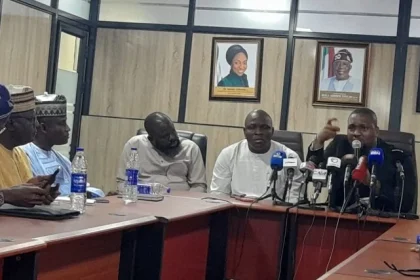
The Nigeria Governors’ Forum has thrown its weight behind Executive Order 9 signed by President Bola Ahmed Tinubu, describing direct remittance of oil and gas revenues into the Federation Account as essential for fiscal transparency, predictability, and constitutional alignment across federal, state, and local governments.
NRS Targets N40.7tn Revenue from 2026 Tax Reforms — Adedeji

The Executive Chairman of the National Revenue Service, Mr Zach Adedeji, has said Nigeria’s 2026 tax reforms have positioned the service to generate N40.7 trillion in taxes and royalties. Adedeji disclosed this on Wednesday in Abuja while speaking at a roundtable organised by the House of Representatives Committee on Appropriations for key stakeholders in the financial sector. According to him, the projected revenue reflects the impact of recent reforms that transferred petroleum and solid mineral royalties, alongside other revenue streams, to the National Revenue Service. “In light of the tax reforms transferring petroleum and mineral royalties and other revenues to the NRS, the total target is N40.7 trillion,” Adedeji said. “We believe that with the support of the House, we will achieve what we have proposed.” Strong 2025 Performance The NRS chairman also highlighted the agency’s strong performance in 2025, noting that it exceeded its revenue target by a wide margin. He said the service generated N28.23 trillion in 2025, surpassing its target of N25.2 trillion. “Compared with 2024, we collected N6.5 trillion more in 2025, representing a 30.3 per cent increase, driven largely by non-oil taxes,” he stated. Finance Minister Explains Reform Rationale The Minister of Finance and Coordinating Minister of the Economy, Mr Wale Edun, said Nigeria had previously relied heavily on Ways and Means financing to cover large fiscal deficits. He added that the Nigerian National Petroleum Company had been funding petrol subsidies through an under-recovery arrangement, which he described as unsustainable. Edun said the government was compelled to address these structural distortions and replace them with market-based solutions, leading to the current wave of fiscal and tax reforms. Lawmakers Seek Clarity on Revenue Projections The Chairman of the House Committee on Appropriations, Rep. Abubakar Bichi (APC–Kano), said the roundtable was organised to allow lawmakers to engage directly with the presidential economic team on the 2026 Appropriation Bill. “This is for us to study, consider and approve the request. We decided to engage the President’s team on 2025 performance and the 2026 proposal,” Bichi said. He added that lawmakers also engaged the NRS leadership to gain clarity on the ambitious 2026 revenue projections. “In 2025, we achieved about N28 trillion against a N25 trillion target. We need more information so Nigerians can understand what is going on,” he said.
Industry Ministry’s $500m Export Claim Faces Scrutiny

The industry ministry claims over $500m in export revenue for 2025, but thin capital funding and limited data disclosures are raising questions about impact and sustainability.
Naira Extends Weekly Rally, Appreciates to ₦1,386.55/$ on CBN Reforms

The naira ended the week stronger at the official market, gaining 0.7% to close at ₦1,386.55 per dollar, according to CBN data.
Nigeria Records 3.98% GDP Growth in Q3 2025, Misses Target

Nigeria’s GDP grew 3.98% in Q3 2025, falling short of targets and prompting calls for urgent reforms.
Reps Summon Dangote Refinery, NMDPRA Over Downstream Sector Tensions

Abuja — The House of Representatives Joint Committee on Petroleum Resources has invited the Dangote Petroleum Refinery and the Nigerian Midstream and Downstream Petroleum Regulatory Authority (NMDPRA) to an emergency meeting following a dispute that threatens stability in Nigeria’s downstream petroleum sector. Chairman of the committee, Ikenga Ugochinyere, disclosed this after an emergency meeting held in Abuja on Monday, warning that escalating tensions between key industry players could undermine recent gains achieved in fuel supply, pricing, and regulation. Ugochinyere said the committee’s intervention had become necessary as Nigeria continues efforts to stabilise the petroleum market in the post-fuel subsidy era. “We are guarding the hard-won stability in the downstream sector. Sustainable solutions require that we identify and address the critical issues, which is why we have invited the leadership of Dangote Refinery and the NMDPRA,” he said. The lawmaker explained that the renewed tension followed concerns and allegations raised by Africa’s richest man, Alhaji Aliko Dangote, against the petroleum regulator. He noted that several petitions submitted to the committee relate to the issuance of import licences and questions surrounding the capacity of domestic refineries to meet Nigeria’s daily petroleum consumption. According to Ugochinyere, the committee will comprehensively examine all outstanding matters when both the refinery and regulatory authorities appear before lawmakers. He stressed that resolving the disagreement is critical to maintaining investor confidence and ensuring uninterrupted fuel supply amid ongoing reforms in Nigeria’s oil and gas sector.
No Shortage Of Naira Notes In Circulation, Says CBN

The Central Bank of Nigeria (CBN), has assured Nigerians that there is adequate supply of Naira notes in the economy. The bank’s Director, Corporate Communications, Isa AbdulMumin, said this in a statement on Thursday in Abuja. Some bank customers in recent times have been complaining about scarcity of Naira notes at the counters, Automated Teller Machines (ATMs), Point of Sale (PoS), and Bureaux de Change (BDCs). According to Abdulmumin, the seeming currency scarcity is occasioned by large volume withdrawal of cash from various CBN branches by Deposit Money Banks (DMBs). He said that panic withdrawals by bank customers was also partly responsible for the seeming scarcity. “The attention of the CBN has been drawn to reports of alleged scarcity ofcash at banks, ATMs, PoS and BDCs in some major cities across the country. “Our findings reveal that the seeming cash scarcity in some locations is due largely to high volume withdrawals from the CBN branches by DMBs and panic withdrawals by customers from the ATMs. “While we note the concerns of Nigerians on the availability of cash for financial transactions, we wish to assure the public that there is sufficient stock of currency notes for economic activities in the country. “The branches of the CBN across the country are also working to ensure the seamless circulation of cash in their respective states of operation,” he said. The director advised members of the public to guard against panic withdrawals as there was sufficient stock to facilitate economic activities. He also advised Nigerians to embrace alternative modes of payment, which would reduce pressure on using physical cash.
Naira Hits All-Time N1065/$ Low, As BDC Operators Seek Urgent Reforms

The nation’s currency, the Naira, experienced a historic low on Wednesday in the parallel market, with the unofficial exchange rate reaching an unprecedented N1065 to the US dollar. On Tuesday, the Naira closed at N1060 to the dollar on the unofficial market, driven by a shortage of dollars, leading to a rapid depreciation of the currency. Additionally, the Naira weakened by 8.9 percent to N848.12 against the dollar in the official Investors and Exporters (I&E) forex market on Tuesday, according to data from FMDQ. Foreign exchange trades took place within the range of N700 to N981 per dollar, with the dollar’s trading volume surging to $133 million, according to an investment note by the Lagos-based investment banking firm Chapel Hill. The Central Bank of Nigeria (CBN) had relaxed foreign exchange controls in mid-June following criticism of monetary policy measures by President Bola Tinubu and a pledge to end the multiple exchange rate regime. The official rate briefly aligned with the parallel market, plunging 40 percent, but the spread began to widen again. Until Tuesday, the official rate remained near N800 to the dollar, while the street rate surpassed N1,000 to a dollar. Foreign exchange operators attributed the Naira’s depreciation to persistent illiquidity in the market in the absence of central bank intervention. The widening premium between the official rate and the black market is a sign that the exchange rate has not found a clearing price. The Chairman of the Association of Bureau de Change Operators in Nigeria (ABCON), Aminu Gwadabe, explained that the Naira’s rapid devaluation is due to significant liquidity driving up demand for unavailable dollars in the market. He also pointed to uncertainties, loss of public and international confidence in the economy, rising inflation, and a low interbank market interest rate, which have reduced the appeal for alternative investments. Gwadabe recommended abolishing the I&E window and allowing willing buyers and sellers to dictate price mechanisms with legislative backing.
Insufficient Supply Fueling FX Market Pressures –Peter Obi

Labour Party’s presidential candidate in the 2023 election, Mr. Peter Obi, has noted that Nigeria’s current foreign exchange liquidity challenges is primarily due to insufficient supply of the greenback to the ma Fielding questions on Arise TV’s ‘The Morning Show’ on Monday, Obi said there should have been broad consultation before the government rolled out the policy. “You can’t float a currency you don’t have supply with. It’s like building a non-gated house in a criminal-ridden society. You have to have a defence mechanism. Nobody floats what you don’t have a supply for. I believe that now that we have new CBN leadership, they have to look at the overall monetary policy. “It’s again not something you announce haphazardly. It’s something you look at critically. Nobody floats his currency without having an adequate supply. When you don’t have adequate supply, there will be pressure and criminality. We should have worked on eliminating those criminalities and excesses in our FX regime,” he said. The former Anambra State governor insisted that rather than float the naira, he would have devalued the naira. “What we would have done is devalue the currency to about 600 or thereabout while trying to manage what you have and encouraging exports. I can tell you that not even in the developed world has anybody left their currency to market forces because you might not be able to control it. After all, you cannot reverse your policy. “These are announcement defects that would have been well thought through by a proper economic team and consultation,” he added. It would be recalled that in June 2023, the Central Bank of Nigeria (CBN) unified exchange rate windows to maintain Naira stability against foreign currencies, notably the United States Dollar. The exchange rate in the investors’ and exporters’ window hit N810.78/$1 on Thursday, the highest rate for the day, and also fell to a low of N590/$1. However in the parallel market, bureau de change operators demanded an average rate of N1008 per dollar.
Rising Oil Prices Good For FG, Bad For Nigerians, Says Rewane

Goldman Sachs has predicted oil price will likely rise to $100 again, citing lower production output from the Organization of Petroleum Exporting Countries (OPEC), amongst others. Chief Executive Officer of Financial Derivatives Company (FDC) Limited, Bismarck Rewane, says it will only increase revenue to governments but will not benefit Nigerians. “Globally, oil prices trade at $95/b and are projected to hit $100/b by year-end due to supply shortages. While government revenue, Federal Account Allocation Committee (FAAC) could increase in naira terms, Nigeria’s reliance on imported energy products (LPG, diesel, petrol and kerosene) amid a falling naira means higher food and transport costs, exacerbating inflationary pressures”, said Rewane in a statement Sunday. He said, these will be major considerations for the MPC at its next meeting, whenever that will be. Nonetheless, we expect the MPC to remain hawkish. Rewane in its FDC Prism Sunday however said, some form of looking inward could solve Nigeria’s economic woes. “Viable options would be improving the value addition of top agricultural traded products like cashew and cocoa, as well as mineral resources like steel. More importantly, Nigeria needs to show its political will, improve access, and encourage local businesses, particularly SMEs, to participate in the AfCFTA by removing non-tariff barriers, he said. Also meanwhile, oil and gas companies keep reporting meaty profits and investors are rediscovering their love of hydrocarbons. At the recent World Petroleum Congress (WPC) in Calgary, oil executives and government officials both warned against the continued push to discourage investment in new hydrocarbon production. “There seems to be wishful thinking that we’re going to flip a switch from where we’re at today to where it will be tomorrow,” Exxon’s chief executive said during the event. “No matter where demand gets to, if we don’t maintain some level of investment industry, you end up running shorter supply which leads to higher prices,” Darren Woods also said. This is exactly what we are currently witnessing in Europe and the United States. Because of the transition push, oil producers are being extra cautious with production growth. Also, they are prioritizing shareholder returns to keep shareholders on, so it pays for them to be cautious. In Europe, the supermajors are being squeezed by windfall profit taxes, activist pressure, and increasingly restrictive legislation, so they are turning elsewhere. Shell is tapping billions of potential barrels in Namibia, and Total is considering a $9billion commitment to oil exploration in Suriname. Meanwhile, Nigeria’s oil output could increase to 2.1 million barrels per day by December 2024 after the country secured $13.5 billion in investment pledges over the next twelve months from oil majors. The companies agreed to invest a total of $55.2 billion by 2030 – including the $13.5 billion over the next twelve months – to lift crude production, according to a statement from the president’s office.Nigeria’s oil output stood at 1.18 million bpd in August 2023, according to the Organisation of Petroleum Exporting Countries (OPEC), meaning production would nearly double by the end of next year. Nigeria is the top oil producer in Africa but large-scale oil theft has over the years cost the country billions of dollars, while dwindling investment in the sector has also curtailed output.The losses from theft and a lack of new projects have reduced oil exports sharply, eroding foreign currency earnings in Africa’s biggest economy.