Leaders of the Kwararafa Development Forum have called on the Federal Government to strengthen security, improve critical infrastructure and create an enabling environment for the states associated with the Kwararafa heritage to unlock their agricultural and mineral wealth.
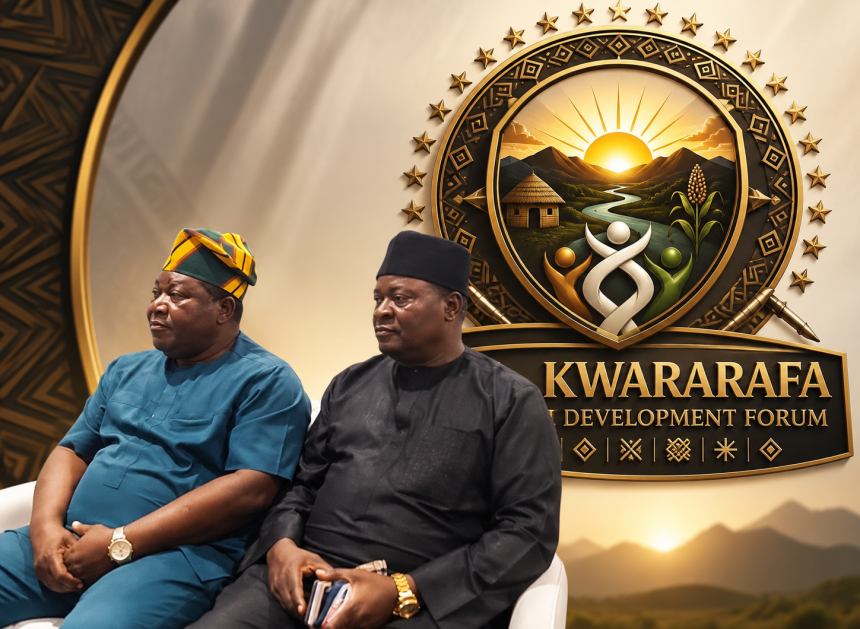
The call was made ahead of the Kwararafa Peoples Assembly 2026, scheduled for Saturday, September 19, at the Transcorp Hilton, Abuja.
The leaders described the Kwararafa region as a strategic economic asset to Nigeria, with its constituent states endowed with extensive deposits of solid minerals, agricultural resources and other economic opportunities.
They characterised the region as a “treasure trove” of Nigeria, arguing that its mineral endowment gives it the potential to contribute significantly to industrialisation, employment creation, infrastructure development and economic diversification.
The claim about the scale of the region’s mineral wealth comes against the wider backdrop of Nigeria’s substantial solid-mineral endowment. The Federal Ministry of Solid Minerals Development says the country has at least 44 mineral deposits in commercial quantities spread across more than 500 locations in the 36 states and the Federal Capital Territory.
States associated with the Kwararafa historical tradition include Benue, Taraba, Kogi, Plateau, Niger and parts of Nasarawa and other areas of the Middle Belt and adjoining regions. Historical references to Kwararafa also encompass a broader group of peoples connected through political, economic and cultural relationships around the Niger-Benue confluence.
Against this background, the Forum said insecurity remains one of the major obstacles to converting the region’s natural-resource endowment into sustained economic activity.
Speaking in Abuja, Chairman of the Media and Publicity Committee of the Forum, Prof. Yakubu Ochefu, identified insecurity as a major constraint affecting communities across parts of Plateau, Benue, Kogi, Niger and Taraba states.
He said insecurity had disrupted economic activities and constrained the ability of communities to fully exploit their agricultural and other productive potential.
The leaders therefore urged the Federal Government to strengthen security across vulnerable communities and protect productive areas, particularly farming and mining locations.
They also called for improved transport infrastructure, highlighting the road linking Jos, Ibi, Wukari and Panteka as an important economic corridor.
The Forum further urged the Federal Government to accelerate the completion of the bridge linking Taraba and Plateau states, saying improved connectivity would facilitate the movement of people, agricultural produce, minerals and other goods.
For the leaders, the development challenge is not simply about extracting natural resources but establishing the infrastructure, security and value chains required to process those resources locally and generate jobs and economic opportunities.
The Kwararafa Peoples Assembly is expected to provide a platform for traditional rulers and other stakeholders to present these concerns and outline a broader development agenda.
According to the organisers, more than 250 traditional rulers representing different Kwararafa nationalities are expected at the Assembly, including paramount rulers, first-class chiefs and heads of traditional councils.
The Assembly, themed “The Splendour of the Kingdom: The Ancient Truths, The New Dawn,” will also feature the presentation of the Kwararafa Development Agenda to the Federal Government.
The organisers said the document would identify the region’s assets, development challenges, available opportunities and the contribution its communities are prepared to make to national development.
A 4K documentary on Kwararafa history and the Kwararafa Handbook are also expected to be unveiled at the event. The handbook will document the history, peoples, economic assets, development priorities and aspirations of the communities associated with the Kwararafa heritage.
The Assembly is expected to conclude with the Abuja Declaration, addressing issues including national unity, security, economic opportunity, equitable development and the place of the communities within the Nigerian federation.
The organisers said the gathering is neither a cultural festival nor a political rally, but a civic and development-focused platform intended to translate shared heritage into practical dialogue on development.
The Forum said the central objective is to strengthen cooperation among traditional institutions and communities while engaging policymakers on measures capable of unlocking the region’s economic potential.
With Nigeria seeking to expand non-oil sources of growth, the leaders argued that the mineral and agricultural resources of the Kwararafa region should be treated as part of a broader national development strategy, supported by security, roads, processing infrastructure, investment and stronger local value chains.