ONICCIMA Calls for Dialogue as Anambra Shuts Onitsha Main Market

The Onitsha Chamber of Commerce, Industry, Mines and Agriculture (ONICCIMA) has called on the Anambra State Government to resolve the closure of Onitsha Main Market through dialogue, warning that prolonged shutdowns over sit-at-home activities could worsen economic losses, disrupt supply chains, and threaten livelihoods across the state.
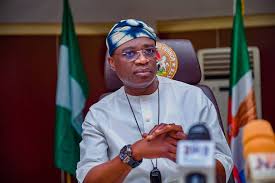
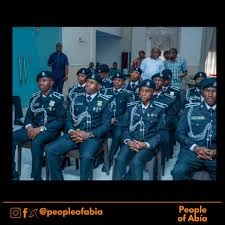
Otti Hails Home-State Posting as Game Changer for Policing

Abia State Governor Alex Otti has applauded the Inspector-General of Police for posting newly commissioned officers to their states of origin, saying the policy will strengthen community policing and enhance local security.
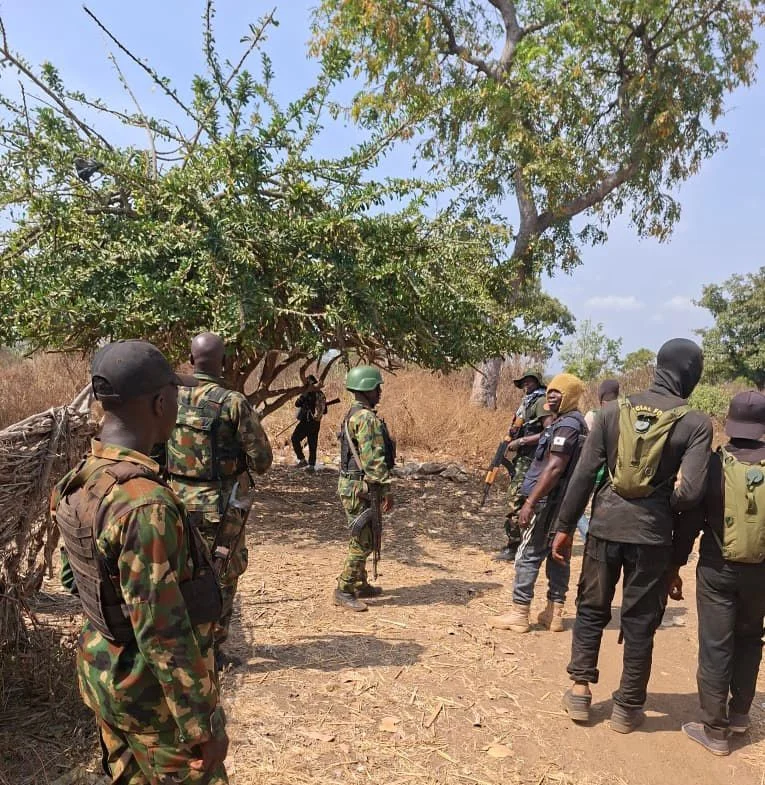
Nigerian Army Foils Bandits in Kogi: 3 Neutralised, Supplier Arrested

Troops of the Nigerian Army’s 12 Brigade in Lokoja have foiled bandits’ movement in Kogi State, neutralising three suspects, arresting a logistics supplier, and recovering weapons during coordinated operations in Kabba Bunu and Yagba West.
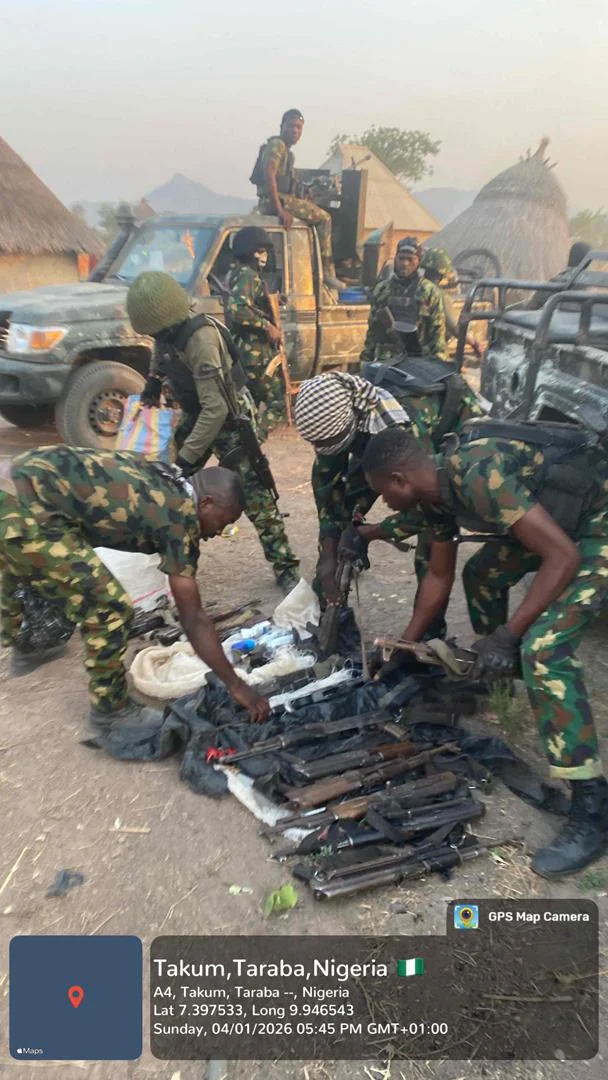
Army Intercepts Criminal Kingpin’s Wife, Seizes Weapons in Taraba

“Troops of Operation Whirl Stroke intercepted the wife of criminal John Gata in Taraba and seized rifles, ammunition, and grenades, neutralising a major arms cache.”
Nigeria’s War Within: Why Force Alone Can’t Defeat Insecurity

November 2025 As Nigeria prepares to inaugurate a new Minister of Defence, General Christopher Musa, recently pulled from his position as Chief of Defence Staff, the appointment highlights a familiar pattern: leadership reshuffles and reconfigurations of the security architecture that have so far failed to address the nation’s deepening insecurity. Despite record defence budgets and years of military operations, Nigeria’s war against insurgency, terrorism, and violent crime remains far from won. Behind the official rhetoric of “decisive action” and “renewed hope,” the figures tell a sobering story: the country is spending more on security than ever before, yet becoming less safe. Between May 2023 and April 2024, at least 614,937 Nigerians were reported killed in violence linked to insecurity, according to data from the National Bureau of Statistics and independent research groups. Amnesty International estimates that more than 10,000 people were killed in the northern states alone during that period. Villages have been razed, farmers displaced, and highways turned into hunting grounds for kidnappers. For 2025, the Federal Government earmarked ₦6.57 trillion for defence and security, nearly equivalent to the combined budgets of education, health, and agriculture. Yet insecurity persists. From Boko Haram’s remnants in the northeast to bandits in the northwest and separatist militias in the southeast, violence has become a permanent feature of daily life. Nigeria’s insecurity cannot be solved by military might alone. “Nigeria’s security crisis is systemic, not merely operational,” a recent Counter-Insurgency and Anti-Terrorism Plan notes. “You can suppress conflict with soldiers, but you cannot kill an idea, or desperation, with bullets.” The country’s challenges go beyond insurgents and bandits; they are rooted in economic inequality, governance failures, and social exclusion, problems that no army, no matter how well-funded, can solve. The Price of Peace Without Justice Decades of economic inequality, corruption, and exclusion lie at the heart of the crisis. Wealth and resources are concentrated in the hands of a few, leaving large portions of the population marginalized. Communities excluded from decision-making or denied access to the country’s resources often turn to violence as a form of protest. Other forces exacerbate the problem: mass illiteracy, youth unemployment, religious manipulation, and climate-induced displacement. Across northern Nigeria, desertification has swallowed farmland, forcing herders southward and triggering deadly clashes with farmers. In the mineral-rich central states, illegal mining networks, sometimes backed by foreign interests, have transformed into armed militias. The insecurity is not merely a question of security operations; it reflects a broader governance failure, where political neglect, corruption, and impunity have created fertile ground for violence to thrive. Without addressing these structural issues, any attempt to suppress insurgency with force alone will remain temporary. Spending More, Achieving Less Nigeria’s defence spending has ballooned over the past four years: ₦966 billion in 2021, ₦1.2 trillion in 2022, ₦1.38 trillion in 2023, and now ₦6.57 trillion in 2025. Yet insecurity has worsened. World Bank data shows that the country’s military expenditure has risen faster than that of many African peers, without a corresponding reduction in violence. Bigger budgets have meant more equipment, more contracts, and more commissions, but not necessarily more safety. Observers note that the country continues to fight the same war with the same tactics, expecting different results. High-profile military campaigns have occasionally neutralized specific threats, but the absence of complementary development and governance reforms has allowed insecurity to regenerate. A New Strategy for a Broken Nation Recognizing that force alone cannot deliver security, the counter-insurgency plan advocates a multi-dimensional approach that blends immediate security measures with long-term social, economic, and governance reforms. It is founded on the principle that lasting peace requires both containment of violence and addressing the root causes of unrest. A central feature of the plan is the proposed Geopolitical Security and Development Summit. This high-level forum would bring together the Presidency, service chiefs, and state governors to coordinate priorities, share intelligence, and integrate human capital development into security planning. By aligning national and sub-national efforts, the summit aims to create a cooperative framework in which security operations respond to local realities rather than operating in isolation. Education, rural empowerment, and healthcare are reimagined as tools of national defence rather than afterthoughts. By addressing poverty, unemployment, and social exclusion, the plan seeks to reduce the vulnerabilities that violent actors exploit. Economic opportunities, skill development, and access to services strengthen communities, making them less susceptible to recruitment by insurgents, bandits, or criminal networks. Complementing this is a Stakeholders’ Summit involving religious leaders, traditional rulers, youth organizations, and civic groups. The forum is intended to promote interfaith dialogue, encourage conflict resolution at the community level, and empower citizens to take part in building peace. By fostering trust between communities and the state, the summit aims to prevent minor disputes from escalating into large-scale violence. The plan emphasizes a shift in mindset: security is not just the absence of attacks but the presence of justice, opportunity, and inclusion. “Peace cannot be sustained through force alone,” it stresses. “It must be built on trust, understanding, and shared values.” Military interventions may suppress violence temporarily, but without addressing structural weaknesses, the gains remain fragile. Reforming the Fault Lines Several structural reforms are prioritized in the plan. Modernizing animal husbandry is one key step, including regulated ranching and strict enforcement of anti-open-grazing laws, paired with economic support for pastoralists to prevent marginalization. Illegal mining, now a major source of funding for armed networks, is another critical target. The plan calls for a nationwide crackdown, formalizing artisanal mining into regulated cooperatives while reclaiming illegal mining corridors with security support. Central to all reforms is restoring the rule of law. Impunity has become a pervasive issue in Nigeria, where political influence often shields offenders. The failure to prosecute crime erodes public trust and perpetuates violence. “A nation that does not punish crime inevitably rewards impunity,” the plan notes, emphasizing accountability as a cornerstone of sustainable security. From Force to Fairness At its core, the strategy envisions a paradigm shift in how Nigeria approaches security. True national security is not measured solely by military victories or the neutralization of threats; it
Crypto Billionaire BLord Arrested For Terrorism Financing

The Nigeria Police Force has confirmed the arrest of a crypto billionaire, Linus Williams, popularly known as BLord. According to a statement on Tuesday by the Force Public Relations Officer, Olumuyiwa Adejobi, BLord was arrested for offences related to alleged internet fraud, terrorism funding, and violation of the CBN act based on complaints lodged against him and his company. Adejobi promised that the Police would do due diligence in the investigations into the allegations against the crypto billionaire and ensure Nigeria’s cyberspace is safe and secure. “The FCID (NPF-NCCC) is currently investigating complaints lodged against BLORD GROUP, BLORD REAL ESTATE LTD, BLORD JETPAYE LIMITED, and BILLPOINT TECHNOLOGY. “These offences include allegations bothering on cryptocurrency fraud, aiding internet fraud, computer-related fraud, terrorism funding, and non-compliance with regulatory frameworks. “We will do due diligence in our investigations. Our cyber space in Nigeria must be safe and secured by all means. We are committed to achieving that,” the statement reads.
Nigerian Army Forces Eliminate Bandit, Seize AK47 Rifle in Kaduna Operation

Nigerian Army’s 1 Division reports the successful neutralization of a bandit and the recovery of an AK-47 rifle along with a magazine in Kaduna. Lt-Col. Musa Yahaya, the Acting Deputy Director of Army Public Relations for the Division, confirmed this achievement in a statement on Wednesday in Kaduna. Yahaya disclosed that the troops, acting on reliable intelligence, set up an ambush on a bandit route along Kwant-Kabai-Kubusu Road on Wednesday. As a result, one bandit was eliminated during the ensuing firefight while others managed to escape with gunshot injuries. “In addition to neutralizing a bandit, we retrieved one AK-47 rifle, a magazine, veterinary medicine, and clothing,” Yahaya stated. He further mentioned that Maj.-Gen. Valentine Okoro, the General Officer Commanding the Division, praised the troops for their steadfastness and urged locals to provide timely and credible intelligence to support security agencies.
Troops Neutralise Terrorists In Anambra, Ebonyi, Imo Operations

Troops of “Operation UDO KA II” in the South East conducted a clearance operation on terrorists’ hideout in Orsumoghu Forest in Ihiala Local Government Area of Anambra. Lt.-Col. Jonah Unuakhalu, acting Deputy Director of Army Public Relations, 82 Division, who stated this at the weekend in Enugu, said the troops neutralised two terrorists. He added that the clearance operation centred on suspected hideouts of the proscribed Indigenous People of Biafra (IPOB) and its Eastern Security Network (ESN). Unuakhalu stated that the terrorist group deployed Improvised Explosive Devices (IEDs) to slow down the troops, but the latter were undaunted. “The troops were able to dislodge the group; neutralised two of them, while others escaped with gunshot wounds. “Items recovered from the camps included a pair of military boots, one military belt, five mobile phones, one binoculars, leather hand gloves and police head warmer. “Others were one locally-made handheld IED and four locally-made IED launchers (Ogbunigwe),” he stated. Unuakhalu added that troops of Sector 2 of the “Operation UDO KA II’’ arrested a suspected gunrunner on Thursday while on a search-and-rescue mission at Effium in Ohaukwu Local Government Area of Ebonyi. He stated that the suspected gunrunner, one Francis Nwekire, 63, was arrested in his house with 48 rounds of 7.62 mm special ammunition. “Additionally, a suspected Effium Militia in Ebonyi was arrested and he led troops to their hideout. “Items recovered from the hideout were one AK 47 rifle, 20 rounds of 7.62 mm special ammunition and one AK 47 magazine. “Both suspects are presently in troops’ custody for further interrogation,’’ he stated. Unuakhalu also stated that troops of Naval Base, Oguta, under “Operation UDO KA II’’ began “Operation IRON TETE’’ on Friday to flush out IPOB/ESN elements from Agwa community in Imo. He added that during the operation, an identified member of the group, a known local gun fabricator nicknamed “Packing Store’’ was neutralised. He stated that items recovered during the operation were one pump-action rifle, one locally-made pistol and a head warmer with IPOB inscription. “Operation UDO KA II calls on law-abiding citizens of the Southeast not to relent in providing timely, credible and reliable information that will assist in ending this menace in the region. “Operation UDO KA II will continue combating crime and criminality in accordance with extant rules and regulations guiding its operations,’’ Unuakhalu stressed.
Matawalle Condoles With Zamfara Communities Over Bandits’ Attacks

The former Governor of Zamfara state, Dr. Bello Muhammad, Matawalle Maradun, has condoled with the people of Maru and Kaura Namoda local government area of Zamfara State, over the recent bandits’ attacks. Matallela said he received with shock, the news of recent attacks of marauding bandits in their numbers, killing innocent people and abducted several others, and left many with various degree of injuries. The former governor said he was saddened by the news of the attacks and called on the people of various communities in the state to report any suspicious movements of the bandits to security agencies. This is contained in a statement by the media coordinating office of the former governor, signed by the Coordinator, Ibrahim Dosara. It said “on behalf of myself, my family and political gladiators, I would like to extend my deep sympathy and condolences to Maru and Kaura Namoda Emirates; local government councils and indeed, the Zamfara State Government over these ugly attacks, killings and kidnapping of innocent lives across the two local government areas. “I must say we are utterly shocked and dismayed at the terrible human loss incurred and the excruciating pain that ensues. May Almighty Allah ease your pain and grant you patience. “We are all terribly sorry to witness the mindless acts of banditry in the two local government areas and other parts of the state, resulting in so much death and destruction. No words are enough to condemn such acts. “Let me hope that the state government and the detachment of troops the Bola Ahmed Tinubu government deployed to the state, along with other security operatives will work together, assert themselves, and ensure that such callous and barbaric attacks, killings and kidnappings are stopped in all parts of the state. “We share the grief of our countrymen and offer our sympathies. “I would like to express my heartfelt condolences to the families of those who lost their lives and other victims of the attacks. “My thoughts and prayers go out to the relatives of those who were killed in the latest waves of the tragic attacks. “I write to you on behalf of my family and political associates to express our shock, horror and profound distress at the appalling events and tragic loss of life in the two local government areas and beyond. “What happened was a dreadful blow to us all and to the civilized values which we share and cherish. “I am deeply shocked and filled with grief over the terrible atrocity and losses brought on to your respective communities and people. “The unbelievable disregard to our community values, of human life and dignity, that exhibited in the ferocious plans behind these acts comes as a horrifying awareness to all of us, a threat to humanity and humankind. “All of us have been impressed by the courage and dedication of our security operatives and rescue workers, and for the dignity and resilience which lies behind the commitment and determination of President Bola Ahmed Tinubu’s government, to prevail against such monstrous evil. “We, who value democracy and freedom, stand shoulder to shoulder with the the government of Zamfara state at this time.” “As the son of the soil and the minister of state, Defence, I would like to reassure you of my commitment and resilience to implement the far-reaching decisions and policies of the Tinubu administration to defeat these monsters and to bring back the lost glory of our dear state in particular and the country in general.”
NSCDC Deploys Undercover Agents To Schools

The Commandant General (CG) of Nigeria Security and Civil Defence (NSCDC), has ordered the immediate deployment of undercover agents to schools and host communities to enhance security in schools nationwide. The CG gave the order on Friday in Kaduna at the closing ceremony of a five- day capacity building on Safe School Response. No fewer than 200 NSCDC personnel and other stakeholders from the seven states in the North West attended the five-day programme. The capacity building was organised by the National Safe Schools Response Coordination Centre (NSSRCC). Audi said that the Corps would partner with the Ministry of Education in each state and Local Education Authorities for the successful implementation of the directive. According to him, the capacity building is to strengthen the resilience of relevant stakeholders including vigilante groups, retired security personnel, host communities and serving personnel of NSCDC. He explained that the programme was to imbue in them all strategies and knowledge on how to provide protection for schools and host communities from violence and attacks. Audi who was represented by ACG Training and Capacity Building, David Abi, said that the NSSRCC was a critical component of the implementation strategy of the National Plan on Safe Schools. He said that the plan was developed by government to mobilise synergy among security agencies and relevant stakeholders towards schools’ protection. The CG acknowledged the rising cases of attacks and violence on schools in Nigeria and its attendant negative impacts, including increasing the rate of out of school children in the country. “The strategic plan is based on the whole-of-society approach with the Nigeria Security and Civil Defence Corps as the lead agency. “The Corps is also hosting the headquarters of the Centre, saddled with the responsibility of coordinating safety and security response for schools and host communities in collaboration with all security agencies and other relevant stakeholders. “The Centre is the first of its kind in Africa; available records indicate that no other country has this kind of facility with the sole responsibility of providing safety and security prevention and protection measures for schools and host communities.” He CG said in view of the recurring attacks and violence in schools in the country, the task ahead of the centre was enormous. “It requires effective synergy and collaboration from all stakeholders including the Federal, State and Local Governments. “It is also pertinent to state that the Standard Operating Procedure of the Centre provides for creation of state coordinating centres and local government response centres for effective and seamless operation. “It is for this singular fact the I respectfully present on behalf of the centre, the request for the kind consideration for allocation of an existing structure within each of the state capitals in the North-West to serve as the safe school coordination centres,” he said. The CG told the participants that the task ahead of them was enormous. “Be reminded that aside being ambassadors of the centre, you are equally the foot soldiers who are in direct contact with the members of schools and host communities,” he said. He charged them to ensure that the knowledge gained from this training was put into effective practice in the discharge of their duties. “Furthermore, members of the vigilante groups and private guards’ company must be ready to collaborate and work in harmony with security agencies to facilitate effective protection of our schools.” Also, the General Officer Commanding (GOC)1 Division Nigerian Army, Maj.-Gen. Valentine Okoro, said that the national plan for safe schools was a programme developed by government to mobilise synergy among security agencies. The GOC, represented by Brig.-Gen. Henry Yanet, Commander 51 Signals, said already, the Chief of Army Staff (COAS), Lt-Gen Taoreed Lagbaja, had directed enjoined army units and formation to work with other security agencies in protecting the civil populace. In his remarks, Kaduna State Governor, Sen. Uba Sani, reiterated the state government’s commitment to partnering with all security agencies to enhance public safety. The governor was represented by the Administrator, Kaduna Capital Territory Authority, Mr Samuel Aruwan.