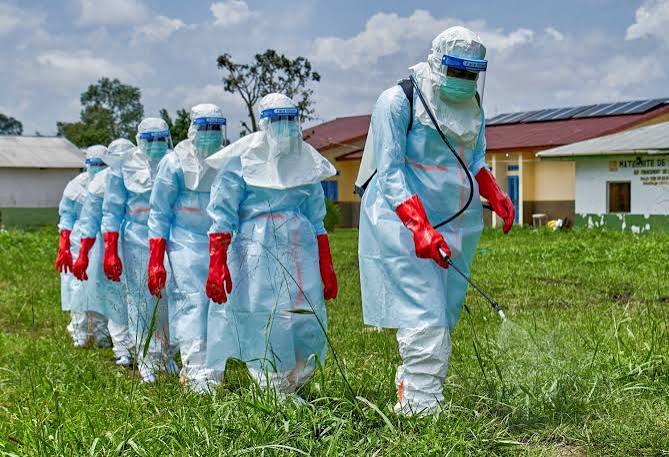
Africa Centres for Disease Control and Prevention (Africa CDC) and the World Health Organization (WHO) have called for urgent, community-driven measures to contain the worsening Ebola outbreak in the Democratic Republic of the Congo (DRC).
The bodies warn that stronger surveillance, early detection and public trust are critical to halting transmission, following a joint high-level mission to Uganda and the DRC on Aug. 4 and 5, where health leaders assessed ongoing response efforts and identified priority actions to strengthen regional cooperation against the disease.
The mission was led by WHO Director-General Dr Tedros Ghebreyesus, Africa CDC Director-General Dr Jean Kaseya and WHO Regional Director for Africa Dr Mohamed Janabi, reflecting renewed international commitment to coordinated outbreak control.
During visits to Kampala, Bunia and Kinshasa, the delegation met government officials, frontline health workers, community representatives and development partners to evaluate response activities and address operational challenges.
In a statement issued on Thursday, the agencies stressed that ending the outbreak would depend on communities recognising Ebola symptoms early, reporting suspected cases promptly and seeking treatment without fear.
They also urged governments and response partners to intensify early case detection, expand contact tracing, improve access to treatment, strengthen laboratory services and accelerate the delivery of essential resources to affected communities.
The agencies identified religious, traditional, women and youth leaders as key partners in building public confidence, countering misinformation and encouraging active participation in surveillance and response efforts.
Africa CDC and WHO cited Uganda’s recent success in containing its Ebola outbreak as evidence that rapid detection, effective contact tracing and strong community engagement can quickly interrupt transmission.
Uganda declared its outbreak over on July 28 after recording 20 confirmed cases and two deaths, with all identified contacts completing follow-up, according to the statement.
In the DRC, the delegation visited the Rwangole Ebola Treatment Centre in Bunia, the outbreak’s epicentre, to assess patient care, treatment capacity and the challenges confronting frontline responders.
Officials said insecurity, population displacement, misinformation and shortages of healthcare resources continued to hamper response efforts across affected provinces.
Response teams reported delays in detecting new infections, shortages of treatment supplies, resistance to public health interventions and inadequate support for frontline personnel.
According to the latest outbreak figures released by the agencies, Ituri Province accounts for nearly 90 per cent of confirmed Ebola infections, with Bunia, Rwampara and Mongbwalu among the worst-affected health zones.
As of Aug. 4, the DRC had recorded 3,973 confirmed Ebola cases, 1,801 deaths and 776 recoveries across 51 health zones. Authorities also confirmed 99 new infections and 52 deaths within the latest 24-hour reporting period.
The statement noted that contact tracing had reached only 75 per cent of identified contacts, significantly below the 95 per cent threshold considered necessary to rapidly interrupt transmission.
It added that 674 patients remained under treatment while health facilities in North Kivu were operating at 139 per cent of their intended capacity.
Africa CDC and WHO called for expanded treatment centres, increased ambulance services, stronger laboratory networks and safe, dignified burial operations to improve outbreak control.
The agencies also urged authorities to ensure timely payment of salaries, adequate protective equipment and stronger welfare support for frontline health workers, describing their safety as essential to sustaining response operations.
During meetings in Kinshasa, officials further emphasised the need for stronger government coordination, sustained financing and improved humanitarian access to affected communities.
Africa CDC and WHO reaffirmed their commitment to supporting a nationally coordinated response involving governments, development partners, health workers and local communities, while advising countries to strengthen surveillance rather than impose unnecessary travel or trade restrictions.