



Uncertainty and anxiety are spreading among African communities in Cambodia following the circulation of a controversial document allegedly issued by Cambodia’s immigration authorities ordering African nationals to leave the country before May 31, 2026, or face arrest and prosecution.
The notice, which has gone viral across social media platforms and messaging groups, claims that African nationals from countries including Ghana, Kenya, Cameroon, Uganda and several others must exit Cambodia following the expiration of what it describes as an immigration waiver programme.
According to the widely circulated document, any affected foreign national remaining in Cambodia from June 1, 2026, could face arrest, up to two years imprisonment, and an $8,000 fine before deportation.
The notice further warns that Cambodian police would commence nationwide operations targeting foreigners allegedly overstaying visas or residing unlawfully in the Southeast Asian country.
However, despite the widespread circulation of the document, serious questions remain over its authenticity.
Independent checks on official Cambodian government platforms, including the Ministry of Interior and immigration communication channels, did not immediately reveal any corresponding public statement, directive, or press release confirming the order.
Although several African and Asian media outlets have reported the development, many of the reports appear to rely largely on the same image of the disputed notice that first surfaced online.
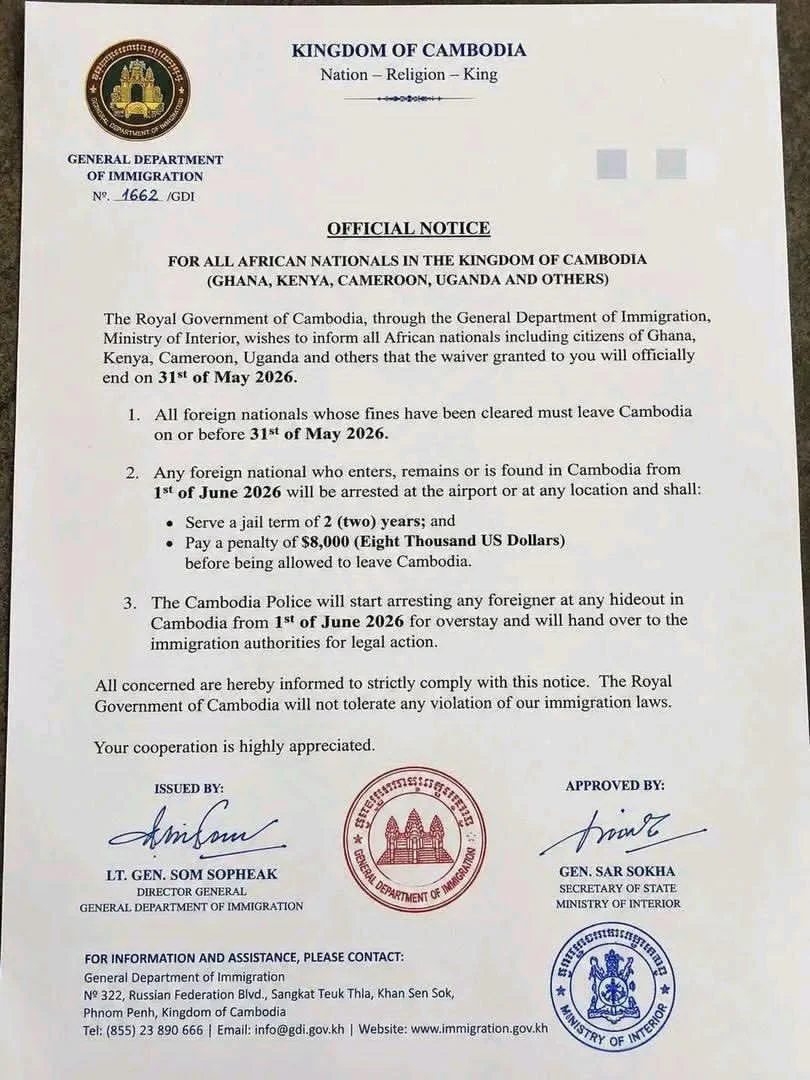
Observers and immigration watchers have also pointed to irregularities in the wording and formatting of the document, noting that certain phrases and expressions appear inconsistent with the style typically used in formal diplomatic or immigration communications.
The lack of an official confirmation has deepened confusion among African migrants living in Cambodia, especially students, traders, workers, and informal business operators who fear possible immigration crackdowns.
Nonetheless, reports suggest Cambodian authorities have in recent months intensified operations against undocumented migrants, visa overstayers, and foreigners suspected of involvement in illegal activities, a development that may have contributed to fears triggered by the circulating notice.
Community leaders and migration advocates have urged calm while encouraging affected individuals to immediately verify their immigration status and documentation.
They also advised foreign nationals residing in Cambodia to seek clarification directly from Cambodian immigration authorities or contact their respective embassies for accurate guidance rather than relying solely on unverified social media information.
As of the time this report was filed, Cambodian authorities had not publicly confirmed or denied the alleged directive, leaving many questions unanswered over whether the notice represents an official policy announcement or a misleading document amplified online.