Kenya’s Vice President Faces Impeachment Amid Corruption Allegations

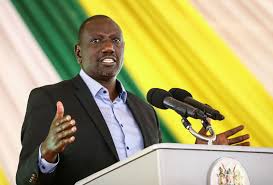
Kenya’s Deputy President, Rigathi Gachagua, is facing an impeachment vote in parliament following accusations of corruption and undermining the government.  The vote is set for Tuesday, exposing internal divisions within the ruling party.  Lawmakers have raised concerns about Gachagua’s alleged involvement in ethnically divisive politics, corruption, and supporting anti-government protests that began in June 2024. Gachagua, a businessman from the Kikuyu tribe, ascended to his position as Deputy President in August 2022 after a closely contested election alongside President William Ruto.  However, tensions between the two have surfaced in recent weeks, with Gachagua claiming he has been sidelined and accused of backing youth-led protests against tax increases. Lawmakers have listed 11 grounds for his impeachment, including allegations of acquiring assets worth 5.2 billion shillings ($40 million) since the election, despite an annual salary of just $93,000.  One of the notable assets includes the famous Treetops Hotel. Despite these accusations, Gachagua maintains that his wealth stems from legitimate business dealings and inheritance. The impeachment process was initiated on October 1, with 291 members of parliament supporting the motion.  If two-thirds of the National Assembly back the impeachment, it will proceed to the Senate for further consideration.  Should the vote pass, Gachagua would be the first Deputy President to be impeached under Kenya’s 2010 constitution.

BREAKING: We Won’t Allow Violence Under Guise Of Copying Kenya Protests – IGP

Kidnapping: Police arrest 32 suspects in Adamawa

The Inspector-General of Police, Kayode Egbetokun, on Tuesday, warned against any violence under guise of replicating the protest which shook Kenya. Following some policies which aggrieved Kenyans considered anti-masses, young persons trooped to the parliament and strategic places across Kenya last month. The protest had led to some reforms, including cabinet reshuffle. Some groups are currently mobilising for protest under the theme #EndBadGovernance But speaking at the Force Headquarters in Abuja during a strategic meeting with top police officers from the rank of Commissioners of Police, Assistant Inspector-General of Police (AIG) and the Deputy Inspector-General of Police (DIG), on Tuesday, Egbetokun advised those planning the protest to jettison the idea, saying the police would not fold their arms watching them engaging in violence. The police boss said the force’s decision was based on what happened during the last #EndSARS protest nationwide, insisting that the police, particularly has not been relieved of the trauma they passed through. The top cop said, “Our position is that the proposed violent protests are ill-advised and should be jettisoned fortuitously. We have the responsibility to protect properties and everyone, irrespective of their race, colour, ethnicity, or tribe, who are lawfully embarking on their daily activities. “We will, therefore, not sit back and fold our arms to watch violent activities unleash violence on our peaceful communities or destroy any of our national critical infrastructure and assets again.” According to him, the police have run background checks on many of the organisers and sponsors of the protest, it was found out that many of them are not living in Nigeria, and that they are only out to instigate crisis in the country. He added, “Before concluding this address, it is important I address an issue of urgent national importance which appears to have gained some momentum, particularly on social media, in the past few weeks. “Some groups of people, self-appointed crusaders and influencers, have been strategising and mobilizing potential protesters to unleash terror in the land under the guise of replicating the recent Kenya protests. “While the force acknowledges the right to peaceful protest as enshrined in our constitution, we must ensure that these protests do not snowball into violence or disorder. “As a nation, we have had more than our fair share of violent protests, with rather dastardly consequences. The last #EndSARS protest led to one-tenth destruction of public assets, including police stations, courts, and transport infrastructure, and the loss of several lives. “Tales of sorrow, tears, and blood followed what was supposedly intended to be a well-intentioned exercise. Rather than lead to any positive outcome, EndSars merely aggravated crime rates and insecurity in several parts of the country. “Indeed, we are yet to fully recover from the huge economic losses and deep-seated psychological and emotional trauma inflicted upon our people by these protests.” Fielding questions from journalists, Egbetokun also said that measures are in place to ensure that any hoodlums attempting to disguise themselves as protesters will be apprehended. He stated, “We have mapped out plans to ensure that no individual or group succeeds in fostering a reign of terror and anarchy on other law-abiding and dissolving Nigerians. “Consequently, I want to seize this opportunity to sound the note of serious warning to hoodlums who may want to take laws into their own hands in the name of protests. Do not worry.”

Nigeria’s Impressive $20.1bn Tops Diaspora Remittances In Sub-Saharan Africa

Nigeria's Impressive $20.1bn Tops Diaspora Remittances In Sub-Saharan Africa

Nigeria has emerged as the leader in Diaspora remittances within Sub-Saharan Africa for the year 2022, receiving an impressive $20.1 billion, representing 38 percent of the total remittance flow to the region. This figure surpasses that of other countries in the region, including Ghana (11.9 percent), Kenya (8.5 percent), Tanzania (25 percent), Uganda (17.3 percent), and Rwanda (21.2 percent). According to the World Bank, Nigeria played a pivotal role in contributing to the total remittance flow of an estimated $52.9 billion into Sub-Saharan Africa in 2022. The increase in remittances has provided significant support to several African nations facing various challenges such as food insecurity, supply chain disruptions, drought (particularly in the Horn of Africa), floods (in countries like Nigeria, Chad, Niger, Burkina Faso, Mali, and Cameroon), and debt-servicing difficulties. Taking a broader perspective, global remittance flows to low- and middle-income countries (LMICs) reached $647 billion. It is projected to experience a modest 1.4 percent increase, reaching $656 billion in 2023. Highlighting the significance of remittances, the World Bank emphasized that over the past year, remittances have become a major source of external finance for LMICs, surpassing foreign direct investment (FDI), official development assistance (ODA), and portfolio investment flows. The report also pointed out that in several countries, remittances have overtaken key exports as the primary source of foreign exchange earnings. For instance, in Kenya, remittances exceed the earnings from critical sectors such as tourism, tea, coffee, and horticulture. Other nations, including the Gambia, Lesotho, Comoros, and Cabo Verde, are also highly dependent on remittance receipts as a proportion of their GDP. However, the report highlighted that Sub-Saharan Africa continues to face the highest remittance costs globally. Sending $200 to African countries during 2022Q4 incurred an average cost of 8.0 percent, up from 7.8 percent in 2021Q4. Costs vary widely across the region, ranging from 2.1–4.0 percent in the lowest-cost corridors to a staggering 17–35 percent in the highest-cost corridors. Notably, banks impose the highest costs, underscoring the importance of cross-border mobile money transactions. Limited interoperability among telecom operators and money transfer operators in countries like Kenya, Rwanda, Tanzania, and Uganda poses challenges for such transactions. Furthermore, the growth of remittance flows into Africa is projected to slow down to 1.3 percent in 2023, compared to 6.1 percent in 2022. Factors contributing to this slowdown include risks related to capital outflows, foreign exchange controls, and sanctions. South Africa’s placement on the “gray list” by the Financial Action Task Force (FATF) is also noted. However, remittance flow growth is expected to rebound to 3.7 percent in 2024, according to the World Bank.

Nigeria, Kenya, Angola to attract increased FDIs amid FX challenges -Report

Nigeria, Kenya, Angola to attract increased FDIs amid FX challenges -Report

In the face of significant currency depreciations, Citigroup Inc. predicts that countries like Nigeria, Angola, and Kenya are poised to attract higher foreign investment inflows. This assertion emerges shortly after JP Morgan’s revelation that Nigeria’s net forex reserves stand at an estimated $3.7 billion, a stark contrast to the reported figure of $14 billion. This situation further exacerbates the pressure on Nigeria’s foreign exchange market. On June 14, 2023, the Central Bank of Nigeria (CBN) initiated the unification of all segments of the country’s forex market, consolidating various windows into a single one. This step formed part of a comprehensive effort to bolster liquidity and stability within Nigeria’s forex market. George Asante, Citi’s Head of Markets for Sub-Saharan Africa, shared these insights during an interview in Nairobi, highlighting that nations undergoing significant forex adjustments hold attractive investment prospects. Asante stated, “Countries where we’ve seen significant foreign exchange (forex) adjustments are clear winners from an investment perspective. All these, from a local market perspective, offer opportunities.” Following the forex rate unification and the removal of the controversial petrol subsidy, the Nigerian naira’s performance has declined dramatically against the US dollar, reaching a historic low. Asante recognized the removal of the petrol subsidy as a crucial reform for Nigeria. The merging of multiple exchange rates is anticipated to enhance liquidity. He underscored that the government’s subsequent task is to ensure the smooth functioning of the official forex market following these changes. He expressed confidence, stating, “I believe that this will be a significant catalyst for flows back into the Nigerian market.” Regarding the outlook for Eurobond issuance by African nations, Asante mentioned that market favorites such as Ivory Coast and Senegal are likely to garner substantial investor interest when the market reopens. He highlighted both countries’ stable economic growth rates, diversified economic foundations, substantial IMF programs with associated concessional financing, consistent economic reforms, fiscal prudence, and low debt service costs as key factors. Asante concluded, “These two countries have fairly consistently high growth rates, diversified economic bases, large IMF programs with associated concessional financing and a track record for economic reforms and fiscal prudence as well as low cost of debt service.”