

The tone of this so-called appeal to “our father” by the supposedly independent, pro-Tinubu Bola Ahmed Tinubu Global Ambassadors (BATGA) and BATGA Digital Multi-Purpose Cooperative Society (BDMPCS) makes one wonder aloud: “With friends like these, who needs an enemy?”
While the group claims to be independent, self-funded and pro-APC, the tone and tenor of its appeal sound more like something written by the opposition. Furthermore, its recommendations that the President artificially peg petrol prices at ₦300–₦500 per litre and intervene to fix the foreign exchange rate would amount to a repudiation of his own reform policies. No government can permanently dictate the market price of a globally traded commodity like petrol or fix the exchange rate by executive order without creating serious fiscal and economic distortions.
That said, whatever the motives of this so-called Tinubu Global Ambassadors group may be, the premise of its appeal should not be dismissed. The messenger may be partisan, but the distress being reported deserves serious attention. The appeal should, in fact, be treated as a cautionary note. Yes, the investor class has seen its wealth shoot through the stratosphere as a consequence of the President’s macroeconomic policies, but daily life for the average Nigerian has become almost unbearable.
The best approach, therefore, is to treat this appeal as a clarion call for urgent intervention to bring relief and succour to the Nigerian populace. The President and his team are right to announce palliative measures, but the critical question is whether these interventions will reach the people who need them most. They must guard against capture by special interests, political patronage and diversion, ensuring that relief is transparently administered and properly targeted at deserving beneficiaries.
You will recall that last week I raised the alarm about the dangers of overconfidence and overreliance on the power of incumbency. This piece focuses on the need to prioritise the microeconomic concerns of the electorate while keeping the reform agenda on course. To jettison the reform agenda for short-term electoral gains, as some in the opposition are proposing, would not only be shortsighted but would also negate and fritter away the enormous sacrifices Nigerians have made over the past three-plus years of painful but necessary reforms. By the same token, the greatest threat to the gains of the reform agenda and their sustainability would be an electoral defeat resulting from a failure to address the dire economic hardship facing the electorate.
Reports of an angry electorate from this BATGA supporter tally with my own anecdotal evidence. In my personal and business experience in Nigeria, through conversations with several people, including my brother last night, and interviews with visitors from Nigeria, reports of economic hardship have been almost universal. These are not accounts from your typical pathological Tinubu haters but from many who support the President. The stories they recount about hardship, hunger and the widening gap between the rich and the poor raise serious concerns about the 2027 presidential election. They spoke of transport costs running into thousands of naira for relatively short trips while incomes have stagnated. They also described people struggling to afford food and other basic necessities, as well as deeply distressing cases of elderly and vulnerable people expressing despair about their circumstances.
These accounts reflect a broader concern: rising food and transport costs, eroding purchasing power and the growing difficulty many households face in meeting their basic needs. For millions of Nigerians, economic adjustment is no longer an abstract debate about fiscal discipline, exchange-rate stability or investor confidence. It is a daily struggle for survival.
My brother acknowledged that the President cannot be blamed entirely for the circumstances in which Nigerians have found themselves. The country’s present predicament has deep structural roots that predate this administration. Nevertheless, the buck stops at the President’s desk. Executive responsibility does not necessarily mean personal culpability for every hardship; it means the responsibility to respond effectively, communicate honestly and ensure that the burden of economic adjustment does not fall disproportionately on those least able to bear it.
It is difficult to tell a hungry man to endure the pangs of starvation for future benefits he might not live long enough to enjoy. A hungry man is an angry and desperate man. As a strong supporter of the President and his reform policies, the stories my sources told me sent chills down my spine.
Given President Tinubu’s considerable political experience and strategic instincts, one can only hope that his administration and campaign team have a formidable polling and public-opinion monitoring operation in place to gauge the mood of the electorate constantly. Such intelligence should not merely inform campaign strategies; it should guide policy adjustments and help the administration identify warning signs before they become political crises.
An angry electorate portends grave danger for an incumbent, whether or not the incumbent is personally responsible for the circumstances that provoked that anger. The stakes are simply too high to take anything for granted. Economic hardship can weaken the enthusiasm of loyal supporters, reduce grassroots mobilisation, encourage defections and drive previously committed voters into apathy or protest voting. An electorate does not have to embrace the opposition en masse to deny an incumbent victory. Sometimes, all it takes is for enough supporters to become disillusioned, stay at home or withdraw their active support.
The 2027 election, despite the fragmented opposition, will not be a cakewalk.
It does not help that the President faces opposition from within his own Southwest political base. Rather than pillorying Governor Makinde, a more productive approach would be to pursue reconciliation and, where necessary, a mutually acceptable soft landing. Politics is ultimately a game of numbers, alliances and margins. A handful of votes gained or lost across strategically important constituencies could make the difference between victory and defeat.
The sense of hubris among some within the ruling APC, buoyed by positive macroeconomic indicators and favourable credit ratings from international financial institutions, carries grave risks for the President’s re-election bid. Macroeconomic stability matters. Investor confidence, foreign direct investment, fiscal discipline and exchange-rate stability are important objectives. But they mean little to an electorate unable to put food on the family table. These objectives become meaningful only when they translate into improved living conditions, expanded economic opportunities, better public services and greater economic security for ordinary citizens.
The problem is that, historically, trickle-down economics has not delivered relief to ordinary Nigerians on the scale, at the speed or with the certainty promised by its advocates. Economic growth and investor confidence do not automatically translate into affordable food, lower transport costs, accessible healthcare or improved purchasing power. Without deliberate policies that connect macroeconomic gains to household welfare, the benefits may remain distant and unevenly distributed. In fact, they may widen the gap between the haves and the have-nots.
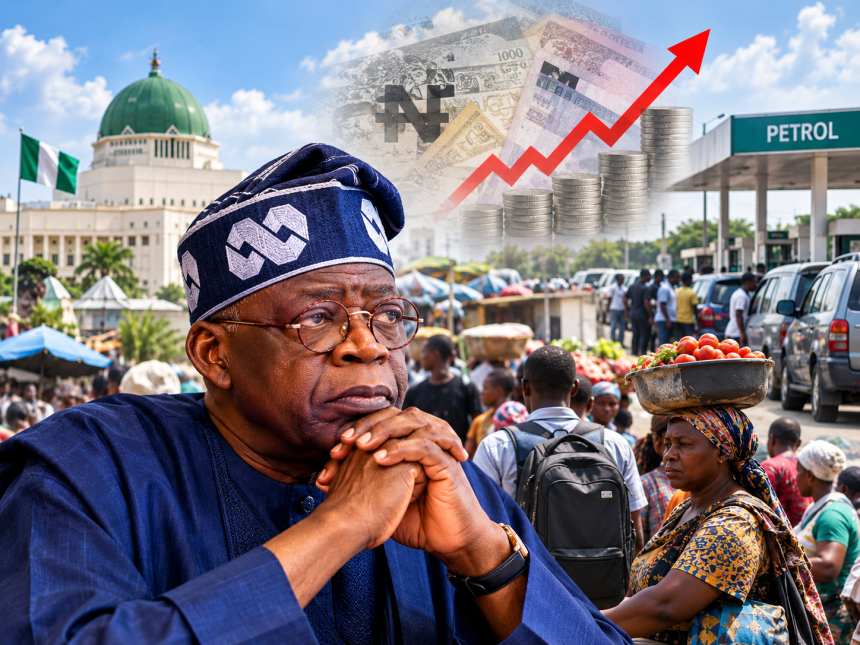
A re-election campaign is not won on the strength of GDP figures, foreign direct investment, credit ratings and other highfalutin macroeconomic indicators that mean absolutely nothing to a hungry and angry electorate struggling to put food on the table. The administration must understand that the average Nigerian does not experience the economy through statistical reports or international financial assessments. The economy is experienced at the market, the petrol station, the bus stop, the pharmacy and the dinner table.
As a supporter of the President, I do not believe this is the time to panic. But it is most certainly time for an economic course correction: one that prioritises the microeconomic realities of ordinary Nigerians alongside the administration’s broader macroeconomic objectives.
This does not require abandoning the fundamental direction of reform or returning to unsustainable price controls. It requires complementing reform with practical, transparent and time-bound interventions that cushion vulnerable households while structural changes take effect. Targeted food and transport assistance, more effective social protection, measures to reduce distribution and logistics costs, and rigorous monitoring of relief programmes should form part of that response. Just as importantly, the administration must communicate honestly about the costs of reform, the expected benefits and the timeframe within which ordinary Nigerians can reasonably expect to see improvements.
Reform without relief is politically unsustainable.
The success of economic reform cannot be measured solely by the confidence it inspires among investors and international financial institutions. It must also be measured by whether ordinary citizens can afford food, transportation, healthcare and the basic necessities of life.
The President must therefore guard against overreliance on incumbency, the flattering assurances of political loyalists and the temptation to mistake favourable macroeconomic statistics for public satisfaction. The most valuable political intelligence may not come from the corridors of power but from the streets, markets, motor parks and homes where ordinary Nigerians are struggling to survive. The President must do a better job of “I feel your pain” politics.
The warning signs are there. The question is whether the President and his team will heed them in time. The electorate will ultimately deliver its own verdict in 2027, and neither incumbency nor a fragmented opposition should be mistaken for a guarantee of victory.
As a supporter of the President and his reform agenda, my concern is not that the administration has embarked on reform. It is that the human cost of that reform, if insufficiently addressed, could undermine both its sustainability and the political future of the very administration implementing it.
The time for complacency is over. The time for course correction is now.