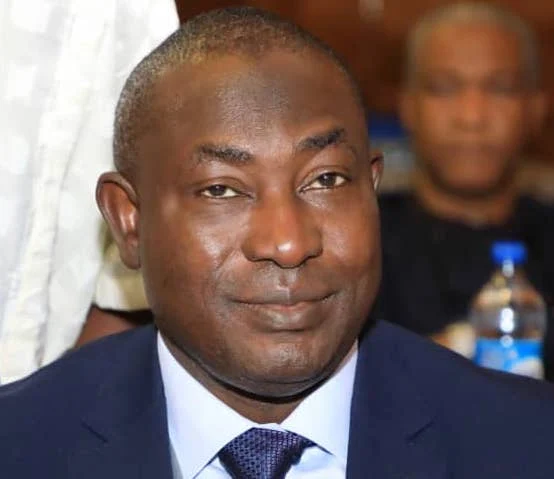
By Abdullahi Ismaila Ahmad, Ph.D
The public hearings conducted recently by the two Chambers of the National Assembly have elicited positive responses from a broad spectrum of Nigerians, cutting across regional interest groups, government agencies, civil society groups, concerned individuals, the academia, and Labour Unions, among diverse others. Contrary to a few dissensions hitherto expressed in the media, almost all the stakeholders who spoke during the week-long sessions were unanimous in their declaration that the hallowed Chambers should pass the tax reform bills after a clean-up of the grey areas.
The public hearings were auspicious for all Nigerians desirous of economic growth and fiscal responsibility. They were also a watershed moment for the Federal Inland Revenue Service, which had been upbeat about the tax reforms. Indeed, the public hearings had rekindled hope in the tenets of democracy that guarantee freedom of expression and equitable space for cross-fertilisation of ideas. Without gainsaying the fact, the tax reform bills have been unarguably about the most thought-provoking issues in Nigeria today, drawing variegated perspectives and commentaries from even unlikely quarters such as the faith-based leaders, student bodies, and trade unions, which speaks much about the importance of the bills.
READ ALSO: why Nigerians should not pay tax
In the build-up to the public hearings, not many people believed that the bills would make it to the second reading, much less the public hearings. Even the Northern stakeholders who seemed unlikely to support the passage of the bills have softened their stance and have given valuable suggestions that would enrich the substance of the bills. The Arewa Consultative Forum came to the public hearings well-prepared with a printed booklet that addressed their concerns. It concluded with an advisory that the bills should be “Well planned, properly communicated, strategically implemented and ample dialogue and political consensus allowed for the reforms to be accepted.”
The concerns of ACF ranged from the composition of the proposed Nigeria Revenue Service Board as contained in Part 111, Section 7 of the bill, the unlimited Presidential power to exempt/wave tax payment as proposed in Section 75(1) of the bill, the family income or inheritance tax as contained in Part 1, Section 4(3) of the bill, to the issues around development levy and VAT. On the development levy, the ACF stated that unless the Federal Government is considering budgetary funding for TETFUND, NASENI and NITDA, it does not see the “wisdom behind the plan to replace (them) with NELFUND”.
The position of the North was equally reinforced by the Supreme Council for Shariah in Nigeria, Northern Elders Forum, Kano State Government, Professor Auwalu Yadudu, and the FCT Imams. Like the ACF, these stakeholders lent their respective voices to the Section on the Inheritance Tax in Part 1 of the bill and the use of the term ‘ecclesiastical’, which, in their views, undermines certain religious rights and beliefs. The Kano State Government, represented by Mahmud Sagagi, affirmed that “we support tax modernisation” but cautioned that “we must ensure that this process does not come at the expense of states’ constitutional rights and economic stability”. Professor Auwalu Yadudu, a constitutional law professor, drew attention to the use of the ‘supremacy clause’ and cautioned that the repeated use of “notwithstanding” in the bills would undermine the supremacy of the Nigerian constitution if passed as such.
Other stakeholders that made contributions at the sessions included the Nigeria Liquefied Natural Gas, Fiscal Responsibility Commission, Revenue Mobilisation Allocation and Fiscal Commission, Federal Ministry of Industry, Trade and Investment, Institute of Chartered Accountants of Nigeria, Chartered Institute of Taxation of Nigeria, Nigeria Customs Service, and a host of others. While most of their concerns bordered on technical issues requiring fine-tuning, they were unanimous in their support for the bills. They aligned with the position of the Executive Chairman of the Federal Inland Revenue Service, Zacch Adedeji, Ph.D. and the Chairman of the Presidential Committee on Fiscal Policy and Tax Reforms, Mr Taiwo Oyedele, which is that the extant tax laws and fiscal regulations are obsolete necessitating reforms aimed at creating a fair and equitable tax and fiscal space to grow Nigeria’s economy.
In one of the sessions, Dr Zaach Adedeji expounded on the criss-cross of trade activities in the Free Trade Zone whereby companies misuse tax waivers as exporters to sell their goods or services in the Customs Area at an amount usually less than the price the operators in the Customs Area who pay VAT and other taxes sell theirs thereby disrupting business transactions. This way, the operators in the Free Trade Zone shortchange the government in paying their due taxes by circumventing extant regulations, which are inimical to the economy’s growth.
Overall, the presentations were forthright, foresighted, and helpful in elucidating the issues contained in the bills. According to the statistics read out at the end of the hearings at the Senate, 75 stakeholders were invited, 65 made submissions, and 61 made presentations. At the House of Representatives 53 stakeholders made presentations. By all means, this is a fair representation. Given the presentations, it is evident that the National Assembly has gathered enough materials to guide its deliberations on the bills. As we look forward to the passage of the bills, we commend the leadership of the National Assembly for their unwavering commitment to making the bills see the light of the day.