Tinubu’s Türkiye Visit: Diplomatic Ambitions Meet Domestic Scrutiny

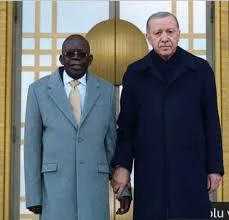
President Tinubu being held by the wrist by his host, President Recep Tayyib Erdogan of Turkiye

Abuja — President Bola Ahmed Tinubu returned to Abuja late Saturday night from a State Visit to the Republic of Türkiye that was officially billed as a diplomatic success but unfolded into a far more complicated political moment at home. The visit, which culminated in the signing of nine bilateral agreements with Türkiye, was intended to signal Nigeria’s renewed international engagement and strategic outreach under Tinubu’s administration. Instead, it has opened a broader conversation, one that blends diplomacy with domestic unease, policy ambition with public scepticism, and substance with symbolism. At the formal level, the trip delivered what governments typically seek from state visits. Tinubu held high-level talks with Turkish President Recep Tayyip Erdoğan, and both leaders reaffirmed their commitment to deeper cooperation in defence, energy, security, research, and trade. Officials described the agreements as instruments for investment growth, security collaboration, and long-term institutional partnerships. Yet even as handshakes were exchanged and documents signed, questions began to surface. Beyond general statements, the Nigerian government offered little detail on the specific terms of the agreements, how they will be financed, who bears what obligations, and when tangible outcomes can be expected. In a country shaped by past experiences of ambitious memoranda that never matured into real projects, the lack of clarity quickly became a source of concern. Security cooperation, in particular, attracted close scrutiny. Nigeria’s prolonged struggle with insurgency, banditry, and violent crime has made foreign defence partnerships politically sensitive. While Türkiye’s growing defence industry positions it as an attractive partner, many analysts argue that past international security arrangements have failed to deliver decisive results. Without clear safeguards, performance benchmarks, and legislative oversight, sceptics fear history could repeat itself. The economic promises attached to the visit were also met with caution. Nigeria–Türkiye trade remains modest when measured against Nigeria’s engagements with other global partners. Economists and policy watchers argue that unless the agreements contain enforceable provisions for local content, technology transfer, and job creation, their impact may be limited—especially at a time when Nigerians are under intense economic pressure. But perhaps the most politically charged dimension of the visit emerged not from policy documents, but from images. Photos and videos from official ceremonies in Türkiye circulated rapidly across social media and opposition platforms. In several of them, the President appeared subdued during extended protocol events, prompting sharp commentary and, in some quarters, unflattering interpretations. Supporters dismissed the reaction as exaggerated and partisan, arguing that long ceremonial routines often produce awkward still images. Critics, however, seized on the visuals as emblematic of broader concerns about leadership optics and preparedness. In modern politics, such moments rarely remain superficial. Analysts note that in an age of instant digital circulation, images can define narratives more powerfully than communiqués. For an administration seeking to project confidence, strength, and momentum on the global stage, the visual language of a state visit matters almost as much as its diplomatic content. In this case, the imagery shifted attention away from signed agreements and toward questions of presentation and perception. The timing of the visit further complicated its reception. As Nigerians confront inflation, currency volatility, and rising living costs, foreign travel by political leaders is increasingly judged through a domestic lens. Supporters argue that diplomacy is essential for long-term recovery and international credibility. Critics counter that such engagements must produce visible, near-term benefits to justify their political cost. By the time Tinubu’s aircraft touched down at the Presidential Wing of the Nnamdi Azikiwe International Airport, the Türkiye visit had become more than a foreign policy exercise. It had evolved into a mirror reflecting Nigeria’s anxieties about governance, communication, and results. Ultimately, the political meaning of the trip will not be determined in Ankara or Abuja’s VIP lounges, but in the months ahead. If the agreements translate into real investment, improved security capacity, and measurable economic gains, the doubts may fade. If they do not, the visit risks being remembered less for what was signed and more for the questions it raised. For President Tinubu, the Türkiye trip stands as a reminder that in contemporary politics, diplomacy is judged not only by documents and declarations, but by delivery, and by the images that linger long after the ceremonies end.hat in contemporary politics, diplomacy is judged not only by documents and declarations, but by delivery—and by the images that linger long after the ceremonies end.ical sessions that led to the finalisation of the agreements.

Senate Raises Alarm Over Insecurity, Probes Kebbi Troop Pullout

By Caroline Ameh | Abuja The Nigerian Senate on Tuesday expressed deep concern over the worsening insecurity in parts of Kwara, Kebbi, and Niger States, resolving to probe the alleged withdrawal of military personnel from a Kebbi school hours before a major abduction. The resolution followed the adoption of a motion of urgent national importance sponsored by Deputy Majority Leader, Senator Lola Ashiru, who described the escalating attacks on schools, worship centres, and rural communities as a national emergency requiring immediate federal action. Senators Decry Widening Attacks Lawmakers lamented the November 18 attack on Christ Apostolic Church (CAC), Eruku, in Ekiti Local Government Area of Kwara State, where gunmen killed two worshippers and abducted 38 others, all later rescued in coordinated security operations. They noted that the attack led to the temporary closure of schools in five local government areas across Kwara, as well as parts of Niger and Kebbi States, affecting 47 Federal Unity Colleges nationwide. The Senate also condemned the growing pattern of school kidnappings, including recent abductions in Niger and Kebbi States, warning that educational and religious institutions had become increasingly vulnerable to banditry and terrorism. Controversy Over Troop Withdrawal Lawmakers were particularly alarmed by credible reports that military personnel were withdrawn from Government Girls’ Secondary School, Maga, Kebbi State, just hours before the abduction of 24 female students.They demanded a transparent investigation into the decision and those responsible. Contributing to the debate, Senator Enyinnaya Abaribe (Abia South) urged his colleagues to confront insecurity “head-on and without reference to the past.” He insisted that the Senate must uncover who authorised the withdrawal of troops from the school before the attack. Abaribe’s position was strongly supported by Senate President Godswill Akpabio, Senator Seriake Dickson, and other lawmakers, who called for urgent and coordinated security action. Intelligence Points to Internal Sabotage The motion also cited intelligence reports indicating that internal collaborators continue to aid criminal networks with logistics, information, and escape routes. Senators warned that terrorists were exploiting forest corridors such as the Kwara–Kogi axis, Kebbi–Zamfara stretch, and Niger’s Shiroro–Rafi–Munya belt to carry out attacks and evade arrest. They further raised concern over the deplorable state of the Idofian–Omu-Aran–Eruku–Egbe–Kabba highway, which they said provides bandits with ambush points, easy escape routes, and concealment within thick forests. Tinubu Commended for Swift Response Earlier, Senate Majority Leader Opeyemi Bamidele cautioned against rising public speculation over the release of kidnap victims, urging a review of the performance of Senate security committees.He reaffirmed that the Tinubu administration does not and will not support ransom payments to abductors. The Senate commended President Bola Ahmed Tinubu for what it described as his “swift and personal intervention,” including cancelling planned foreign trips to coordinate national security efforts. It also lauded security agencies for the rescue of 38 abductees in Kwara and 51 students in Niger State. Key Resolutions The Senate resolved to:

Why all Yoruba must support Tinubu except…

An opinion piece condemning Nigeria’s failure to prioritize citizens’ security and welfare, citing deadly federal roads, poor infrastructure, elite indifference, and policy choices under successive governments, with sharp criticism of the Tinubu administration during the Christmas travel season.

By UGO ONUOHA EXCEPT for the “Omoluabi”, every Yoruba person at home, and in the diaspora, should fiercely support the regime of Nigeria’s president, Alhaji Bola Ahmed Tinubu. So far, he is doing well for them, especially his Yoruba “boys” from Lagos, many of whom actually are not indigenes of the state. Anyway, Tinubu himself is also said not to be an indigene of Lagos. The inevitable question then will be: why the attempt to exclude some Yoruba from being part of the permanent choristers for Tinubu for the perceived good things he is doing for the Yoruba nation? We will explain. Meanwhile I could have asked any of my many Yoruba friends for the meaning of “Omoluabi”, the group that I excluded from chanting the incantation “On your mandate” Tinubu personal anthem that could in time supplant the old/new national anthem. I deliberately refused to, but instead opted to consult Meta AI. And it described it thus: “Yoruba ‘Omoluabi’ is a concept that refers to a person of good character, someone who embodies traditional Yoruba values such as respect, honesty, and integrity. It’s about being a good human being, showing empathy, kindness, and strong moral principles”. It went further to explain that “in Yoruba culture, an Omoluabi is highly respected and admired for their virtues and behaviour”. This concept, I believe, also exists in other nations that make up our country. It can be compared to ‘ubuntu’. In recent times, and for as long as it lasted, some members of Afenifere, a Yoruba socio-cultural group, which was led by Chief Ayo Adebanjo approximated the virtues of Omoluabi, two of which are sensitivity to fairness and equity. In the run up to the presidential election in 2023, the group stoutly advocated for equity in the consideration for access to power at the topmost level for a critical section it believed had been left out of the power loop for too long. And according to the Adebanjo group that section was not its own Yoruba nation. For that faction of the Afenifere, it did not matter that a Yoruba personage was canvassing and had been adopted as the presidential candidate of the ruling All Progressives Congress [APC] political party. It adopted and endorsed Peter Obi, an Igbo who was running on the ticket of the opposition Labour Party [LP]. It took courage, though not unusual, to take such a stand in the politics of Yoruba land. But it spoke to the stuff Adebanjo and those who stuck with him in spite of the dangers were made of. Like elsewhere, partisan politics in the south west region can be vicious, deadly, and bloody. But Pa Adebanjo, a renowned nationalist, elder statesman, and lawyer was unfazed by the potential consequences of the position that he took. He had known danger, having played significant roles in Nigeria’s political evolution from colonial time. A lawyer, Adebanjo had served as the organising secretary of the Action Group, one of the leading political parties in the First Republic dominated by the Yoruba. Before he died last February 14 at 96, he had told Nigerians that he would not be around when they would face the consequences of their political choice. How prescient he had been. Tinubu has been in office for a little over two years. Or 30 months to be precise. And it was obvious from Day One on May 29, 2023, that his rulership will be consequential for the country. First, he removed petrol subsidy, a policy he had vehemently preached against as an opposition politician. Then he devalued the Naira in a precipitous manner. He imposed taxes on everything ahead of setting up a committee to review and reform Nigeria’s tax laws. The new tax laws are ready and will come into effect from January 1, 2026, about two months hence. The new tax laws can be likened to an elephant in the midst of blind people. Each person describes it from the feel of the part the person touches. But as the elephant is heavy and massive, so will be the burden of new taxes on Nigerians. Even ahead of the implementation of the new tax laws, Tinubu has approved the implementation of a 15% tax on imported petroleum products. He said the tax was to protect local refiners of petroleum products. Nigerians say that the tax will worsen the already biting cost of living crisis because a litre of petrol will shoot above N1,000. Nigeria’s informal economy estimated at above 60% depends on petrol for its lubrication. The formal economy is largely driven by diesel fuel. That explains why Nigeria is derisively described as a generator economy. So whatever happens in the petroleum products sector has rippling effects on Nigerians. The other day, a notable critic of this regime said Nigerians should brace up for a tax by Tinubu on the oxygen they inhale. He said that the president, said to be an accountant, is so ignorant that he believes that he can use taxation to to bring the country to the path of sustainable development. What should be clear and obvious in this dispensation of Tinubu in the years since his advent, and in the remainder of his tenure is that his policies, programmes, and actions have been tailored to reimagine Nigeria in his own image, to his personal advantage, to the benefits of his cronies and acolytes, to empower his Yoruba of Lagos, and to the advantage of the Yoruba nation. It used to be that many Nigerians were singing from the same hymn book with Tinubu on the restructuring of this country while he was the governor of Lagos state, and then opposition politician. But the restructuring vision and form we once shared with the man, and the other self-styled ‘progressives’ got lost in the shuffle immediately our progressive comrades assumed office at the centre in 2015. The irony: the face of the ‘progressives’ at the time was one Muhammadu Buhari, an arch-convervative, sectarian, Fulani Muslim irredentist. Of

Behold Nigeria’s New Service Chiefs, Senate Commends Choices

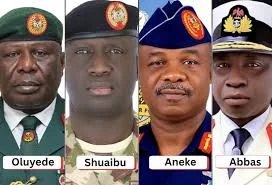
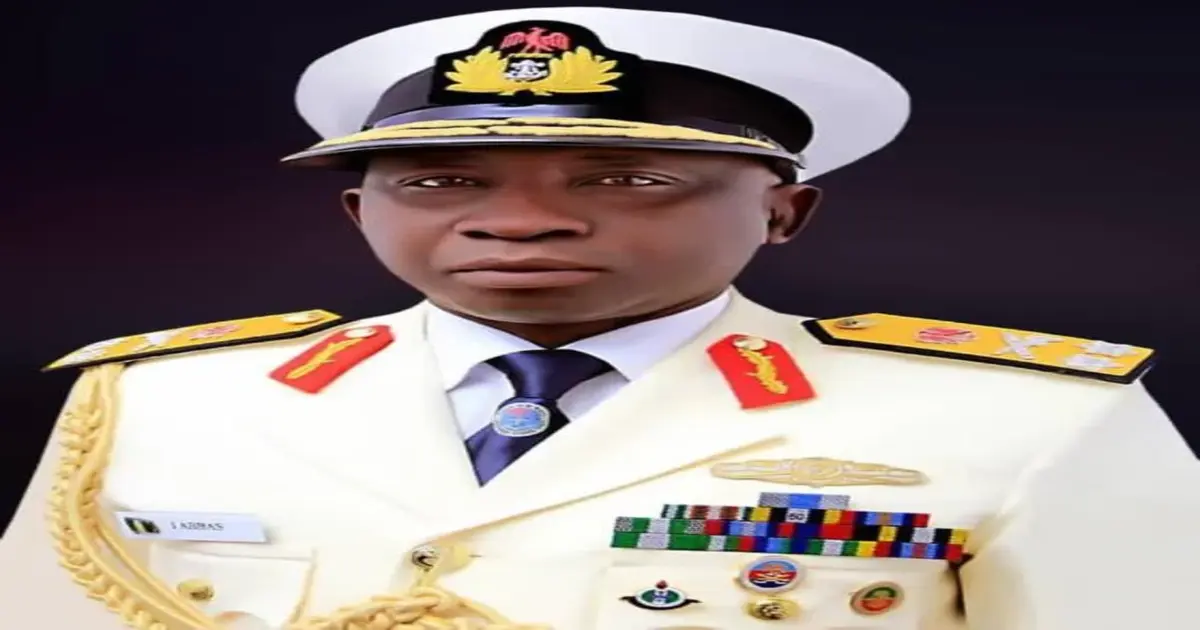
The Nigerian Senate on Wednesday confirmed the appointments of new service chiefs nominated by President Bola Ahmed Tinubu. The senate arrived at the decision to confirm the president’s nominations following a thorough screening session conducted by the Committee of the Whole. Those confirmed comprise of Lieutenant General Olufemi Oluyede as Chief of Defence Staff, Major General W. Shuaibu as Chief of Army Staff, Rear Admiral I. Abbas as Chief of Naval Staff, and Air Vice Marshal S.K. Aneke as Chief of Air Staff. During the plenary, Senate President Godswill Akpabio announced the confirmations after each nominee received unanimous approval from lawmakers through a voice vote. READ ALSO: Senate Screens New Service Chiefs as Air Chief Aneke Affirms Super Tucano Jets are Fully Operational In his remarks, Akpabio congratulated the newly confirmed service chiefs and commended President Tinubu for what he described as a “careful and strategic selection” of officers with proven experience from various theatres of operation across the country. “We believe this will renew the hope of Nigerians regarding efforts to restore security across the nation. Security is everybody’s business, and we have found these nominees fit and capable to deliver,” Akpabio stated. He also acknowledged the Senate’s commitment to national security, noting that the chamber suspended all other agenda items to prioritize the screening and confirmation process. The new service chiefs replace their predecessors who were relieved of their duties by President Tinubu earlier in October following reported concerns about internal discontent within the armed forces. The Senate President prayed for divine guidance for the newly appointed military leaders as they assume responsibility for safeguarding lives and property across the country.

NNPC Ltd Committed to Developing a Robust Downstream

Says, competition alone was no longer enough to drive efficiency, adding that operators must embrace collaboration, sustainability, and resilience as the new benchmarks for success. Renown energy expert and Head of Nigeria’s National Petroleum Company Ltd (NNPCL), Bayo Ojulari says his leadership is currently preoccupied with revamping facilities in the nation’s oil and gas  downstream sector. He emphasised that such a move was required to enhance collaboration and drive efficiency in the sector. The NNPCL Group Chief Executive Officer (GCEO), stated this at the opening ceremony of the 2025 OTL Africa Downstream Energy Week in Lagos on Monday. Engr Ojulari made the disclosure while speaking in alignment with the conference’s theme “Energy Sustainability: Beyond Boundaries & Competition.” Doubling down on NNPCL’s current growth and rebranding focus under his leadership, Mr.  Ojulari said competition alone was no longer enough to drive efficiency, adding that operators must embrace collaboration, sustainability, and resilience as the new benchmarks for success. “At NNPC, we are committed to deploying additional infrastructure across the oil and gas value chain while revamping our existing downstream infrastructure nationwide. These assets will be accessible to partners seeking to store and transport products, supporting strategic alliances and collaboration in the downstream sector,” the GCEO said. Excerpts of Mr. Ojulari’s presentation was made available to Nigerian Anchor in a statement under the signature of NNPCL Chief Communication Officer (CCCO), Mr. Andrew Odeh. In the statement, Mr. Ojulari was reported to have disclosed that a cocktail of factors ranging from strategic policies and fiscal incentives to transparent and well-structured regulatory frameworks exemplified by the PIA have engendered expansion and growth in the sector requiring new skill sets and further investments in new lines of business such as Liquefied Petroleum Gas (LPG), Compressed Natural Gas (CNG), and mini-LNG projects. The GCEO also urged participants at the conference to discuss challenges and align on opportunities “to redefine energy systems in ways that are both profitable and sustainable, to forge cross-sector partnerships that transcend traditional competition, and to explore innovative business models and technologies that support decarbonization while driving economic value”. Nigerian Anchor reports that the OTL Africa Downstream Energy Week is the continent’s leading downstream and midstream energy event for international organizations, policy makers, and regulators. It is also focused to benefit development organisations, operators, service providers., and consumers in the downstream energy value-chain.

Meet Nigeria’s 25th Chief of Naval Staff – Rear Adm. Idi Abbas

The appointment of Rear Adm. Idi Abbas as the 25th Chief of Naval Staff (CNS) brings a wealth of experience, discipline, and professionalism to the leadership of the Nigerian Navy. A seasoned Above Water Warfare specialist, Rear Adm. Abbas has spent more than three decades in service to the nation, distinguished by dedication to duty and a passion for maritime security. Born on Sept. 20, 1969, Abbas hails from Nassarawa Local Government Area of Kano State. He began his educational journey at Gwagwarwa Primary School, Kano, and later attended the Air Force Military School, Jos, from 1981 to 1986. In 1987, he gained admission into the Nigerian Defence Academy (NDA) as a member of the 40 Regular Course and was commissioned Sub-Lieutenant on 10 September 1993 with a Bachelor’s degree in Chemistry. A well-trained officer, Abbas has attended several military courses at home and abroad. These include the Sub-Lieutenant Technical Course and Officers’ Long Course in Above Water Warfare at NNS QUORRA, as well as the Junior and Senior Staff Courses at the Armed Forces Command and Staff College, Jaji. He also attended the United Nations Military Observer Course in Tanzania in 2009 and is a graduate of the National Defence College (NDC), Abuja, Course 23. Over the years, the new Naval Chief has held several command and staff appointments. He has served onboard various Nigerian Navy ships, including NNS ARADU, NNS DAMISA, and NNS AYAM, as a Watch-Keeping Officer. He was also Naval Assistant to the Deputy Commandant, Armed Forces Command and Staff College, Jaji, and later served as Commanding Officer, Burma Battalion, NDA. His other notable appointments include Base Administrative Officer, NNS PATHFINDER; Maritime Guard Commander, Nigerian Maritime Administration and Safety Agency (NIMASA); Commander, Task Group Operation TSARE TEKU; and Flag Officer Commanding, Central Naval Command. He also served as Chief of Naval Safety and Standards, Chief of Defence Civil-Military Relations at Defence Headquarters, and Senior Research Fellow at the Nigerian Army Heritage Centre before his elevation to the position of Chief of Naval Staff. Rear Adm. Abbas has risen steadily through the ranks from Midshipman in 1996 to Rear Admiral on Sept. 10 2020. His career has been decorated with several honours, including the Forces Service Star (FSS), Meritorious Service Star (MSS), Distinguished Service Star (DSS), Grand Service Star (GSS), and the Defence General Staff Medal (DGSM). He is a Fellow of the Defence College (fdc) and a member of the Nigerian Institute of Management (NIM) and the International Institute of Professional Security (IIPS). A calm, focused, and result-oriented officer, Abbas is widely respected for his professionalism and strategic leadership. Outside the uniform, he enjoys playing hockey and driving. He is married to Mrs Aisha Abbas, and they are blessed with two sons. The new naval chief is expected to bring renewed drive and operational focus to the Nigerian Navy as it continues its mandate of safeguarding Nigeria’s maritime domain and contributing to national security. 

I Won’t Negotiate Election Integrity, My Coming to INEC is Divine – Amupitan

…Says ‘Eyes of the nation are upon us’ as he assumes office as INEC Chairman Chairman of the Independent National Electoral Commission (INEC), Prof. Joash Amupitan, who formally assumed office at the Commission’s headquarters, Thursday, in Abuja has described his appointment as a divine call to service. Consequently, he pledged to uphold integrity and transparency in Nigeria’s electoral process. Amupitan, who has been sworn in by President Bola Ahmed Tinubu took over from May Agbamuche-Mbu, who had been serving as Acting Chairman of the Commission following the exit of Prof. Mahmood Yakubu. Speaking during an interactive meeting with INEC directors shortly after taking over, the new chairman expressed gratitude to God for what he described as a “divine assignment,” vowing that election integrity would not be compromised under his watch. “I am here for a purpose. Maybe if I had a choice, I would have said I would not come here. But from all indications, I can see that God is moving this country, and my coming is divine. With God saying go, who am I to say no? I am here because I have a role to play to ensure that a new Nigeria is birthed,” Amupitan said. He stressed that the integrity of elections is not negotiable, adding that every Nigerian voter must trust that their vote will count. “Our mandate is very clear, to deliver free, fair, and credible elections that reflect the will of the people. Every voter must feel confident that their vote counts,” he said. Amupitan, who was accompanied by his wife, children, and the Vice Chancellor of the University of Jos, Prof. Tanko Ishaya, along with other officials from the institution where he previously served, assured INEC staff that his administration would prioritize their welfare and professional development. He emphasized the importance of teamwork, accountability, and synergy among departments, noting that the success of the Commission depends on collective effort. “For me, staff welfare is going to be a priority. We will expect a lot from you, and because of that, you also deserve to be well equipped and supported to deliver. We will work assiduously to ensure that your working conditions are conducive and that you have the necessary resources to excel,” he said. The new INEC boss acknowledged the challenges ahead, particularly the forthcoming Anambra governorship election, which he said would serve as a litmus test for the Commission’s commitment to credible polls. “Together, let us uphold the values of democracy and work tirelessly for the credibility of our elections. The task may be challenging, but if we stand united, there is nothing we cannot achieve. The eyes of the nation are upon us. We must rise to the occasion and demonstrate that we are capable of conducting elections that meet the expectations of Nigerians,” he declared. Amupitan also commended Agbamuche-Mbu for her leadership during the transition period and thanked INEC staff for their continued dedication to duty. He urged them to work in unity, break silos, and commit to strengthening democratic values through credible elections.

Investors gain N308bn as equities market sustains rally

The Nigerian equities market on Thursday sustained its upward trend as investors recorded a gain of N308 billion. Specifically, the Nigerian Exchange Ltd. (NGX) market capitalisation, which opened at N92.490 trillion, appreciated by N308 billion or 0.33 per cent to close at N92.798 trillion. Similarly, the All-Share Index added 0.33 per cent or 485.25 points to close at 146,204.34, compared with 145,719.09 recorded on Wednesday. Sustained interest in Eunisell Interlinked, Caverton Offshore Support Group, Sunu Assurances, Industrial and Medical Gases, Mecure, and 27 other advancing stocks boosted market performance. The market breadth also closed positive with 32 gainers and 21 losers. Eunisell Interlinked and Caverton Offshore Support Group led the gainers’ chart by 10 per cent each, closing at N44 and N6.93 per share respectively. Sunu Assurances appreciated by 9.90 per cent to close at N5.77, while Industrial and Medical Gases rose by 9.10 per cent to finish at N35.95 per share. Mecure also gained 8.81 per cent, ending the session at N28.40 per share. READ ALSO: Council of State approves Prof Joash Amupitan as new INEC Chairman Conversely, FTN Cocoa Processors led the losers’ table by 6.67 per cent, closing at N5.60 per share. Tantalizer followed with a 3.35 per cent decline to close at N2.31, while Fidelity Bank shed 2.38 per cent to finish at N20.50 per share. PZ Cussons also dipped by 2.18 per cent to close at N38.15, while Veritas Kapital Assurance fell by 1.90 per cent to end at N2.06 per share. Market activity showed a decline in the number of deals and volume traded but an improvement in trade value. A total of 346.99 million shares worth N27.43 billion were traded in 24,691 deals, compared with 525.72 million shares worth N13.61 billion exchanged in 25,597 deals on Wednesday. Fidelity Bank topped the activity chart with 42.01 million shares valued at N861.54 million. Please Read: Stock Market Appreciates by N1.36Trillion in Three Days Dangote Cement followed with 20.9 million shares worth N11 billion, while Sterling Nigeria traded 19.8 million shares valued at N162.9 million. Jaiz Bank transacted 19.5 million shares worth N85.27 million, and CHAMS traded 17.69 million shares valued at N76.9 million. 

Miyetti Allah hails Tinubu on commitment to livestock development

Pampered and enabled by the defunct Buhari regime, Miyetti Allah Kautal Hore, are on another fancy ride, applauding President Bola Tinubu for his administration’s commitment to livestock development. The socio-cultural association representing the interest of Fulani pastoralists in Nigeria, bared their mind in a communiqué jointly signed by the association’s National President and Secretary, Alhaji Abdullahi Bodejo and Saleh Alhassan. The statement issued Tuesday, in Keffi, Nasarawa State after an expanded national executive meeting by the national leadership of the association to x-ray the challenges confronting Fulani pastoralists in Nigeria. The meeting, which took place in Karu Local Government Area on Sunday, had state chairmen of the association and other critical stakeholders in attendance. According to the communiqué, the association expressed appreciation to Tinubu for his commitment to livestock development and enhancement of security and general welfare of the pastoralist community in the country. It, however, called for adequate funding of the Ministry for Livestock Development to ensure full implementation of the National Livestock Development Plan. The association also appreciated the decision of the ministry to commence designation, gazetting and development of all the 415 grazing reserves across the states of the federation. This, it said, would serve as a strategic step to addressing the challenges confronting Fulani herders in Nigeria. “This will include building of earth dams and solar boreholes, building of veterinary clinics and development of diary (milk) collection centres, among others,” the communiqué stated. It condemned the continuous profiling of Fulani pastoralists by a section of the media and called for unbiased and justice-based reportage of the farmers and herders’ conflicts. The association, however, applauded the National Security Adviser, Mallam Nuhu Ribadu and the Senate Committee on National Security and Intelligence for adopting both kinetic and non-kinetic strategies in addressing rural banditry, particularly in the North-West zone. 

Echoes of ‘Iya Shukudi’ in Trade Fair demolitions

An opinion piece condemning Nigeria’s failure to prioritize citizens’ security and welfare, citing deadly federal roads, poor infrastructure, elite indifference, and policy choices under successive governments, with sharp criticism of the Tinubu administration during the Christmas travel season.

By UGO ONUOHA  MANY issues have been playing out in Lagos state between the government and residents, especially with those of Igbo extraction. There appears to be no love lost. It has been a cat and mouse relationship since after the February 2023 presidential election in which Labour Party candidate, Peter Obi [an Igbo], defeated a ‘son of the soil’ Bola Ahmed Tinubu, candidate of the ruling All Progressives Congress [APC] political party. The defeat of the Jagaban, who was a governor of the state between 1999 and 2007, was deemed an insult, an assault, and a sacrilege. It came as a shock of ‘tsunamic’ proportion because Tinubu, now president of Nigeria, was regarded as the builder and owner of Lagos, a claim that is blatantly untrue. He was regarded as a wily politician and a political strategist like no other. For once he was outed as a giant with clay feet. Since after his governorship, nobody became anything in the state at least, politically without his express approval, anointing, and support. And this includes each and everyone of his successors since 2007. You cannot even aspire to become a local government councillor unless you belong to the camp of ‘Baba sope’. Any beneficiary of Tinubu’s approval who allowed themselves to be suspected of disloyalty or harboured anything short of absolute fealty to the ruler was frozen out, and sent to the Siberia of Lagos. If in doubt, ask the one term governor of the state, Akinwumi Ambode. That the indigenes and residents of Lagos thought he did a good job in his first term was of no consequence. His performance did not guarantee him a second term. He was ousted at the party primary level. It now appears that his rehabilitation is on the horizon after six years and counting of being in the cold. Tinubu is the only governor of the ‘Class of 1999’ in Nigeria who allegedly successfully privatised a state, stork and barrel, for about two decades and counting. So the result of the 2023 presidential election was an aberration and a shock. The political bookmakers did not reckon with that outcome in their widest imagination. It was claimed that the margin of his loss in the informal and unannounced vote tally was staggering. And a huge price must be extracted from any persons or group suspected to have a hand in that humiliating defeat. The Igbo of Lagos were not just merely suspected of voting to defeat the owner of Lagos. Without evidence they were quickly branded as the original sinners, and as harbouring designs to seize the governorship of the state from the indigenes, the economic heartbeat of the Yoruba nation. So, the reprisal was swift and scorching. No Igbo in the state would be allowed to vote in the March 2023 governorship poll unless the enforcers headed by a rich [wealth extracted through extortion and violence], illiterate motor park lout were fully convinced that the Igbo voter would cast their ballot in favour of the ruling party [APC] candidate, Babajide Sanwo-Olu. Videos from some enforcers including that from the popular or notorious motor park henchman in Lagos made the rounds. They warned Igbo voters not to come near the precincts of the voting stations unless they committed to voting for the ruling party candidate, and to show evidence that they did so. It was immaterial that it was unlawful to show who you voted for. Many were restrained from casting their ballots in that election including some Yoruba persons and non-Igbo residents of the state. Their crime: they were judged to resemble Igbo. Those who resisted the enforcers and insisted on voting were viciously attacked, bloodied and left for dead. M.C Oluomo who was the head of the enforcers of no voting for the Igbo of Lagos enjoyed, still enjoys, police escorts. And official protection. His godfather now lives in the Rock. RELATED STORIES: The police said Oluomo’s threat to the Igbo was a joke and completely harmless. He followed up the get out of jail template with a choreographed video which showed that his jocular banters with ‘Iya Shukudi’ [Yoruba for Igbo’s Chukwudi’s mother], his alleged long time friend and neighbour, was misconstrued as a threat to the Igbo voters in Lagos. But nobody was fooled. Oluomo has since relocated to Abuja to head the national body of road transport workers union, about the same time that Tinubu assumed the presidency, also in Abuja. Oluomo’s relocation and promotion could be a reward for a job well done. Another person who was alleged to play a role in the fall of Tinubu in Lagos in 2023 was his party man and the governor of the state, Sanwo-Olu. It took time to ‘unmask’ his role though there was no supporting evidence placed in the public domain. In ‘Baba sope’s’ camp mere suspicion is enough evidence. The governor was hounded and publicly humiliated. He was ridiculed and castrated. Obviously, with backing from a higher authority, the speaker of the Lagos state house of assembly was empowered to demean and disgrace the governor. He was reportedly at the brink of impeachment. His alleged manoeuvre to remove the speaker was bursted. Indeed, the governor was forced to swallow his own vomit. Respite came when he managed to find sympathizers who agreed to accompany him to Abuja to pay obeisance to their god. Even the allegations of his using a female socialite, whose birthday party he was said to have sneaked out of state to attend in one exotic island in a far-flung part of the world, to launder money has gone cold. The deity that they worship does not stop demanding for blood sacrifices. That probably explains the governor’s overzealousness in doing-in the Igbo to satisfy his master. And one certain way to get at the Igbo is to destroy their businesses and threaten their livelihoods. In this regard the Lagos state government under Sanwo-Olu appears to be in overdrive. And demolitions of properties owned by