October 1st, an anniversary, and a country’s blues

“If we are a serious people we should be looking back in anger as we celebrate the 65th anniversary of our country tomorrow. We have failed ourselves. We have failed Africa. And we have let down black people all over the world. The countries we started off with [indeed we were in front of some of them] have since left us behind. Nature endowed our country with so much natural resources to make it belong to the First World, but we have consistently given ourselves ruinous rulers whenever we have the opportunity to do so.” MOCKERY! This word probably best captures the slogan for the 65th anniversary of the independence of our country. The federal government unveiled the, what might as well be a tongue-in-cheek slogan, when it revealed the activities that will precede the anniversary celebrations of the country tomorrow. Nigeria gained political independence on October 1,1960, amidst funfare and much expectations from Africa and the Black World. The theme for the anniversary which will culminate tomorrow is “Nigeria @65: All Hands on Deck for a Greater Nation”. The theme is ostensibly designed to emphasize the critical place of unity, collaboration, and patriotism ‘among government institutions, the private sector, civil society, and citizens in building a nation of peace, prosperity, and progress”. As enunciated by the government the theme underscores the need for collective effort to consolidate past achievements and pursue greater national aspirations ‘under the Renewed Hope Agenda’. That’s where the ‘innovation’ ends. The other contents of the anniversary package are normal, routine and run-of-the-mill. They included Juma’at prayer on Friday, September 26, at 1:00p.m.; Inter-Denominational Church Service, on Sunday, September 28, at 10a.m.; and a World Press Conference, on Monday, September 29, at 10 a.m. During the rituals, and after them, our country will continue or return to its normal routine of bloodletting, grinding poverty, indifference of the ruling elite to the plight of citizens, insecurity, banditry, out of school children, increasing number of internally displaced persons [IDPs] in a country that’s not officially at war, renewed hopelessness, despondency, ‘japa’ syndrome [of youngsters and even adults] voting with their feet by fleeing the country in droves, profligacy of the rulers, arrested development, among other vices. “If some Nigerians thought that Buhari will be the end of a president stoking hate and division, then they did not reckon with the coming of his successor, Alhaji Bola Ahmed Tinubu, also of the APC. Even before he acceded to office and power, he had publicly declared that the presidency was his, and Yoruba’s. Embedded in his ‘emi lo kan’ slogan were selfishness, nepotism, corruption, division, disunity, among other vices. And he is living up to it. His appointments into critical and sensitive public offices are skewed to the extent that they make Buhari look like an apprentice and a saint.“ Many previous rulers of our country, military and civilians, have been myopic, nepotistic, and suffered from tunnel vision. But the last 10 years of the rulership of the All Progressives Congress [APC] have stood out as signposts and symbols of everything that is designed to put pressure on the country’s fault lines. Former president, the late Maj.Gen. Muhammadu Buhari [2015-2023] was a threat to the cohesion and unity of this country in spite of his claims to the contrary. He had said with his own mouth in a foreign land that while he would be in charge as president, he would only take care of those who voted for him during the 2015 presidential election. That statement that divided the country into 97% positive voters, and 5% naysayers [ignore the percentages that did not add up] became the state policy. The atmosphere of the country was fouled and poisoned, but the consolation for the targeted victims of Buhari’s publicly stated meanness was that during his eight years the country experienced more of his non-presence [not necessarily absence], and  ‘non-governance’. They were eight years of waste that dragged Nigeria backwards by, at least, one generation. During a media chat in December 2015 [the only one in his eight-year underwhelming reign], Buhari berated a section of the country, asking angrily and dismissively “what do the Igbo[s] want”? That was his reaction to a question about youth restiveness in the south east who were demanding for a referendum to settle the issue of the Igbo nation continuing to remain part of Nigeria. Buhari did not fail to tell the global audience of the prime time TV programme that he was part of the marauding soldiers during the civil war [1967-1970] who killed the restive youths’ fathers, their unarmed mothers, and siblings irrespective of whether they were combatants or not. Down the line during his reign, he derisively and derogatively referred to the Igbo nation as a dot in a circle. At no time did the accursed ruler describe any other nation within Nigeria in such demeaning, dismissive and insensitive terms. Buhari’s era may have been marked by ‘ungovernance’, but he left behind a legacy of hate and disunity. If some Nigerians thought that Buhari will be the end of a president stoking hate and division, then they did not reckon with the coming of his successor, Alhaji Bola Ahmed Tinubu, also of the APC. Even before he acceded to office and power, he had publicly declared that the presidency was his, and Yoruba’s. Embedded in his ‘emi lo kan’ slogan were selfishness, nepotism, corruption, division, disunity, among other vices. And he is living up to it. His appointments into critical and sensitive public offices are skewed to the extent that they make Buhari look like an apprentice and a saint. To be fair to him, his appointments have, unlike Buhari’s, not been promoting a sectarian agenda. But it may be worse in its appearance of innocence. His appointments create the impression of building a cult and rewarding fealty to a cult leader. That could prove more dangerous and unsettling for this country at critical times. Tinubu is not restrained in putting his

Tinubu jets out of Abuja again

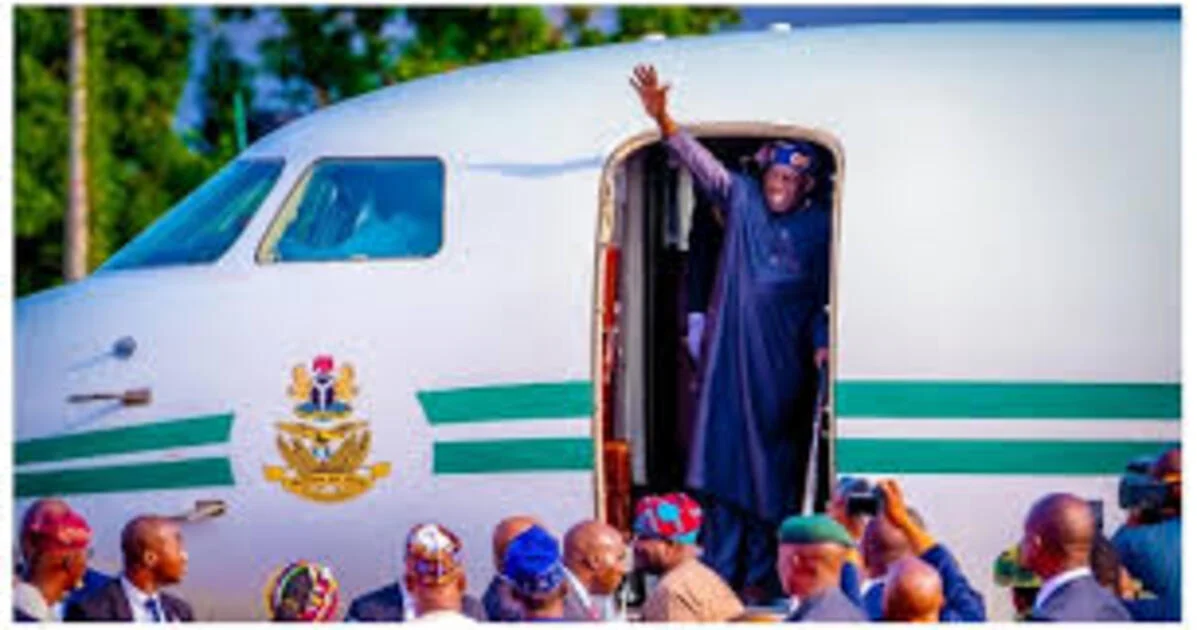
President Bola Tinubu arrived in Lagos on Friday for a working visit, as Nigeria prepares for a low-key  65th Independence Anniversary.‎‎This is contained in a statement issued by Presidential Spokesperson, Mr Bayo Onanuga on Friday in Abuja. ‎‎Tinubu travelled to Lagos after attending the coronation of the new Olubadan of Ibadanland, Oba Rashidi Ladoja, in Oyo State. PLEASE READ: Tinubu travel to France: Buhari, Jonathan, Obasanjo – which Nigerian president travel pass? ‎‎While in Lagos, the President is expected to engage with key private sector leaders and senior government officials.‎‎He will travel to Imo on Tuesday to inaugurate projects executed by Gov. Hope Uzodimma.‎‎As part of the Independence anniversary, the President will also commission the remodelled National Theatre, Lagos, which has been renamed the Wole Soyinka Centre for Culture and the Creative Arts.

2027: Friendship Won’t Stop Me from Opposing Tinubu – Lamido

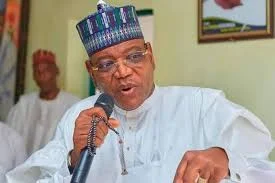
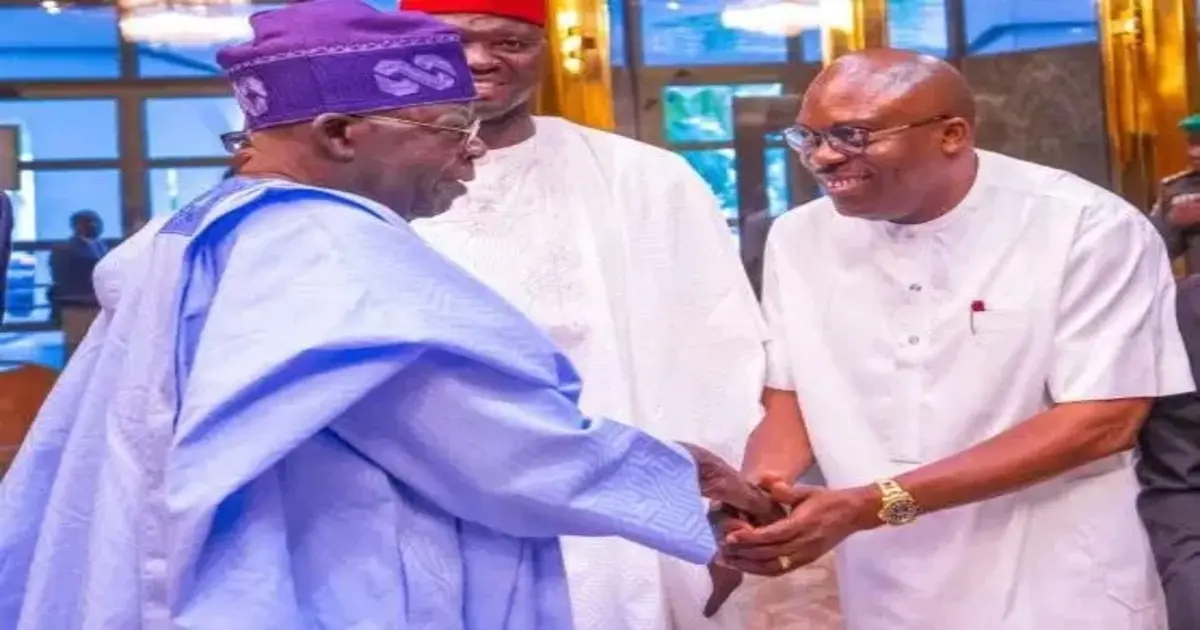
The former Jigawa State Governor, Sule Lamido has declared that his longstanding friendship with President Bola Tinubu will not prevent him from working against the ruling All Progressives Congress (APC) in the 2027 general elections. Lamido, in an interview with the BBC, emphasized that politics and friendship must remain separate, insisting his loyalty lies with Nigeria’s progress and the survival of the opposition. “Tinubu and I know each other very well, but we haven’t met in a while. He told me, ‘Sule, I love you because you are trustworthy.’ We laughed and left. But that doesn’t change politics. My duty is to unite Nigerians in opposition to his government,” Lamido said. The comment came after Lamido and Tinubu were seen laughing and exchanging pleasantries at the wedding of former Zamfara Governor Abdulaziz Yari’s son in Kaduna, fueling speculation about their political alignment. Lamido dismissed the speculation, stressing that his commitment is to mobilize opposition forces against what he described as the APC-led government’s failures on insecurity, economic hardship, and national unity. He further reiterated his loyalty to the PDP despite recent high-profile defections, including that of former Vice President Atiku Abubakar to the African Democratic Congress (ADC). “Atiku and I formed the PDP. We are still talking to many Nigerians who were once with us but are now scattered. What we are doing is for the people, not ourselves,” Lamido said. The former governor added that the PDP is working to resolve its internal crises and strengthen unity ahead of 2027. “We are constantly engaging, reaching compromises where needed, and ensuring dialogue continues. Nigeria must move forward, and we will hold Tinubu accountable,” he noted. Meanwhile, the Lagos State APC dismissed opposition claims, including suggestions that President Tinubu would serve only one term. APC spokesman Seye Oladejo described such comments as “wishful thinking from political lightweights,” insisting Tinubu is laying the foundation for long-term transformation. With Lamido maintaining his opposition stance and the PDP struggling to reorganize, the 2027 elections are already shaping up to be a fierce political contest.

Tuggar Urges U.S. to Strengthen Partnerships with Nigeria

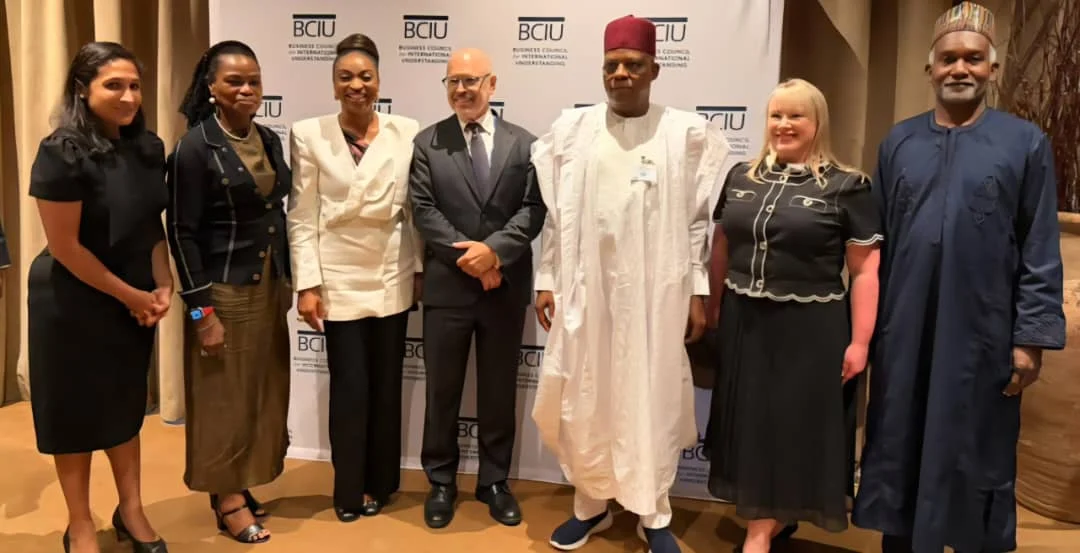
Describes Nigeria as Africa’s Anchor State Nigeria’s Minister of Foreign Affairs, Yusuf Maitama Tuggar, has reaffirmed the country’s strategic position as an anchor state in Africa. He therefore calls on the United States to deepen its engagement on the continent through stronger partnerships with Nigeria. Tuggar made the call at a high-level investment roundtable organized by the Business Council for International Understanding (BCIU) on the sidelines of the 80th United Nations General Assembly (UNGA). The forum was attended by Vice President Kashim Shettima and senior executives of top U.S. firms. Highlighting opportunities across priority sectors such as energy, agriculture, technology, and finance, Tuggar stressed that Nigeria’s size, resources, and leadership role make it the natural hub for U.S. investment in Africa. “With our vast population, abundant resources, and continental scale, Nigeria is a natural destination for U.S. business partnerships,” Tuggar said. “Such collaboration will reduce costs, provide access to a skilled talent pool, and help integrate millions of informal businesses into the formal economy.” He added that under President Bola Ahmed Tinubu’s Renewed Hope Agenda, Nigeria is pursuing economic diplomacy and reforms designed to attract investment, improve the ease of doing business, and ensure that global partnerships yield tangible benefits for citizens. Tuggar emphasized that Nigeria’s demographic advantage and continental influence reinforce its role as Africa’s premier gateway for global investors seeking growth and long-term impact

Tinubu Urges Bold UN, Financial Reforms at UNGA80

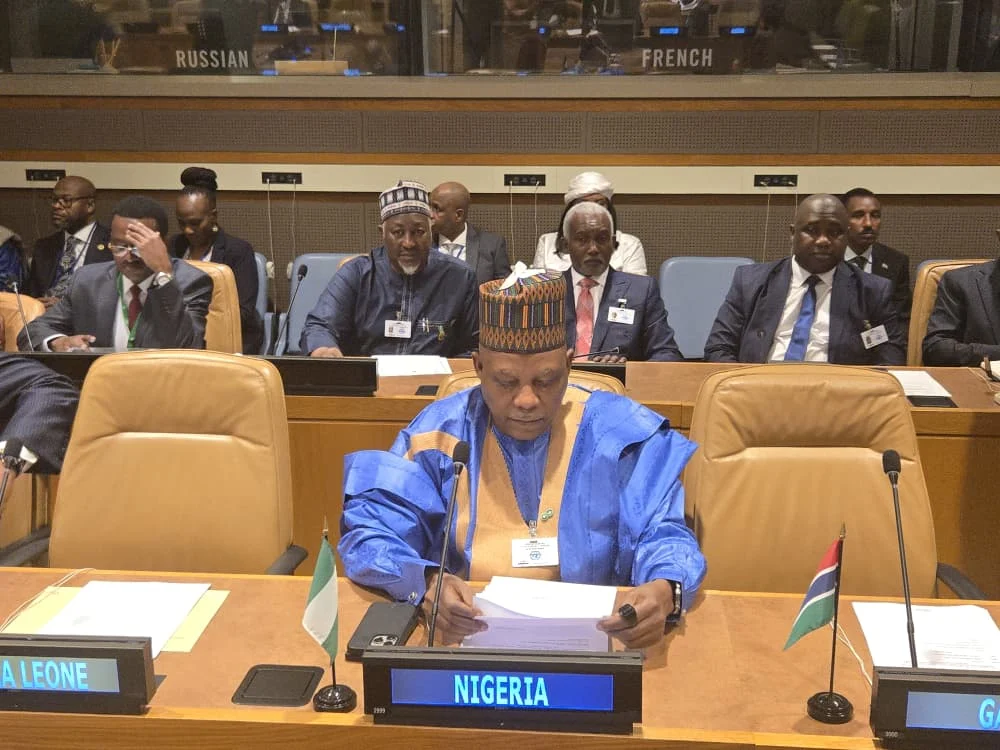
President Bola Ahmed Tinubu has called for sweeping reforms to restore the credibility of the United Nations and global financial systems, urging world leaders to adapt institutions to present-day realities. Speaking through Vice-President Kashim Shettima at the 80th United Nations General Assembly (UNGA80) in New York, Tinubu said the world could not afford “the luxury of inaction” in the face of conflicts, climate change, debt crises, and widening inequality. “The United Nations will recover its relevance only when it reflects the world as it is, not as it was,” Tinubu declared, arguing that Nigeria deserves a permanent seat on the UN Security Council. He noted that while Nigeria was a colony of 20 million when the UN was founded in 1945, it is now a sovereign state of more than 236 million, projected to be the world’s third most populous country. He outlined four priorities for change which includes: a) Security Council Reform: that is it’s expansion to reflect current global realities, including Nigeria’s representation. b) Debt Relief and Fair Financing: as a new binding mechanism for sovereign debt management, “an International Court of Justice for money.” c) Resource Equity: by ensuring mineral-rich countries to benefit directly from their resources through local processing and jobs, and; d) Closing the digital divide as a global initiative to expand technology access, declaring that “A.I. must stand for ‘Africa Included.’” Reaffirming Nigeria’s commitment to peace, Tinubu highlighted the country’s participation in 51 of 60 UN peacekeeping operations since 1960. He also backed a two-state solution in Palestine, saying the right to life “should not be trapped in the corridors of endless debate.” On regional security, he warned against terrorism and extremism, describing them as threats that prey on division and undermine human dignity. Tinubu further described climate change as a pressing security concern tied to migration, instability, and inequality, urging the UN to channel climate funds into education, resilient housing, and community development. Referencing Nigeria’s ongoing economic reforms, including subsidy removals and currency adjustments, Tinubu acknowledged the hardship but said they were necessary steps to unlock growth and attract investment. He pointed to the inaugural West Africa Economic Summit held in Abuja as proof of Africa’s potential when innovation and investment intersect. Warning against growing disillusionment with multilateralism, Tinubu said: “We must make real change, change that works, and change that is seen to work. If we fail, the direction of travel is already predictable.” He closed with a reminder of shared responsibility: “For none of us is safe until all of us are safe.”

National oil assets: are the buccaneers coming? [2]

By UGO ONUOHA “Federal Government led by the ministry of petroleum incorporated [MOPI] and the ministry of finance incorporated [MOFI], have planned to sell significant portions of Nigeria’s equity in some of our best-performing oil and gas joint ventures”. Some commentators have since alleged that this set of our rulers behaves like “usu biara orji ntagbu”, Igbo for ravaging and destructive locusts and cankerworm. They claimed that by the time this journey is over, whenever that will be, the country will be empty and comprehensively hollowed out. The carnage could turn out to be numbing and crippling. By the way, locusts are known to be destructive given their voracious appetite for food. They, like our rulers, are at their worst when they exhibit swarming behaviour under certain conditions. Also like Nigerian politicians, locusts can and do devastate farms and cause significant economic damage wherever and whenever they invade any territory. Desert locusts are reported to be some of the most destructive species. And they are mostly found in Africa. Politicians are some of the worst species in many countries. The worst of the worst are mostly found in Africa with Nigeria competing strongly for the number one position. There are some other interesting bits about locusts that parallel Nigerian politicians. Each locust can eat its weight in plants daily. A typical Nigerian ruler can steal more than he needs in 10 lifetimes. Locust swarms can consume vast amounts of food to rival the daily consumption of residents of well populated cities. The same can be said of the amazing capacity of our rulers to steal from the commonwealth, even money that would confound their successors up to the fourth generation. It was not long ago that Nigeria’s president, Alhaji Bola Ahmed Tinubu, reminded us that the problems we are contending with currently, over which he has been exerting so much energy and sleepless nights to reverse, were because his predecessors were nonchalant in their governance style which failed to provide for the upcoming generations. In other words, the earlier rulers spared no thoughts for future generations of Nigerians. The irony was that at the time that Tinubu was grandstanding and waxing philosophical, his regime was busy borrowing and accumulating foreign and domestic debts for the next generations he claimed to be concerned about to repay. For the discerning, the president was engaged in theatre. It was a performance for his choristers, and the unwary. And the background music was the ubiquitous…’On your mandate…’ which is now strongly competing to dislodge the national anthem at events organised by the national assembly, and the ruling All Progressives Congress [APC] political party. At some formal sessions and sittings of the national assembly, including during budget presentations by the president, the partisan ‘On your mandate…’ dwarfs and takes precedent over the national anthem. This speaks to the state of the fears of some people about state capture by this regime. Apart from propaganda and the desperate search for wins where there are no wins, the current APC regime is notorious for borrowing and taxation. It has made deceit an artform, and a governance imperative. For them there will always be a lie as a solution to every problem. To tax or borrow and spend on productive ventures can be excused. But to tax and borrow, and then leave Nigerians wondering what happened to the revenues is numbing. It is also troubling to tax and borrow to fund the lavish lifestyles of our rulers, and the profligacy of the regime. Our rulers cannot in good conscience, that’s if they have conscience, ask us to tighten our belts whilst they’re loosening theirs. That’s wicked. That’s evil. That’s unconscionable. Sadly, that’s what is happening now. “Elsewhere, a commentator who identified as Umar Sani, likened the speculated proposed sale of public investments in some oil assets, and the amendment of the PIA, to winding down [liquidation] of a corporation but in this case the country.“ And like buccaneers our rulers are now reported to be training their eyes on our national oil assets. The goal is essentially two folds- increase the revenue accruing to the regime, and asset stripping for the benefit of regime honchos, their collaborators and business partners. The plot is laid out, starting with the amendment of the Petroleum Industry Act [PIA]. The amendment is given since we have a pliable national assembly which has elected to be a parastatal under the presidency. The curated and carefully selected leadership of the national assembly said from the onset that the primary reason for their existence is to accede, without question, to ALL the demands of the president and his executive council. What this means in effect is that looming vandalisation of our national oil assets is a fait accompli unless Nigerians rise to the challenge to say enough is enough. The designs on the oil assets are clear, and coming into the public domain. But that an alarm has been blown on the scheme by industry operators and sundry watchers does not seem to deter the government. Instead the regime has started preparing the grounds by falsely claiming that $18billion has been secured through some of its reforms in sectors of the oil and gas industry. “Nigeria secures $18bn in oil and gas investment commitments” was one of the headlines that trended last week. To be sure, ‘commitments’ are not contracts”. As someone wrote, “in the oil and gas sector, they [commitments] often amount to handshake promises, useful for optics [and photo opportunities], but rarely backed by enforceable timelines, financing structures, or regulatory clarity. Without transparency, execution plans, and measurable milestones, such announcements risk becoming political theatre rather than economic transformation. Nigeria deserves more than ceremonial pledges. We need bankable deals, local capacity building, and a clear path to energy security”. The danger is that the planned alteration of the PIA and the expected accompanying assets stripping, and the ceding of portions of our oil commonwealth to self and acolytes and business partners will not

Mixed reactions greet end of emergency rule in Rivers

The lifting of emergency rule in Rivers by President Bola Tinubu has triggered mixed reactions from stakeholders in the state. Tinubu on Wednesday announced the end of emergency rule in Rivers, and reinstated Gov. Siminalayi Fubara, his Deputy, Prof. Ngozi Odu and members of the state assembly after six months of suspension. A Niger Delta activist, Ms Ann-Kio Briggs, described the announcement as expected but raised concerns over the uncertainties surrounding Fubara’s return to full constitutional duties. She said that Rivers people were expecting Fubara to return as governor and perform his constitutional duties without being gagged. “Until the governor is allowed to freely carry out constitutional responsibilities, we cannot say exactly what the lifting of suspension portends,” Briggs said. The activist said that the six months period of emergency rule was characterised by project abandonment, poor performance and undemocratic practices. Briggs further stated that the suspension of democratic rule in Rivers inflicted incalculable losses on the people. She said that Rivers people would demand accountability for the period the state was governed under emergency rule. Darlington Nwauju, a factional Publicity Secretary of the All Progressives Congress in Rivers, commended Tinubu for lifting the emergency rule, and reinstating Fubara. READ ALSO: Fubara resumes today as Tinubu ends controversial emergency rule in Rivers state Nwauju however, said that the state witnessed unprecedented poor governance and mismanagement of resources during the six months period. “Rivers was poorly managed during the past six months. The sanitary condition alone reflected absence of governance. Workers experienced delayed salary payments,” he said. He said that the emergency rule period had left Fubara with the huge tasks of restoring confidence, improving infrastructure, and re-establishing investor confidence. “The state did not attract any foreign direct investment during the emergency rule period, but we must move on now that democracy is back in action,” he said. PLEASE READ: People, privations and public policy priorities Prof. Benjamin Okaba, the President, Ijaw National Congress, said that although the emergency rule had been lifted, the state was taken several years backwards. He claimed that no fewer than 10,000 jobs were lost during the six months of emergency rule in the oil-rich state According to him, suspending the governor, his deputy and the legislature handed absolute power to a sole administrator and undermined  democratic principles. Analysts say that although the lifting of emergency rule has ended uncertainties, questions remain concerning the political climate that awaits Fubara as he returns to office. They suggest that sincere reconciliation between the governor and other political stakeholders will determine the pace of recovery.

National oil assets: are the buccaneers coming?

By UGO ONUOHA THE prospects are frightening if the early indications are true that the Presidency is primed to turn its attention to Nigeria’s national oil assets as part of its drive for increased revenue. The tentative framework of the plot of the regime which is currently being debated in not too hushed tones among industry players should be of concern to all Nigerians. Unless something gives, and quickly too, the possible wasting, I am loath to say plundering, of a critical section of that industry could be likened to the infamous and historic activities elsewhere in the world of pirates in the 17th and 18th centuries. But there’s a difference here. The buccaneers and pirates of the gone by centuries virtually personally sent themselves on missions to the high seas to plunder. But in this case, those who may be mandated to sell off Nigeria’s oil assets may claim, and perhaps rightly so, that they are fulfilling their campaign promises of 2023. They could hide under the cover of being promise keepers. It might be helpful to recount how some pirates operated in the past centuries without suggesting that our present crop of rulers also operate in the same way. Today’s pirates in the oceans operate in about the same manner but not necessarily with equal brazenness, temerity, and blood-cuddling brutality. An online entry recorded that “buccaneers were pirates or privateers who operated in the Caribbean Sea during the 17th and 18th centuries. They were known for their bravery, cunning, and sometimes brutal tactics”. It’s ironic that our current rulers are famous or notorious, depending on which side you are standing, for their courage, for instance, in their sudden decision to remove subsidy on petrol, and generally on energy, and their bravery in massively devaluing the national currency, the Naira, all in one fell swoop. And all within two months of assumption of office in 2023. Continuing, the online record identified some famous buccaneers to include a Welshman, Henry Morgan, who raided Spanish colonies and ships in the Caribbean; an English pirate who was simply known as Blackbeard. He was said to have blockaded the port of Charleston, South Carolina, in the United States of America. He derived his name from his long black beard, and he was fearless in battle. Calico Jack Rackham was yet another English pirate who also operated in the Caribbean. He was famous for having two fearsome female crew members as accomplices, Anne Bonny and Mary Read, who disguised themselves as men to join in the art of plundering merchant ships and sundry seafarers. “When it comes to money this regime is insatiable. It frequently issues both Naira and Dollar-denominated bonds and treasury bills. It offers, sometimes unreasonable interest rates, which accounts for the rush to buy by foreign portfolio investors [hot money mongers], creating the illusion of increased foreign Investments.“ For good or for bad, “buccaneers played a significant role in shaping the history of piracy and the Caribbean region”, the online report stated. Their exploits captured the imagination of peoples around the world, and inspired “countless books, movies, and other works of fiction”. In like manner, the bravery and the courage as well as the punishing economic reform agenda of our country’s extant regime has captured the imagination of the citizens. And also dazed them probably to stupor. And surrender. As we stated earlier, the buccaneers of old were unelected and so their actions could be deemed to be illegal and criminal. But our rulers can lay claim to legitimacy on account of the fact that the law declared that they were lawfully elected to their present political offices. So their actions in the wake of their mandate could also be described not to be criminal. Nor illegal. Meanwhile, we still have about four months until the commencement of the recently comprehensively reviewed tax laws, but some of its provisions have set off alarm bells nationwide. Individuals are apprehensive, fearing that the provisions will make them poorer in spite of the assurances to the contrary by the clearly malicious contrarian postulations of the government. Some industry operators are grumbling loudly that their operations would be negatively d by the proposed reintroduction of hitherto suspended taxes in the new dispensation. The aviation sector is one such example of players who fear the worst of the looming tax dispensation. Thus far the administration appears unperturbed. All it sees are multiple streams of revenues for its own purposes which includes a proclivity to profligacy. It is behaving like a carpenter armed with a hammer and a nail who regards everything in front of him as wood. There’s no doubt that the primary motivation for the removal of petrol subsidy on May 29, 2023, was to gather more money into the coffers of the federal government. The same accounted for the devaluation of the Naira about the same time. There appears to be no other substantive reason for the ongoing quest for cost-reflective pricing of other areas of energy [electricity inclusive]. The tragedy, so far, is that the increased revenues have not positively impacted the lives of the people. The tiers of government have experienced increased revenue, though it could actually be an illusion of money, but the poverty afflicting our citizens is not abating. Last year or so, the National Bureau of Statistics (NBS) said that over 133 million Nigerians suffer from multidimensional poverty. And a little over one month ago, a ranking federal government official said publicly that about 180 million Nigerians were not sure where their next meal would come from. There’s a likelihood that the number has risen. Is it not instructive that in the many recent claims of economic wins, this administration has never mentioned that it has lifted any Nigerian out of poverty in the more than two years it has been in office. For a country such as ours, which has consecutively been the poverty capital of the world since 2019, lifting citizens out of poverty should be

Marafa’ll bury himself in shame – Zamfara APC Chairman

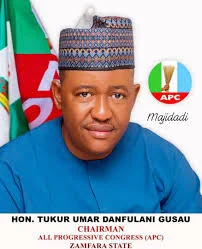
Alhaji Tukur Danfulani, the Chairman of the All Progressive Congress (APC) in Zamfara, has described recent political comments against President Bola Tinubu by Sen. Kabiru Marafa as unfortunate. Danfulani, in a statement he issued in Gusau on Thursday, described the comments by Marafa as an action of selfish motives. He said: “We, therefore, call on Marafa to come to Zamfara and reassess his popularity among the electorate, I believe he will bury himself in shame. “Marafa’s unguarded utterances are just out of frustration of loosing election and his inability to secure appointments in President Bola Tinubu administration. “Ordinarily, if not because Marafa touched Mr President in his uncivilised manner, we would not have responded to a lower and rejected politician like him.” According to Danfulani, the State APC leadership had listened to the recent interview granted by Marafa, threatening to reduce one million votes from Tinubu’s 2023 votes. “I would like to address that by telling the Nigerian public that apart from being disgraced from the Senate by his constituents in 2019,  he has not recovered from his dementia. “Even in the 2023 polls where he made uncorroborated  calls on the 2023 elections, it should be noted that Marafa could not even win his constituency in the same elections. “Talk less of securing the votes which largely came through the faith the electorate have in the party and in Matawalle, Yari and other respected party leaders in the state,”the chairman said. Danfulani recalled that Matawalle, the present Minister of State for Defence now, served as the Coordinator of Tinubu/Shettima Presidential Campaign Council for the whole of North-West and initially to doubled as the Zamfara Coordinator. “Matawalle honourably suggested that the Zamfara coordination should be given to Marafa but unfortunately, he, Marafa did not merit it. “Having lost everywhere, Marafa who insisted he be given a high ranking position in the government, began to create one problem or the other. “He sometimes used alliances with other trouble makers who would also leave him immediately they discovered his selfish motives,” he added. Danfulani said that the APC supporters in Zamfara had grown wiser and more loyal to political leaders like Matawalle, Yari and many others who were carrying them along. “That was why the party won the just- concluded Kaura Namoda South State House of Assembly by-election with a wide margin against the runner up (PDP). “This was without any input from the likes of Marafa who tried to sabotage APC’s chances of winning through anti-party maneuvers that didn’t work for them. “It’s laughable that Marafa who couldn’t win even his ward of Yandoton Daji or his local government of Tsafe or his central constituency, could boast of reducing one million votes out of President Bola Ahmed’s votes of 2023.” “The question is, from where Marafa will get these votes, because the entire Zamfara votes in 2023 were not close to one million votes, except if he is going to use his bragging nature. “So, I want the public to consider Marafa as just a l@me dog that can only bark but without any tooth to bite,”Danfulani added. He said that what was expected from Marafa during the interview was to tell the world how many votes he secured himself and that of his opponent in the last election. “He should have done this before talking about reducing President Bola Tinubu’s votes while peddling lies and propaganda that are dead on arrival,” Danfulani further said.

President Trump’s visa revocation policy against Nigerians

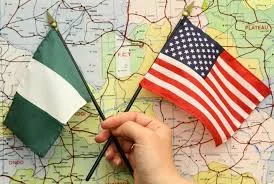
… A bullying tactic in an incoherent geopolitical game of Throne Wale Alonge It is beyond ludicrous, the reason purportedly given by the US consular office for the recent revocation of visas already issued to Nigerians. When did Nigeria and Nigerians become a national security threat from which America and Americans must be protected? In term of contribution to America’s economy as measured by GDP, number of patents, contribution to technological innovations, to academia as measured by number of published articles in reputable academic journals and numbers of leading professionals in critical areas to American economy from medicine and health care delivery, to the finance and fintech sector, to academia and many others, Nigerians rank among probably the top three of all immigrant community in the USA. Like his Tariff policy, President Trump is weaponizing immigration and visa issuance as retaliatory tools in pursuit of his incoherent foreign policy agenda and enemy list. With the warm embrace between Presidents Lula of Brazil and Tinubu during his recent state visit, Nigeria and Nigerians should be prepared for more visa revocation and other retaliatory policy measures. Brazil has become enemy number one for Trump and he Trump seeks to interfere in Brazil’s domestic policy in the court case against its erstwhile dictator wannabe Trumpian Bosenario. Additionally Brazil is one of the arrowheads of BRICS which Nigeria has signified interest in its membership. What President Trump is underestimating in his blunt and bullish use of American power, is the power of national power and pride. It was on full display in his now iconic Oval Office verbal brawl with seemingly weak, outmatched and cornered Ukrainian President Zelensky who stood up boldly to Trump and his tag team refusing to subject Ukraine national pride to bullying by Trump. Read Also: Visa War: FG explains stances as US slams tighter measures Trumps’s Visa crackdown linked to Nigeria’s refusal to house asylum seekers Nation states have almost inexhaustible elastic pain tolerance when it comes to defending their national pride and sovereignty. It is the only logical reason Ukraine is still standing against all odd from Russian bombardment just like Great Britain did against Nazi German bombardment during world war 2. Trump will soon learn like other bullies that the game is over once you stand up to them. President Trump needs to know that diplomacy is a very nauced delicate game of carrot and stick, overuse either of the two, you lose. In the words of incomparable Maya Angelou You can revoke Nigerian visas. You may even impose punitive tariff. You may trod us in the very dirtBut still, like dust, Nigeria Will rise. Sadly for America, a country that I love and to whom I have pledged my loyalty as a naturalized citizen for decades, while not forgetting or abandoning my Nigerian roots, Trump’s policy is not advancing American wider foreign policy objective. Rather it is weakening and dissipating the deep well of friendship, goodwill and loyalty from its many allies across the globe and pushing them into the waiting embrace of its most potent competitor for global dominance, China. We are seeing that on display as India, Russia and China are engaged in full romantic embrace for the whole world to see. Our collective hope is that this mind numbing season of anomie in US global reputation would not do so much damage that it is becomes almost unrecoverable. Adewale Alonge, PhD, Founder & President, Africa Diaspora Partnership for Empowerment and Development. www.adped.org