People, privations and public policy priorities (3)

An opinion piece condemning Nigeria’s failure to prioritize citizens’ security and welfare, citing deadly federal roads, poor infrastructure, elite indifference, and policy choices under successive governments, with sharp criticism of the Tinubu administration during the Christmas travel season.

By UGO ONUOHA LAST week, here, we said that we probably have been down the path that the regime of Nigeria’s president, Alhaji Bola Ahmed Tinubu, has been taking us to in the last 27 months through his economic reform agenda. We wrote that the current economic reform bore a striking resemblance to military president, Gen. Ibrahim Badamasi Babangida’s [IBB’s] structural adjustment programme [SAP] of the mid-1980s. Subsequently we dubbed Tinubu’s programme SAP 2.0. The major planks of the Babangida economic recovery agenda which he introduced in 1986 were economic diversification to reduce Nigeria’s over dependence on crude oil revenues; the development of the non-oil sectors like agriculture, manufacturing, and services; to restore fiscal discipline by implementing austerity measures, curbing government expenditures, and controlling inflation; devaluation of the Naira to make exports more competitive, encourage foreign investments, and reduce trade imbalances; liberalise the market by reducing government intervention and control in designated sectors to promote a more market-driven economic system; to privatize state-owned enterprises so that the private sector would be encouraged to drive economic development which was expected to promote efficiency and productivity; to stimulate economic growth by improving resource allocation and utilisation; improve the standard of living of Nigerians through poverty reduction; to improve government revenue by expanding and widening the tax base; and, to enhance resource allocation and utilisation for sustainable economic development. Does the above economic policy direction sound familiar to the adults in the house? Is this déjà vu? A quick reminder: it will be 40 years, next year, since Babangida introduced and implemented his own economic reform agenda. What were the benefits? How did it end? How much pain did it inflict on Nigerians? If it worked, why are we still where we are today? The answers to the questions are obvious. And we will explore some of them in the wake of the current gamble. As we said earlier, Tinubu’s economic reform agenda is SAP 2.0. SAP 1.0 failed, and the reasons why Babangida failed may yet afflict Tinubu’s SAP, though he cleverly dodged calling it by its proper name for fear of a backlash and a pushback by Nigerians. So why did Babangida, a military ruler who sat atop his command and control military/government structure for about nine years, fail with his own SAP after putting Nigerians through so much pain 39 years ago? Could it be because his SAP had no buy-in from citizens? Yes, that’s partly the reason. It also suffered from poor implementation. There was no doubt that it was externally imposed shortly after a charade called a national debate on whether to adopt the programme or not was conducted. It was neither well planned nor intentionally and faithfully executed. Unintended consequences which should have been foreseen and provisions made to alleviate them took a huge toll on the programme. It should be concerning that the ongoing economic programme is grappling with the same problems of unintended consequences, lack of buy-in, and poor implementation. SAP objectives also failed to materialize because of the country’s poor and weak infrastructure. In 1986 Nigeria’s infrastructure was not developed enough to support the goals of the programme. Is there evidence today that the country’s public facilities are strong and robust enough to support the ongoing drastic and indeed reckless surgical procedures on the fragile and largely informal economy of the country? Can what is happening be likened to using a chainsaw for brain surgery? Corruption hobbled Babangida’s SAP, and hindered its effectiveness. Has this monster been tamed? Is it capable of dealing a death blow on Nigeria? With succeeding administrations corruption became more pervasive. It has been suggested in some quarters that the extant regime is a haven for corrupt politicians and public servants and their collaborators. It’s a well known fact that some of the leaders of this government were suspects in multi-billion Naira fraud cases before their files were conveniently forgotten and allowed to gather dust on the shelves of the so-called anti-graft agencies, the Economic and Financial Crimes Commission [EFCC] and the Independent Corrupt Practices and Other Related Offences Commission [ICPC], the moment they assumed political offices through nepotistic appointments or rigged elections. Ahead of the 2019 election, a former national chairman of the ruling APC who is currently a senator of the federal republic had reportedly said in public that the sins, including looting of the treasury by office holders and opposition politicians, would be forgotten and forgiven once they joined the ruling party. Seven years after, that offer still remains on the table, and suspected and confirmed corrupt politicians have been enjoying the ‘amnesty’ to the detriment of Nigerians. It is now so bad that state governors, state and national assembly lawmakers are hawking and trading mandates given to them on the platforms of opposition parties to seek favours and protection from the APC. It sounds like what obtains in the mafia world. And this could be one of the reasons why a court in Canada was recently reported to have likened Nigeria’s dominant political parties – APC and PDP – to terrorist organisations. These parties thrive in holding Nigerians as hostages, intimidating citizens, extracting oaths of allegiance and fealty to their leaderships, violence and bloodletting. PDP used to have a cult leader or Capone while it was in power at the centre. APC still does probably because it now controls the federal government. Meanwhile, like Babangida’s SAP, Tinubu’s SAP 2.0 is primarily focused on economic austerity measures without publicly saying so. At Inception of the economic programme no heed was paid to cushioning the harsh and inevitable painful fallouts from the agenda. Not much has been done in this regard since 2023, bar the student loan scheme. Other palliatives such as the conditional cash transfers to the poorest of the poor households and individuals, and access to funding for small scale enterprises have suffered from credibility problems. In fact, their implementations have been dogged by allegations of political partisanship and the challenge of verification. Even the

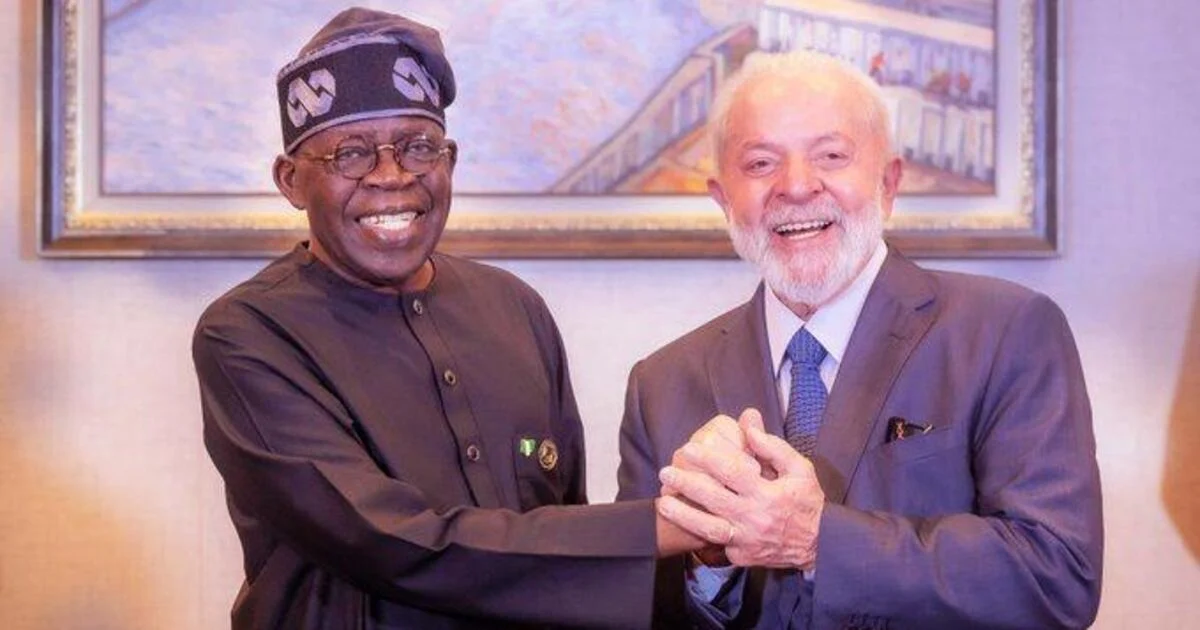
Contextualizing the lovefest between Presidents Lula of Brazil and Tinubu

Wale Alonge Many have been totally taken by surprise by the over-the-top grand reception and welcome that has been extended to President Tinubu and his delegation by his host President Lula of Brazil. No doubt, Nigeria and Brazil have had cultural and historical ties dating back to the shipment of our people across the Atlantic on cruel inhumane slave ship. That cultural connection cannot be overemphasized. We also must not underestimate how much the entire global has acknowledged and credited President Tinubu for his bold, transformative, yes painful reform agenda. It has done a lot to restore much needed confidence in our country even as the citizens groan under its excruciating pain. There can be no gain with pain. Having said all that, we will be missing the boat if we fail to contextualize the over-the-top warm embrace and welcome mat being extended to Nigeria and President Tinubu by Lula of Brazil within the context of the broad geopolitical realignment taking place in the globe with the erratic unpredictable, and unreliable leadership in Washington DC. The Trump administration is upending what many have assumed for decades as settled norms. America as the bastion of democracy, of federalism, and of a predictable global order is under assault and is being revealed as a mythology. The entire globe, including the U.S. once reliable ally, Europe no longer trusts Washington DC. Everyone is scrambling to find a realignment of an alternative global order. Brazil’s Lula is looking for allies across the globe in his titanic conflict with Trump. Nigeria, with its reform agenda under the presidency of Tinubu and its re-emergence as Africa’s powerhouse is becoming once again an attractive bride. There is also the BRICS agenda to contend with. So, yes while we cannot underestimate the influence ofTinubu as president. we must see the lovefest between Nigeria and and Brazil within that broader global context. Nigeria is rising and many of us are missing the train by focusing on the current challenge of the reform agenda. Like I tell many of my fellow Nigerians in the diaspora there will be gnashing of the teeth when many people realize that they have lost out of the early bird windfall and find in a few years that Nigeria has become unaffordable the longer they wait to jump in. Nigeria is transforming in our very own eyes and yet many are too distracted to see it. Brazil is sending that message loud and clear. The question is will we harken to it and catch the wave before it is too late. Wale Alonge

Court Orders Freeze of Four Bank Accounts Linked to Ex-NNPCL Boss Kyari

The Federal High Court in Abuja has ordered the temporary freezing of four accounts at Jaiz Bank, allegedly linked to Mele Kyari, former Group Managing Director (GMD) of Nigerian National Petroleum Company Limited (NNPCL). Justice Emeka Nwite gave the order on Tuesday after hearing an ex parte application filed by the Economic and Financial Crimes Commission (EFCC). The anti-graft agency told the court that Kyari is under investigation for alleged conspiracy, abuse of office, and money laundering. According to an affidavit presented by EFCC investigator Amin Abdullahi, the four accounts — two in Kyari’s name and two belonging to the Guwori Community Development Foundation Flood Relief — were discovered to contain ₦661.4 million suspected to be proceeds of unlawful activities. The EFCC alleged that the funds were disguised as payments for a book launch and NGO projects but were in fact linked to suspicious inflows from the NNPCL and oil companies. It further claimed that the accounts were being controlled by Kyari through family members acting as fronts. Justice Nwite, while granting the order, said the application had merit and adjourned the matter to September 23 for a report on the investigation. The Commission said the freeze order was necessary to preserve the funds while investigations continue, with a view to possible prosecution.

People, privations and public policy priorities [2]

By UGO ONUOHA WITHOUT any doubts whatsoever, the twin policies of the unplanned, wrong-headed, and precipitate removal of petrol subsidy and the massive devaluation of the national currency, the Naira, have at the root of the serious problems plaguing Nigeria and the pauperisation of about 200 million citizens. This regime pulled the plug on the alleged subsidy on petrol the same day it assumed office on May 29, 2023. In fact, it did so within the hour of taking office. At the time it did so, there was no full complement of the government. There were no advisers, no assistants, no ministers, no carriers of its vision and mission [assuming that it had any, really] except the structures it inherited from its predecessor, a regime that was widely regarded as a monumental failure and a scourge on our people. It was widely acknowledged that Muhammadu Buhari did not just waste eight years of Nigeria, but that it set the country back by a generation, or 30 years. Buhari’s was a sad case of serial bungling and ‘ungovernance’. He was an affliction. If corruption and industrial scale theft of crude oil in the upstream sector of the industry were the primary problems as were correctly diagnosed by successive administrations, it then follows that the right thing to have been done would have been to visit the root of the challenges with the full weight of the federal government. This regime didn’t. It was the beginning of it getting its priorities wrong. And that was understandable though unacceptable because high ranking government operatives, leading lights in the military, and other collaborators were the crude oil thieves. Those who stole Nigeria’s crude oil in handheld jerry cans or even those who move them in hundreds or thousands of jerry cans in trucks were not our problem. How much damage can they inflict on the national revenue, that’s, if this category of thieves existed? Almost zero. Stories were rife of huge and monster-size tankers criss-crossing our ocean fronts day and night, and their bellies being filled to the brim, and their leisurely sailing away to export markets in the Americas, Europe and Asia. The monster-like vessels were escorted by some members of the armed/security forces of Nigeria safely out of our territorial waters. The proceeds from the sales go to the global syndicate. Everybody knew that the crude was stolen. The ships’ crews were aware. Regulators and monitors of ships’ movements and registers were aware of the illicit business. The buyers were in the know that they were buying stolen products. But they did not care because it was a case of willing sellers and willing buyers. It was immaterial that illegality was written all over the transactions. Read Part 1: People, privations and public policy priorities The then new regime turned a blind eye to the bazaar in the Niger Delta and went for the jugular of the soft target-the hapless and helpless citizens of the country. It deregulated (read taxed ) the downstream sector immediately which opened the floodgates of the problems now besetting the country and her citizens. It was a petrol pump head tax. And every act of taxation comes with consequences. While the majority of Nigerians struggled with coping with basic needs of life, the privileged few with access were allowed sufficient time to clean up their act of illegally lifting crude oil to our collective loss and detriment. Because of the new tax (deregulation), the price of a litre of petrol rose rapidly from less than N200 to about N1,500 between 2023 and 2024. The bottom was knocked off our disproportionately informal economy. The impact of the ill-digested action was swift and severe and crushing. The movement of people and goods was mainly by road, and the majority of cars, buses, and trucks were powered by petrol. So the movement of people was affected. The same for goods. It was a common sight in mid and late 2023 to see trending videos of workers, artisans and traders going to and fro their various destinations on foot. Even up till today some people still cover significant distances on foot before completing their journey by bus or tricycles or commercial motorcycles otherwise called ‘okada’ or ‘inaga’. Many car owners ditched their vehicles and opted for commercial buses or even ‘leggediz Benz’ or ‘footwagon’, a deprecating description of covering distances on foot. The other day, an otherwise respected economist and public intellectual who indeed was one of my teachers during my chief executive programme [CEP] certificate course at the Lagos Business School [LBS], Dr. Bismark Rewane, was lamenting that the patience of Nigerians was being tasked, taxed, and stretched by the unintended fallouts from the policy options adopted by the ruling All Progressives Congress [APC] in the implementation of its economic reforms. I was scandalised but I took solace in the suspicion that he was striving to be seen by the authorities to be politically correct in his public speech. I reminded myself that there were times during the disastrous years of Buhari that the same Rewane spoke in like manner. What could be unintended or unforeseen in inflation spiking and poverty deepening when the price of petrol was raised five fold in a country where petrol played, still plays, an outsized role in the movement of people and goods? In an environment where other modes of transportation are either underdeveloped or non-existent. Rewane’s lamentation was pathetic and patronising. It was nauseating. And an insult to Nigerians. He could not have forgotten that now Nigeria’s president, Alhaji Bola Ahmed Tinubu, had as an opposition politician in January 2012 or thereabout, written an epistle to the then President Goodluck Jonathan opposing the removal of petrol subsidy. Tinubu’s arguments then were unassailable about the dire negative multiplier effects of such action on Nigerians. To now say that the negative fallouts of petrol subsidy removal, and the subsequent mindless devaluation of the Naira soon after were unanticipated, would amount to a gratuitous insult

Tinubu’s Saint Lucia visit will boost ties with Caribbean -Presidency

The Presidency says Tinubu’s state visit to Saint Lucia is a strategic engagement that will deepen educational and cultural cooperation with the island nation the Caribbean. ‎ ‎This is contained in a statement  by the Presidential Spokesperson, Mr Bayo Onanuga, on Sunday. ‎ ‎Onanuga said the visit will rekindle Nigeria’s ancestral and strategic economic ties with the Caribbean nation and the wider CARICOM bloc. ‎“In the wake of some Nigerians’ misguided, mischievous, and uninformed comments regarding President  Tinubu’s historic state visit to Saint Lucia, it is necessary to clarify the purpose. ‎ ‎“First, from the perspective of the Government of Saint Lucia, the visit by the Nigerian leader paves the way for  rekindling of  ancestral bonds, igniting a new era of diplomatic, cultural, and economic possibilities between our nations,” Onanuga stated. ‎He stated that  the President’s historic visit aligned with Nigeria’s “Four D’s” foreign policy: Democracy, Development, Diaspora, and Demography—key pillars of  the country’s global engagement. ‎ ‎Onanuga  noted that Saint Lucia, with deep African roots and a significant Nigerian-descended population, views the visit as a homecoming of sorts. ‎ ‎It would be recalled that in the 19th century, Nigerian immigrants brought enduring cultural and religious traditions to the island, a legacy still felt today. ‎ ‎Onanuga said  the visit underscored Nigeria’s rising soft power, driven by Afrobeats, Nollywood, and a literary heritage that resonated across the Caribbean. ‎ ‎He noted that Saint Lucia, home to the Organisation of Eastern Caribbean States (OECS), is a gateway to the 15-member CARICOM bloc with a 130 billion dollars GDP. ‎ ‎He said that President Tinubu’s presence signalled Nigeria’s interest in expanding South-South trade and strengthening diplomatic and economic ties with the Caribbean. ‎ ‎”Nigeria and Saint Lucia already share remarkable historical links, such as Sir Darnley Alexander, a Saint Lucian, who served as Chief Justice of Nigeria from ‎1975 to 1979,” he stated. ‎ ‎The presidency also highlighted  contributions of other Saint Lucians, including Neville Skeete, who helped design the Central Bank of Nigeria headquarters, and Sir Darnley’s son Michael, a frontline medical officer during the Nigerian civil war. ‎ ‎Onanuga said that Nigeria’s Technical Aid Corps, part of Tinubu’s delegation, will support development efforts by deploying professionals to key sectors in Saint Lucia. ‎ ‎The small Caribbean island of Saint Lucia gained independence in 1979, and had hosted fewer than 10 official state visits. ‎ ‎The last African leader to visit was President Nelson Mandela, who attended the 1998 CARICOM Heads of Government Summit.

Pause on FRCN levy enforcement to remain – FG

A new law required large private entities reclassified as PIEs to pay 0.02 per cent to 0.05 per cent of turnover, without a maximum cap. The Federal Government says the 60-day administrative pause on the N25 million levy by the Financial Reporting Council of Nigeria (FRCN) will remain in place. The pause will continue in the medium-to long term, pending a broader legislative review on the contentious annual dues cap. This decision follows widespread criticism of the FRCN’s N25 million fixed annual levy for Public Interest Entities (PIEs). Dr Jumoke Oduwole, Minister of Trade, Industry and Investment, confirmed this in a statement on Sunday in Abuja. She stated that the government would maintain the pause while legislative reforms are considered to address stakeholder concerns. In March 2025, the Federal Government, through the Minister, established a Team Working Committee for stakeholder engagement. The committee included representatives from NECA, MAN, NACCIMA, and other private sector bodies, alongside a robust FRCN team. The group met six times within three weeks, deliberating on the issues causing friction between government and the private sector. “These sessions produced a report assessing Section 33D of the FRC (Amendment) Act 2023,” said Oduwole. She said the report was submitted to the Minister on April 17 for further action. Please Read: The Nigerian Tax Reform Acts The Ministry briefed President Bola Tinubu on key concerns from private sector stakeholders regarding the levy and related issues. Before pausing the levy, stakeholders recommended steps based on findings from the consultations and submitted report. “The pause remains in effect mid-to long term, pending broader legislative reform,” Oduwole reiterated. She added that in March 2025, the Ministry convened a broader stakeholder meeting on the FRC (Amendment) Act 2023. The move was in response to widespread concern over annual dues for PIEs under the amended law. In December 2024, groups like OPTS and ALTON expressed dissatisfaction through direct engagements and public statements. The main concern was the reclassification of large private firms as PIEs, creating a heavy financial burden. The new law required private PIEs to pay 0.02 per cent to 0.05 per cent of turnover, without a maximum cap. This was unlike the fixed N25 million levy applied to publicly listed companies, regardless of size. “The FRCN remains central in setting and enforcing accounting and reporting standards,” said Oduwole. She noted stakeholders feared the law could cause unsustainable compliance costs and reduce investor confidence. Oduwole affirmed that the Tinubu administration remains committed to transparency and a pro-business regulatory framework. She said the Ministry conducted a public consultation to align policy with fairness and competitiveness. The consultation resulted in two actions: a temporary pause and creation of a Technical Working Group. “To provide clarity, I’ve directed FRCN to cap private PIEs’ dues at N25 million,” the Minister said. This interim cap aligns with the amount already fixed for publicly listed companies under current law. “The move ensures stability and transparency for affected firms in the short term,” she stated. It also reflects the Ministry’s goal of boosting investor confidence and regulatory fairness. “Meanwhile, the Ministry of Justice will consider legislative amendments, if necessary,” Oduwole added. The News Agency of Nigeria (NAN) reports that the FRCN was established by Act No. 6, 2011. It operates under the supervision of the Ministry and develops accounting and financial reporting standards in Nigeria. The amended FRCN Act was signed into law on May 3, 2023, strengthening corporate governance frameworks. Section 33(1)(c) of the Act mandates quoted companies and PIEs to pay 0.002 per cent of market capitalisation or N25 million.

Tinubu orders personnel audit for reform of civil service

President Bola Tinubu has ordered a full personnel audit and skills gap analysis across the Federal Civil Service to improve capacity and overall performance. He gave the directive on Thursday in Abuja during the maiden edition of the 2025 International Civil Service Week. Tinubu said it was essential to assign competent individuals to appropriate roles for an efficient and effective public service. “We can only guarantee a high-performance culture by placing the right people in the right positions. “To that end, I have authorised a full Personnel Audit and Skills Gap Analysis across the Federal Civil Service to build capacity,” he said. He urged stakeholders to complete the exercise promptly to enable reforms and create a more agile, skilled and responsive civil service. Tinubu described the civil service as “the engine room” for delivering public goods and effective governance throughout Nigeria. “Our civil servants are the quiet architects of stability, innovation, and public trust,” he added. He said the audit was part of a wider plan to align the civil service with global standards and digital transformation. Tinubu emphasised the importance of accurate and secure data to support evidence-based policy and international benchmarking. “Data is the new oil. Unlike oil, it becomes more valuable when refined and responsibly shared,” the President stated. He instructed MDAs to publish verified data in line with the Nigeria Data Protection Act 2023. Tinubu noted progress under the Federal Civil Service Strategy and Implementation Plan 2021–2025. He commended the Head of Civil Service, Mrs Didi Walson-Jack, for leading reforms in digitalisation and staff development. “Launching Service-Wise GPT and other innovations reflects exceptional leadership,” the President said. Walson-Jack said the conference was entirely self-funded through strategic partnerships and creativity. “If Nigeria must lead Africa, our Civil Service must lead first,” she declared. The conference was with the theme ‘Rejuvenate, Innovate and Accelerate,’ reflecting a drive for renewal. 

Yelwata Massacre: Benue Govt. confirms arrest of 50 fake IDPs

The Benue State Government has confirmed arrest of 50 fake Internally Displaced Persons (IDPs) at the International Market, George Akume way in Makurdi, the state capital. The State Commissioner for Humanitarian Affairs and Disaster Management, Mr Aondowase Kunde, disclosed this on Saturday in Makurdi. Kunde said that criminals have infiltrated the IDPs camp opened for victims of Yelwata attack. He said that 50 fake displaced persons had been arrested adding that people from the host community and market women have all infiltrated the camp. He stated that the criminals on  Friday night broke into the camp and stole some non food items while market women too have invaded the camp buying off food items distributed to them. “We have issues in the camp for the past two days and we discovered a lot of infiltrators in the camp. “We conducted investigations after the protest and discovered that criminals and people from the host community in Makurdi were behind the protest. “So we resolved that we have to be at the camp by 4am today (Saturday) to fish out those criminals and discovered that they stole mattresses through a collapsed fence to access the camp. “We discovered that some market women have started coming to the camp to buy off rice and food items distributed to displaced persons. “We also discovered that some women who  were claiming  to be lactating mothers went out to borrow babies from outside to be able to access the camp when they discovered that the first set of people we attended to are pregnant women and lactating mothers. “When these so called lactating mothers were asked to breast feed their babies, we discovered that there was no milk coming out of their breast,” the commissioner said.

Bola Ahmed Tinubu’s futile quest for immortality

Tinubu's Intervention Can't Solve Ondo Crisis - PDP

By UGO ONUOHA HE will never get it. But that should not stop those who consider him a stain and an aberration on the presidency of this country. He will spend his four years or eight years or any number of years at the helm of our ruling structure seeking validation and genuine acceptance. He won’t get it. Nigeria’s president, Alhaji Bola Ahmed Tinubu, will spend the rest of his life attempting to fill holes that he has created in his pilgrimage thus far on this side of eternity. He has lived for over 70 years. Officially. Even the seven decades we have benchmarked with are riddled with controversies. His controversies are serial and debilitating. That’s the life of the man. He is like no other Nigerian. That ordinarily should be a compliment. But here, it is not. He is unique but for all that’s repulsive and atrocious and abominable. We will illustrate. Former president (1999-2007), Gen. Olusegun Obasanjo, and Nobel Laureate, Prof. Wole Soyinka are from Ogun state, and they are generally regarded as childhood mates. Soyinka has a generally accepted and recognised birth record which shows that he is currently about 90 years old. Obasanjo does not have such and so has consistently admitted that he doesn’t know his birth date. At the last check Obasanjo is reportedly slightly younger than Soyinka, though in some quarters there’s a joke that in their younger days, Soyinka and others in their playgroup used to defer to Obasanjo as their senior. But somehow along the way, Soyinka overtook Obasanjo and became his (Obasanjo’s) elder brother on record. Elder brother or not, at least Nigerians have a fairly good idea of how old Obasanjo is. More importantly, he has not fought shy of saying that he doesn’t know when precisely he was born. There’s little or no controversy hovering over his person on this issue. That’s not the same with Tinubu. He has no settled state of origin even though his ‘traducers’ award Osun state to him. He does not have publicly or privately known brothers, sisters, cousins, nephews, father or mother. He had no agemates and playmates from Osun state. He claims to be from Lagos state. Here also he had no agemates and no playmates either. If he were to be like Obasanjo or Soyinka, Nigerians would have used his mates in the mosque where he worshiped as a child or a young adult or the school which he attended, and who have birth records to determine the age group he could be assigned to. With Tinubu there are no such benchmarks. It’s one of the gaping holes in his life which needs to be filled. We are, however, minded to treat this matter as a minor issue though in the character count of every man nothing should be overlooked. Often, the building of character flaws start from the insignificant, from the little, until it becomes a full blown fraud. Tinubu is Nigeria’s president but he’s a haunted and troubled man. Look beyond the bravado and the strongman posturing. He is weak. He is vulnerable. He is constantly looking back. When you have holes in your life as he surely does, you will never stop to seek for things that would serve as veneers to cover up the yawning gaps. So those who take umbrage at Tinubu’s obsession with seeking validation and the company of decent people and society and immortality are gravely mistaken. In a sense Tinubu can be likened to some of us who are obsessed with titles. Part of the obsession is that we feel at every point that there’s something missing in our lives. And we believe that prefixes and/or suffixes will fill the void. Yes, those who have walked the straight and narrow path for almost all their lives have good reasons to treat Tinubu and his co-travellers with scorn and disdain, the offices they occupy notwithstanding. But they should also be treated with understanding. In the realm of conjecture, there’s a possibility that given another chance some of these monstrous transgressors and human scums may opt for a different path in their next incarnation. But we will never know. It’s the emptiness and the fear of ultimately amounting to nothing in spite of being created as the president of Nigeria that drives Tinubu in his cravings for moments, memorials, and monuments in his name. He lives behind a facade, if not outright lies, through and through for much of the 70 years or even 80 years of his life. He had to battle through multiple fronts to attain the presidency – in Nigeria and abroad – over the schools he allegedly attended, his national youth service corps certificate, the diplomas he was alleged to have been awarded, monetary forfeiture in the United States in connection with a suspected drug trafficking ring in Chicago, US, alleged identity theft, litigations in Nigeria and the US, and sundry odiums. The man still lives under a cloud of whether or not he has an adverse and incriminating record with the Intel (Intelligence) Community of America while he lived there in the 1970s. He is also perennially under the weight of his cover being fully blown as an asset of the US. It’s neither inconceivable nor unique but it should be concerning that the ruler of the biggest black country on earth might just be a mere agent or pawn of a foreign power, available to be manipulated, used and dumped. Former president of Panama, Manuel Noriega, once lived under that shadow. He was an asset of the US even while he was the president of his country. Later, the same US toppled him, moved him to America, tried and jailed him for drug trafficking. It takes courage to go to bed every night and wake up every morning with this knowledge playing in the back of his mind. It is not for nothing that Tinubu is unlike any president before him since the independence of this country

May 29: victory lap by callous hegemons

By UGO ONUOHA THE victory lap is on. It has actually been on since May 29, 2023, when this regime assumed office. We are 48 hours away from the regime of Nigeria’s president, Alhaji Bola Ahmed Tinubu, clocking two years in office. For all practical purposes, he is halfway through his tenure. He is constitutionally qualified, in the Nigerian context, to seek a second term in 2027. Though not supported by the evidence before us in terms of delivery of promises, the chorus from his echo chamber has been that the next presidential election will be a no contest, a walkover or a stroll in the park. But some other Nigerians are insistent that Tinubu, in spite of defections, deflections and contrived bandwagon by some opposition politicians, will end up as OTP or one term president. This group says that their conviction about OTP for Tinubu is borne out by his glaring failures midway into his tenure. While the pro-Tinubu camp is pinning their hopes on his reelection on his bogus achievements and contrived popularity, as well as the notorious recurring electoral heists in our country, the opposing team believes that it cannot be business as usual and that the president must swim or sink on the strength of his performance in four years. And if the midterm scorecard is any yardstick then Tinubu should be prepared for a fierce headwind in the run up to the 2027 general election. Victory lap comes in different dimensions and contexts. For our purposes today and with particular reference to the rulership of the All Progressives Congress (APC) political party we will dwell on the cultural angle. The cultural angle of the ongoing awkward victory lap by the APC is supposed to symbolize achievement, triumph, and hard work. It might as well be for the APC apparatchiks. But is that the experience and reality of the majority of our people? I will leave that judgement call to Nigerians as individuals. Another cultural significance of a victory lap is the celebration of successes so as to inspire others to strive for similar achievements. What achievements in this midterm report card is the ruling party celebrating that are worthy of emulation – poor and deteriorating public utilities and infrastructure; debilitating energy deficits; worsening insecurity; in-your-face pillaging of the public till (including the recent announcement of the shutting down of the Port Harcourt refinery for maintenance barely six months after re-streaming it and after expending $1.5bn on repairing the same refinery); failed educational system which high-point is the about 20 million out of school children, deepening poverty, among other troubling indexes of the country. Ostensibly, as part of the victory lap about 22 governors, (ironically about the same number of the then ruling PDP governors endorsed former President Goodluck Jonathan ahead of the 2015 election which he eventually lost), of the APC including governors who shamelessly absconded with the mandate of the electorate which they received on the platform of another political party, converged on Abuja last Thursday to adopt Tinubu as their sole presidential candidate for an election that’s still about two years away. To be sure the congregants acted within their rights. But by so doing they also betrayed anxiety that all is not well in the APC in spite of the bravado of their invincibility. We have witnessed similar posturing in the past. A former ruling party, the People’s Democratic Party (PDP), once vowed that it would remain in power at the centre for a minimum of 60 unbroken years. Where’s the PDP today barely 10 years after losing power? Nowhere. It is castrated. It is impotent. It is gasping for breath. It is fractionalized. Its governors who are the funders of the party given our peculiar political party structure are leaving the party in droves for the ruling APC. It is alive only in name, and remnants of its once imperial glory. The self-styled largest political party in Africa is virtually extinct. It’s a shell which has been hollowed out. If the PDP which at inception remotely resembled a proper political party is currently facing this tragic fate, it will only be left to the imagination what will become of the APC which was a special purpose vehicle (SPV) cobbled together to deliver the presidency of Nigeria to Tinubu. Yes, I can hear you say that it first delivered the presidency to a once eternal presidential candidate, Muhammadu Buhari, who turned out to be a blight on the country. But I know that you know better than that. APC was for Tinubu. Still is. Buhari, the affliction of Nigeria, was used to test the vehicle because of his provincial cult following, and to smoothen the rough edges of the SPV. So the test of the APC will be after the tenure of its owner, Tinubu, in 2027 or 2031 or whenever Nigerians say that they have had enough of the apostle of “emi lo Kan”, a corrosive and corruptive slogan that has become the USP (unique selling proposition) of this regime. The APC hegemons and sundry subscribers know, or should know what governance is, but we will remind them since they have chosen selective amnesia. For good governance to be acknowledged in a democratic jurisdiction of which we pretend to be one, there must be a manifest presence of a responsible and responsive leadership, efficient and transparent management of resources, credible institutions, and policies that promote the well-being of citizens. Leaders, (in contrast to rulers), and institutions should be seen to be accountable to citizens for every action and decision; decision – making processes and information about same should be open, transparent, accessible, and understandable; citizens should have opportunities and platforms to participate in decision – making processes and contribute to policy formulation and their implementation. And also critical to good governance is the upholding of the rule of law over and above individuals and institutions no matter how highly placed they may be. Good governance promotes equity, fairness, and justice as well