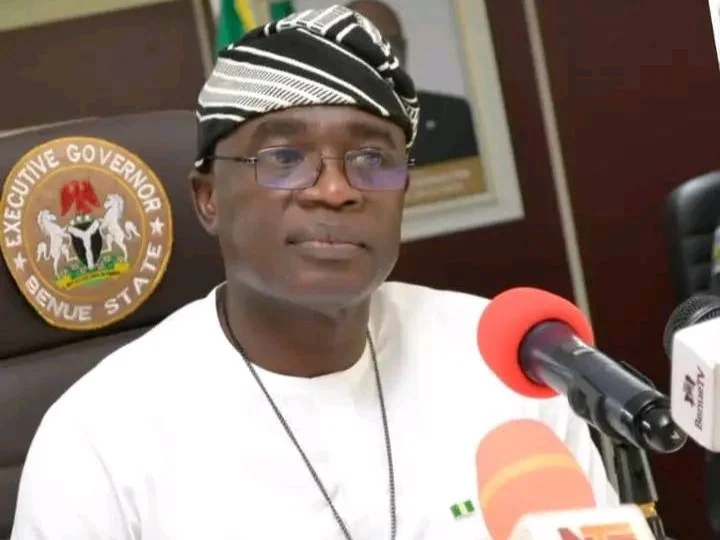
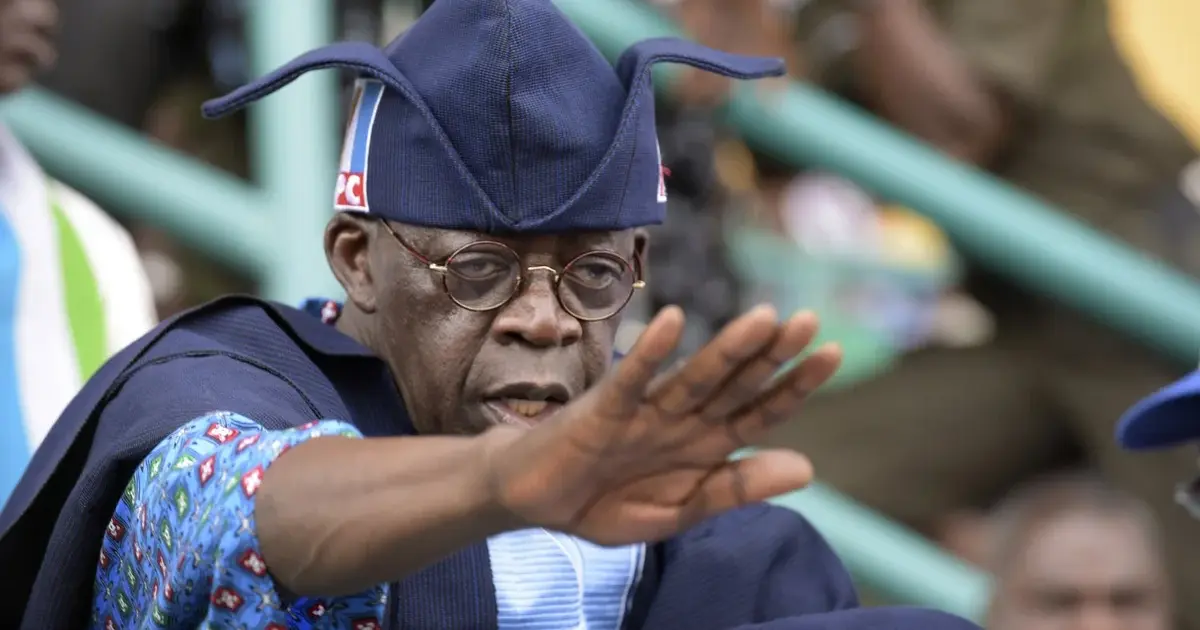
Sen Natasha Akpoti: N/Central women write Tinubu

Decry strong arm tactics. Say FG lawsuit sends wrong signal North Central women on Saturday urged the Federal Government not to trample on the rights of citizens. ‘’Senator Natasha Akpoti-Uduaghan’s rights are slowly extinguished. Her complaints, protests and appeals are now treated as seditious murmurings’’ They also advised the Federal Government not to provide a justification for political anarchism. The women in a statement in Lafia said the lawsuit against Akpoti-Uduaghan was capable of sending wrong signals of political oppression of women in Nigeria. They urged President Bola Tinubu to prevent the 10th Senate from being ill governed. The zonal women advised President Tinubu to go to the root of the matter involving the Senate President, Godswill Akpabio and the Senator representing Kogi Central, Chief Natasha Akpoti-Uduaghan. The statement issued by the Chairperson of North Central Women Front (NCWF), Mrs. Mary Adamu, described the recent case filed by the Federal Government against Senator Akpoti-Uduaghan as a desire for conquest and a bad way of maintaining or restoring stability, patriotism and morality among the people. ‘’The problem in the Senate cannot be resolved in this manner. It is in going to the root that you will find the solution of a number of problems of the 10th Senate which the leadership cannot settle’’. The statement counseled Tinubu not to yield to the fatal temptation of oppressing women in the country. Particularly, the women urged Tinubu to apply human wisdom, follow public reason and act aright by asking the Attorney General and Minister of Justice to quickly withdraw the lawsuit from the court. The statement emphasized sincere reconciliation and the question of morality. The women praised Akpoti-Uduaghan for her honest heart. They also underscored shameful methods in conflict resolution and the activities of fierce and brutal men in the country.
We’re not elected to fight executive – Akpabio

President of the Senate, Mr. Godswill Akpabio says lawmakers were not elected to engage in confrontation with the Executive. The former Governor of Akwa Ibom state argues that, on the contrary, the role of the senate is to foster policies that promote national development. Akpabio said this in an upcoming documentary to mark two years of the Bola Tinubu administration, Mr Bayo Onanuga, the President’s spokesman, said in a statement on Tuesday. Akpabio was reflecting on the importance of cooperation between the National Assembly and the Executive. He said: “When elected into the National Assembly, whether in the Senate or the House of Representatives, your constituents will not give you boxing gloves. “It’s not a boxing tournament. You are there to work in a bipartisan manner for the interest of Nigeria.” The President of the Senate emphasised that the relationship between both arms of government had been cordial over the past two years, owing to a shared vision for the country’s progress. “If you spend all your energy fighting the Executive, who will work for Nigeria?” he asked. He added that the current administration was unique in Nigeria’s history, with a President, First Lady, and Vice President, all former senators. Highlighting legislative priorities, Akpabio said the National Assembly was working on a bill mandating Ministries, Departments, and Agencies (MDAs) to prioritise procuring locally assembled vehicles over imported alternatives. “We have started the bill for enacting legislation to enable us first purchase automobiles from Nigerian companies before thinking of importing them,” he said. “We lose billions of dollars annually importing vehicles and other items that can be produced locally,” he said. Akpabio underscored the urgent need to revive Nigeria’s manufacturing sector, citing the collapse of the textiles industry and cash crops, such as cotton, groundnut and palm oil, which were once the bedrock of the economy. “Over 50 textile companies have left Nigeria. The cotton industry collapsed. The groundnut industry collapsed. The palm oil industry collapsed. Look at countries like Malaysia that have leveraged palm oil to boost their economies,” he lamented. Akpabio praised the “Nigeria First” policy championed by the Tinubu administration, describing it as a “fantastic” initiative that deserved legislative backing. He said discussions were ongoing with the Raw Materials Research and Development Council to promote laws ensuring Nigeria produced most of what it consumed. “We are going to make laws and produce bills that ensure almost every item we consume that can be produced in Nigeria is produced in Nigeria. “Taking Nigeria first means bringing industries back to the country to serve our population of over 200 million,” he said. Akpabio called for more support for local entrepreneurs, noting that even small-scale production ventures such as vinegar or bread could thrive in Nigeria’s vast consumer market. “Even if you produce vinegar and bag it well, it will fly. If you produce bread, you will be a millionaire considering the kind of population that we have,” he stated. He promised that the National Assembly would pass the necessary legal instruments to sustain this industrial renaissance and reduce the country’s import dependence. Regarding checks and balances, Akpabio refuted claims that the legislature was merely rubber-stamping executive decisions. He noted that the National Assembly had occasionally rejected presidential nominees when necessary. “People forget that we have made enemies by rejecting some of the nominees that the President sent to us. It’s not everything the President brings that he takes back the same way,” he said. Akpabio maintained that the Assembly’s role was to scrutinise, amend, and support executive actions that aligned with national interest. “Our job is to make sure we cross the T’s and dot the I’s to assist the President in having the best for the Nigerian population,” said Akpabio. He assured Nigerians that the 10th National Assembly would continue prioritising pro-people legislation supporting the President’s bold reform agenda. “This government is not a government of theory; it’s a government of action. So, for us in the National Assembly, we are very focused on pro-people legislation,” Akpabio stated. He cited several landmark legislative interventions that aligned with the administration’s reforms, including the Student Loan Act (NELFUND), Tax reform bills and the Minimum Wage Bill. “We have done quite a lot in just two years. I assure Nigerians that more people-focused laws are coming: laws that will reduce hardship, open the economy, and empower young people. “From the perspective of the National Assembly, we have scrutinised almost every bill that the President has brought. We have aligned it with the Nigerian people’s realities and needs and supported it by ensuring they are speedily passed. “We don’t waste time on anything that will enhance the living standard of Nigerians,” he said.
Shadow Govt: DSS drags Prof. Pat Utomi to court

The Department of State Services (DSS) has sued renowned academic and politician, Prof. Pat Utomi over his plan to establish “a shadow government” in the country. The DSS, in a suit filed at the Federal High Court in Abuja, prayed the court to declare the move as an attack on the constitution. The News Agency of Nigeria (NAN) reports that in the fresh suit marked FHC/ABJ/CS/937/2025, Utomi, the 2007 Presidential Candidate of the African Democratic Congress (ADC), is sued as sole defendant. The security outfit, in the suit filed on May 13 by Akinlolu Kehinde, SAN, contended that the move by Utomi was intended to create chaos and destabilise the country. The DSS argued that not only was the planned shadow government an aberration, it constituted a grave attack on the constitution and a threat to the democratically elected government that is currently in place. It expressed concern that such a structure, styled as a “shadow government,” if left unchecked, may incite political unrest, cause inter-group tensions, and embolden other unlawful actors or separatist entities to replicate similar parallel arrangements, all of which would pose a grave threat to national security. The plaintiff, therefore, urged the court to declare the purported “shadow government” or “shadow cabinet” being planned by Utomi and his associates as “unconstitutional and amounts to an attempt to create a parallel authority not recognised by the Constitution of the Federal Republic of Nigeria, 1999 (as amended).” It is also sought a declaration that “under Sections 1(1), 1(2) and 14(2)(a) of the Constitution, the establishment or operation of any governmental authority or structure outside the provisions of the Constitution of the Federal Republic of Nigeria, 1999 (as amended) is unconstitutional, null, and void.” The plaintiff prayed the court to issue an order of perpetual injunction, restraining Utomi, his agents and associates “from further taking any steps towards the establishment or operation of a ‘shadow government,’ ‘shadow cabinet’ or any similar entity not recognized by the Constitution of the Federal Republic of Nigeria, 1999 (as amended).” The plaintiff, in its grounds of argument, hinged its prayers on the fact that Section 1(1) of the Constitution declares its supremacy and binding force on all persons and authorities in Nigeria. It added that Section 1(2) prohibits the governance of Nigeria or any part thereof except in accordance with the provisions of the constitution. According to the DSS, Section 14(2Xa) states that sovereignty belongs to the people of Nigeria, from whom government through the constitution derives all its powers and authority. It contended that Utomi’s proposed shadow government lacked constitutional recognition and authority, thereby contravening the aforementioned provisions. The plaintiff further stated in a supporting affidavit that it is the principal domestic intelligence and security agency of the Federal Republic of Nigeria statutorily mandated to detect and prevent threats to the internal security of Nigeria, including subversive activities capable of undermining national unity, peace and constitutional order. The DSS added that it is statutorily empowered to safeguard the internal security of Nigeria and prevent any threats to the lawful authority of the Federal Republic of Nigeria and Its constituent institutions. It stated that it has monitored, “through intelligence reports and open source material, public statements and interviews granted by the defendant, Professor Patrick Utomi, in which he announced the purported establishment of what he themed a ‘shadow government’ or ‘shadow cabinet, ’comprising of several persons that make up its ‘Minister.’ “The ‘shadow government’ or ‘shadow cabinet’ is an unregistered and unrecognised body claiming to operate as an alternative government. contrary to the provision of the Constitution of the Federal Republic of Nigeria, 1999 (as amended). “The defendant (Utomi), through public statements, social media, and other platforms, has announced the formation of this body with the intent to challenge the legitimacy of the democratically elected government of Nigeria. “While inaugurating the ‘shadow cabinet’, the defendant stated that it is made up of the Ombudsman and Good Governance portfolio to be led by Dele Farotimi; the Policy Delivery Unit Team consisting of Oghene Momoh, Cheta Nwanze, Daniel Ikuonobe, Halima Ahmed, David Okonkwo and Obi Ajuga: and the council of economic advisers. “Based on the intelligence gathered by the plaintiff, the activities and statements made by the defendant and his associates are capable of misleading segments of the Nigerian public, weakening confidence in the legitimacy of the elected government, and fueling public disaffection,” it said. The DSS said in the discharge of Its statutory duties, it had gathered intelligence confirming that the defendant’s actions pose a clear and present danger to Nigeria’s constitutional democracy. “The defendant’s actions amount to an attempt to usurp or mimic executive authority, contrary to Sections 1(1), 1{2), and 14(2Xa) of the 1999 Constitution (As Amended), which exclusively vests governance in institutions duly created under the constitution and through democratic elections. “The Federal Government of Nigeria has made several efforts to engage the defendant to dissuade him from this unconstitutional path, including statements made by the Minister of Information, but the defendant has remained defiant.” The agency said it would be In the interest of justice, national security and the rule of law for the court to declare the existence and operations of the defendant unconstitutional and illegal. The suit is yet to be assigned to any judge for hearing.
Hedonistic rulers and ‘Nigeria First’ distraction

By: Ugo Onuoha WE will start with the unusual by copiously quoting an online entry (Artificial Intelligence, AI) characterization of a hedonist. We do so to see whether many of Nigeria’s rulers in the past, and more so currently fit the descriptions. We are doing so in light of the recent Nigeria First ‘policy’ of Alhaji Bola Ahmed Tinubu, Nigeria’s president, and his All Progressives Congress (APC), and whether the pronouncement is worth the paper on which it was written. Or even whether as usual the ruling political party which has become a scourge on Nigerians is at it again with its propaganda, and pulling wool over our eyes. It has been the trademark of the APC since the days and years of the retired Maj.- Gen. Muhammadu Buhari, the affliction of Nigeria, from 2015-2023. They were the years of the locusts. Unfortunately, two years after he departed the presidency in a whimper and shame, the siege of the locusts has not abated. To the majority of our people their situations have become much more dire, and life-threatening. Meta AI says ‘a hedonist is someone who prioritizes pleasure, comfort, and self-indulgence in their life’. Does this characterisation ring a bell as it pertains to our succession of rulers? To elaborate, the online entry goes ahead to outline the characteristics of a typical hedonist as a pleasure – seeking person who prioritizes activities and experiences that brings him pleasure including fine dining, travel, or entertainment. A hedonist is also likely to be prone to self-indulgence, overindulging in luxuries, comforts, or vices, such as excessive spending, substance abuse (psychotropic substances and vintage expensive wines in the case of our rulers), or other forms of self- gratification. Again, as special species, hedonists are more likely to prioritize short – term pleasure over long-term consequences. In Nigeria, our hedonistic rulers pay scant regards to any consequences or responsibilities or indeed pushback or adverse reactions from the citizens. We are in a place where citizens fear the rulers instead of the other way round. Hedonists are more disposed to disregarding societal norms and mores in the single – minded pursuit of their own pleasures and desires. They lay emphasis on their personal satisfaction and put their happiness above other considerations. The entry talks about the different types of hedonism which includes epicurean hedonism, the type which emphasizes the pursuit of moderate pleasures and the avoidance of physical pain and mental distress. Nigeria’s hedonistic ruling elite do not pursue their pleasures in moderation but they avoid pain and any type of distress. There’s also Cyrenaic hedonism. Our rulers congregate in this region where they emphasize pursuit of immediate physical pleasure and sensual experiences. Many of them are sexual harassers and predators. Excessive hedonism where a preponderance of Nigeria’s ruling elite can be found comes with consequences including addiction, neglect of responsibilities, and imbalanced life. Overindulgence often leads to addiction, while prioritizing pleasure over responsibilities leads to neglect of important duties and obligations. Finally, excessive focus on pleasure can lead to an imbalanced life, neglecting other important aspects such as relationships, personal growth, and positive contributions to society, country and humanity. Hedonism and many of our rulers are one and the same. And the receipts are in plain sight. Any ruling class which luxuriates in hedonistic indulgences is incapable of driving change, inspiring hope not to talk of renewing hope, and pulling the people up by their bootstraps. And the online depiction in preceding paragraphs fully captured the essence of Nigeria’s ruling elite. So its preachments of prioritizing things Nigeria, going forward, are just that – preachments. They are hollow and designed to hoodwink. Like some other previous rulers and political parties, Alhaji Tinubu and the APC are contemptuous of the country and Nigerians. Therefore, they are not equipped, and are incapable of doing much to benefit this country and its citizens. They don’t even care. What good do you expect from a dispensation that was founded on a corrupt and corrosive premise of “emi lo Kan”. Their recent proclamation of Nigeria First ‘policy’ on government procurements and sundry activities is a ruse. The greatest enemies of patronizing anything Nigeria are the governments at all levels, and their top functionaries – from the president down to the councillors in the local governments. Majority of Nigerians are already practicing Nigeria First, though it may not be out of choice, but because they are condemned to doing so due to government policies that have limited their options. If some ordinary folks have developed a voracious appetite for consuming foreign goods, it would only be because our rulers failed to create the objective conditions for them to appreciate and patronise Made in Nigeria products. A casual scrutiny, (can you actually casually scrutinize), of the highlights of the Nigeria First ‘policy’ will tell you immediately that there was no sincerity behind it. Coming at this time it is obvious that the Nigeria First ‘policy’ is yet another political gimmick ahead of the 2027 election when Tinubu will be seeking a second term. It’s meant to be a talking point to fill a void created by the non-performance of the extant regime. Whenever an incumbent is due for a possible reelection the common question to be asked the governed is whether their lot was better than when the ruler assumed office. In the case of Nigerians as of today, the answer should be self – evidently a resounding no. The lives and living standards and conditions of Nigerians have deteriorated from a bad dream during the era of Buhari to a nightmare in this season of Tinubu. In this dispensation human misery has increased; many more citizens are dropping below the poverty line; corruption is widespread; accountability by public office holders no longer exists (which explains why, for example, a humanitarian affairs minister who was sacked over one year ago on allegations of stealing has yet to be tried); insecurity has gotten worse with new terrorist groups springing up almost on
FG Rallies Stakeholders to Relaunch Home-Grown School Feeding Programme

…says programme Requires N900bn to N1trn Annually In a renewed push to combat child hunger, improve education, and stimulate local economies, the Federal Government has initiated fresh consultations with stakeholders on the relaunch and expansion of the Renewed Hope National Home-Grown School Feeding Programme (RH-NHGSFP). The high-level meeting, held at the Federal Secretariat in Abuja, was spearheaded by the Minister of State for Humanitarian Affairs and Poverty Reduction, Dr. Tanko Yusuf Sununu. The event marks a significant step towards revitalizing the programme under the Renewed Hope Agenda of President Bola Ahmed Tinubu, GCFR. Speaking at the meeting, Dr. Sununu disclosed that an estimated N900 billion to N1 trillion would be needed annually to provide nutritious meals to primary school pupils in grades 1 to 3. The programme aims to deliver at least three meals per week to each pupil. While noting that appropriations from the federal budget would support the initiative, the Minister stressed the need for additional sources of funding to ensure sustainability. “This programme cannot thrive on government funding alone. Strategic partnerships and innovative funding mechanisms are key to achieving our goals,” he said. Providing further insight, the National Coordinator and CEO of the National Social Investment Programme, Associate Professor Badamasi Lawal, PhD, identified a range of potential funding channels. These include presidential support, international donor contributions, stakeholder grants, and 5% of recovered repatriated funds. “As stakeholders, your technical expertise, strategic insights, and financial backing are invaluable,” Dr. Badamasi stated. “This engagement is not only about collaboration but also about co-creating a system that directly aligns with the Sustainable Development Goals—especially the eradication of hunger, the promotion of quality education, and poverty reduction.” He added that the RH-NHGSFP is more than a social programme—it is a key component of the Tinubu administration’s strategy to deliver inclusive and people-centered development. “We are tackling multiple challenges through this initiative: reducing malnutrition, increasing school enrollment, supporting smallholder farmers, and invigorating local economies—one nutritious meal at a time,” he emphasized. Dr. Badamasi also outlined enhancements in the programme’s model, which focus on transparency, efficiency, inclusiveness, and measurable outcomes, with the ultimate goal of making RH-NHGSFP a model for other nations seeking sustainable school feeding systems. The meeting concluded with a presentation by Dr. Princess Aderemi Adebowale, the National Programme Manager, who unveiled the Enhanced Platform of the NHGSFP, signaling the beginning of what many hope will be a more robust, data-driven, and impactful era for school feeding in Nigeria.
Insecurity: NGF sets up c’ttee to partner security agencies

In a belated move, better than none at all, the Nigeria Governors’ Forum has set up a sub-committee to work out a solution to security challenges in the country. The committee is expected to collaborate with the heads of security agencies for immediate resolution of the issues giving to the spate of insecurity. Governor Hope Uzodinma announced this in the early hours of Thursday while reading a communique issued after the NGF’s second meeting held late Wednesday in Abuja. The communique was signed by the forum’s Chairman, Gov. AbdulRahman AbdulRazaq of Kwara. Uzodinma noted that the governors’ decision was in response to technology-driven solutions presented by the Chief of Defence Staff (CDS). ”The Forum received a presentation from the CDS on an innovative security initiative aimed at strengthening national and sub-national capacity for early threat detection and coordinated response. ”The project envisions the phased deployment of advanced technology and infrastructure to improve surveillance, crisis management and public safety. ”Governors expressed support for the initiative’s objectives and underscored the importance of technology-driven solutions in addressing evolving security challenges at the state level. ”Governors also commended the CDS and indeed the Nigerian military for these valuable propositions and initiatives,” he said. Uzodinma added that the forum also received a presentation from the Minister of Housing and Urban Development, Ahmed Dangiwa, on unlocking the economic potential of land through a Federal-State partnership for land reform. He said that the minister outlined ongoing housing initiatives under the Renewed Hope Programme and proposed a comprehensive land registration reform to formalise land ownership, enhance tenure security and boost internally generated revenue across states. ”The Forum also received a presentation on a proposed strategic partnership with Powercom Smart Grid Nigeria Limited (PSGN), aimed at revitalising the electricity distribution sector through private sector investment. ”Under the proposed agreement, PSGN will assume operational control of select distribution companies (Discos), introduce advanced smart grid technologies and establish a meter production facility to enhance service delivery and energy across states,’’ he said. Dangiwa who spoke earlier in an interview with newsmen, said the presentation was to update the governors on the current administration’s Renewed Hope Cities and Estates Programme. The minister said, the presentation was also to request for land from all the state governors yet to offer the required land needed for the housing programme. Also speaking, Gov. Uba Sani of Kaduna State said the recent killings and attacks in some states should not be seen as an indictment on the governors because they have limited roles to play in addressing security challenges. Sani said while he agreed with the National Security Council comment he also believed that security agencies in Nigeria should also step up action and do what is right. He said that while leaders must take responsibility, there was need for all stakeholders to work together and address the problem of insecurity. ”In my opinion, it is not an indictment. I do agree that we have a limited role to play concerning the constitution of Nigeria. ”By the grace of God, it is one of the areas we are going to look at, the possibility of the creation of state police in Nigeria, which for me would go a long way in tackling insecurity, particularly at the sub-national level,’’ he said.
Tinubu pledges nationwide road infrastructure boost

President Bola Tinubu says his vision is to complete and expand all key road infrastructure projects across Nigeria to improve nationwide connectivity. Represented by the Governor of Kaduna State, Uba Sani, Tinubu stated this on Sunday during the inauguration of section two of the Abuja-Kaduna-Zaria-Kano road project. The President said the road is a vital link between the North and South, and the government is committed to easing travel across the country. “My vision is to overhaul Nigeria’s roadways by completing and expanding critical infrastructure projects nationwide,” Tinubu stated. He acknowledged that some projects began under past administrations but praised his government for refining partnerships, addressing funding issues, and setting new completion timelines. “In almost two years, we’ve awarded several new road projects, many of which have already been completed to boost trade, productivity, and regional development,” Tinubu said. He added that no part of Nigeria is being neglected in the ongoing infrastructure upgrades sweeping across the nation under his leadership. Tinubu said Kaduna State and Northern Nigeria have especially benefited from major infrastructure improvements since his administration began. He highlighted the Abuja-Kaduna-Zaria-Kano dual carriageway as a landmark project and one of Nigeria’s most critical road networks. The road connects the Federal Capital Territory with about 12 states across the north-central, northwest, and northeast, aiding both economic and social development. Also, Tinubu approved an 11-kilometre extension to connect the road to Aminu Kano International Airport. He also added 10 kilometres at the start of section one, between Kogi State and Abuja, for greater coverage. Tinubu directed that solar-powered lights be installed throughout the road for safety and illumination. Minister of Works, David Umahi, praised Tinubu’s dedication to improving Nigeria’s infrastructure, especially in the road sector. Umahi revealed that the 700-kilometre road would be completed using concrete-reinforced pavement within 14 months. He said the project spans 350 kilometres each way from Abuja, passing through Niger State to Kaduna, Zaria, and ending in Kano. The minister confirmed that Julius Berger had completed 480 kilometres of the Kano section, with 280 kilometres remaining to be done. Umahi stated that construction of sections one and three, totalling 118 kilometres, had been awarded for N252 billion with 30 per cent upfront payment to Infiouest. He added that section two, 82 kilometres each way (164 kilometres total), had been flagged off at a cost of N525 billion. The entire road project, close to a trillion naira in total, is being executed by Infiouest, which Umahi endorsed as reliable. Umahi assured Nigerians of progress and said the ministry would return in 30 days to assess the ongoing work. He disclosed plans for zonal engagements across the six geopolitical zones to report on road and bridge achievements under the Tinubu administration. Minister of State for Works, Bello Goronyo, reaffirmed Tinubu’s commitment to Nigeria’s socioeconomic development. Goronyo called Tinubu a leader for all regions, with dedication to every corner of the country. “We deeply appreciate your efforts; your impact is felt nationwide,” Goronyo said. He commended Tinubu for projects in Illela, Sokoto, Lagos, and Badagry, highlighting them as part of major legacy superhighways. “This is a performing President, bringing renewed hope and positive change to Nigerian lives,” Goronyo added. He encouraged communities to support the contractors, governors, and the president in building a prosperous and transformed Nigeria.
Fr. Hyacinth Alia, you are decidedly wrong!

An open letter by Professor Sebastian T. Hon (SAN, DSSRS) to Governor Hyacinth Alia PrefaceI personally refused to watch your media chat of Thursday, 10th April, 2025. The reason was plain enough: I was strongly persuaded in my spirit that you would not raise the hope of, let alone console, your subjects on the security situation in the State you are governing. My suspicion and hunch came to be true when I later watched it! What a sad day for the people of Benue State! It was Khalil Gibran who once said “You talk when you cease to be at peace with your thoughts.” I cannot, as a Lawyer of this height (with all sense of humility and responsibility) be silent and allow your wrong opinion on the ECOWAS Transhumance Protocol to go unchallenged. Proper consultation would have made you avoid that area, even if you would want, as you have clearly shown, to take no single interest in protecting the lives of the Benue people. Your interpretation of the ECOWAS protocol is wrong First of all, the Protocol was the product of the 21st Conference of Heads of States of ECOWAS countries, reached in 1998, not 1978, and registered as “Decision A/DEC.5/10/98.” Secondly, contrary to the deliberately wrong information passed by you at the said media chat that the Protocol willy-nilly permits the movement of cattle in the West African Sub-region, the following provisions of the Protocol created preconditions for such movement: (a) Article 3, while granting such right of movement, states that such movement shall be subject to “the conditions set out in this Decision.”(b) Article 5 then sets the conditions for such movement in the following words: Article 5“All transhumance livestock shall be allowed free passage across points of entry into and departure from each country on the condition that they have the ECOWAS International Transhumance Certificate, a sample of which is annexed to this Regulation. The aims of the Certificate are: Drawing from the above, I openly challenge you or any of those herders you are so eager to protect to show to the Benue people EVEN A SINGLE CERTIFICATE issued to any of those herders to embark on transhumance. Remember to also show to the Benue people whether any such Certificate (if any) has satisfied the following conditions: (a) Has stated the composition of the herds of cattle that are thronging Benue State and indeed Nigeria;(b) Has indicated the vaccinations given to those herds;(c) Has shown in clear terms the itinerary of those herders in Nigeria generally and in Benue State particularly;(d) Has shown the border posts crossed into Nigeria and the final destination of the herders and their cows; and(e) Has shown the country of origin, to enable facts about the issuing authority to be verifiable.In addition to the above, Article 6 of the Protocol requires that the said Certificate in question “shall be verified and counter-signed by the competent authorities at the entry and exit points in the host country.” I will, therefore, require you to point out where any “competent authority” signed any such Certificate (if any). Not yet done, Article 7 mandatorily provides as follows: “Transhumance herds shall follow the routes defined by Member States in accordance with the itinerary indicated on the ECOWAS International Transhumance Certificate.” My Governor, I hereby humbly request you to prove that ECOWAS Members States, including Nigeria, have designed the routes followed by these herdsmen! I BOLDLY STATE TO YOU THAT NO SUCH ROUTES HAVE BEEN DESIGNATED TO DATE! PROVE ME WRONG, IF YOU CAN! Another provision is Article 9, which provides that, in addition to other sanctions provided in the laws of host countries, “herds not covered by a Certificate shall be placed under quarantine and the costs borne by the owners.” This means that those cows are supposed to have been quarantined on your orders, not the other way round, Mr. Governor. Article 12 requires herdsmen to be in possession of ID papers “duly signed by the competent authorities in their countries of origin.” Also, Article 13 provides that stray animals must be apprehended and impounded.” Have we not had instances of those animals straying into farmlands in Nigeria at large and in Benue State in particular? Have you ordered for the apprehension and impoundment of any of them? Where are the ID cards of those herdsmen? To show you that you are thoroughly wrong in your assertions, I will hereby quote verbatim the provisions of Articles 14, 15 and 16 of the Protocol: “Article 14Each host country shall fix the period during which migrating livestock may enter into and depart from its territory, and inform the other States accordingly. “Article 15Each State shall define the areas where transhumant animal may be stocked and shall determine the maximum, capacity of each zone thus identified. The accompanying herdsman must pen up his herd in the zone of which he is directed by officials, at the point of entry. “Article 16Herdsmen accompanying transhumant livestock and who are legally admitted into the host country shall be given protection by the authorities and their fundamental rights shall be guaranteed by the judicial institutions of the host country. In return, such herdsmen shall observe all laws and regulations of the host country, particularly those concerning the conservation of forest reserves and forest resources and the management of watering points and pastoral land.” Has any of those conditions been met by these your friends? Haba, Your Excellency!Let me inform you, if you are not aware, that till date, none of the contracting parties to the Protocol, including Nigeria, has satisfied EVEN ONE OF THOSE CONDITIONS, including issuance of the Transhumance Certificate, which is the fons et origo (source) of all those other conditions listed above. In other words, neither the primary condition (issuance of Transhumance Certificates) nor the secondary conditions (all the other conditions listed above – as provided for in the Protocol) has been satisfied by the ECOWAS Member States! CONTRADICT ME ON THIS, IF YOU CAN! Consequently,
MTP is the law; he can do no wrong

By Ugo Onuoha THERE are many persons in this republic whose names should never appear in the same sentence with the word democracy. Alhaji Bola Ahmed Tinubu, Nigeria’s current president is one such name. There are many others. He has been around for more than awhile. His reputation precedes him, but hardly for good. There’s no suggestion here that he’s a thoroughly bad man. And irredeemable. But he carries such a heavy baggage that ordinarily would have killed off the social, cultural, political, economic, public and private lives of three persons combined. You will be living in denial not to give credit to any person who has allegedly lived with a false name almost all his life, and who has travelled the world and also worked in transnational corporations with the said dodgy name. You probably may have read or known of someone who claimed to be an alumnus of a school they never attended. Tinubu is one such person. Claiming alumnus of an academic institution not attended is almost an everyday occurrence these days. He had once claimed to be a former student of the University of Chicago, and actually filled a form in that regard for election purposes. But it turned out that he was not a former student of that college. He was caught. He recanted, and then quickly recruited one senator Tokunbo Afikuyomi to play the role of a fall guy. He got away with it in spite of a dogged pursuit in the law courts by the late fiery attorney Gani Fawehinmi. “Tinubu is baked in the furnace of the streets, at home and abroad. Apart from becoming the president of our country, not much has changed concerning him. During his soujourn in the US in the 1970s, he was also law onto himself or an outlaw as some would like to say until he was not. He was alleged to be a banker to outlaws and henchmen of the underworld.” In line with what appeared to be his life and career, the same person who is today the president of our country attempted to hoodwink old students of the prestigious Government College, Ibadan in Oyo state to host a reception for him as one of their own who has made it in life, decades ago. Again, he was caught at the last minute when nobody could identify as his classmate. However, he was undeterred. Somewhere in his dark past, Tinubu had filled out yet another application to the effect that he had attended yet another Government College, but this time in the Eric Moore, Surulere area of Lagos in 1970. A casual search indicated that Government College, Eric Moore was founded in 1974, clear four years after he claimed that he had attended the school as part of a requirement for admission into a university in the US. He reportedly gained the admission into the college. The admission, to this day, remains controversial. He’s said to have acquired a diploma from that university. But the diploma remains controversial. Even forgery has been associated with it. Lawyers say you cannot put something on nothing and expect it to stand. This is not for Tinubu. He puts something on nothing, and wills it to stand. With Tinubu, the so-called learned people are stark illiterates. In some other climes their citizens and sundry gatekeepers of the sanity and health of their nations work extra hard to keep away some people from the levers of the powers of government. Many fall into the category of people who are usually shut out of acquiring and exercising the enormous powers of government. But for this conversation we will restrict ourselves to only two categories of such persons who should be kept out of wielding state power. The first of such persons are those who are mired in sullied and questionable past. The fear is that those in this category carry their life of criminal ‘entrepreneurship’ into government to the hurt of the majority of the people. A leopard does not change its spot. The second group that every sane society tries very hard to keep out of the very top echelons of government is the extremely wealthy, especially those with riches of the questionable type. During the 2023 presidential election, the phrase ‘wealth without enterprise’ gained currency and traction. There are many of them in government today. Lawyer and politician, Muiz Banire, it was who once described them as politicians without a second address. For such people partisan politics and access to the public treasury is their sole and only means of sustenance and livelihood. To them the talk of democracy and its ethos are tales by idiots. To them majority of Nigerians are fools and only good enough to be used as canon fodders in the quest for political power. “Tinubu has no principles. He only pretends to be a democrat. He is driven by selfish interests. He’s a tortured man. He is insecure in spite of his bragaddacio. If you are in doubt about how insecure Tinubu is, look at the form and texture of his security chiefs and kitchen cabinet?” Tinubu is baked in the furnace of the streets, at home and abroad. Apart from becoming the president of our country, not much has changed concerning him. During his soujourn in the US in the 1970s, he was also law onto himself or an outlaw as some would like to say until he was not. He was alleged to be a banker to outlaws and henchmen of the underworld. And reportedly refunded a huge sum of money to the US authorities in Chicago for alleged illicit deals. A lawyer who was one of his campaign spokespersons in 2023 said Tinubu was not sued for the recovery of the money suspected to be proceeds from illicit drugs. He said only the bank accounts which bore his name were sued for wrongdoing. The man who was engaged in that lawyering, Festus Keyamo, is today the minister of aviation
Scientist urges FG to tackle poverty, hunger for improved health

Dr Livinus Abonyi, a Medical Imaging Scientist challenges the Federal Government to tackle poverty and hunger if it hopes to reduce pervasive ill health in the country. Abonyi, a Lecturer in the Department of Medical Radiography, University of Lagos, made the call in an interview on Monday in Lagos. He said that poverty contributes to ill health, which in turn aggravates the level of poverty. The medical scientist expressed concern over Nigeria’s growing food security challenges. He attributes the growing food challenge to climate change, economic instability, limited access to quality agricultural inputs, and market constraints for smallholder farmers. According to him, such a trend ends up having adverse effects on the country’s health indices. He said over 40 per cent of Nigerians below the poverty line and nearly 20 per cent of children under five suffer chronic malnutrition, based on 2020 World Bank Report. “Urgent action is needed to build resilient food systems to improve the nation’s health indices. “Living in poverty can have a devastating effect on health; and poor health leads to poverty. “Good leadership, strong partnerships, and targeted investment will change this trajectory to bridge the gaps with smart solutions,” he said The Nigerian setting where more than five people live in a room apartment thereby contributing to the spread of airborne diseases compounds the situation, he added. The causes of poor health for millions globally include political, social and economic injustice. Dr. Ahonyi added that poverty was both a cause and a consequence of poor health. He added that poverty increases the chances of poor health and poor health, in turn, traps communities in poverty. “The World Bank recognises the relationship between economic development and health. “It also recognises that the poor health indices in most developing countries are as a result of entrapment in a vicious circle of unrelieved poverty. “Therefore, for our economy to be more vibrant, we need to pay more attention to the health and welfare of the population and of course the health sector,” he said. The scientist explained that, to improve on the poor health indices, healthcare policies must be inclusive of all socio-economic strata. Tackling the structural causes of poverty and poor health, he argued, requires adopting measures to address inequality and injustice by the government. “There must be universal basic healthcare coverage and provision of health insurance to Nigerians, especially the rural community dwellers. “Reducing poverty, improving nutrition and making sure people have access to safe water and sanitation, as well as strengthening national health systems, is of the utmost importance. “Otherwise, tackling one particular threat simply leaves people open to another deadly disease soon afterward,’’ Abonyi said.