

By Godfrey Onyilo Onmoke
Introduction: An Election That May Be Shaped Before Election Day
Nigeria is approaching the 2027 general elections under circumstances that raise fundamental questions about the health of its democracy, the preparedness of its opposition parties, the credibility of its electoral institutions and the willingness of political leaders to place national interest above personal ambition.
President Bola Ahmed Tinubu seeks another mandate at a time when millions of Nigerians continue to grapple with rising living costs, declining purchasing power, insecurity and uncertainty about their economic future. His governing party, the All Progressives Congress (APC), enters the contest with considerable political advantages, including control of the federal government, an extensive party network and the support of numerous governors.
The opposition possesses potential sources of strength of its own. These include public dissatisfaction with the administration, Peter Obi’s appeal among many younger Nigerians, Atiku Abubakar’s experience in national governance and the possibility of building a coalition around a credible alternative programme.
Yet these advantages may count for little if opposition leaders cannot reconcile their ambitions, if legal controversies narrow the field of competition, or if citizens lose confidence in the institutions responsible for conducting the election.
Recent developments have intensified these concerns. The reported Supreme Court judgment of 24 September 2026 on political party membership registers and nomination procedures, followed by INEC’s announcement that certain candidates would be excluded, has heightened political anxiety.
Such concerns deserve serious examination, but allegations of partisan interference must be distinguished from established facts. A judicial decision that disadvantages an opposition candidate does not, by itself, establish political favouritism. Equally, the formal legality of an administrative decision should not exempt it from scrutiny over consistency, transparency and procedural fairness.
The central question is therefore broader than who will win the presidency. Can Nigeria maintain a genuinely competitive electoral environment? Will the opposition develop a coherent strategy? Can the governing party defend its record convincingly? Above all, will the election command sufficient public confidence to strengthen rather than weaken democratic legitimacy?
The answers will shape not only the distribution of political power but also the relationship between the Nigerian state and its citizens.
The Supreme Court Judgment: Electoral Compliance Or Political Exclusion?
The Supreme Court’s judgment of 24 September 2026 has become a major point of controversy in preparations for the 2027 elections.
In INEC v. Zenith Labour Party, Appeal No. SC/CV/495/2026, the Supreme Court restored Sections 77(5), 77(6), 77(7) and 84(2) of the Electoral Act 2026 after setting aside an earlier Court of Appeal decision that had invalidated the provisions. The provisions concern party membership registers, participation in party primaries and candidate nomination procedures.
The legal principle is straightforward: political parties must comply with electoral laws. No party can demand strict adherence to statutory requirements from its opponents while treating its own obligations as optional.
Nevertheless, enforcing such provisions can have significant practical consequences, particularly when disputes arise close to an election. A candidate who has secured a nomination may lose the opportunity to contest because of an alleged procedural failure by the party. Voters who support that candidate may consequently find their preferred choice unavailable.
On 14 October, INEC explained that the omission of Isa Pantami in Gombe State and Ladi Adebutu in Ogun State from its final governorship candidate lists followed the commission’s interpretation of the Supreme Court judgment and the applicable membership-register requirements.
INEC also said that parties disputing omissions had until 24 October 2026 to notify the commission under Section 32(2) of the Electoral Act 2026. The availability and outcome of any subsequent legal remedy should be assessed from the relevant records.
These omissions have acquired political significance because of the prominence of the affected candidates and the wider atmosphere of distrust surrounding electoral administration. The Supreme Court ruling did not specifically determine the individual cases of Pantami and Adebutu; INEC applied its interpretation of the judgment and the relevant statutory requirements.
The appropriate response is neither to assume that every adverse ruling reflects a political conspiracy nor to dismiss every objection as the complaint of a disappointed politician. Both approaches weaken serious democratic debate.
Instead, the circumstances of each case should be examined against the law and the available evidence. Were the requirements communicated clearly? Were deadlines applied consistently? Were parties given the same opportunity to comply? Were comparable breaches treated similarly? Have affected candidates been able to pursue appropriate legal remedies?
The timing of a judgment can also have significant consequences. A ruling delivered or implemented close to an election may leave a candidate with limited time to seek redress and voters with little opportunity to reassess their choices.
That does not mean a court should disregard the law because an election is approaching. It means that timely adjudication and clear procedures are essential components of electoral justice.
The decisive test is consistency. If the same statutory requirements apply to candidates across political parties, they must be enforced according to the same standards.
Should evidence emerge that comparable violations are treated differently according to political affiliation, public suspicion would have a stronger foundation. Conversely, transparent and consistent enforcement would strengthen confidence in the institutions responsible for the process.
The controversy therefore raises a fundamental issue: how can electoral law be enforced without undermining public confidence that political competition remains fair?
Judicial Independence and INEC’s Institutional Credibility
The judiciary and INEC occupy positions of exceptional responsibility in a democracy. Their authority depends not only on their formal constitutional powers but also on the confidence citizens place in their decisions.
Courts must determine disputes according to the law, while INEC must administer elections impartially. Neither institution can guarantee that every candidate or party will be satisfied with its decisions. Their responsibility is to demonstrate that those decisions are based on lawful procedures rather than partisan preferences.
The challenge arises when a succession of disputed judgments, candidate exclusions and disagreements over electoral procedures creates the impression that political competition is being shaped outside the ballot box.
A perception of institutional bias is not proof of actual bias. Yet such perceptions cannot simply be dismissed, particularly when they concern institutions that determine who may contest elections and how votes translate into political authority.
Public confidence is strengthened when institutions explain their decisions clearly, publish relevant information, treat comparable cases consistently and provide lawful avenues for redress.
INEC should therefore ensure that decisions affecting candidates are accompanied by sufficient explanations for independent scrutiny. Political parties, in turn, should present documentary evidence when challenging the commission’s actions rather than relying exclusively on accusations.
The judiciary must remain insulated from political pressure, but judicial independence should not become an argument against legitimate public scrutiny of judgments. Courts are most credible when their reasoning can withstand examination.
The issue is not whether institutional decisions will disappoint some political actors; that is inevitable in a competitive democracy. The real question is whether Nigerians can reasonably conclude that the rules are applied fairly, regardless of the candidate or party involved.
An election can lose public confidence long before voting begins if citizens believe that the available choices are being unfairly restricted.
The APC’s Structural Advantages: Incumbency, Governors and Political Organisation
Tinubu enters the 2027 contest with advantages that cannot be ignored in any realistic assessment of the presidential race.
The first is incumbency. The president enjoys national visibility, access to an established governing platform and the opportunity to present government policies as evidence of leadership. His administration can communicate its achievements, defend its decisions and promise further reforms from a position that opposition candidates do not occupy.
The second advantage is the APC’s extensive network of governors and political officeholders.
Governors often exercise considerable influence over state-level political organisation. Their relationships with legislators, local party leaders, community networks and other political actors can assist in mobilising supporters and coordinating campaigns.
When numerous governors support the same presidential candidate, the governing party may benefit from a more coherent organisational structure than a divided opposition.
However, political endorsements do not automatically translate into votes. Voters may support their governor while rejecting the governor’s preferred presidential candidate. They may also distinguish between state-level performance and the federal government’s economic record.
A third APC advantage is its capacity to sustain alliances across regions and political constituencies. A party with a broad national network can draw on relationships that have developed through previous elections and political negotiations.
Yet this network also creates a burden of accountability. The more extensively the APC controls political institutions and state governments, the more difficult it becomes to distance the party from the overall performance of the governing establishment.
Voters experiencing economic hardship may judge the party collectively rather than attribute every difficulty to an individual minister or governor.
Consequently, the APC’s organisational strength could become a liability if its political dominance is not accompanied by convincing improvements in living standards.
Incumbency can provide a candidate with visibility, resources and an established campaign structure. It cannot permanently substitute for public satisfaction with the results of government.
Tinubu’s Economic Record: The Principal Test of Re-election
The economic question will be central to Tinubu’s effort to secure another mandate. Since assuming office in May 2023, his administration has pursued major reforms, including the removal of the longstanding petrol subsidy and the liberalisation of the foreign-exchange system.
The government has defended these measures as necessary to reduce fiscal distortions, improve market efficiency and create conditions for sustainable economic growth. Supporters argue that the previous arrangements imposed substantial costs on public finances and could not continue indefinitely without serious consequences.
Critics, however, contend that the speed and implementation of the reforms placed severe pressure on households and businesses, particularly those with low or irregular incomes.
Both the economic rationale and the social consequences deserve examination.
Reducing subsidy expenditure can ease pressure on public finances, but higher petrol prices can increase transport fares, food-distribution costs and production expenses. Exchange-rate adjustments can create opportunities for exporters while increasing the local-currency cost of imported goods, machinery and industrial inputs.
For ordinary Nigerians, the decisive question is not whether an economic policy is theoretically defensible, but whether households can afford food, pay rent, meet medical bills, educate their children and maintain a reasonable standard of living.
Macroeconomic indicators may improve while many citizens continue to experience hardship. Conversely, difficult reforms may eventually produce benefits if they are accompanied by effective economic management, social protection and policies that expand productive employment.
The administration must therefore show that the benefits it attributes to its reforms are becoming visible in Nigerians’ daily lives.
If inflationary pressures ease, real incomes improve, employment opportunities expand and essential goods become more affordable, Tinubu will have a stronger argument for continuity. If households remain trapped in economic insecurity despite official claims of progress, his campaign may struggle to persuade voters that the sacrifices have been justified.
The opposition must also demonstrate seriousness. Criticising the government’s economic record may attract public attention, but a credible alternative requires more than promises to reverse unpopular policies.
Opposition candidates should explain which policies they would retain, which they would modify, how proposed interventions would be financed and how quickly citizens could reasonably expect relief.
A responsible economic programme must address both immediate hardship and long-term productivity. It should explain how employment will expand, domestic production will improve, public revenue will be managed and vulnerable households will be protected.
The 2027 election should consequently become a contest between demonstrable records and credible policy alternatives, not a competition in which the government offers assurances while the opposition offers only denunciation.
Peter Obi: Personal Credibility, Youth Appeal And The Challenge Of National Reach
Peter Obi occupies a distinctive position in Nigeria’s opposition politics. His appeal is particularly visible among younger Nigerians and citizens who favour a different style of political leadership. Many supporters associate him with personal simplicity, restrained public presentation, attention to public expenditure and a demand for greater accountability in government.
His style contrasts with the conventional model of Nigerian elite politics, where extensive patronage networks, political alliances and relationships with influential personalities frequently play important roles.
For supporters who distrust political extravagance, Obi represents the possibility of a presidency more attentive to public resources and measurable results. His civility and relatively restrained public demeanour also form part of his political identity.
However, personal reputation is only one component of presidential leadership.
A candidate must build a national coalition, establish effective party structures, recruit capable personnel and offer policies that can be implemented within the federation’s constitutional and financial realities.
Obi’s challenge is to translate enthusiasm into sustained electoral organisation.
Nigeria’s large young population gives youth mobilisation considerable potential. Nevertheless, young Nigerians are not a uniform political constituency. Their preferences differ according to employment, education, location, economic circumstances, religious affiliation and personal experience.
Social-media popularity and large rallies can demonstrate enthusiasm, but neither necessarily translates into equivalent votes across the federation.
Effective mobilisation requires sustained community engagement, voter participation, well-organised polling-unit structures, credible electoral agents and sound logistics.
Obi must also persuade citizens outside his strongest areas of support that his programme addresses their concerns. These include insecurity in the North-East and North-West, agricultural livelihoods in rural communities, industrial development in the South-East and South-West, and the economic and environmental challenges of oil-producing communities in the Niger Delta.
His campaign must explain how its proposals would address these varied needs within a coherent national framework.
Personal simplicity may strengthen his appeal among voters who distrust political extravagance. Yet Nigerians will also want evidence that his leadership style is accompanied by the administrative capacity, political relationships and policy discipline necessary to govern a complex country.
Obi’s central challenge is therefore to combine personal credibility with national reach, organisational strength and a persuasive programme for government.
Atiku Abubakar: Experience, Northern Politics And The Demand For Renewal
Atiku Abubakar brings a different set of political assets to the presidential contest.
His experience as vice-president, his long involvement in national politics and his repeated participation in presidential elections provide him with considerable familiarity with the machinery of government and the complexities of Nigeria’s political system.
His supporters can reasonably argue that such experience matters in a country confronting economic pressures, insecurity, institutional weaknesses and difficult relationships among its constituent regions.
The presidency requires coordination among ministries, security institutions, fiscal authorities, diplomatic partners and state governments. A candidate familiar with these relationships can present that experience as an advantage.
However, experience does not automatically establish a candidate’s suitability for another term in office.
Voters may ask whether a politician who has occupied senior positions within the political establishment represents the change they seek. A long political career invites scrutiny not only of a candidate’s promises but also of the record associated with that career.
Atiku must explain what his administration would do differently, why his proposals would be effective and how he would address the problems that previous governments have failed to resolve satisfactorily.
His political calculations also intersect with northern regional and religious considerations.
Northern Nigeria contains a substantial proportion of the electorate, but its population is neither politically nor religiously homogeneous. The region includes Muslim and Christian communities, urban and rural populations, farmers, traders, public servants, industrial workers and young people with differing priorities.
Religious identity can influence political mobilisation, particularly where voters perceive a candidate as representing their community or protecting its interests. Yet economic hardship, insecurity, education, employment and the performance of state governments also influence electoral decisions.
Atiku cannot assume that his established relationships in northern political circles will automatically produce electoral support throughout the region.
He must appeal to voters who value experience while addressing those who favour generational change or a different model of governance. He must also demonstrate that his candidacy can contribute to a viable national coalition rather than become another source of division within the opposition.
His experience will be an asset only if he can translate it into convincing responses to today’s challenges.
Opposition Disunity: The Strategic Advantage It Could Give Tinubu
The most serious strategic problem confronting Nigeria’s opposition is its difficulty in coordinating around a common electoral objective.
Opposition leaders may share dissatisfaction with the incumbent government while disagreeing over who should lead an alternative administration. Such disagreements are understandable. Presidential ambition is rarely surrendered easily by politicians who have spent decades building their reputations, networks and party structures.
Nevertheless, unresolved rivalry can weaken the collective prospects of those seeking a change of government.
Nigeria’s 2023 presidential election provides an important reference point. Tinubu won with approximately 37 per cent of the valid votes, while Atiku and Obi finished second and third respectively. The opposition vote was distributed among several candidates rather than consolidated behind one challenger.
This result does not prove that a united opposition would necessarily have defeated Tinubu. Voters do not automatically transfer their support when their preferred candidate withdraws. Differences in policy, regional identity, personal loyalty and perceptions of credibility can prevent a complete transfer of votes.
Even so, fragmented opposition support can influence the distribution of votes and the strategic opportunities available to an incumbent.
The problem is not simply the number of presidential candidates; it is the absence of a credible mechanism for reconciling competing ambitions.
Opposition parties do not necessarily need to merge into a single organisation. Multiparty democracy requires room for competing political programmes. However, parties that share substantial policy objectives can explore arrangements that allow them to cooperate without abandoning their individual identities.
They could negotiate a common candidate, establish transparent selection criteria, agree on a minimum programme for government or coordinate their efforts to protect electoral transparency.
Such arrangements require compromise and mutual confidence.
A leader who insists on becoming the presidential candidate regardless of the consequences may preserve a personal ambition while weakening the broader political objective. Equally, a rival who demands withdrawal without accepting a fair process for selecting the common candidate may deepen distrust.
The opposition’s problem is therefore organisational as well as personal: how to persuade established politicians that influence can sometimes be preserved through compromise rather than through personal control of the presidential ticket.
A photograph of opposition leaders standing together is not evidence of unity if they later return to competing declarations and mutual accusations.
A credible coalition requires an agreed process, clear responsibilities, a common programme and a willingness to respect collective decisions.
Contesting Separately: Democratic Choice Or Strategic Miscalculation?
The decision to contest separately is legitimate when parties have genuinely different ideological positions or policy priorities. It becomes more questionable when candidates who claim to seek the same national transformation refuse to cooperate without adequately considering the consequences.
Nigeria’s presidential election operates under constitutional requirements concerning the distribution of votes across the federation. A candidate must satisfy both the applicable national vote requirement and the relevant geographical distribution requirements. Winning a large plurality in a fragmented field is therefore not sufficient by itself.
Suppose three opposition candidates attract substantial support from voters who are dissatisfied with the incumbent. Their combined support might be significant, yet each could struggle to secure the geographical spread required for victory. The governing party might benefit from this division even without enjoying majority support among all voters.
That is a plausible scenario, not an inevitable outcome. The supporters of different opposition candidates may have incompatible preferences, and some may abstain rather than support a rival.
Nevertheless, opposition leaders should distinguish personal popularity from the ability to build an electoral majority.
A candidate may command intense enthusiasm among particular groups without possessing the national reach, party organisation or alliances required to win a presidential election.
The lesson of 2023 is not that every opposition candidate must withdraw. It is that fragmentation has consequences that deserve honest assessment.
If several leaders argue that Nigeria urgently needs a change of direction, they should explain why their individual candidacies are preferable to a credible, collectively agreed strategy.
The electorate deserves political choices based on clearly articulated programmes rather than repeated declarations of unity followed by uncompromising competition among the same leaders.
Ordinary Nigerians And The Real Stakes Of 2027
For many Nigerians, political arguments about presidential ambition and party rivalry are becoming increasingly disconnected from the realities of daily life.
A trader wants predictable costs and enough customers to sustain a business. A farmer needs security, affordable inputs, access to markets and a fair return on produce. Parents want to educate their children without sacrificing essential household needs. Young graduates want realistic opportunities to earn a living. These concerns should define the 2027 political debate.
The election will give citizens an opportunity to compare competing approaches to economic management, job creation, security, education, healthcare and public accountability. The value of that choice, however, will depend on the quality of the alternatives on offer.
Candidates should answer specific questions: How will they address food insecurity and the cost of living? What measures will expand productive employment? How will they improve security without undermining civil liberties? What will they do to strengthen public education and healthcare? How will they ensure that public funds are used transparently and that essential services receive adequate financing?
They should also explain the costs of their proposals. Promises to reduce prices, create millions of jobs or expand social benefits mean little without credible funding arrangements, implementation plans and measurable targets.
Economic reform must likewise be assessed through both its intended objectives and its consequences for vulnerable households. Governments should explain how the burdens of adjustment will be managed and what evidence will demonstrate that the promised benefits are materialising.
Citizens must also resist the temptation to treat political leaders as objects of personal loyalty. Candidates should be evaluated according to their records, proposals, integrity and capacity to deliver results.
The ballot remains an instrument through which voters can influence the direction of government. Its effectiveness depends on informed participation, credible electoral administration and the willingness of citizens to demand accountability.
Who Benefits From The Present Political Trajectory?
The immediate beneficiaries of opposition fragmentation and electoral controversy are difficult to identify with certainty. Their potential effects, however, can be examined.
The first potential beneficiary is the incumbent party. When its opponents divide their votes, spend resources on internal disputes or struggle to establish a common message, the APC may enjoy a strategic advantage because it already possesses an established national organisation.
That advantage does not prove that the governing party caused the disputes or that it will necessarily win the election. Opposition divisions can emerge from genuine ideological differences, personal rivalry, regional interests and poor internal party management.
Opposition parties must accept responsibility for resolving their own organisational problems. At the same time, their weaknesses do not absolve public institutions of the obligation to act impartially.
A second potential beneficiary is any political actor who prefers a campaign dominated by personality disputes rather than substantive policy debate.
When public attention is consumed by legal controversies, party defections and arguments over political entitlement, candidates may face less scrutiny of their economic proposals, security records and plans for public expenditure.
This can produce intense political activity without improving the quality of information available to voters.
The opposition itself may be among the principal losers. Parties that cannot manage nominations, comply with statutory requirements or resolve leadership disputes risk weakening their candidates and damaging their long-term credibility.
Voters may also lose when their preferred candidates are excluded through a legally valid process that leaves them disappointed, or when an improper decision unfairly restricts their choices. The distinction between lawful exclusion and unjustified exclusion must be determined through evidence and appropriate remedies.
The governing party faces a different risk. Although opposition fragmentation may offer short-term political advantages, an election widely perceived as unfair could weaken the legitimacy of the resulting government.
A credible victory in a competitive election provides a stronger foundation for implementing difficult policies and negotiating national compromises. Persistent doubts about electoral impartiality can instead deepen political alienation and weaken public confidence.
The greatest potential loss is therefore not confined to any one party. It is the erosion of the belief that elections offer Nigerians a meaningful opportunity to influence the direction of government.
Regional and Religious Politics: Important Factors, Not Fixed Voting Blocs
Nigeria’s regional diversity and religious composition will influence the 2027 contest, but neither should be treated as a system of automatic political allegiance.
Atiku’s relationships in northern political circles, Obi’s appeal among many younger Nigerians and the APC’s alliances across different regions provide distinct foundations for political mobilisation. Yet none of these factors guarantees the voting behaviour of an entire constituency.
Northern voters do not share one political preference. Young Nigerians are not uniformly aligned with Obi. Governors who support the APC cannot assume that every voter in their states will support the party’s presidential candidate.
The same caution applies to religious identity.
Religion can influence political choices when candidates are perceived as representing a community or protecting its interests. However, voters also evaluate security, employment, education, food prices and the performance of government.
A farmer concerned about insecurity may prioritise access to land and markets. A trader facing rising transport costs may judge candidates according to their economic policies. A young person without employment may place greater emphasis on job creation than on the religious identity of political leaders.
These considerations can interact with identity, but they cannot be reduced to it.
Candidates seeking national office must demonstrate that they understand the different concerns of the federation and can develop policies that respond to them without treating any region or religious community as a captive constituency.
The ability to build bridges across social and geographical divisions is therefore an important measure of presidential leadership.
What A Credible Opposition Strategy Would Require
A viable opposition strategy must begin with an honest assessment of electoral realities and a willingness to make difficult decisions.
First, a transparent process for choosing a presidential candidate.
If opposition leaders believe a common candidate would improve their prospects, they must agree on a selection mechanism that commands the confidence of participating parties. Negotiated consensus, agreed selection criteria or another mutually accepted process could provide a basis for cooperation.
Second, a common policy programme.
Agreement on a presidential candidate is insufficient if the coalition cannot explain what it intends to do in government.
The participating parties should establish clear positions on economic management, security, employment, education, healthcare, public-sector accountability and federal relations. Their differences need not disappear, but they should identify a minimum programme on which all participants can agree.
Third, organisational discipline and legal compliance.
Opposition parties must maintain accurate membership registers, conduct nomination processes properly, meet statutory deadlines and resolve internal disputes before they threaten their candidates’ eligibility.
The controversy surrounding membership-register requirements demonstrates the political consequences of failing to manage these responsibilities.
Fourth, effective national mobilisation.
The opposition needs a campaign that reaches beyond established supporters. It must engage communities across the federation, explain policies in accessible language and demonstrate how proposed measures would address local economic and security concerns.
Fifth, acceptance of collective decisions.
Opposition leaders must accept that collective decisions sometimes require personal sacrifice. A politician who cannot accept any outcome other than personal nomination may obstruct the very change that the politician claims to seek.
A credible opposition must therefore demonstrate not only that it can criticise the incumbent but also that it can govern itself, coordinate competing interests and present a practical alternative.
What the APC Must Do to Earn Another Mandate
The governing party has responsibilities that extend beyond taking advantage of opposition weaknesses.
Tinubu and the APC must explain why Nigerians should support another four years of their administration. That explanation should rest on verifiable achievements, realistic plans and an honest assessment of unresolved problems.
The government should provide credible evidence of progress in inflation management, employment, real incomes, infrastructure, public revenue and security. Where improvements have occurred, their scale and significance should be explained. Where difficulties remain, the administration should acknowledge them and identify practical measures for addressing them.
The government must also explain how the costs of economic adjustment will be managed and how vulnerable households will be protected.
Reforms may produce long-term benefits, but the public needs evidence that those benefits are reaching ordinary people. Assertions about future prosperity cannot indefinitely substitute for improvements in living conditions.
The APC must also recognise that electoral legitimacy is an asset, not an obstacle to political power.
Transparent administration, consistent enforcement of electoral law and timely resolution of disputes serve the long-term interests of the governing party as well as the opposition. A government that emerges from a credible election is better positioned to implement difficult policies and seek public cooperation.
The administration should therefore welcome legitimate scrutiny of electoral procedures and its own candidates. Questions about institutional impartiality should be answered through evidence and transparent processes rather than dismissed automatically as partisan hostility.
Ultimately, the APC must answer two related questions: what has the administration achieved, and why should Nigerians trust it to continue governing?
Its political organisation may help it win support, but its record will determine the strength of its argument for another mandate.
Five Possible Directions For The 2027 Contest
The eventual shape of the election remains uncertain. The final field of candidates, campaign alliances, legal disputes, economic conditions and voter responses will influence the outcome. Nevertheless, several plausible scenarios deserve attention.
1. A fragmented opposition facing a coordinated APC
If opposition leaders remain divided while the governing party maintains a relatively coherent national campaign, the APC could benefit from incumbency, established political networks and the distribution of opposition votes among competing candidates.
The extent of that advantage would depend on voter turnout, the geographical distribution of support, campaign effectiveness and compliance with constitutional requirements for presidential victory.
2. A negotiated opposition coalition
If opposition leaders agree on a common candidate and a credible programme, the election could become a more direct contest between competing national visions.
Such a coalition would not guarantee victory. Its success would depend on whether the participating parties could reconcile their differences, retain their supporters and persuade voters that their policies were practical.
3. Continued disputes over candidate eligibility
Further litigation over membership registers, nominations or other electoral requirements could introduce additional uncertainty.
The consequences would depend on the facts of individual cases, the applicable law and the availability of timely remedies. Prolonged disputes could disrupt campaigns and leave voters uncertain about the candidates available to them.
4. An election dominated by economic and security concerns
If household hardship and insecurity remain central public concerns, candidates will face increasing pressure to explain how their programmes would improve everyday life.
The governing party would need to defend its record, while the opposition would need to demonstrate that its alternatives were affordable and implementable.
5. A contest in which institutional confidence becomes a central issue
If disputes involving INEC and the judiciary intensify, the perceived credibility of the electoral process could become an important campaign issue.
Candidates might then compete not only on public policy but also on whether voters believe the system offers a fair opportunity to participate.
These scenarios are not mutually exclusive. The final contest could combine elements of all five. Its character will depend substantially on how political leaders and institutions respond to the challenges before them.
The Decisive Test: Will Nigerians Trust The Result?
The credibility of a presidential election cannot be measured solely by the identity of the winner. It also depends on whether citizens believe that political power has been allocated according to accepted rules.
Eligible candidates must have a fair opportunity to participate. Voters must be able to make informed choices. Ballots must be counted accurately, and disputes must be resolved impartially.
Political parties must comply with the law and provide evidence when challenging electoral decisions. INEC must communicate its decisions clearly. Courts must adjudicate disputes according to the law. The media must distinguish established facts from political allegations, while citizens should assess claims critically rather than accepting them simply because they favour a preferred candidate.
The controversy surrounding candidate exclusions illustrates why these distinctions matter. The reported Supreme Court judgment is a judicial development; INEC has offered explanations for particular exclusions; affected political actors have expressed objections. Whether any specific decision was improperly influenced requires evidence relevant to that case.
A credible electoral system must withstand scrutiny without treating every question as an attack. Equally, political criticism must be specific enough to identify the decision, evidence or procedure being challenged.
Official assurances alone cannot create public confidence. Confidence grows through consistent conduct, transparent procedures and a demonstrated willingness to correct errors when they occur.
The 2027 election will therefore test not only the ambition of political candidates but also the capacity of Nigeria’s institutions to sustain confidence in democratic competition.
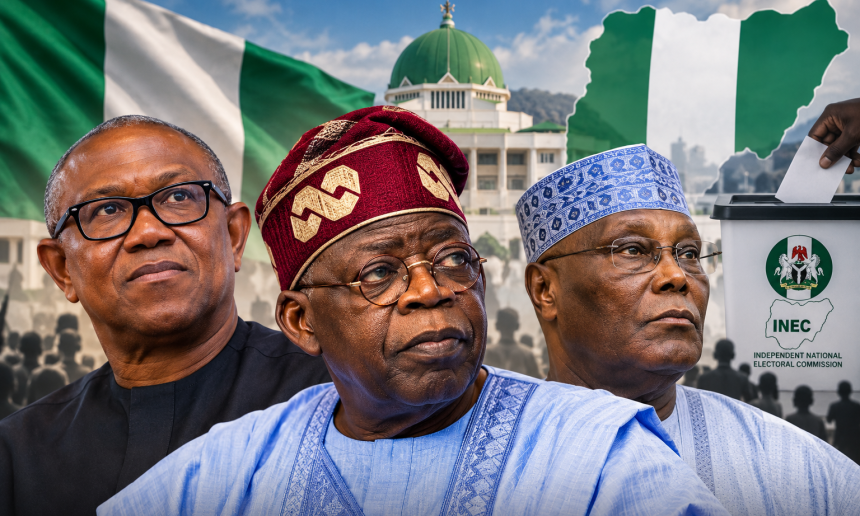
Beyond Tinubu, Obi And Atiku
Nigeria’s 2027 elections will test its political leadership, its democratic institutions and the willingness of citizens to insist on accountability.
Tinubu possesses the advantages of incumbency, an established national party structure and the support of numerous governors. He must nevertheless defend his administration’s economic record and demonstrate that its policies are improving the lives of ordinary Nigerians.
Obi brings a distinctive political appeal rooted in his public image, personal style and support among many younger Nigerians. His challenge is to translate that appeal into an effective national organisation and a convincing programme for governing a diverse federation.
Atiku brings extensive experience in national governance and established political relationships. He must demonstrate that his experience offers credible answers to present challenges and that his candidacy can attract support beyond established political constituencies.
The opposition faces a collective decision: whether to reconcile competing ambitions and develop a credible alternative or allow personal rivalries to undermine its ability to convert public dissatisfaction into electoral strength.
The judiciary and INEC must demonstrate that electoral law is applied consistently and that decisions affecting candidates are transparent, legally grounded and open to appropriate scrutiny. The APC must defend its record through performance and democratic legitimacy rather than rely exclusively on the weaknesses of its opponents.
For Nigerians, however, the central issue extends beyond the personal fortunes of the presidential aspirants. A change of government does not automatically produce better governance, just as continuity does not automatically guarantee stability or progress. The outcome depends on leadership, policy credibility, institutional strength and the willingness of citizens to hold those in power accountable.
Voters should therefore compare candidates’ records, examine their proposals and ask whether their promises are supported by realistic plans. They should demand clear answers about economic management, employment, security, education, healthcare and the protection of public resources. They should also insist that their votes be protected by institutions capable of administering the election impartially.
The gravest danger is a political process in which elite ambition eclipses the public interest, institutional controversies erode confidence and citizens are left choosing among personalities without convincing answers on governance.
Nigeria deserves a more demanding political conversation. Public office is a responsibility, not a personal entitlement. Political institutions must earn confidence through consistent conduct. Voters must judge promises against measurable outcomes. Whether the APC retains power or an opposition candidate emerges victorious, the ultimate test will begin after the election.
Will food become more affordable? Will employment opportunities expand? Will communities become safer? Will public institutions become more accountable? Will young Nigerians have stronger reasons to believe that their future can be built at home? These are the questions that should define the 2027 elections.
Nigeria’s democratic future will depend not only on who wins the presidency but also on whether the election strengthens the conviction that political power belongs to the people and must be exercised in their interest.
Godfrey Onyilo Onmoke: A retired Public Servant, an author, writes in from Abuja, Nigeria.