Bandits storm Buhari’s home state, kill several villagers

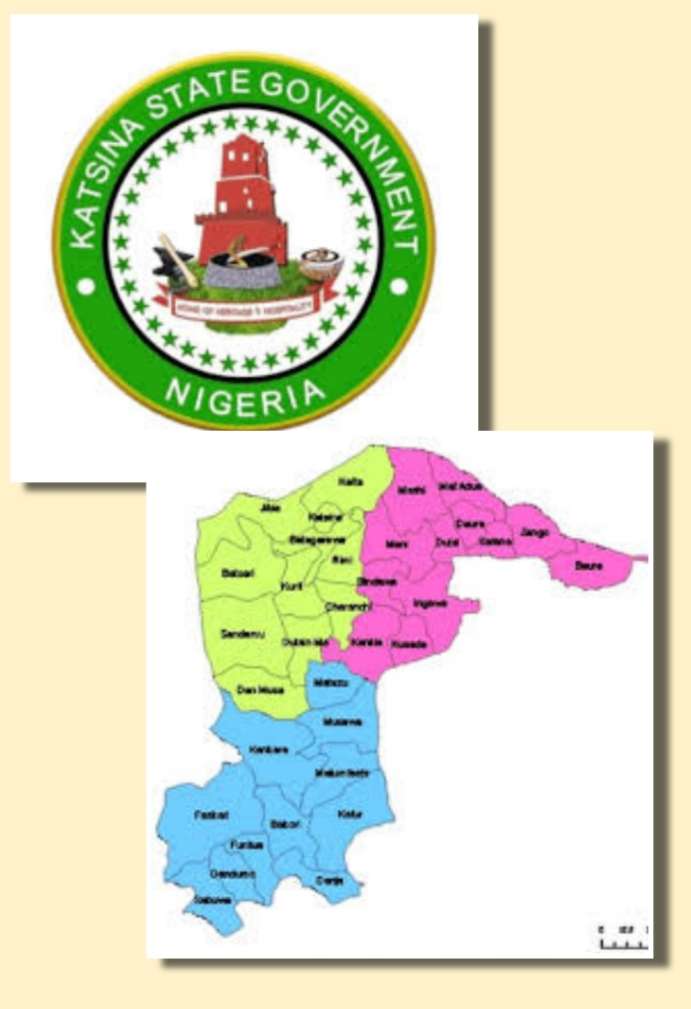
The Katsina police command has confirmed that bandits attacked three villages in Bakori Local Government Area, resulting in the deaths of 11 people.  Police spokesman Abubakar Sadiq-Aliyu announced this in a statement on Sunday. “We are aware of a misleading report making the rounds, especially on Facebook, that bandits attacked three villages in Bakori and killed 40 people. The command wishes to categorically debunk this claim as misleading and set the record straight,” the police statement said. It added, “On May 25, 2024, bandits launched an attack on Unguwar Lamido village in Bakori where they shot and killed 11 people. The Divisional Police Officer in Bakori, on receiving the information, quickly mobilised operatives and rushed to the scene where they successfully restored normalcy and prevented further losses.” The command urged the public to disregard the false report, warned against circulating unverified news, and advised them to always verify information through official channels before sharing, as the spread of false information could cause panic, fear, and unnecessary tension. “The commissioner has also ordered a thorough investigation into the incident and deployed additional personnel to ensure the arrest of the perpetrators. The commissioner has also urged anyone with useful information that will assist the investigation to come forward and assist in bringing the perpetrators to justice. “The investigation is ongoing; the command is working closely with relevant stakeholders and members of the community to identify and apprehend those responsible for the attack,” the police command said.

Nigerian Army denies involvement in Kano Emirate tussle

The Nigerian Army has clarified that contrary to claims, it is not involved in enforcing any court order related to the ongoing Kano Emirate tussle. Major General Onyema Nwachukwu, Director of Army Public Relations, clarified in a statement on X that the troops are not engaged in the emirate dispute. He said instead, the Army has taken proactive measures to prevent any potential breakdown of law and order that might arise from the conflict. “The issue of paramount concern to the Nigerian Army and other security agencies is the prevention of breakdown of law and order in the state, which could be taken advantage of by adversarial non-state actors. “The military would imminently intervene when it becomes apparent that the intensity of the security situation becomes overwhelming for the police. “All the Army is doing at this stage is to monitor the situation as it unfolds and be on standby in the event of any escalation that could threaten the security of the state and the region in general,” the statement reads in part.

Obasanjo proffers solutions to Nigeria’s economic woes

Former Nigeria President, Olusegun Obasanjo has told President Bola Ahmed Tinubu to ramp up activities around production and productivity to tackle Nigeria’s economic woes. Obasanjo disclosed this in a statement by his Media Aide, Kehinde Akinyemi, on Sunday, quoting the ex-president as having spoken at a Colloquium: “Nigeria’s Development: Navigating the Way Out of the Current Economic Crisis and Insecurity” delivered at the Paul Aje Colloquium (PAC) in Abuja. Obasanjo blamed fuel subsidy removal, the Harmonization of foreign exchange markets and dealing with a military coup in Niger for Nigeria’s economic hardship. However, as a solution, the former President said the government should focus on production, noting that there is no shortcut to economic progress. “The way forward is production and productivity, which belief and trust in government leadership will engender. No shortcut to economic progress but hard work and sweat. “The economy does not obey orders, not even military orders. I know that. If we get it right, we will begin to see the light beyond the tunnel in two years. It requires a change of characteristics, attributes and attitude by the leadership at all levels to gain the confidence and trust of investors who have alternatives,” he said. Recall that in June last year, Tinubu’s administration announced fuel subsidy removal and the Harmonization of Foreign exchange markets. In April, fuel pump price surged by 176.02 per cent on a year-on-year basis to N701.24 per litre compared to N255.06 last year. Similarly, the country’s Naira dropped to N1482.81 per dollar last Friday from N465.50 per dollar on June 14, 2023. This development has led to a surge in prices of goods and services, as headline and food inflation increased to 33.69 per cent and 40.53 per cent, respectively.

Fresh facts emerge about Ajayi Crowther University Student Tortured To Death by colleagues 

Fresh facts have emerged about the Ajayi Crowther University Student who was tortured to death by colleagues recently. An activist from Warri Kingdom in Delta State, south-south Nigeria, identified as ‘Lord Of Warri’ has revealed that a student of Ajayi Crowther University killed by fellow students was a prince. He identified the deceased student as Prince Alex Timileyi of Warri Kingdom. In an open letter addressed to the Oyo State Governor, Seyi Makinde, and posted on his X page, the activist called on the governor to ensure those who tortured Alex to death are brought to justice. His letter is titled, ‘Regarding the Tragic Murder of Prince Alex Timileyi of the Warri Kingdom at Crowther University, Oyo State.’ In the letter, he identified the deceased as “the son of Princess Antonia Emiko, daughter of Olu Erejuwa II (1951-1986), and an aunt of the current Olu of Warri. He was also a first cousin of His Majesty, Ogíamè Atuwatsé III CFR, the Olú of Warri Kingdom”. He said, “This incident has left us deeply saddened and concerned about the safety and security of students in schools not just in Oyo State but in Nigeria as a whole. As Itsekiri people, we appeal to you, the Governor of Oyo State, Makinde, to ensure that the perpetrators of this heinous crime are brought to justice. “While we are aware that the deceased was alleged to have stolen, we vehemently oppose the act of taking the law into one’s hands without proper investigation. “The claim that he was caught with a stolen phone led to a brutal 6hours torture, the beating that began on Friday at 6pm and tragically ended with his death on Saturday at 10am. This inhumane treatment is unacceptable. “No one should be punished without a fair trial and due process. It is equally unacceptable for the school management and the perpetrators of this crime to go unpunished.” He noted that according to the laws of the Federal Republic of Nigeria, one is presumed innocent until proven guilty by the courts of law, “with both sides having an opportunity to present their case and evidence”. He said, “However, the young prince was neither on trial nor was he arrested. Instead, he was beaten to death. He was also the only son of his mother, making this loss even more devastating. “Therefore, we urge your office and the security agents in Oyo State to conduct a thorough investigation into this matter and ensure that justice is served. “The perpetrators of this heinous act must be held accountable and face the full wrath of the law. We cannot allow the murder of an Itsekiri prince to go unpunished. It is important for His Excellency to know that the Yoruba and Itsekiri people are one and the same. “Allowing these murderers to go free would be equivalent to allowing the killers of your own family members to go unpunished, without seeking justice.” “Your Excellency, we eagerly await your swift action in bringing the culprits to justice,” added. Meanwhile, the university management in a statement credited to its spokesperson, Femi Atoyebi, and published by the News Agency of Nigeria on Saturday, said the group of students who assaulted the deceased had been expelled. He added that the students had been handed over to the police for prosecution. “Contrary to what is trending, the university affirms that there is no cultism in the institution, just as the university has zero tolerance for any sort of anti-societal vices and misconduct. “It is important to stress that the expelled students do not belong to any cult group,” Atoyebi said.

ZACCH ADEDEJI’s PRINCIPLES OF TAXATION: A PATHWAY TO NIGERIA’S ECONOMIC GROWTH

Regularise your tax positions or face sanctions, FIRS warns shippers

Abdulahi Ismaila Ahmad, PhD Since the assumption of Zacch Adedeji, Ph.D to office as the Executive Chairman of the Federal Inland Revenue Service (FIRS), I have followed keenly his enunciation of his principles of taxation, which, to my mind, can translate to a pathway to Nigeria’s economic growth. To be sure, Adedeji’s principles of taxation embody some of the normative principles of taxation, which are certainty, flexibility, equity, simplicity, and utmost good faith. At every given forum, Adedeji does not fail to reify his wholesome principles of taxation. He is wont to say that, “we will tax the fruit, not the seed; we will tax prosperity, not poverty.”These are statements of certainty and equity, which are altogether refreshing and reassuring. The reassurance in his statements is underlined by his insistence that his tax principles are focused on encouraging taxpayers to grow their investments or income so that they can yield enough taxable dividends or profits. In his most philosophical best, he compares taxpayers to gardeners and the taxman as one who waters the garden. He says it is the duty of the government to create a conducive environment for taxpayers and their businesses to thrive in the hope that once they have a fulsome yield, they will gladly pay their taxes. That is why he says the taxman is not aiming to tax poverty but prosperity. Adedeji’s principles of taxation anticipate economic boom and discourage tax hikes in times of economic depression. The flexibility principle provides that the amount of tax charged should not be the same all year round; and, that tax rates should be lowered for other social benefits during economic boom, while during economic depression tax rates may be raised to raise maximum funds for developmental projects. Adedeji’s taxation principle does not support tax hikes that will become a burden on the taxpayers or the citizenry. Thus, it is obvious that Adedeji’s taxation principle takes cognizance of the fact that taxation is the lifebuoy of the economy. It is the fecund source of economic development. It follows then that when taxes are collected and properly utilized in grooming businesses, empowering citizens through access to low interest loans and grants, diversification of business activities like the creation of value chains, and provision of critical social amenities, there will be enough income in the pool to tax. In other words, there will be enough fruit from which to pick. Recently, the federal government took the right step in the right direction by establishing the Consumer Credit Scheme, which guarantees access to loans facility for the citizenry to grow their business activities. The logic here is that once there is a boom in economic activities in the informal sector of the economy, there will be a corresponding widening of the tax net without complaint from the tax paying community. It is this veritable connection between taxation and economic growth that Adedeji’s principles of taxation seek to highlight, making them the pathway to Nigeria’s economic growth. In concrete terms, Adedeji’s unwavering commitment to expounding his taxation principles has already raked in more than Three Trillion naira in tax revenue in the first quarter of 2024 for the three tiers of government in aid of the execution of the Renewed Hope Agenda of President Bola Ahmed Tinubu. In addition to raising this much revenue, Adedeji has also reorganised the structure of the service to reflect his taxation principle of customer-centricity. He believes that taxpayers should form the focal point of the operations of the Service, and that regard, they be treated with due diligence. Presently, the Service is structured based on the category of taxpayers: Large Taxpayers Group, Medium Taxpayers Group, and Small Taxpayers Group; as well as five other services groups, viz, Corporate Services Group, People Services Group, Support Services Group, Compliance and Enforcement Support Group, and the Special Duties. This taxpayers-based operational categorisation is purposely to simplify tax payment processes, which is made more so by the introduction of the various automation platforms. And so, it is always both refreshing and reassuring to listen to Adedeji marshals his thoughts around the issue of making taxation the pivot of national development. He often couches his statements in literal parallelism, metaphor, and humour. This rare sagely gift sets him apart as a conscientious taxman. Beneath his jocular mien lies a determination to set Nigeria’s fiscal trajectory and tax system on the pathway of sustainable economic growth. ABDULLAHI ISMAILA AHMAD, PHD Director of Communications and Liaison Department, Federal Inland Revenue Service (FIRS) Abuja.

Governor El-Rufai’s Brilliant, Yet Too Cute by Half Federalism Proposition

Governor Nasir El-Rufai’s position paper on federalism is erudite, brilliant, progressive, and actionable. Yet when it comes to federalism and decentralization between state and the local governments, it is not only too cute or too smart by half (take your pick), it reeks of hypocrisy on steroid. While recommending total decentralization of power between Abuja and the state governors, El-Rufai proposes that a more prudent, and truly federal, option would be to let the Federation Account fund only the federal and the state governments, while the state governments should then fund and manage governance at the local level as they deem fit, and as reflected in the enabling laws that their respective Houses of Assembly shall enact to that effect. Every state can then have as many or as few local government councils as they may choose. El Rufai wants to eat his gubernatorial cake and still have it. While he canvasses the loosening of the top-heavy stranglehold of Abuja on the states, he is not extending the same privilege to the local governments, where the state governors impose even more draconian, more autocratic, and more stifling stranglehold on their finances and administration. Governor El-Rufai would like the governor to have their kleptomaniac fingers on the juicy honeycomb of the local government allocation to squeeze it until the Queen and worker bees are starved to death. Giving the governor the kind of monarchical power being advocated by El-Rufai will give governors, who already operate as absolute monarchies, the power of life and death at the local level. They would have the power of the purse to punish and strangulate communities that vote for the opposition political parties. It has the potential to lead to the kind of abuse of ethnic minorities and opposition parties of the nature that characterized and eventually derailed the first republic. Governor El-Rufai’s position on the relationship between governors and local governments runs counter to the spirit and letter of the U.S. presidential constitution, which was massively and insanely plagiarized to form the basis for the financially crippling 1999 constitution that has been foistered on our country. Specifically, the Tenth Amendment to the U.S. Constitution grants all powers not given to the federal government back to the people by way of state and local government. Local governments have control over a plethora of services used on a daily basis by the citizens who vote for them in municipal elections. Among these functions are Police departments, fire departments Emergency Medical Services, Libraries, Public works departments, Building and zoning departments, Public Schools (K-12), Parks and Recreation, Municipal courts, Streets and sanitation departments, roads and street departments, public safety, water sanitation, Senior citizen programs, Cemeteries, Housing, Community development, and Environmental protection. Local governments fund their activities through property taxes on land, buildings, and personal dwellings, income from licenses, fees, state-operated businesses, federal grants, state grants, and lotteries. The state governors can’t have it both ways, by demanding autonomy from the federal government while imposing their autocratic stranglehold on the local government. The local government, by its name and definition, is the level of government closest to the citizenry and is, by extension, the most appropriate arm to provide services to it. True federalism, to be effective, must be systemic and all embracing from Abuja to the states and to the remotest local government in the federation. For Governor El-Rufai to advocate for anything less will be hypocrisy on steroids. Dr. Alonge is the President of Africa-Diaspora for Empowerment & Development Inc. He is based in Miami, Florida, USA.

FG drags 36 state Govs to S/Court, seeks autonomy for LGAs

FG Expresses Readiness To Increase Supreme Court Justices

The Federal Government, through the the Attorney General of the Federation and Minister of Justice (AGF), Prince Lateef Fagbemi SAN,has dragged the 36 state governors to the supreme court over alleged misconduct in the local government administration. Specifically, the AGF is seeking full autonomy for LG as third tiers of government in the country. The Governors were sued through their respective State Attorneys General. In the suit marked SC/CV/343/2024, the AGF is praying the Apex Court for an order prohibiting State Governors from unilateral, arbitrary and unlawful dissolution of democratically elected local government leaders for local governments.. In the originating summons, AGF is also praying the Apex Court for an order permitting the funds standing in the credits of local governments to be directly channelled to them from the Federation Account in line with the provisions of the Constitution as against the alleged unlawful joint accounts created by governors. The summon personally signed by AGF, seeks an order of the Apex Court stopping governors from constituting Caretaker Committees to run the affairs of local governments as against the Constitutionally recognized and guaranteed democratically system. It also applied for an order of injunction restraining the governors, their agents and privies from receiving, spending or tampering with funds released from the Federation Account for the benefits of local governments when no democratically elected local government system is put in place in the states. The suit is predicted on 27 grounds among which are that the Nigeria Federation is a creation of the 1999 Constitution with President as Head of the Federal Executive arm of the Federation and has sworn to uphold and give effects to the provisions of the Constitution. *That the governors represent the component states of the Federation with Executive Governors who have also sworn to uphold the Constitution and to at all times,give effects to the Constitution and that the Constitution, being the supreme law, has binding force all over the Federation of Nigeria. * That the Constitution of Nigeria recognizes federal, states and local governments as three tiers of government and that the three recognized tiers of government draw funds for their operation and functioning from the Federation Account created by the Constitution. *That by the provisions of the Constitution, there must be a democratically elected local government system and that the Constitution has not made provisions for any other systems of governance at the local government level other than democratically elected local government system. *That in the face of the clear provisions of the Constitution, the governors have failed and refused to put in place a democratically elected local government system even where no state of emergency has been declared to warrant the suspension of democratic institutions in the state. *That the failure of the governors to put democratically elected local government system in place, is a deliberate subversion of the 1999 Constitution which they and the President have sworn to uphold. *That all efforts to make the governors comply with the dictates of the 1999 Constitution in terms of putting in place, a democratically elected local government system, has not yielded any result and that to continue to disburse funds from the Federation Account to governors for non existing democratically elected local government is to undermine the sanctity of the 1999 Constitution. *That in the face of the violations of the 1999 Constitution, the federal government is not obligated under section 162 of the Constitution to pay any State, funds standing to the credit of local governments where no democratically elected local government is in place. Fagbemi SAN therefore asked the Apex Court to invoke sections 1, 4, 5, 7 and 14 of the Constitution to declare that the State Governors and State Houses of Assembly are under obligation to ensure democratically system at the third tier of government in Nigeria and to also invoke the same sections to hold that the governors cannot lawfully dissolve democratically elected local government coincils. The AGF also prayed for invocation of sections 1, 4, 5, 7 and 14 of the Constitution to declare that dissolution of democratically elected local government Councils by the Governors or anyone using the State powers derivable from laws enacted by the State Houses of Assembly or any Executive Order is unlawful, unconstitutional, null and void. A 13-paragragh affidavit in support of the originating summons deposed to by one Kelechi Ohaeri from the Federal Ministry of Justice averred that the AGF took out the suit against the Governors under the original jurisdiction of the Supreme Court on behalf of the Federal Government. The deponent asserted that local government system recognized by the Constitution is a democratically elected local government coincils and that the amount due to local government Councils from the Federation Account is to be paid to local government system recognized by the Constitution. The deponent sought to tender during hearing, Daily Post online publication of January 29, 2024 titled “LG Administration; 15 Govs under scrutiny over Constitutional breach”, Vanguard online special report of September 12, 2023, Guardian editorial of January 23, 2024, Premium Times online publication of December 1, 2023, Vanguard online publication of December 1, 2023 and Arise online news of December 2, 2023 to justify the national importance public interest on the issues of autonomy for local governments in Nigeria. Hearing on the suit is fixed for Thursday, May 30.

AGF Explains Why Nnamdi Kanu’s Case Still In Court – AGF …says FG convicted 250 terrorism, criminal cases

FG Expresses Readiness To Increase Supreme Court Justices

Attorney General of the Federation(AGF) and Minister of Justice, Prince Lateef Fagbemi SAN, Friday, maintained the leader of the Indigenous People of Biafra (IPOB) Mazi Nnamdi Kanu’s case is very difficult, requested it is left to court. Also, the Federal Government, revealed that it prosecuted and convicted 250 terrorism and criminal offenses in various courts across the country. The AGF made this revelation, Friday, at the Sectoral Ministerial briefing to mark President Bola Tinubu’s one year in office. Fielding questions from the press, the minister explained that there is a remarkable difference between Kanu’s case and that of the convener of #RevolutionNow protest, Omoyele Sowore. He said, “Sowore and Kanu are not the same. When it comes to the first one, I didn’t have difficulty to say go, but I have difficulty with the second one. “The matter is still in court, let’s wait for the court”. Sowore was arrested in 2019 and prosecuted for allegedly calling for the forceful take over of the administration of former President Muhammadu Buhari. However, the federal government through the office of the AGF in February this year filed a notice of discontinuation of the case. Breaking down the achievements of justice ministry in the year under review, Fagbemi said the FG has secured 160 convictions for criminal offences, 87 convictions for terrorism cases, 3 novel convictions in the last one year for extremist terrorism actors involved in the radicalization of children and violence against women. He hinted on enhanced interagency synergy for prosecution of Maritime Cases, Electricity offences, collaboration with public and private sector stakeholders on cybersecurity protection and cybercrime prosecution. Following the Ministry’s intervention for the upgrade of facilities designated for trial of terrorism cases, Fagbemi said the Ministry has resumed trials of terrorism cases in conjunction with the Legal Aid Council, National Human Rights Commission and other stakeholders. “The percentages of terrorism cases initiated and corruption cases concluded within the reporting period has been significant,” the Justice Minister said. Speaking on the development of the proceeds of Crime Recovery and Management Regulation, 2024, by the Ministry, the AGF said the objective of the regulation which is being developed with relevant agencies is to ensure transparency, accountability and standardization in the management of recovered assets, in line with global best practices. “This document is being finalized for validation, the AGF said. On terrorism financing and other transnational crimes, the AGF stated that the Tinubu administration has facilitated international cooperation and secured conviction of 13 terrorism financing cases, and have also concluded 150 mutual legal assistance requests and 12 extradition requests from law enforcement agencies and foreign countries. “The Ministry places priority on enhancing the prosecutorial and litigation capacity of its staff, to this end it organized capacity building programmes to improve knowledge on various aspects of the law including Darknet and Cryptocurrencies applied to terrorism financing, investigation and prosecution of financial and wildlife crimes in Nigeria. “The coordination of the effective implementation of the National Anti-Money Laundering/Combating Proliferation Financing (AML/CPF) Strategy 2023 – 2027 is also a top priority for the Ministry, the AGF said. On the fight against corruption, the Minister submitted that the present administration has achieved successes under its international asset recovery and management efforts. The asset sharing agreement between the Federal Republic of Nigeria and the Bailiwick of Jersey was signed in February 2024, for the return of £2,125,944 (Two Million, One Hundred and Twenty-Five Thousand, Nine Hundred and Forty-Four GBP) proceeds of corruption, the AGF revealed. “This has been approved by the President to be utilized, for continuation of works on the Abuja-Kano Road project” Fagbemi said. On the Glencore settlement, the Justice Minister said the Ministry on behalf of Nigeria on April 25, 2024, concluded negotiation of a settlement agreement with Glencore International A.G. wherein the firm is expected to pay the sum of $50 million USD as penalty and compensation for certain activities in Nigeria.

Protesters Storm Villa, NASS Over Reinstatement Of Sanusi As Kano Emir

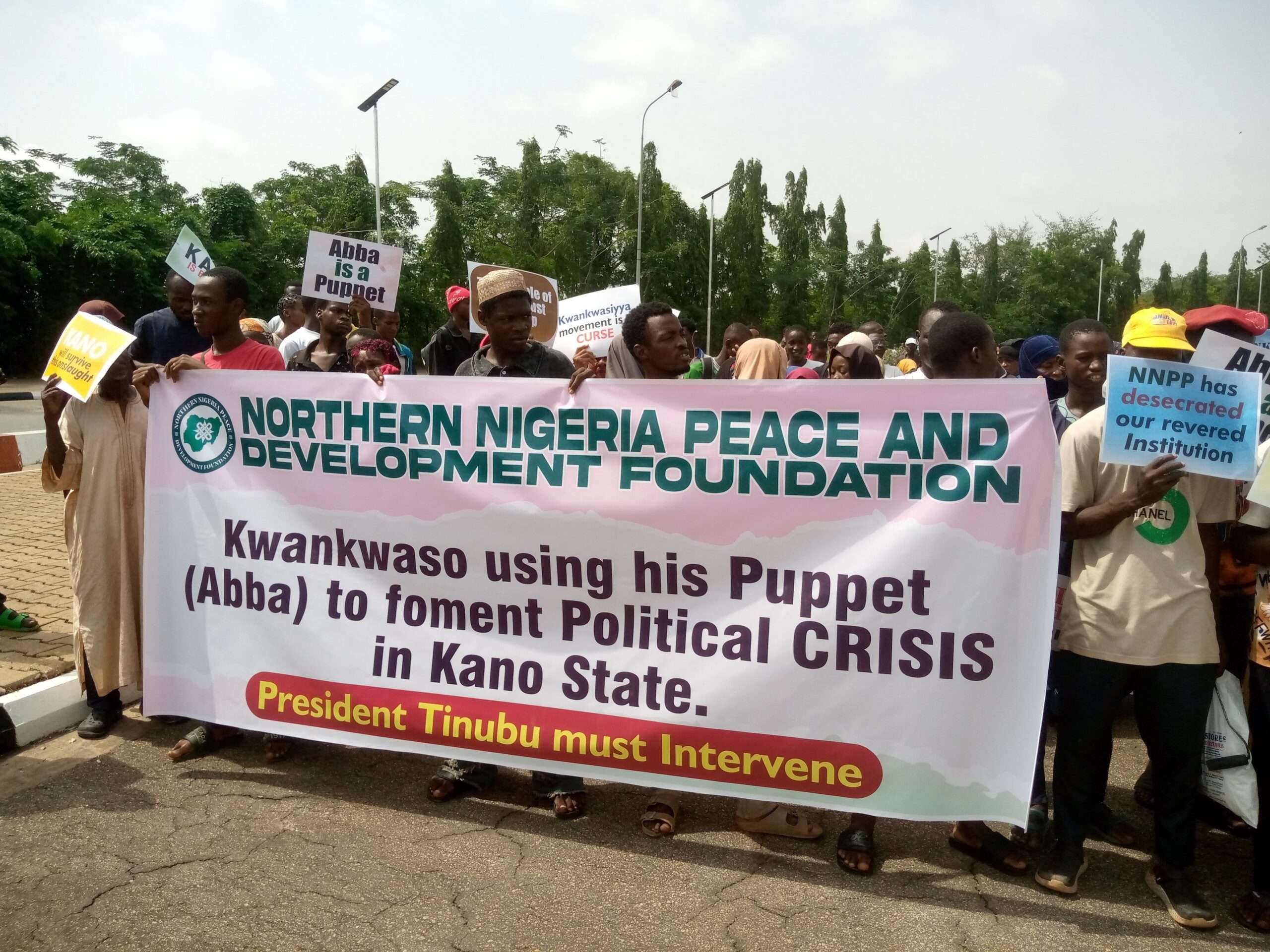
Protesters marched to the Presidential Villa and the National Assembly in Abuja on Friday, demanding President Bola Tinubu’s intervention in the Kano Emirate conflict. The protesters, marching peacefully, carried banners highlighting their concerns about the escalating situation in Kano. They called on President Tinubu to use his authority to resolve the crisis and ensure the restoration of peace and stability in the State. The State Assembly passed a bill titled, ‘The Kano State Emirates Councils (Repeal) Bill, 2024’, which dissolved the establishment of the additional emirates. This made way for the reinstatement of Muhammadu Sanusi II on Thursday by Governor Yusuf, four years after he was dethroned by a former governor of the state, Abdullahi Ganduje. The protesters, under the banner of the Concerned Patriots of Nigeria, accused Governor Yusuf of escalating his abuse of office by dissolving the traditional council. The coordinator, Abdullahi Muhammed Saleh said, “A lot had been going wrong in the state but the Concerned Patriots of Nigeria had thought it best to allow Kano state to sort out its thorny issues. However, Thursday’s brash actions of Governor Abba Kabir Yusuf of Kano State, who sacked five emirs to reappoint Alhaji Muhammadu Sanusi as the 14th Emir of Kano has awoken us to the urgency of raising the alarm about the destructive excesses of the state governor. “Since being sworn into office, Governor Abba Yusuf has a string of loutish acts that run like a hardened criminal’s rap sheet. All in the name of rubbishing his predecessor, he started with a demolition spree that has served to impoverish the people whose lives he took an oath to improve. Thus he proved himself to be anti-people. “The Governor then attempted to destroy the structures of political parties in the state. The impish fanaticism with which he pursued this illicit mission saw him intruding into the structure of other political parties, including hiring some charlatans who purportedly suspended the national chairman of the All Progressive Congress (APC), Dr Abdullahi Ganduje, who is interestingly his predecessor. Thus he proved himself to be anti-democratic. “This latest stunt of sacking five emirs to install his acolyte was achieved by manipulating the Kano State House of Assembly, which he had successfully turned into a rubber stamp for endorsing his illegal acts. He has eroded the autonomy guaranteed by the separation of powers as enshrined in the Constitution of the Federal Republic of Nigeria (as amended). “It is inconceivable that any right-thinking person will descend low to the point of manipulating the traditional institution for political gimmicks. The humiliation meted out to the five emirs was most unbecoming and we have cause to believe that Abba Yusuf has set the stage for using the traditional institution as ancient and as esteemed as that of Kano for a political seesaw will continue since his successor will revert to the five emirates. The Kano governor has thus proven himself to be the anti-traditional institution leader.” The protesters criticized Governor Yusuf’s actions as unreasonable and detrimental to a civilized society, urging him to stop undermining Kano’s peace. They condemned the NNPP-dominated Kano State House of Assembly for being a rubber stamp for the governor’s actions, warning that their desperation could destabilize the city and the country. They appealed to President Tinubu to urgently intervene in the Kano Emirate crisis to prevent further deterioration and ensure peace is restored.

Makinde Approves Immediate Recruitment of Healthcare Professionals in Oyo State

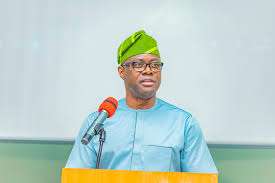
Oyo State Governor Seyi Makinde has sanctioned the urgent recruitment of doctors, nurses, consultants, and other healthcare professionals to address staffing shortages in the state’s health sector. The announcement was made by Akin Fagbemi, Chairman of the Hospitals Management Board, following a meeting with the National Association of Nigeria Nurses and Midwives (NANNM) in Ibadan.  This decision comes in response to an indefinite strike initiated by the NANNM on May 21, due to unmet demands from the state government. Fagbemi emphasized the importance of this recruitment drive, noting it will significantly alleviate the current workforce deficit in hospitals and healthcare centers across Oyo State.  He praised Governor Makinde for his commitment to transparency and accountability in the health sector, which are vital for delivering quality healthcare services. “The governor’s approval for the immediate recruitment of additional healthcare professionals is a crucial step towards resolving the staffing crisis and enhancing healthcare delivery in our state,” Fagbemi stated.