FG Reveals Those Exempted From Students Loan

The Nigerian Education Loan Fund has revealed that Nigerian students studying abroad are ineligible for the newly introduced student loan scheme. The NELFUND’s Managing Director, Akintunde Sawyerr, disclosed this information on Friday. The Access to Higher Education Act, 2023, signed into law by President Bola Tinubu on June 12, aims to provide interest-free loans to indigent students attending Nigerian tertiary institutions. The move is in line with Tinubu’s campaign promise to enhance education funding. Dele Alake, a member of the former Presidential Strategy Team, noted the significance of this legislation in making education more accessible. Following a briefing from NELFUND led by Minister of State for Education, Dr Yusuf Sununu, on January 22, the President instructed the Fund to extend interest-free loans to students pursuing skill-development programmes. Despite these delays, the scheme has seen significant interest, with 30,000 students successfully registering and over 60,000 individuals signing up on the NELFUND website. However, on May 22, 2024, a group of Nigerian students at Teesside University were expelled from their courses and ordered to leave the United Kingdom due to difficulties in paying their tuition fees on time, according to a BBC report. The students cited the devaluation of the naira as a significant barrier to meeting their financial obligations, which has led to a breach of their visa sponsorship requirements. Nevertheless, Sawyerr clarified that the loan scheme was exclusively for students studying within Nigeria. “Nigerians in Diaspora cannot benefit from the student loan. Nigerians schooling in the country are those we want to help. The law does not allow the FG to give loans to Nigerians studying abroad,” he stated. Criticising the exclusion of Nigerian students in foreign institutions from the recently introduced student loan scheme, the National Mobilisation Officer, Education Rights Campaign, Adaramoye Lenin, stated that this exclusion highlighted the inadequacy of the scheme in addressing the educational needs of Nigerian students. He argued that the government was using the loan scheme to avoid properly funding public education, instead shifting the financial burden onto students.
FG Reacts As Labour Begins Indefinite Nationwide Strike

The Federal Government has appealed to Organised Labour to reconsider its decision to embark on an indefinite strike from Monday, June 3, 2024. The Nigeria Labour Congress president, Joe Ajaero yesterday announced that the industrial action which would begin by Monday midnight is in protest against the government’s refusal to raise the proposed minimum wage from N60,000. Reacting to the development, Minister of Information and National Orientation, Idris Mohammed in an interview with Punch stated that the interest of the masses should be the top priority of Organised Labour, saying strike was not the solution to the ongoing negotiation for a new minimum wage for workers. His words: “The government is pleading with Labour to reconsider its position. The FG has already made an offer of N60,000, and whatever the government does is in the interest of Nigerians. “We won’t like to do something that will throw the country into another problem. “Even as we do that, we are pleading with Labour. They are partners in this project called ‘Nigeria’ and we expect them to join hands with the FG as it strives to look for solutions that will take Nigeria to the desired prosperity. “Our message is that of an appeal and the need for Labour to see reason with the government. That was even the basis for setting up the tripartite committee that was made up of Organised Labour, the sub-nationals and the FG. This was because the government just didn’t want to make unilateral decisions. In any case, the position on the wage regime is not a one-sided thing. “We expect that they will see reason with the government. That is why we are calling on them to show understanding by not embarking on the strike because we don’t want that at this point. A strike is not the solution to our problem. We are continuing our negotiation with them. The minister and other stakeholders are still talking to them and we believe that we will find a common ground,” he stated.
National Assembly to Consider Bill Proposing Nigeria’s Return To Regional Government

In a landmark move, the National Assembly is speculated to be planning for a debate and, most likely, pass into into law before October 1, 2024, a bill proposing a return to regional government. Part of the draft bill circulating on social media, seen by SaharaReporters is titled: “A Bill for an Act to Substitute the Annexure to Decree 24 of 1999 with a New Governance Model for the Federal Republic of Nigeria.” Although the identities of the sponsors of the bill were yet to be ascertained, the Bill, when passed, would be cited as the Constitution of the Federal Republic of Nigeria New Governance Model for Nigeria Act 2024. The sponsors of the Bill explained that the current Constitution of the Federal Republic of Nigeria 1999 (as Amended) is not “autochthonous” as it does not evolve from the deliberations and consensus of the Nigerian people. According to the advocates, the constitution amendment would be subject to a “yes or no” vote in a referendum by the people of the Federal Republic of Nigeria. The sponsors of the Bill explained that the current Constitution of the Federal Republic of Nigeria 1999 (as Amended) is not “autochthonous” as it does not evolve from the deliberations and consensus of the Nigerian people. According to the advocates, the constitutional amendment would be subject to a “yes or no” vote in a referendum by the people of the Federal Republic of Nigeria. Part of the draft Bill seen by SaharaReporters on Friday partly read: “PART I – Preliminaries: WHEREAS Nigeria, its Peoples and Government have been governed under Decree 24 of 1999 that was handed down by the then Military Government without the express consent of the people despite the preamble of “We the people.” “WHEREAS the said Constitution of the Federal Republic of Nigeria 1999 (as Amended) is not autochthonous as it does not evolve from the deliberations and consensus of the Nigerian People. “WHEREAS the Peoples of Nigeria now desire and effectively demand for a change to a Constitution based on Federal/Regional System of Government. “WHEREAS the Federal and Regional governments are to operate within the provisions of this Constitution, it is within the discretion of the ethnic blocs within the States that constitutes a given region to aggregate or disaggregate as Provinces, Divisions and Districts, while being in control of their affairs without let or hindrance at whatever level of governance. “Whereas the 1999 Constitution as amended is a schedule of a military decree now deemed to be an Act of the National Assembly for which the National Assembly have the powers to amend and/or abrogate as expedient. Whereas the National Assembly where so necessary and expedient can invoke the doctrine of necessity to resolve any point of law for the good governance of the country Nigeria.” On PART 11 – Substitution Clause, the drafters proposed that the National Assembly shall invoke its inherent powers to expunge the schedule attached to decree 24 of 1999 often referred to as 1999 Constitution as amended from the decree, which “is now deemed to be an Act of the National Assembly to which the National Assembly have the powers to so do and replace same with a new governance model for Nigeria effective not later than October 1, 2024.” “This amendment is subject to a yes or no vote in a Referendum by the people of the Federal Republic of Nigeria,” it proposed. On governance structure under PART III – Stipulations for Federal Administration, the sponsors proposed that: “(1) Nigeria shall be a Federation comprising of Regional Territories and a Federal Capital Territory and shall be a Republic to be known by the name of the Federal Republic of Nigeria. “(2) The territorial jurisdiction of Nigeria shall comprise the territory of the Regional members of the Federation and its bound.
Nationwide Strike Imminent as Labour Unions Decry Government Inaction

The Nigeria Labour Congress (NLC) and the Trade Union Congress (TUC) have threatened to embark on nationwide strike by Monday in response to the Federal Government’s failure to finalize a new National Minimum Wage Act and reverse the recent surge in electricity tariff to N65/kwh. During a press conference held on Friday, May 31st, 2024, the unions expressed deep concern over what they perceive as the government’s disregard for the welfare of Nigerian workers. The unions were particularly irked by the absence of governors and key ministers, except for the Minister of State for Labour and Employment, during the negotiations as a mark of the government’s lack of commitment to addressing the concerns of workers. Recalling the ultimatums issued during the May Day celebrations on May 1st, 2024, demanding the conclusion of the minimum wage negotiations by the end of the month, the unions emphasized the lack of substantial progress or commitment from the government. In addition to demanding the reversal of the recent electricity tariff hike, which saw rates skyrocket to N225/kwh, the unions reiterated their call for a return to the previous rate of N65/kwh and an end to the categorization of consumers into Bands. Despite widespread protests and public outcry, the unions criticized the government’s response as characterized by “persistent inaction” and the dissemination of propaganda rather than engaging in meaningful dialogue. Consequently, the NLC and TUC announced the initiation of an indefinite nationwide strike, set to commence on Monday, June 3rd, 2024. The unions called upon their affiliates, civil society organizations, market traders, and the general public to lend their support to the industrial action. While acknowledging the potential inconveniences that may arise from the strike, the unions affirmed their unwavering resolve to pursue their objectives until the demands regarding the minimum wage and electricity tariff hike are satisfactorily addressed by the government.
Nigeria Police unveil cybercrime reporting platform

The Nigeria Police Force has unveiled a platform for reporting cybercrime. NPF says the platform is in its bid to reinforce its commitment to tackling digital threats. The new portal, managed by the NPF National Cybercrime Centre is now accessible with a new site replacing the old site. The Force spokesperson, ACP Olumuyiwa Adejobi, disclosed this in a statement on Thursday. The statement read, “The Nigeria Police Force is pleased to inform the general public of the launch of a new, more robust, and secure domain for reporting cybercrime-related offences as part of the continued commitment to combating cybercrime and enhancing the safety and security of our digital space. “The new reporting platform, managed by the NPF National Cybercrime Centre (NPF-NCCC), can be accessed at: [https://nccc.npf.gov.ng/ereport/signin]. This upgraded domain replaces the previous site [https://incb.npf.gov.ng] which must be discarded.” The statement stated that the upgraded domain offers enhanced security to protect user information and is user-friendly for efficient reporting. Additionally, it featured improved tracking and response mechanisms for timely action on reported cases, and it urged the public to utilize this platform to aid in the fight against cybercrime in Nigeria. “The upgraded domain includes enhanced security measures to protect user information and ensure confidentiality and is user-friendly for easy and efficient reporting of cybercrime incidents. “It also includes improved tracking and response mechanisms to ensure timely and effective action on reported cases. “The Inspector General of Police urges all members of the public to utilize this new platform for reporting any cybercrime activities as vigilance and prompt reporting can significantly contribute to police efforts in tackling the menace of cybercrime in Nigeria, and even beyond,” it added. It would be recalled that implementing the Cybercrime Act 2015 has been met with different reactions from various quarters. The Act will provide a unified legal, regulatory, and institutional framework for the prohibition, prevention, detection, investigation, and prosecution of cybercrimes in Nigeria.
Old national anthem: ‘Vagabonds in power distracting us —Charly Boy

Nigerian entertainer, Charles Oputa, also referred to as Charly Boy or Area Fada, has joined the chorus of criticism against the reinstatement of the old, colonial national anthem by President Bola Tinubu and the National Assembly, echoing the sentiments of millions of Nigerians. President Tinubu formally initiated the recitation of the old national anthem, “Nigeria, We Hail Thee,” despite widespread disapproval from the public. This decision follows the recent enactment of a bill, signed into law by the President, replacing the current national anthem, “Arise O Compatriots,” with “Nigeria, We Hail Thee,” passed by the Senate on Tuesday and the House of Representatives last week. In his trademark candid manner, Charly Boy, also known as the ‘Senior Advocate of the Masses,’ took to X on Wednesday night to denounce the move, emphasizing that it does not align with the pressing priorities of the Tinubu administration. “Vagabonds in power wan distract us from hunger, kidnapping, high cost of living by organizing useless priorities for us to follow so we no go dey talk as e dey pain us?” “Animals in Agbada fit make me start to sing our olden days National Anthem, imposicant.
Nigeria’s Name, Flag Should Also Be Changed – Mike Ozekhome Tells Tinubu

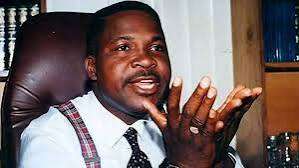
Popular rights activist and Senior Advocate of Nigeria (SAN), Mike Ozekhome, has admonished the incumbent government led by President Bola Ahmed Tinubu to also change Nigeria’s name and national flag. This is as he commended the administration for reverting to the old national anthem, describing it as a welcome development. According to Ozekhome, the change of the national anthem was long overdue. Ozekhome stated this during a press conference on Wednesday where he expressed that he was elated by Nigeria’s return to the old national anthem, 10 years after he moved a motion for it at the 2014 National Conference. The SAN said: “Bringing the old National Anthem back is well overdue. It has better lyrics in content and context like the Senate President said. It is better than the other one. “The name Nigeria and the flag should also be changed.”
FG, Labour To Resume Talks Friday On Minimum Wage

President Bola Tinubu-led government, on Wednesday, reached out to the Organised Labour consisting the Nigeria Labour Congress (NLC) and Trade Union Congress (TUC) for the continuation of minimum wage negotiations. According to Punch, a source familiar with the matter disclosed the development in Abuja. The source noted that Labour would honour the invitation. The source said, “A letter has been addressed to Labour by the committee chairman and signed by the NSIWC chairman. The meeting is scheduled for Friday. “Of course, Labour will attend. If they present a better offer on Friday we will accept it.” Recall that the minimum wage committee, on Tuesday, adjourned indefinitely after talks between the Federal Government and Organised Labour broke down. During the meeting labour rejected the Federal Government’s ₦60,000 fresh proposal, up from the earlier ₦57,000 offer. At the meeting, labour also lowered its demand by removing ₦3,000 from the ₦497,000 it proposed last week, pegging the new proposal at ₦494,000. To fast-track the negotiation process, NLC and TUC on May Day gave the committee till the end of the month to wrap up talks on a new national minimum wage. The ultimatum will expire on Friday night.
LG autonomy: S/Court gives Govs 7 days to respond Suit

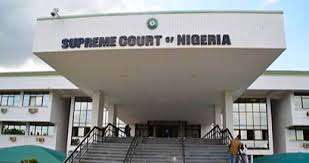
The Supreme Court, Thursday, gave the 36 State Governors seven days to file their defence in reponse to the Federal Government suit seeking autonomy for 774 local governments in the country. The Apex court also ordered the AGF to, upon receipt of the governors defence, file his reply within two days. The seven-man panel led by Justice Garba Lawal issued the order while ruling on an application for an abridgment of time argued by the Attorney General of Federation ( AGF) Lateef Fagebemi SAN. The apex court said that the decision of the court was predicated on the national urgency of the suit and the non objection from the attorneys general of the states of the federation. It insisted that filing of all processes and exchanging of same must be completed within the time. Justice Lawal ordered that the 8 states that were not in attendance at Thursdays proceedings must be served with fresh hearing notice. The 8 states are Borno, Kano, Kogi, Niger, Ogun, Osun, Oyo, and Sokoto, whose attorneys general were absent in court despite being served with hearing notice. In the meantime, the matter is adjourned to June 13 for hearing of the suit. The FG, through the AGF, Prince Lateef Fagbemi SAN, dragged the 36 state governors to the supreme court over alleged misconduct in the local government administration. Specifically, the AGF is seeking full autonomy for LG as third tiers of government in the country. The Governors were sued through their respective State Attorneys General. In the suit marked SC/CV/343/2024, the AGF is praying the Apex Court for an order prohibiting State Governors from unilateral, arbitrary and unlawful dissolution of democratically elected local government leaders for local governments.. In the originating summons, AGF is also praying the Apex Court for an order permitting the funds standing in the credits of local governments to be directly channelled to them from the Federation Account in line with the provisions of the Constitution as against the alleged unlawful joint accounts created by governors. The summon, personally signed by AGF, seeks an order of the Apex Court stopping governors from constituting Caretaker Committees to run the affairs of local governments as against the Constitutionally recognized and guaranteed democratically system. It also applied for an order of injunction restraining the governors, their agents and privies from receiving, spending or tampering with funds released from the Federation Account for the benefits of local governments when no democratically elected local government system is put in place in the states.
Tinubu To Present 2024 Supplementary Appropriation Bill To NASS

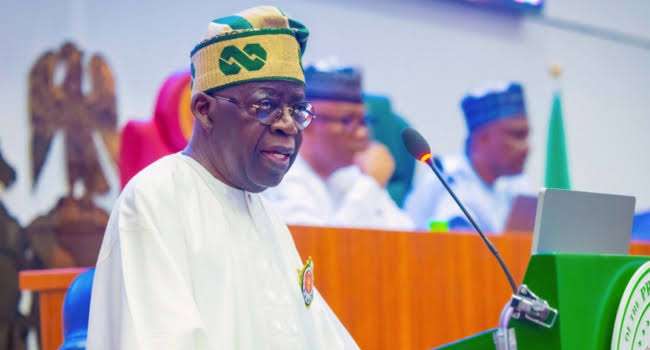
President Bola Tinubu will soon present the 2024 Supplementary Appropriation Bill to the National Assembly (NASS). “I submitted the last budget to you,” the President said when he addressed a joint sitting of the National Assembly on Wednesday. “You expeditiously passed it. We are walking the talk. I will soon bring the Year 2024 (Supplementary) Appropriation Bill. That is just for your information,” the President said at the joint sitting to mark the Silver Jubilee Of Nigeria’s 4th Republic. In his response, Senate President Godswill Akpabio, said, “Thank you, Mr President, we will be expecting the Supplementary Appropriation Bill of 2024 as soon as possible.” Also, at the joint sitting which coincided with the first anniversary of the Tinubu administration, the President confirmed ‘Nigeria, we hail thee’ as the “latest national anthem”. Tinubu said, “You rang out the latest national anthem, ‘Nigeria, we hail thee’. This is our diversity, representing all characters and how we blend to be brothers and sisters.” The President pleaded with both the Senate and the House of Representatives to continue to collaborate and work together with the administration to build the country on the path of sustained progress and development. “We have no other choice; it is our nation. No other institution or personality will help us unless we do it ourselves. No amount of aid from foreign countries or any other nation (will fix us), they take care of themselves first. Let us work together as we are doing to build our nation, not only for us but for generations unborn. Tinubu had on January 1, 2024, assented to the N28.7 trillion 2024 Appropriation Bill passed by the Senate. The 2024 budget was N1.2 trillion higher than the budget originally proposed by the President to a joint NASS session on November 29, 2023.