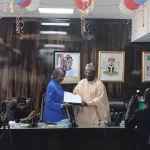



The Director-General of the Nigerian Meteorological Agency (NiMet), Prof. Charles Anosike, has paid a working visit to his Moroccan, Mohammed Dhikissi.
It was revealed that the visit is part of efforts to deepen bilateral collaboration on AI-driven weather forecasting and early warning systems.
The visit took place on the sidelines of the ongoing United Nations Systematic Observation Financing Facility (SOFF) workshop for Peer Advisors and Implementing Entities in Casablanca.
The SOFF workshop is one of the programmes designed to strengthen technical cooperation between Nigeria and Morocco in advancing climate services, data management, and predictive meteorology.
During the meeting, Prof. Anosike and his Moroccan counterpart discussed areas of mutual interest, including joint research on AI-enabled weather models, capacity building for meteorologists, and the exchange of best practices for enhancing regional weather observation networks.
He emphasized that leveraging AI technologies in meteorology would significantly improve the accuracy of forecasts and the timeliness of climate-related warnings, thereby enhancing resilience in sectors such as agriculture, transportation, and disaster management across Africa.
The NiMet DG also highlighted the importance of regional partnerships in addressing the growing impacts of climate change, stressing that “Africa’s future in climate resilience depends on collaboration, innovation, and the intelligent use of technology.”

Morocco’s Directorate of General Meteorology, renowned for its advancements in modern forecasting systems and climate services, expressed readiness to work closely with NiMet to develop a framework for continuous technical exchange and joint innovation in weather prediction and climate adaptation.
The visit is expected to pave the way for a stronger partnership between both institutions under the broader framework of the World Meteorological Organization (WMO), supporting the African continent’s push towards smarter, AI-enabled weather and climate solutions.