Delta State Governor Sheriff Oborevwori has approved a new salary structure for academic and non-academic staff of state-owned tertiary institutions, with implementation beginning in August and September 2026.
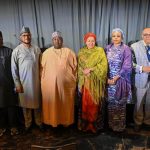
Oborevwori announced the decision on Tuesday in Asaba while inaugurating the state’s Auditor-General, Matthew Oghene, and the governing councils of three state-owned universities.
The governor said the new salary structure for academic staff would take effect from August, while non-academic staff and employees of other state-owned tertiary institutions would benefit from September.
The affected universities include the University of Delta, Agbor; Dennis Osadebay University, Asaba; and Southern Delta University, Ozoro.
The governor said the state’s four universities now offer professional programmes, including medicine, law, nursing and accounting.
According to him, student enrolment across the institutions has doubled from about 50,000 in 2023 to more than 100,000 in 2026.
He also said the universities had maintained uninterrupted academic calendars without staff strikes or student unrest for 17 years, describing the development as evidence of the government’s commitment to stability in the education sector.
Oborevwori described Delta as an “emerging education hub in Nigeria”, saying his administration would continue to reposition state-owned universities as centres of excellence.
He charged the newly inaugurated governing councils to strengthen corporate governance, improve institutional efficiency and promote sustainable growth.
The governor also urged the councils to uphold transparency, accountability, collective responsibility and regular meetings, while avoiding nepotism and other forms of parochialism.
He specifically tasked them with tackling sexual harassment, examination malpractice, cultism and unfair treatment of staff, stressing the need for disciplinary processes to be guided by equity and justice.
On funding, Oborevwori said government could not sustainably bear the entire financial burden of running universities.
“It is unrealistic and unsustainable for a university to rely solely on government funding,” he said.
He therefore encouraged the institutions to market their programmes, attract private-sector investment and develop alternative sources of revenue.
The governor said the state had also approved the construction of two hostels for each of its nine state-owned tertiary institutions. Each hostel, he said, would have capacity for 480 students.
The initiative would provide additional accommodation for students as enrolment continues to rise across the institutions.
Muoboghare, Pro-Chancellor and Chairman of the Governing Council of Dennis Osadebay University, who spoke on behalf of the appointees, thanked the governor for the confidence reposed in them.
He called for the establishment of a Higher Education Endowment Fund to provide sustainable financing for tertiary institutions.
He also urged individuals and corporate organisations to partner with government in providing hostels, staff accommodation, lecture halls and faculty buildings, noting that government alone could not meet the infrastructure needs of the universities.