


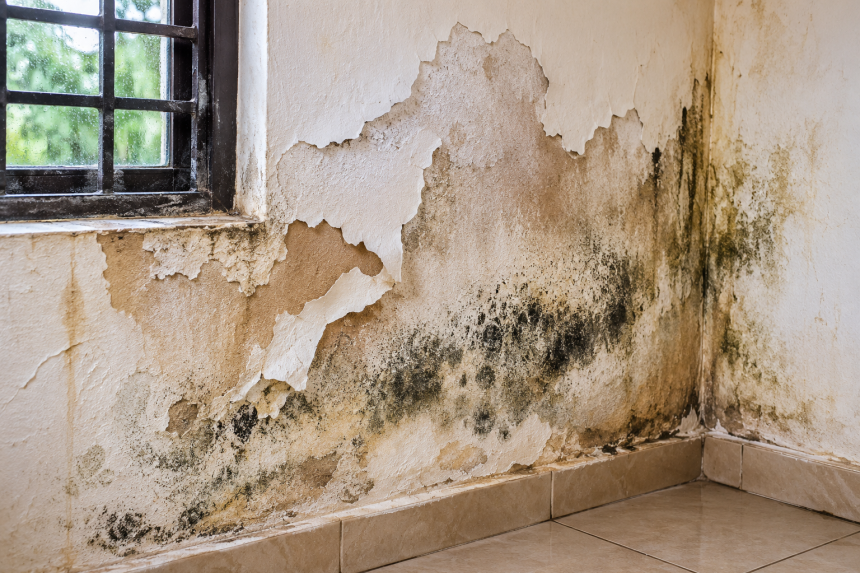
A construction expert, Mr Ikechukwu Godwin, has identified misdiagnosis of damp, faulty damp-proof courses (DPCs) and trapped salts as major causes of persistent moisture in building walls.
Godwin warned that homeowners who rely on scraping, plastering and repainting without identifying the underlying source of moisture risk recurring damage and unnecessary repair costs.
He gave the warning in an interview with the News Agency of Nigeria (NAN) in Suleja on Sunday, November 8.
He said dampness should not be treated merely as a cosmetic defect, noting that peeling paint and mould often indicate deeper moisture problems within building structures.
“Homeowners often treat peeling paint and mould as cosmetic problems — scraping, puttying and repainting — while moisture continues to travel invisibly through masonry,” he said.
Godwin explained that incorrect identification of damp types was a major reason repairs often failed.
He noted that condensation caused by poor ventilation, penetrating damp from cracked external walls and leaking gutters could be mistaken for rising damp from the foundation, resulting in inappropriate treatment.
He also warned that poorly installed damp-proof courses could fail to prevent moisture penetration, particularly when leaking pipes or unsealed external defects introduce water above or around the treated areas.
According to him, applying fresh plaster or paint before walls are adequately dried could trap residual moisture, causing it to reappear later.
To address the problem, Godwin advised homeowners to inspect damp-proof courses, improve drainage systems and ensure rainwater flows away from building foundations.
He also recommended repairing cracks, defective wall finishes and other external openings through which water could penetrate.
Where necessary, he said severely damaged and salt-contaminated plaster should be removed, allowing the affected walls sufficient time to dry before replastering.
He stressed the importance of using suitable breathable and moisture-resistant materials during restoration.
“The key is to find and fix the source of the water before repairing the surface; otherwise, the damp will always come back,” he said.