


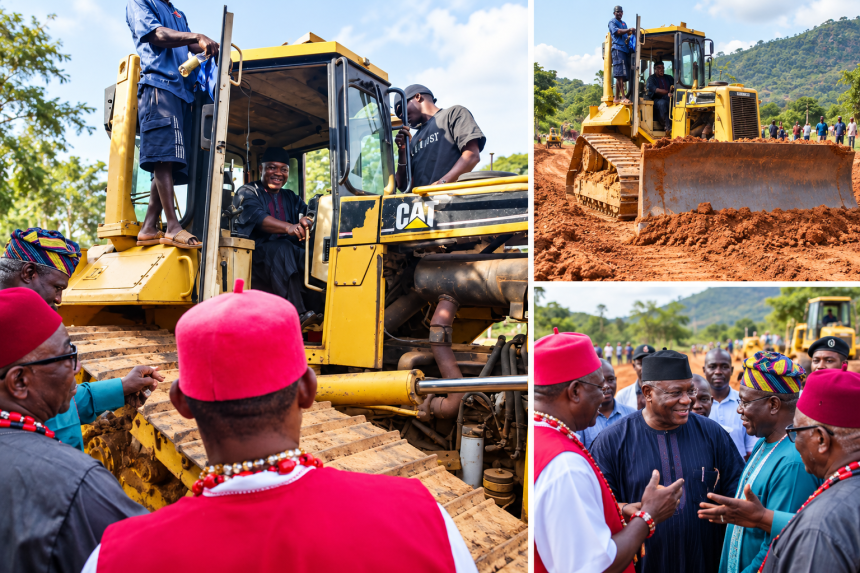
From funding a secondary school to investing in commercial agriculture and rural roads, Dr Emmanuel Owoicho Ejembi is extending his development efforts across Ohimini Local Government Area of Benue State.
A popular saying holds that one tree does not make a forest. But in Ohimini Local Government Area of Benue State, the growing list of community projects associated with Dr Emmanuel Owoicho Ejembi is showing how one person’s commitment can make a difference in the lives of many.
His interventions span education, agriculture and infrastructure, with the latest being the reconstruction of the Onyagede–Adankali Road, a route residents say has been neglected for decades.
Work began on Thursday, October 22, 2026, following the official flag-off by the Dr Emmanuel Ejembi Foundation. The project is expected to ease movement between communities, help farmers transport their produce to markets and improve access to healthcare and other essential services.
For residents of rural communities, a bad road is more than an inconvenience. It can mean higher transportation costs, lower returns for farmers, difficulty reaching hospitals and lost business opportunities. The reconstruction is therefore expected to address some of the everyday challenges facing residents of Onyagede, Adankali and neighbouring communities.
Education was the starting point
Ejembi’s interest in community development did not begin with road construction. He had earlier single-handedly funded Ebu City High School, described as the only secondary school serving the Agadagba Clan, which comprises about seven villages.
The intervention addresses a major need in an area where young people may have to travel considerable distances to continue their education. Having a secondary school serving the clan offers families an important opportunity to keep their children in school and reduces some of the difficulties associated with accessing education in rural communities.
In December 2025, Ejembi moved into road infrastructure with work on the Agadagba–Ochobo Road. The Onyagede–Adankali project is the latest addition to his interventions in the area.
The projects address different needs, but their benefits are closely linked. Education gives young people the opportunity to acquire knowledge and skills, while good roads make it easier for them, their families and businesses to reach schools, markets, health facilities and other services.
A major investment in agriculture
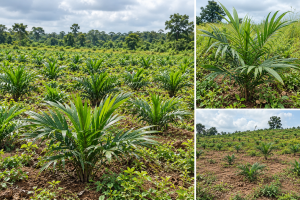
Another significant part of Ejembi’s activities is Ubuntu Integrated Farms Nigeria Limited, an agricultural enterprise focused on oil palm and cashew production.
The farm covers 250 hectares and is described as one of the major agricultural investments in the area. According to information provided about the enterprise, it is currently the largest employer of labour within the governing council.
The investment is expected to create jobs and stimulate economic activity beyond farming itself. Oil palm and cashew production can support a chain of businesses involving harvesting, processing, transportation, packaging and distribution.
According to Ejembi, the agricultural and manufacturing complex is expected to transform the local economy and contribute to economic growth across Idoma land when it becomes fully operational.
Achieving that ambition will depend on the expansion of production, development of processing facilities, availability of reliable infrastructure and access to markets. The condition of rural roads is particularly important because it affects how easily agricultural produce can move from farms to buyers and processing centres.
In this regard, investments in agriculture and road infrastructure could complement each other, helping to reduce transportation difficulties and improve the prospects of businesses operating in the area.
Ejembi calls for unity and skills development
Speaking through his representative, Idoko Emaikwu, at the flag-off ceremony, Ejembi called on residents to work together across generational and social differences to advance development in their communities.
He said development becomes more meaningful when people have access to the infrastructure and opportunities needed to improve their lives.
According to him, the road project marks the beginning of sustained efforts to improve conditions in Ohimini, with expected benefits including safer journeys, better access to markets, improved security and stronger links between communities.
He also urged traditional rulers and young people to take education and vocational training seriously, while contributing practical ideas to address challenges in their communities.
Ejembi thanked those who contributed to bringing the road project to commencement and appealed to those handling the work to discharge their responsibilities diligently, safely and honestly.
Community leaders welcome the project
Traditional rulers and other community leaders at the ceremony welcomed the reconstruction, describing it as a much-needed intervention in an area where poor roads have made daily activities difficult.
Those who spoke included the Third-Class Chief of Onyagede, Awume and Agedagba, Chief Zakari Shaibu; the Clan Head of Onyagede, Chief Adamu; and the Kindred Head of Adankali, Chief Matthew Ejeh.
Youth and women leaders, alongside other community representatives, also commended the initiative.
They said the improved road would make it easier for farmers to transport their produce to markets and help residents reach healthcare facilities and other essential services.
The leaders prayed for God’s continued blessings on Ejembi, asking for the strength, wisdom and resources to sustain his contributions to Ohimini and other communities.
The ceremony ended with the formal flag-off by Chief Zakari Shaibu, after which work commenced along the Onyagede–Adankali route.
Sustaining the gains
The projects associated with Ejembi point to the role that private investment and philanthropy can play in communities where infrastructure and access to essential services remain major concerns.
But the real test will be the benefits residents derive from these interventions over time. The road must be properly completed and maintained, while the school and agricultural enterprise must continue to deliver value to the people they are intended to serve.
For Ohimini, better roads, access to education and investment in agriculture could help create more opportunities for young people, farmers and small businesses.
The reconstruction of the Onyagede–Adankali Road is a further step in that direction. For residents who have endured years of poor access, the hope is that the project will bring lasting relief and make movement, trade and access to essential services less difficult.