NALDA To Crash Maize, Rice Prices Across Nigeria

NALDA To Crash Maize, Rice Prices Across Nigeria

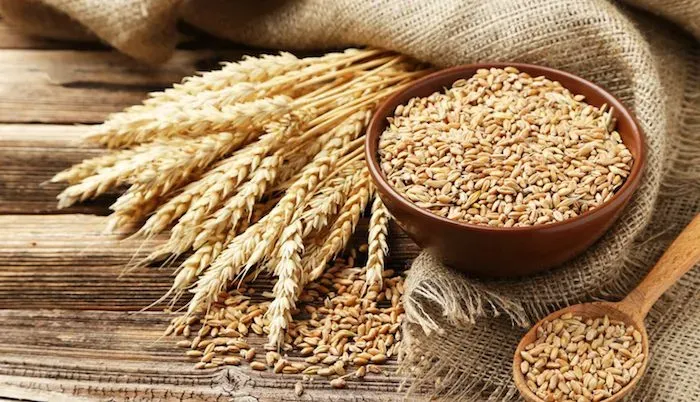
*Commences Harvest From Farm Estates The National Land Development Agency (NALDA) is set to crash the price of maize and rice as it commences crop harvest from its farm estates across Nigeria. The Agency has farm estates across Nigeria has achieved tremendous success in both farms built and run solely by the agency and in collaboration with private and public institutions across the six geopolitical zones. Harvesting, bagging and storing of rice and maize are currently ongoing in Niger, Nasarawa, Benue, and Oyo states. The agency targets 150 metric tons of maize while the faro 44 and 59 rice cultivated at Nasarawa state is expected to yield over 300 metric tons of paddies. Harvesting and bagging have also ongoing in the NALDA-cultivated 150-hectare rice farm in Gboko, Benue State. According to the agency, it is anticipated that the harvests will boost Nigeria’s grain supply (rice and maize), which will have a big effect on the value chains. Evidence from states during the media tour of harvest activities at farm sites showed that the harvests will help to reduce the gap in domestic production and supply of rice and maize. Speaking with journalists, NALDA Executive Secretary, Prince Paul Ikonne, said the harvest will be released into the markets immediately as it would greatly assist in cushioning the effects of high food prices. In Bauchi State, maize harvest is ongoing at the well-equipped NALDA farm estate located at Galambi. Although the overall land area is 500 hectares, 50 hectares were cultivated due to a 15-day rain delay and a late start to activities. The farm is equipped with four tractors, two maize threshers, planters, boom sprayers, maize harvesters, and a finished grain warehouse. The Bauchi State Coordinator for NALDA is Jalaludeen Muhammad Mu’Azu. said that the NALDA farm will boost significant production in the area because no farms in the state possessed such machinery. Head, Department of Engineering, at NALDA, Engineer Owolabi Matthew Olusegun, speaking with journalists about the level of mechanisation on the farm expresses joy at the level of impact the harvest will have on the Nigeria economy. “This is what we have been preaching, and it is proof that Nigeria is capable of doing so, as you have witnessed firsthand at NALDA Farm. With this, you can see how much labour we have removed, how much drudgery has been eliminated, and how the entire process has been streamlined. “We are therefore appealing to the federal government to invest more in NALDA. We are ready to replicate this farm all over the country. With this we can increase the acreage to ensure that we get food self-sufficiency. We can do it and we are doing it,” he said. According to Mu’Azu, the crop’s success has already piqued the interest of farmers in the surrounding farming communities. He explained that the entire farm operation was entirely mechanized, from harrowing to planting to spraying fertilizer with a 400-litre capacity boom sprayer and machinery for weeding and harvesting. According to him, “we have just started our harvest and you know this is the first time we are farming here. From the stories that we heard from people, there is a particular place they showed us that since they came here 40 years ago, they have never seen maize production that can be compared to our own.”

World Food Day: HOMEF Calls For Ban On Nigeria’s GMOs

World Food Day: HOMEF Calls For Ban On Nigeria’s GMOs

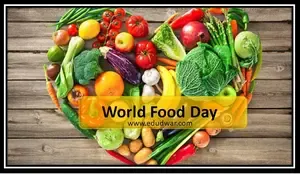
As Nigeria joins the rest of the World to mark the 2023 World Food Day, the Executive Director Health of Mother Earth Foundation, Nnimmo Bassey, has called on the Federal Government to remove all Genetically Modified Foods from the country’s shelves. World Food Day is an essential international observance held every year to raise awareness about food security and hunger while promoting action to ensure everyone has access to safe, nutritious, and affordable food. Bassey in a statement on Sunday, said one big challenge the country is faced with protecting its food, including water, from the new wave of colonialism that is systematically taking hold of food systems across the globe. According to him, the transnational corporations leverage the current food crises to advance an atrocious agenda to gain control over the world’s food systems. “GMOs are being pushed into our food system without stringent government regulations. People do not know the implications of growing or eating GM foods because the population is not given information on the risks related to the technology. “In Nigeria, approvals for importing GMOs are granted without adequate public notice and proper and independent health and environmental impact assessments. It is improper for our farmers to be given seeds to grow without telling them what they are planting or what eventually will end up on the consumer’s plate.” HOMEF states that marking World Food Day should encourage people, organizations, and governments to unravel the root of hunger and malnutrition, address food injustice, and abuse of farmers’ rights. The day is a reminder of the avoidable fate of millions worldwide who suffer from hunger despite abundant natural and human resources. Bassey, noted that modern agricultural biotechnology directly undermines our pursuit of food sovereignty, posing a threat to our dignity and our fundamental right to refuse foods laden with uncertain health consequences and an agriculture system that stresses our ecosystems.  He further charged Nigerians to be intentional about what is on their plates. “We must not fail as individuals to ensure that what goes into our stomachs is safe. We must demand accountability from regulatory agencies to ensure that food products approved for import are wholesome, meet the dietary requirements of the people, and support the local economy.” HOMEF’s Director of Programme, Joyce Brown, echoed that agroecology can feed the world, cool the planet, and help local farmers adapt to climate change impacts. “Governments worldwide who want to address food insecurity and take meaningful climate action must invest in agroecology – the foundation for a positive transformation of food systems. Agroecology ensures optimum water and other resources use, revives soils and the ability to hold in carbon, uses renewable energy, and promotes shorter food supply chains while making healthy and nutritionally diverse food available to all”. Mariann Bassey-Orovwuje, the Deputy Director of Environmental Rights Action/ Friends of the Earth Nigeria, noted, “Food is a central and integral part of any society, and it creates a connection between our beliefs, ethnicity, and cultural heritage. Food is not just a part of culture; it defines culture.  What we eat and how we eat provides much information about specific cultures. Food, water, and soil are all interconnected and are not commodities. They are a sacred, life-affirming, and central composite of every existing society”. Orovwuje stressed that food and producers must be treated with respect and dignity. She called for policies that celebrate the smallholder farmers who produce over 70% of the food consumed globally. “We need deep-rooted changes in how agriculture is practiced and how the food system is organised and regulated. We need to wean our food system from corporate control and concentration and keep seeds in the hands of small-scale farmers.”

FCTA partners South Korea, Turkiye on vocational education, agriculture – Wike

FCTA partners South Korea, Turkiye on vocational education, agriculture – Wike

The Minister of the Federal Capital Territory (FCT), Mr Nyesom Wike, has said that the FCT Administration (FCTA) would partner with the Republic of South Korea on vocational education. Wike also expressed willingness to partner with Turkiye on agricultural development. The minister stated this when the Ambassadors of South Korea to Nigeria and his Turkiye counterpart visited him in his office. He told the Ambassador of South Korea to Nigeria, Kim Young-Chae, that he visited the country while he was the minister of education and discussed the issue of vocational education. He described South Korea’s vocational education model as “impressive”, saying that the model enables students who do not want to go further, to have some skills. “It was my desire that we would have concluded with that partnership then, but unfortunately, that was not to be. “I would also like to reintroduce that as the FCT minister to see how we can also have that vocational school,” he said. Wike added that he would like to introduce a hands-on model to the vocational schools and skill acquisition centres in the FCT. This, he said, would be in partnership with the Republic of South Korea. He said that he was impressed when he visited Samsung and noticed that sometimes, the company supplies refrigerators and cars to the vocational schools for practical purposes. “I think we have to see how we can come back to that issue because vocational education is very key to us,” he said. Earlier, Young-Chae informed the minister about his country’s collaboration with the Ministry of Agriculture and the Rural Electrification Agency. He said that the aim was to build a mini electricity grid in the FCT which was ongoing. He also disclosed that South Korea plans to introduce a grant project to help young businessmen start new businesses. This, he said, was in addition to the Nigeria-Korea Model School in the FCT and other training programmes for teachers. “In addition to that, we have launched a smart school project, one in each of the six geopolitical zones, to help innovate schools in terms of communication technology and teachers’ education,” he said. In a related development, the FCT minister, while hosting the Turkiye Ambassador to Nigeria, Mr Hidayet Bayrakter, on Monday, said that FCT has large arable land for agricultural development. He said that collaboration with Tirkiye in that regard would be beneficial for both countries. On the Abuja metro rail line, the minister said that the FCT Administration has an open-door policy and would be willing to discuss with companies from Turkey. Wike, however, appealed for a review of Turkish visa policy, pointing out that the policy of short-term, single-entry visas may not be good enough to enhance business collaborations. Earlier, Bayrakter sought the collaboration of the FCT Administration in the construction of the second phase of the ongoing Abuja metro line system. The ambassador said that Turkiye had very capable construction companies with experience in rail constructions as well as suspension bridges. Some of the companies, he said, were involved in the construction of the metro system in Dubai and Qatar, in addition to building one of the biggest suspension bridges in the world. He said that the companies have expressed interest in partnering with the FCT Administration. He expressed the readiness of Turkish investors to meet with the FCT minister for further discussions on the second phase of the rail project.  

FG Obtains $163m AfDB Loan To Boost Wheat Production

FG Obtains $163m AfDB Loan To Boost Wheat Production

The Vice President, Kashim Shettima has disclosed that the Federal Government had obtained 163 million dollars loan from the African Development Bank to support wheat production in the country. Shettima stated this at the palace of the Emir of Argungu, Alhaji Sumaila Mera, when he paid a condolence visit to the Emirate and family of late Sheikh Abubakar Giro. He re-affirmed the determination of the Tinubu administration to fulfill all its promises to Nigerians, particularly in the agricultural sector. The Vice President also assured that food security would receive serious attention from the government. “We have obtained 163 million dollars loan from the African Development Bank to support wheat production. The scheme would be launched soon. “We need 10,000 hectares of land in Kebbi State. But the scheme would be well executed in Jigawa State with a cultivation of 50,000 hectares of land to boost wheat production.” In his remarks, the Emir of Argungu, Mera, who prayed for the unity and progress of Nigeria, thanked President Tinubu and Vice President Shettima for their support.

Exclusive: ABP Failure: FG, RIFAN Initiate Nationwide Loan Recovery Drive

Exclusive: ABP Failure: FG, RIFAN Initiate Nationwide Loan Recovery Drive

*Orders formation of loan recovery taskforce nationwide In the wake of the Federal Government’s recent threat to recover loans issued to Nigerians during the previous administration, the Rice Farmers Association of Nigeria (RIFAN) has taken swift action by issuing a directive to its members nationwide to reclaim loans disbursed to farmers during the 2018-2021 cropping seasons under the Anchor Borrowers’ Program (ABP). At inception in late 2015, the Central Bank of Nigeria (CBN) had said the programme thrust of the ABP is the provision of farm inputs in kind and cash (for farm labour) to smallholder farmers to boost production of these commodities, stabilise inputs supply to agro-processors and address the country’s negative balance of payments on food. By 2022, at least 4.8 million people had benefitted from the Anchor Borrowers Programme, authorities said at the unveiling of stacked paddy rice pyramids produced by rice farmers under the ABP initiative. While some beneficiaries have cited insecurity, flooding, climate change and crop failure as reasons for their inability to repay the loans, government officials have said that while the farmers’ reasons are somewhat valid, many of the farmers saw the loans as ‘their share of the national cake’ which do not need to be repaid. But the programme has been marred by loan default, even as food prices rose significantly within the years it took effect. There are also reports that several farmers collected the loan to travel to Hajj or married additional wives from the proceeds of the Anchor Borrowers Programme. This, among other reasons, is why authorities resolved to take legal action. “We find it very difficult to recover this loan,” Sahabi Augie, the immediate past Chairman of the Kebbi State chapter of the Rice Farmer Association of Nigeria (RIFAN), had said. In a recent report on Nigeria, the International Monetary Fund (IMF) said that only 24% of loans under the ABP had been repaid. The CBN, however, disagreed with the IMF, saying N503 billion of loans under the ABP had been repaid. This figure represents 52.39% of the total loans collected by farmers under the programme, according to the bank. But a recent statement from CBN’s corporate communications department restated that only 48 per cent of the loan has not been repaid. The CBN said it released N1.079 trillion under the programme, out of which over N500 billion is due for repayment. Interestingly, the All Farmers’ Association of Nigeria (AFAN) seemed to tilt towards the IMF when, in December 2022, it said the CBN was having difficulties recovering the loans because most beneficiaries of the ABP were not Nigerian farmers. Experts believe the failure of farmers who benefitted from the ABP to repay more than N500 billion extended to them by the CBN underscores a weakness in the initiative. However, the critical decision to set up a taskforce and recover the loans by all means is following a high-level executive meeting between RIFAN and the Department of State Security (DSS) on August 29, 2023. During the meeting, the recovery of loans issued to rice farmers between 2018 and 2021 was discussed extensively, leading to the issuance of a directive by RIFAN’s top leadership. In the confidential memo addressed to RIFAN members, which was leaked to the NIGERIAN ANCHOR, Aminu Mohammed Goronyo, the National President of RIFAN, and Chief Livinus Ngwangwa, the National Secretary, provided detailed instructions on how the loan recovery process should proceed: “Immediate Loan Recovery: All loans disbursed to beneficiary farmers from 2018 to the present date must be swiftly and effectively recovered. Farmers are given the flexibility to repay in either cash or paddy. “Loan Repayment Account: Beneficiary farmers are required to channel their loan repayments to the designated loan recovery account: Account Name: RIFAN 2020/2021 Wet Season; Account Number: 0054122612; Bank: Unity Bank PLC. “Documentation: Farmers are mandated to ensure that copies of their loan repayment records are sent promptly to RIFAN Headquarters. This documentation process is essential for maintaining accurate records. “Recovery Task Force: RIFAN state chapters have been instructed to establish a dedicated recovery task force without delay. These task forces will work in close collaboration with law enforcement agencies, including the police, Department of State Security (DSS), Nigerian Civil Defense, and local traditional rulers, to oversee and facilitate the loan recovery process,” the memo instructed. Beneficiary farmers were encouraged to fully cooperate with their respective RIFAN state chapters to facilitate the successful recovery of loans in adherence to the provided directives. For additional information and updates, beneficiaries are advised to contact their local RIFAN chapter or visit the RIFAN website. RIFAN Contact Information: Website: www.rifan.ng, Email: info@rifan.ng. The Rice Farmers Association of Nigeria (RIFAN) is a prominent agricultural organization dedicated to supporting and advancing rice farming in Nigeria. RIFAN plays a pivotal role in facilitating the Anchor Borrowers’ Program (ABP) to empower rice farmers and enhance food security in Nigeria.

Nigeria’s H1 2023 foreign trade data raises questions about economic balance

Nigeria's H1 2023 foreign trade data raises questions about economic balance

In the first half of 2023, Nigeria engaged in trade amounting to N24.79 trillion in goods and services with global partners, resulting in a N2.2 trillion trade surplus, as reported by the National Bureau of Statistics (NBS). While these figures indicate a -12.68% decline compared to the N28.39 trillion traded in the same period of 2022, they also signify a significant +258% year-on-year (Y-o-Y) increase in trade surplus, highlighting a potential enhancement in Nigeria’s international net trade. Total imports for H1 2023 amounted to N11 trillion, with total exports reaching N13.50 trillion, contributing N2.2 trillion to the country’s foreign exchange earnings. The data reveals that crude oil remains Nigeria’s dominant export product for H1 2023, constituting approximately 79.50% of exports, while other oil products make up 10.57%, manufacturing 2.54%, and agriculture 4.15%. This suggests that despite reduced crude oil production, oil still heavily influences the nation’s exports, indicating a lack of comparative advantage in non-oil products. In contrast, Nigeria’s imports for H1 2023 predominantly comprised manufactured products at 47.99%, oil products at 33.17%, agriculture at 8.21%, and raw materials at 9.95%. Analysts believe that due to substantial domestic productivity gaps, reliance on imported fuel is likely to continue undermining the country’s foreign exchange position. A breakdown of trading partners reveals that Nigeria’s largest trading partners are Europe (46% of total exports) and Asia (25%), while intra-African trade accounts for a modest 19%. Likewise, Nigeria’s primary sources of imports are Asia (42%) and Europe (38%), with other African nations contributing 15% to imports. The relatively limited trade relations with other African countries in favor of India (Asia), the Netherlands (Europe), and the United States (America) may restrict Nigeria’s ability to maximize the benefits of the African Continental Free Trade Agreement (AfCFTA). *Culled from Proshare

Global commodities’ prices up 1.3% in July – FAO

Rising demand pressures spark global food concerns –FAO

Global food commodity prices rose in July, influenced by the termination of the Black Sea grain initiative and new trade restrictions on rice, the Food and Agriculture Organization of the United Nations (FAO) has stated. The FAO Food Price Index, which tracks monthly changes in the international prices of globally-traded food commodities, averaged 123.9 points in July, up 1.3 percent from the previous month while 11.8 percent below its July 2022 level. The increase was driven by a sharp jump in the FAO Vegetable Oil Price Index, which rose 12.1 percent from June after seven months of consecutive declines. International sunflower oil prices rebounded by more than 15 percent in the month, due mostly to renewed uncertainties surrounding the exportable supplies after the Russian Federation’s decision to end the implementation of the Black Sea Grain Initiative. World prices for palm, soy, and rapeseed oils increased on concerns over output prospects in leading producing countries. The FAO Cereal Price Index declined by 0.5 percent from June, driven by a 4.8 percent drop in international coarse grain quotations due to increased seasonal supplies of maize from ongoing harvests in Argentina and Brazil and potentially higher-than-anticipated production in the United States of America. However, international wheat prices rose by 1.6 percent, their first monthly increase in nine months, due to uncertainty over exports from Ukraine as well as continued dry conditions in North America. The FAO All Rice Price Index increased by 2.8 percent on the month and 19.7 percent on the year to reach its highest nominal level since September 2011, as India’s 20 July prohibition of non-parboiled Indica exports fostered expectations of greater sales in other origins, amplifying upward pressure already exerted on prices by seasonally tighter supplies and Asian purchases. This upward pressure of rice prices “raises substantial food security concerns for a large swathe of the world population, especially those that are most poor and who dedicate a larger share of their incomes to purchase food,” FAO warned, adding that export restrictions can bear adverse consequences on production, consumption and prices that last beyond the duration of their implementation and risk exacerbating high food domestic inflation in many countries. The FAO Sugar Price Index declined by 3.9 percent as good progress in Brazil’s sugarcane harvest and improved rains across most growing areas in India weighed on world quotations, as did subdued demand from Indonesia and China, the world’s largest sugar importers. Persistent concerns over the potential impact of the El Niño phenomenon on sugarcane crops, along with higher international crude oil prices, mitigated the decline. The FAO Dairy Price Index declined by 0.4 percent in July to stand 20.6 percent below its July 2022 value. World cheese prices recovered slightly after steep recent declines as hot weather affected seasonally declining milk supplies in Europe. The FAO Meat Price Index declined 0.3 percent from June. Quotations for bovine, ovine and poultry meat declined on solid supply availability and in some cases lower demand from leading importers. Pig meat prices, by contrast, rose, reflecting high seasonal demand coupled with ongoing tight supplies from Western Europe and the United States of America.

FG, World Bank train 80 animal health workers in Yobe

FG, World Bank train 80 animal health workers in Yobe

The Federal Ministry of Agriculture and Rural Development in collaboration with the World Health Organisation (WHO) on Tuesday, commenced training of 80 private and public health workers in Yobe. Dr Yusuf Maina, Director, Veterinary Services, Ministry of Agriculture and Natural Resources, Yobe, said the programme was being sponsored by the World Bank through the Ministry. Maina said that the aim of the programme was to change the way disease outbreaks were reported from analogue to digital for effective management and control. According to him, the training is nationwide. Today is Yobe’s turn. We have divided the training into two segments because of the volume of participants. “Today we are doing for the Area Officers, veterinaries who are in charge of local government areas and then private practitioners, who operate private veterinary services. The training for other category of participants, the surveillance agents, who are closer to people in the rural communities might be carried out next week. “After the training we will give them applications so that whenever they see anything reportable, they will just input, and the report will go direct to the central device for further action,” he said. Maina said the programme would be dealing with emerging and re-emerging diseases, adding that 75 per cent of the emerging diseases come from the animals’ side. “That is why WHO decided to take what is called one health. That is the human health, the animal health and the environmental health. “Under this one health, we come together, we strategise together and fight diseases together,” he explained. One of the participants, Dr Abdussalam Saleh, the Area Veterinary Officer, Nangere Local Government commended the organisers and described the training as timely. Another participant, Dr Hauwa Daya, said the development would ease their work and make it effective.