A Strategic Pathway to Revitalising the Shea Sector
By:
Chris Echikwu
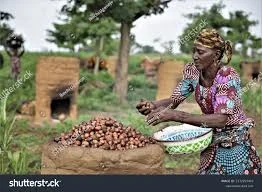
Nigeria sits atop the world’s Shea belt, producing nearly half of the global output. Yet, despite this natural advantage, the country earns little from the multi-billion-dollar global Shea industry. Every year, millions of rural women across Nigeria’s Middle Belt and northern states gather tonnes of Shea nuts — only for most of it to be exported raw.
The paradox is painful but clear: Nigeria is rich in Shea, yet poor in Shea wealth.

Industry experts say the problem isn’t production — it’s structure. The Shea sector remains informal, uncoordinated, and largely unregulated. Without organisation, the country’s Shea economy continues to bleed value that could have transformed rural livelihoods and boosted non-oil exports.
An Economy Lost to Fragmentation
Across Nigeria’s Shea-producing communities, rural women collect nuts individually, selling them to itinerant traders who dictate prices. This opaque system has produced a long list of setbacks — inconsistent quality, high contamination, lack of grading, and a complete absence of reliable production data.
The consequences ripple across the value chain: falling prices discourage processing investments, factories operate below capacity, and rural incomes stagnate. What should be a thriving export sector remains stuck in a cycle of poverty and inefficiency.
“Nigeria’s problem is not a lack of Shea — it’s a lack of structure,” says industry analyst and retired Nigeria Commodity Exchange Director, Mr. Chris Echikwu.
Aggregation as the Turning Point
The game changer, Echikwu argues, lies in building an organised Shea nut aggregation system.
Aggregation is more than logistics — it’s the backbone of a sustainable Shea economy. Under such a framework, producers would form Village Shea Producer Groups, linked to Primary Collection Points for grading and controlled intake. These would feed into Secondary Aggregation Centres for bulk storage, logistics, and quality control.
Licensed buyers would operate transparently under regulatory oversight. Digital traceability platforms and warehouse receipt systems would ensure accountability, price stability, and access to finance.
This model aligns incentives across the value chain while protecting the most vulnerable — the rural women collectors.
Empowering Women, Strengthening Communities
Over 80 percent of Nigeria’s Shea collectors are women. A functioning aggregation framework is therefore also a gender empowerment policy.
“When women are organised into cooperatives with transparent pricing, quality training, and access to finance, they shift from being invisible collectors to recognised economic actors,” Echikwu notes.
Structured aggregation allows rural women to enjoy predictable incomes, gain credit access, and take leadership roles within cooperatives — combining gender inclusion with export competitiveness.
NASPAN: The Institutional Backbone
For the vision to succeed, institutional coordination is essential. Echikwu highlights the National Association of Shea Products of Nigeria (NASPAN) as the central pillar for reform.
NASPAN’s mandate, he suggests, should include policy leadership, buyer licensing, registry management, industry dialogue, and donor coordination. Only a nationally empowered body can anchor reforms beyond the cycle of changing administrations and regional politics.
Government’s Role and Coordination
The Federal Government already recognises Shea as a strategic export crop, but acknowledgment alone is not enough. This to call attention to a tighter coordination among key agencies — including the Federal Ministry of Agriculture and Food Security, the Federal Ministry of Industry, Trade and Investment, RMRDC, NEPC, SON, NAFDAC, and the State Ministries of Agriculture.
“Without government ownership, no national aggregation system can be sustained,” he warns.
Why Donor Support Matters
Transforming the Shea sector requires more than good policy — it needs patient capital and technical assistance. Development partners such as GIZ, FAO, UNDP, ITC, IFAD, and the Global Shea Alliance (GSA) are already active in parts of West Africa. Their support will be critical in financing pilot aggregation centres, building digital traceability platforms, training producer cooperatives, and connecting Nigerian producers to international markets.
Unlocking Nigeria’s Shea Potential
If Nigeria succeeds in structuring its Shea value chain, the rewards could be enormous:
- Rural incomes could grow by up to 50 percent;
- New processing investments would emerge;
- Export earnings could surpass ₦500 billion annually; and
- Employment would expand across rural communities.
The belief is that this is Nigeria’s opportunity to dominate the African Shea market — not only in production, but in value creation.
Conclusion
The Shea economy cannot thrive on informality. Nigeria must choose: remain a raw material supplier, or become a value leader.
A sustainable aggregation mechanism is not optional — it is imperative.