Meet Sunday Ekedayen: Delta State’s visionary Commissioner for Economic Planning

Mr. Sunday A. Ekedayen, a Chartered Accountant renowned for his astute administrative skills, currently serves as the Delta State Commissioner for Economic Planning. Holding an impressive academic background, Ekedayen is an alumnus of the University of Lagos, a versatile manager of both human and material resources, and a figure seamlessly integrated into various sectors. His journey began in the early 1990s when he entered the finance industry, swiftly ascending the ranks within one of the national Development Finance Institutions (DFIs). Fondly known as Sonny, his professional prowess and kindhearted nature endeared him to colleagues and management alike. His willingness to support others made him a cornerstone of the organizations he has served. A significant milestone in Ekedayen’s career came with the transformation of the Bank of Industry, arising from the amalgamation of Nigeria Industrial Development Bank (NIDB), Nigeria Bank for Commerce and Industry (NCI), and National Economic Reconstruction Fund (NERFUND). In this transformative phase, Sonny played a pivotal role in crafting operational protocols for the reimagined enterprise, now recognized as the Bank of Industry. Much like a versatile utility player, Sonny showcased his adaptability by maneuvering through various units of the newly formed bank, culminating in his leadership of the Internal Control and Audit (IC&A) Department. His departure from each role was met with a sense of loss, and his arrival at new posts was always celebrated, a testament to his impact. Now in his role as the Delta State Commissioner for Economic Planning, the stage is set for Ekedayen to exhibit his trademark proactive approach. His congenial nature and reputation for quick thinking position him as a dependable ally, primed to hit the ground running. Ekedayen’s ability to seamlessly transition between sectors and functions underscores his capacity as a well-rounded individual. As he continues to serve in his new role, Delta State can anticipate a future guided by his strategic economic insights and steadfast commitment to progress.
Africa Social Impact Summit: Entrepreneurs seek $49.6m intervention

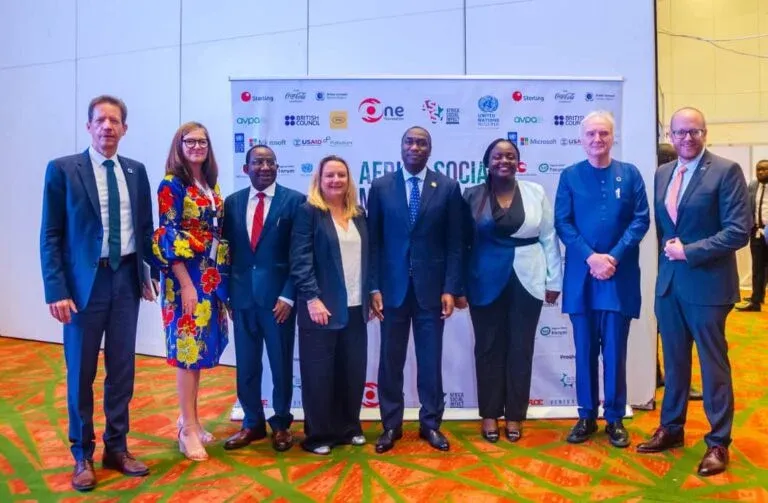
African inventors and entrepreneurs are seeking $49 million from investors at the just concluded Africa Social Impact Summit (ASSIS) to scale up their businesses. This is contained in a statement signed by Mrs Olapeju Ibekwe, Chief Executive Officer (CEO), Sterling One Foundation, made available to newsmen on Tuesday in Lagos. The two-event was co-convened by Sterling One Foundation and the United Nations in Nigeria. The summit had as its theme, “Global Vision, Local Action: Repositioning the African Development Ecosystem for Sustainable Outcomes.” Ibekwe said that the Summit featured a deal room with pitches from 18 businesses shortlisted from over 500 applications from across Africa. She said that the finalists, drawn from South Africa, Kenya, and Nigeria with businesses cutting across health, waste recycling, agriculture and education, had a combined investment bid of about $49.6 million for expansion and production capacity increase. According to her, the investors are observing due diligence to determine what the successful candidates will access to upscale their businesses. The CEO noted that the gathering of key players from the government, the diplomatic community, civil society and the public and private sectors for the summit, was not a talk shop but a meaningful engagement that would spark the desired impact in Africa. She said that ASIS 2023, being the second edition, was designed to help build partnerships and galvanise investments that would ensure that Africa made rapid progress towards achieving the SDGs. Ibekwe said that with the world halfway through the 15-year timeline set for the actualisation of the SDGs, there had been a call across the globe to review the work done to see what had worked and what had not. He said this was to identify critical areas where additional measures were needed for success to be achieved. She said that the call formed the basis of conversations at ASIS 2023. She said that the call also resonated as former President of Malawi, Joyce Banda; Consuls-General of the British High Commission, USA, Germany and Denmark, including experts in various fields, shared insights into different sustainability strategies. She expressed the hope that several partnerships and innovations would emerge from the summit. The CEO said that she was looking forward to existing social impact initiatives in various rural communities, accessing multilevel resources, to be able to do more and spread their impact from community to community across the continent. She added that she was humbled by the intentionality of the private sector to own the SDGs and expressed gratitude to the partnership of the United Nations as the co-convener of the summit “Across the continent, the people are waiting for action. For far too long, Africa has been tagged the emerging continent, with its potentials a recurring theme of conversation, yet poverty, hunger, climate crisis, and inequality, remain visible; thus, Africa is yearning for action. “I remain confident and incurably optimistic that there is the capacity for the type of action we seek in this room. There is the capacity to build strong partnerships for sustainable solutions to move from plans to action quickly. “I urge everyone to interact and collaborate because the stakes are very high,” Ibekwe said. She said that Mr Abubakar Suleiman, Managing Director and CEO of Sterling Bank Limited, explained that the true essence of the Summit was to ensure that at every level, the issues and challenges resulting in widespread poverty across Africa got tackled rightly. “Six months from now, when we reach out for you, we want to hear that because you came here, you met someone, and you established a relationship, you rethought your approach, therefore, are getting more value from your resources, and are better at solving problems together. “The only thing that matters is the relationships you form today and how these relationships transmit to a much better outcome than you had before you came here,” Suleiman, who is also board member of the Sterling One Foundation, said. Ibekwe said that the UN Resident and Humanitarian Coordinator, Nigeria, Mr Matthias Schmale, said the 2030 Agenda was a clear framework for addressing the challenges facing Africa, which required all to break free from business-as-usual approaches and move together faster. “Governments, NGOs, and civil society cannot tackle our current challenges alone. “If we are to secure a just, sustainable world, we need a whole-of-society approach in which the private sector plays a pivotal role,” Schmale said. While further stating that the promise of the 2030 Agenda was now in peril, he urged more CEOs and investors to adopt the 10 principles of the UN Global Compact. He asked them to hire more qualified women, and ensure that their investments focused on more than just profit, to reflect social impact considerations. He pledged support to the Nigerian Government, citing the Cooperation Framework for Sustainable Development, which both parties had agreed to. He also called on more organisations to embrace Public-Private Partnerships to leverage the strengths and capabilities of both sectors to fast-track and scale up major development initiatives.