Nigerian Foreign Minister Tuggar Welcomes US Secretary of State Blinken for Bilateral Talks

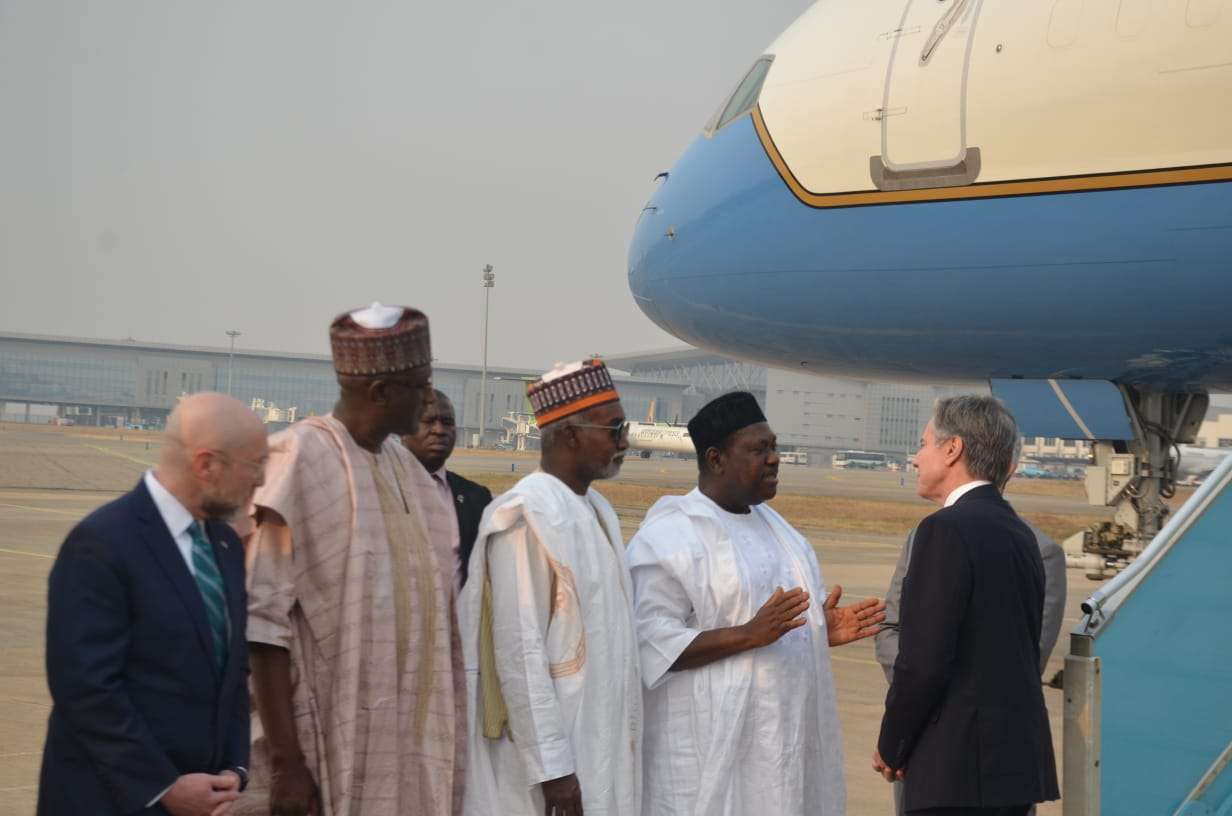
Nigeria’s Minister of Foreign Affairs, Ambassador Yusuf Maitama Tuggar, warmly received the United States Secretary of State, Anthony Blinken, on Tuesday, January 23, 2024. The diplomatic encounter took place at the Presidential wing of the Nnamdi Azikiwe International Airport, where Tuggar, alongside Secretary to the Government of the Federation Sen George Akume, led a brief reception and exchanged pleasantries with the visiting American diplomat. Alkasim Abdulkadir, Special Assistant on Media and Communications Strategy to the Minister of Foreign Affairs, confirmed these details, highlighting the significance of the diplomatic engagement between Nigeria and the United States. During Secretary Blinken’s visit, discussions are set to revolve around key areas such as deepening democracy in the West African subregion, enhancing trade relations, and bolstering security cooperation between the two nations. The Minister also plans to utilize the opportunity to advocate for multilateral reforms, specifically emphasizing the need to democratize the United Nations Security Council. The talks aim to strengthen ties and address regional and global concerns in a collaborative manner.

Foreign Affairs Minister, Tuggar calls for Nigeria’s Membership of UN Security Council

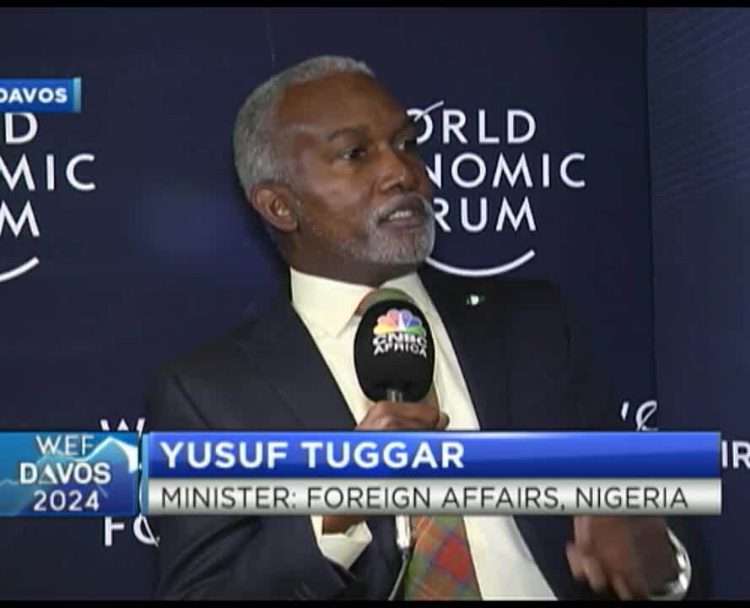
Nigeria’s Minister of Foreign Affairs Ambassador Yusuf Maitama Tuggar, has said there is a need to democratise the United Nations (UN) security council and Nigeria with its population, economic size and strategic role in Africa has earned the right to be part of the UNSC. Ambassador Tuggar made the call while speaking at a panel discussion on the theme “Securing an Insecure World” at the World Economic Forum (WEF), Davos, Switzerland. Tuggar said the values of democracy – such as the rule of law – should be replicated in the world’s highest decision organs. Tuggar said the UN security council, as constituted, is not leaving up to its purpose. “What we have to do is collectively practice what we preach. The values that we uphold – democracy, rule of law – need to be practised, and we need to see them being practised in the very decision-making bodies or entities for the planet,” the minister said. “So, to begin with, the UN Security Council needs to be democratized. Clearly, it is not fit for purpose. “We should do away with the veto powers on the UN Security Council; clearly, it’s clumsy and not working. Again, when you look at the global security architecture, it is impacted by such undemocratic entities that influence decisions. “We have a situation where, in the past, during the bipolar world, there was neutral ground for diplomats to engage, allowing diplomacy to resolve issues, preempt conflicts, and diffuse them. Unfortunately, we don’t have that anymore. “We are increasingly seeing a situation where diplomats and diplomacy are taking the backseat, and disagreements are being securitized.” Tuggar expressed dismay that security chiefs and defence policymakers are taking the front seat in world security issues. “Of course, for the guy with the hammer, everything is a nail,” he said. Other speakers on the panel with Mr. Tuggar were, the Secretary of NATO, Jens Stoltenberg, Minister of Foreign Affairs of the Kingdom of Saudi Arabia, Prince Faisal bin Farhan Al Saud, Minister of Foreign Affairs of Finland Elina Valtonen, Senator from Delaware United States Christopher A. Coons, President, World Economic Forum Børge Brende, and Federal Minister of Foreign Affairs Federal Foreign Office of Germany Annalena Baerbock Discussions at the parley dwelled on persistent conflicts, the intensifying climate crises, the fragile global economies and the potential risks of new technologies that were creating a complex global security environment. The forum provided an opportunity for the participants to interrogate what the true state of global collective security looked like today and how leaders can strengthen it for the future.