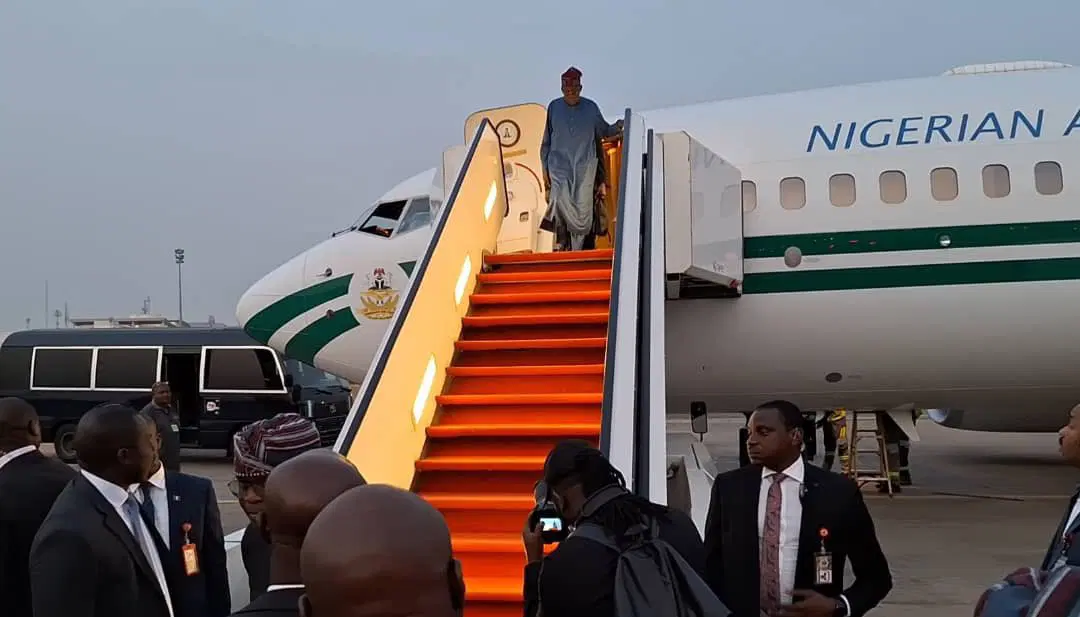
Nigeria Socioeconomic turmoil: Tinubu to skip UNGA

In apparent reaction to the disquiet in the camp of the “owners of Nigeria”, President Bola Tinubu has decided to skip the 79th United Nations General Assembly (UNGA), opting to focus on Nigeria’s pressing domestic challenges. President Tinubu who has been on a junket, visiting country capitals in Europe, Asia and North America while the country literally burns, says the current decision to cool heels at home is in deference to the gigant Maiduguri flood that has taken over 30 lives and affecting over a million people. Irked by the apparent indifference of President Tinubu to the suffering of Nigerians due his economic policies, some former military rulers and strategic generals, so-called ‘owners of Nigeria,’ gathered in Minna at the hilltop home of former President Ibrahim Babangida to sketch an alternative to a second term of President Tinubu. A statement issued on Thursday by Special Adviser to the President on Information and Strategy, Bayo Onanuga, which disclosed President Tinubu’s decision, also said Vice President Kashim Shettima will lead Nigeria’s delegation in his place The President’s move is seen as a prioritization of local concerns over international diplomacy, as President Tinubu aims to address the immediate needs of Nigerians affected by the floods. The UNGA, scheduled to take place from September 24 to 28, 2024, will feature discussions on sustainable development, peace, and human dignity. VP Shettima will deliver Nigeria’s national statement to the General Assembly, attend key sideline events, and engage in bilateral meetings, ensuring the country’s interests are represented on the global stage. “President Bola Tinubu will not attend the 79th United Nations General Assembly session in New York this year. “The President has thus directed Vice President Kashim Shettima to lead Nigeria’s delegation. “President Tinubu, who returned to the country last Sunday after his trip to China and the United Kingdom, wants to focus on domestic issues and address some of the country’s challenges, especially after the recent devastating flooding. “At UNGA 79, Vice President Shettima will deliver Nigeria’s national statement to the General Assembly, attend important sideline events, and hold bilateral meetings. “The high-level General Debate, with the theme ‘Leaving no one behind: Acting together for the advancement of peace, sustainable development and human dignity for present and future generations’, will run from Tuesday, September 24, through Saturday, September 28, 2024”, the statement said.
UNGA: Nigeria, Others Commit To Ending TB By 2030

Nigeria, some UN Member States, civil society representatives and other stakeholders have approved a declaration to advance efforts to end Tuberculosis (TB) by 2030. The document lays out ambitious new targets for the next five years that include reaching 90 per cent of people with TB prevention and care services, providing social benefit packages to those who have the disease, and licensing at least one new vaccine. TB is the second leading infectious killer disease worldwide after COVID-19, with some 1.6 million deaths in 2021 alone, according to the World Health Organisation (WHO). Also, the only available vaccine of TB is more than a century old. All the 193 Member States and stakeholders made the political commitment at a High-level meeting on the fight against Tuberculosis at the ongoing 78th of the UN General Assembly. “Why, after all the progress we have made – from sending man to the moon, to bringing the world to our fingertips – have we been unable to defeat a preventable and curable disease that kills over 4,400 people a day?” the President of the UN General Assembly, Dennis Francis, said. TB had afflicted humanity for millennia, going by several names including the white plague and consumption. It is caused by bacteria and mainly affects the lungs, and treatment is with antibiotics. A WHO council established to facilitate the development and equitable use of new vaccines met for the first time this week. Stamping out the TB epidemic is among the health targets of the Sustainable Development Goals (SDGs), the roadmap for a more just and green global future by the end of the decade. Five years ago, countries set the target of delivering TB treatment to 40 million people, reaching 34 million. They also aimed to provide 30 million with preventive treatment but fell short by half. UN Deputy Secretary-General Amina Mohammed called for action to tackle the main drivers of TB – poverty, undernutrition, lack of access to healthcare, the prevalence of HIV infections, diabetes, mental health, and smoking. “Stigma surrounding the disease also needs to be reduced so that people can get help without fear of discrimination,” she added, while urging governments to ensure universal health coverage that includes TB screening, prevention and treatment. Mohammed also shared her own reason for supporting the global fight. “My commitment is my personal story: losing my father to TB at 50, 37 years ago this week. “Today we have the tools to diagnose, treat, and what we need right now is a vaccine. Let’s end TB now. It is possible,” she said. Mongolian author Handaa Rea, who had survived the disease, urged world leaders to “treat TB not only medically but also socially.” She had written about her own experience of TB-related stigma, discrimination that she said is prevalent in many developing countries, resulting in “hundreds of thousands of people” delaying seeking treatment. Rea said: “The consequences of stigma are “more enhanced” for women and girls who are held to higher standards of health, well-being and beauty. “When society says things like ‘she’s too skinny, because she has TB, she’s unworthy of marriage because she has or had TB, or she continues to have TB because she’s irresponsible. “We as a society are bullying TB patients one step closer to death – a death that is fully preventable. And this has to stop.” WHO chief Tedros Ghebreyesus commended the “amazing” energy in the room, where participants frequently chanted “End TB, yes we can!” He welcomed the political declaration, which was agreed by consensus ahead of the meeting. It will be presented to the General Assembly, the UN’s most representative organ, comprising all 193 Member States. The UN scribe said: “For millennia, our ancestors have suffered and died with tuberculosis, without knowing what it was, what caused it, or how to stop it,” he said. “Today, we have knowledge and tools they could only have dreamed of. We have political commitment. And we have an opportunity that no generation in the history of humanity has had: the opportunity to write the final chapter in the story of TB.”