LG Autonomy Must Become Nigeria’s 1964 Civil Rights Fight

President Bola Ahmed Tinubu’s administration will be remembered—for good or ill—for its bold systemic reforms: the removal of fuel subsidy and the floating of the Naira. But perhaps the most consequential, destiny-shaping, and legacy-defining reform is the pursuit of local government autonomy. Sadly, its importance is largely unappreciated. We live in survival mode. Nigerians worry about what to eat today, not about distant reforms whose benefits may not be seen tomorrow. Fuel subsidy removal and naira floating shook people at the existential level; hence they dominate the headlines. But local government autonomy—though quieter—has the potential to change Nigeria’s governance forever. The Bold Supreme Court Route Unlike subsidy removal, which Tinubu casually announced in his inaugural speech, he knew local government autonomy could not pass through the legislature. As a former governor, he understood the enormous grip governors hold over senators and representatives. Any such bill would have been dead on arrival. He therefore chose the unconventional but brilliant route—through the Supreme Court. That singular move reveals how monumental the reform is. Governors Will Not Give Up Without a Fight Across Nigeria today, governors are doing everything possible to frustrate implementation. They will not give up their honeypot fiefdoms without a titanic fight. Local government allocations are their oxygen, their war chest, their piggy bank.Osun State shows us how consequential this struggle is: the government and opposition are locked in a fight-to-the-finish over who controls local government funds. Neither side can afford to lose. Only the suffering masses lose.Governors in Nigeria are among the most powerful people on the continent. They are political Santa Clauses, distributing patronage to the loyal and punishment to dissenters. Even powerful cultural organizations such as Afenifere and Ohaneze tread carefully—they too want their share of the goodies. Nobody dares to fall into the bad books of a governor.This is why only a handful of so-called “crazies” and “knuckleheads” dare to take them on. But truth be told, the battle for local government autonomy is not a fringe struggle—it is our collective struggle. Nigeria’s Civil Rights Moment Just as Black Americans in 1964 rose to demand their civil rights against systemic denial, Nigerians must rise to demand true local government autonomy. This is our civil rights moment.Why? Because local government is the only tier of government closest to the people. It is where the school roofs collapse, where rural roads decay, where health centers go without medicine, and where farmers are either empowered or abandoned. Without local government autonomy, development remains centralized in the hands of governors who dictate winners and losers. Community Efforts Are Not Enough In Ijesaland, we have set up a Local Government Monitoring Committee. It is a commendable step, but let us be honest: such committees are like trying to stop a raging elephant with needles. They lack constitutional power to enforce accountability. Governors and their parties control who contests local elections, and unsurprisingly, they always win in landslides. Community monitoring is better than nothing, but it cannot uproot entrenched abuse. Freedom Is Never Given Freely Let us be clear: governors will never willingly surrender control of local government allocations. Asking them to do so is like asking a pig to abandon its muddy pond. It will not happen voluntarily.To wrestle power away requires nothing less than a civil rights–style movement. Freedom is never handed down. It must be fought for, demanded, and seized.If Nigerians are serious about grassroots development, accountability, and true democracy, then we must treat local government autonomy as our 1964. Afenifere, COYN, and other activist communities can help mobilize, but the power must come from ordinary Nigerians who refuse to be shut out of their own governance. Conclusion Tinubu may have taken the boldest step by going through the Supreme Court. But without citizen action, governors will suffocate the reform. This fight is not about Tinubu, APC, or PDP—it is about the people versus the political elite.Local government autonomy is not just another policy tweak—it is the foundation of genuine democracy and development in Nigeria.The governors will not give it up. The people must rise up and take it. This must become Nigeria’s 1964. Adewale Alonge, PhD, Founder & President, Africa Diaspora Partnership for Empowerment and Development. www.adped.org
IGP Speaks On Creation Of State Police

The Inspector General of Police, Olukayode Egbetokun, has reaffirmed the Nigeria Police Force’s commitment to adhering to the federal government’s stance on state police. This statement was made during the visit of the Coordinating Deputy Inspector General of Police, South-West, Mr. Abiodun Alabi, who represented the IGP in Lagos on Monday. This is a modal window.The media could not be loaded, either because the server or network failed or because the format is not supported. Egbetokun’s remarks come amidst ongoing discussions about the suitability of state police in Nigeria. Previously, on April 22, 2024, he had expressed reservations about the country’s readiness for state-controlled police forces, citing maturity concerns. During the press briefing, DIG Alabi, on behalf of IGP Egbetokun, emphasized the importance of discipline and professionalism within the force. He urged police officers to adhere strictly to the constitutional guidelines that dictate their operations, focusing on human rights and the responsible use of firearms. “The Nigeria Police Force remains dedicated to performing its duties responsibly. We must ensure our actions are always within the bounds of the law and respect for human rights,” Alabi stated. In addition to operational directives, IGP Egbetokun highlighted the welfare of the police officers, announcing initiatives aimed at improving their living conditions. This includes partnerships with consultants to facilitate housing for police personnel, enabling them to access their own homes shortly. The IGP also addressed the mental and physical health of the officers, instructing the officer in charge of Police Medical to conduct comprehensive mental and psychological evaluations for the personnel of the Lagos State command. On the topic of inter-agency cooperation, Egbetokun warned against any rivalries with other security bodies, emphasizing that a collaborative approach is essential for national security. He also called on officers to proactively engage with the youth to educate them on the dangers of cultism, as part of broader efforts to combat this pervasive issue. The meeting concluded with remarks from the Lagos State Commissioner of Police, Mr. Adegoke Fayoade, who noted the success of recent collaborative crime prevention strategies that have led to a significant reduction in crime rates across Lagos.
Tinubu, Governors To Consider Establishment Of State Police

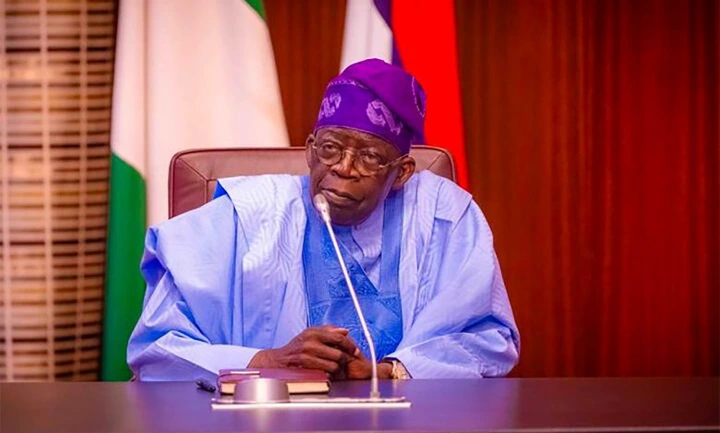
President Bola Tinubu, alongside the 36 governors, has endorsed the establishment of state police. The agreement was made during an emergency meeting held at the Presidential Villa in Abuja on Thursday. The Minister of Information and National Orientation revealed that discussions surrounding state police have gained momentum, with the federal and state governments recognizing the necessity of such a development. The Minister emphasized that while this marks a significant shift, further meetings will be conducted to refine the modalities for implementing state police across the country. He said, “But now, there is also a discussion around the issue of state police. The federal government and state governments are mulling the possibility of setting up state police. “Of course, this is still going to be further discussed, a lot of work still has to be done in that direction. But what the federal government and state governments are agreeing to the necessity of having state policy. “Now, this is a significant shift. But like I said, more works need to be done in that direction. A lot of meetings will have to happen between different government and sub nationals to see the modalities of achieving this.