The suspension of Senator Natasha: A return to the dark days of women sexual exploitation and harassment.

“If we were planning to send the clear and chilling message to our young ladies, our children and grandchildren, who face sexual harassment on a regular basis, to shut up, suffer in silence, raise no alarm, suffer humiliation and retaliation quietly, we couldn’t have chosen a better case to make the point than the Natasha-Akpabio Scandal.”   That in the year 2025, a powerful lady, a Senator of the Federal Republic of Nigeria, Natasha Akpoti-Udanghan, who is also married to a highly influential husband, and who just as she released a bombshell alleging being  sexually harassed by the senate president, was suspended for six months, marks a sad day for women’s right and their bodily autonomy in our country.  To add insult to injury, this national show of shame occurs only hours away from March 8th, the International Women’s Day.  We do not need research statistics to tell us that sexual harassment and sexual exploitation of women in Nigeria is a true epidemic.  We all know it in our daily and past lived experience.  READ ALSO: EFCC questions ex-minister over alleged N138million fraud In a study by Owoaje ET, and Olusola-Taiwo O. titled “Sexual harassment experiences of female graduates of Nigerian tertiary institutions” and published in the 2009-2010 edition of International Quarterly of Community Health Education, the authors reported that majority (69.8%) of the respondents had been sexually harassed, with the main perpetrators being male classmates and lecturers. About two-thirds experienced the non-physical type of sexual harassment; 48.2% experienced the physical type. Non-physical harassment included sexual comments (57.8%) and requests to do something sexual in exchange for academic favors (32.2%). Physical forms of sexual harassment included unwanted sexual touching (29.4%) and being intentionally brushed against in a sexual way (28.9%). The effects experienced by victims were depression and perceived insecurity on campus. Sexual harassment is not just a common occurrence confined to Nigerian tertiary institutions, it is prevalent across the society, in the workplace, houses of worship and in everyday living, including women just walking in the street when men often feel entitled to make sly and sexually demeaning comments and sometimes unwanted physical touching.     Sadly, in our patriarchal male-dominated misogynistic society, victims of sexually harassment who are predominantly women are often shamed, intimidated, disbelieved and revictimized.  That same scenario would seem to be playing out in the high profile allegation of sexual harassment levelled by Senator Natasha Akpoti-Uduaghan against one of the most powerful men in Nigerian politics, the Senate President, Senator Godswill Akpabio.  Let me state here that I take no side on the guilt or innocence nor on the veracity or falsehood of the allegation by the senator. Just as sexual harassment is extremely damaging to its victim, in the same manner, false accusation of sexual harassment can cause tremendous  and sometimes irreparable reputational and psychological damage to the falsely accused.   READ ALSO: FIOA use will eliminate obstacles and biases against women – stakeholders Until a few days ago when the story broke, I had never heard the name of Senator Akpoti-Udanghan. My position has nothing to do with her public profile nor position.  My position would have remained the same even if she were a pepper seller. The good news about the sad situation is that it enabled her to beam a bright light on the ugly side of our society, our pervasive problem with sexual exploitation and harassment of women to which we have played the ostrich with its head in the sand for a very long time.   “Many on social media have suggested that the lady senator bore a higher burden of proof because ostensibly she had made similar allegations before as if sexual harassment was a one time affair.  Yet, no one has suggested that because Senator Akpabio had been accused before, he automatically should be presumed guilty which would be equally as ridiculous as the position many have taken against Senator Natasha.”   In a case of sexual harassment, neutrality is absolutely essential. Both the accused and the accuser must be afforded the same right and no one should be placing a finger on the scale of justice no matter who is involved. In this case, we are not just talking about a finger on the scale of justice but the full weight and force of the powerful senate is being applied punitively against a fellow senator who has come forward with an allegation against one of the most powerful men in the country.  If we were planning to send the clear and chilling message to our young ladies, our children and grandchildren, who face sexual harassment on a regular basis, to shut up, suffer in silence, raise no alarm, suffer humiliation and retaliation quietly, we couldn’t have chosen a better case to make the point than the Natasha-Akpabio scandal.  Now, the accusing Senator Natasha is facing her night of long knives with her colleagues, women pressure groups, and socio-cultural association coming after her to assault her reputation, including insinuation that she was a woman with loose moral who has had six children from six different husbands! Yet official records shows she only has three children.  Even if it were true that she has six children from six husbands, what business of ours is that?  Does that fact only give anyone a license to sexually harrass her? Her case, not surprisingly, has become a cause célèbre, a soap opera made for TV.  In the process the opportunity that this high profile case presents for us as a society to face our national shame in the epidemic of sexual harassment and exploitation of women is being frittered away.  Sexual harassment is one of the most insidious, most embarrassing situation a woman can face.  Sadly, it often boils down to ‘he says she says’ as only the two involved often know. Our society has so much sexually objectified our women that most victims of sexual harassment are too ashamed to talk. Women often get re-victimized, or blamed for dressing provocatively and hence blamed for their

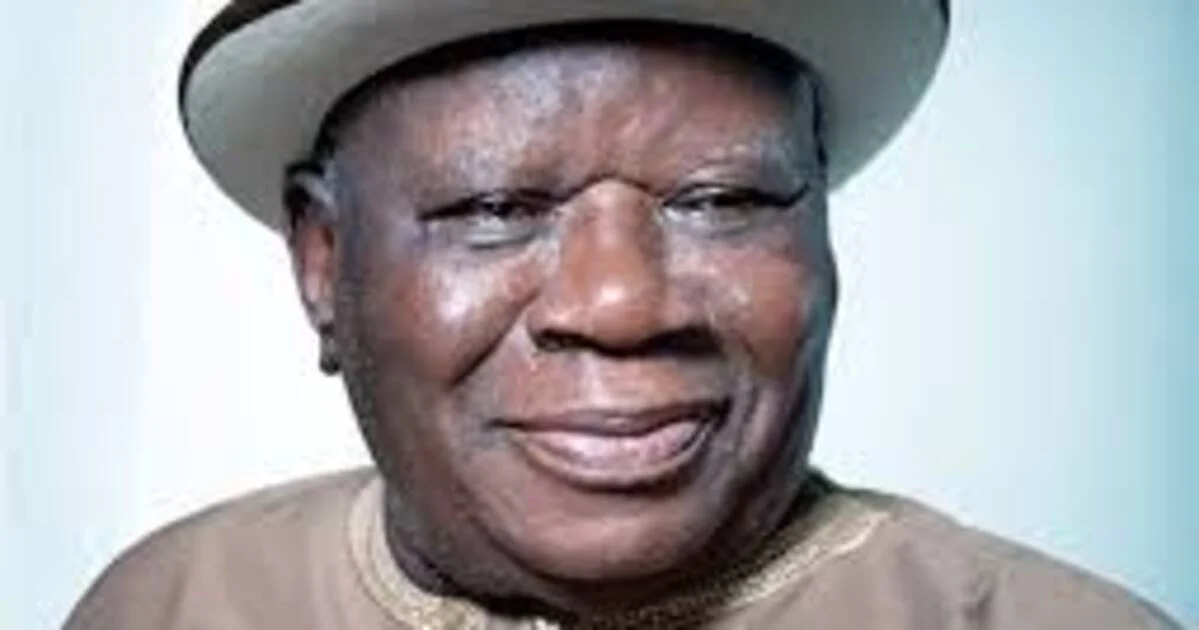
Name a national monument after Edwin Clark: Senate pleads with Tinubu

The Senate has asked the Federal Government to honour the late Chief Edwin Clark by naming a national monument after him.  Clark, a former Federal Commissioner for Information and a well-known South-South leader, died on February 17, 2025, at 97. During Tuesday’s plenary, lawmakers observed a minute of silence in his memory and shared tributes to his contributions.  They also agreed to send a delegation to his family and attend his burial. The motion, sponsored by Senator Joel-Onowakpo Thomas and 16 other South-South senators, recalled Clark’s long service to Nigeria.  He was a nationalist, lawyer, administrator, and strong advocate for the Niger Delta.  His political career started in 1953 as a councillor, and he later became a senator and a key figure in the fight for regional development. As Midwestern Commissioner for Education and Finance, he helped establish the Midwest College of Technology, which became the University of Benin.  He also served as Federal Commissioner for Information in 1975 and played a role in national unity efforts. Several senators praised his courage and commitment to justice. Senate President Godswill Akpabio noted that Clark remained a strong voice for equity even in his old age.