Restructuring: Don admonishes attitudinal change

Prof. Kamal Bello, Dean, Faculty of Social Sciences, National Open University of Nigeria (NOUN) has urged Nigerians to look beyond restructuring and channel their efforts towards behavioural and attitudinal change. Bello spoke as a Lead Discussant, at the first Dialogue Series of the Faculty of Social Sciences, NOUN, at the weekend in Abuja. The programme had the topic “Nigeria: To be Restructured or Not to be Restructured”. The don said that for Nigeria to be great, everyone must contribute to its success. He described restructuring as a cumbersome process that needed to be conceptualised in the Nigerian context as to what needed to be restructured. “The word restructuring is not new. Nigeria must understand the concentration of the country’s resources before true restructuring can take place. “People look at the contemporary things in restructuring; people are seeking true federalism. “Nigeria must know the concentration of her resources before it can be restructured. Most of Nigeria’s problems are how to share the cake, but not how to bake it. “What should be on every Nigerian’s mind should be the question of how to bridge the gap between the rich and the less endowed and not the question of creation of more states or local government. “It is our mindset that needs to be restructured, not the structure itself. Nigeria’s problem starts on an individual level. We should shun discrimination,” he said. Bello added that at this critical time, the question shouldn’t be about whether to restructure or not to restructure but to shun nepotism, corruption, and ethnicity. “We need to look at Nigeria as a nation that everyone must contribute to its success. The teachers and the lecturers should be role models,” he said. The dean thanked the university management for making the dialogue possible. He also thanked the Standing Committee on Seminar, Conference, and Public Lecture under the chairmanship of Dr Adeola Adams for ensuring that the dialogue was a success. Speaking, Prof. Hussaini Tukur of the Nasarawa State University, Keffi, said the legal framework should be taken into cognisance before the question of why restructuring and for whom. “The legal issues surrounding restructuring should be considered. “When you understand the purpose and the legal entity of restructuring you will realise the issues involved as there are several guidelines to restructuring,” Tukur said. In his remarks, the NOUN Vice-Chancellor, Prof. Olufemi Peters, noted that the dialogue was novel and innovative. He said that the topic was apt due to the recurring nature of the debate. Represented by the Deputy Vice-Chancellor Administration, Prof. Isaac Butswat, the VC said that the Faculty organised the dialogue to make an input. He said it was also to decide on which way Nigeria as a country should go on the issue of restructuring. The VC, however, expressed optimism in the crop of discussants drawn from various higher institutions of learning across the six geopolitical zones of the nation. He urged the participants to pay attention to the discussants for a better and more useful understanding of the dialogue.

Tinubu promises Restructuring Nigeria

Tinubu's Intervention Can't Solve Ondo Crisis - PDP

President Bola Ahmed Tinubu has reiterated his determination to restructure Nigeria but emphasised that the proper foundations must be laid in order for the goals to align properly.  Tinubu assured that with the structures put in place by his administration, the country will soon be better off, and Nigerians will be out of the current economic hardship. The President stated this at a meeting with the National Leader of Afenifere, Pa Reuben Fasoranti, at his country home in Akure, Ondo State capital, on Wednesday. The meeting with the leaders of the mainstream Yoruba group was held behind closed doors. In a statement by the National Publicity Secretary of the organisation, Jare Ajayi, and disclosed to newsmen, the core issues on how to move the country forward were the focus of the meeting. According to Ajayi, the President said, “I prayed for it, I danced for it, I campaigned for it, and I got it. I know the enormous amount of responsibility, so don’t pity me, Baba, just sit down and relax.” “He (Tinubu) assured Nigerians that the struggle he undertook and that he is trying to build the structures that will not be reversed. “He said that the structure he is trying to put in place in Nigeria economically, socially, and politically would be such that it would bring Nigeria back to where it was supposed to be. “We should eat the food we grow. Doing so would prevent us from depending on foods from foreign sources. A nation that fully depends on food from outside cannot get it,” Ajayi added. Fasoranti, who commended Tinubu for keeping his word to return to his residence after emerging as President, stated, “Your performance so far has shown that you understand the full gravity of your mandate, which is to show the Nigerian people that a good government is possible. “We seek, therefore, a true Federal Republic that would reflect fiscal federalism. If the derivation principle is good for oil, why is it not good for value-added tax, for example?”

Wike Sacks Heads Of FCTA Parastatals, Agencies

Wike Promises Improved Quality Healthcare Services In FCT

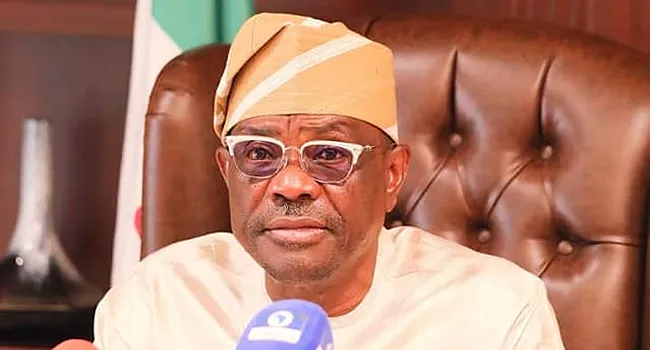
The Minister of the Federal Capital Territory (FCT), Nyesom Wike, has taken the decision to dismiss the heads of various parastatals, agencies, and companies operating under the FCT administration (FCTA). This significant move was announced by Anthony Ogunleye, the Director of Press in the Minister’s office, through an official statement released on Wednesday. “The minister’s directive to relieve these officials of their positions is effective immediately, and new appointments to these offices will be made in due course. “As part of the transition process, all affected officials have been instructed to facilitate the smooth handover of their duties to the most senior officers in terms of rank,” the statement said. Below is a list of the entities and individuals affected by this decision: This development marks a significant change in the leadership landscape of the FCTA parastatals and agencies as the minister seeks to implement his vision and objectives within the Federal Capital Territory.

Tinubu rejigs ministerial portfolios, renames Ecological Ministry

CSOs call for debt rescheduling with China, others

President Bola Ahmad Tinubu has initiated a comprehensive restructuring of the forthcoming Federal Cabinet, aimed at optimizing ministerial portfolios and enhancing government efficiency. This significant move was announced by Ajuri Ngelale, the Special Assistant to the President on Media and Publicity, through a formal press release. One of the notable changes involves the redeployment of Engr. Abubakar Momoh, who was initially assigned to the Federal Ministry of Youth and Sports Development. He will now assume responsibilities within the Federal Ministry of Niger Delta Development. This strategic reallocation of personnel aims to leverage Momoh’s expertise in a way that aligns with the nation’s development priorities. Meanwhile, the Federal Ministry of Youth and Sports Development is set to undergo a transition as it awaits the assignment of a new Minister-Designate. This decision underscores the administration’s commitment to ensuring that every ministry is led by capable and qualified individuals. Furthermore, the Ministers-Designate earmarked for the Federal Ministries of Transportation, Interior, and Marine & Blue Economy have experienced a noteworthy reshuffling of their designations: (A) H.E. Adegboyega Oyetola, who was initially positioned for another role, will now bring his leadership and expertise to the forefront as the Honourable Minister of Marine & Blue Economy. This adjustment reflects the President’s focus on sustainable maritime and economic development. (B) Hon. Bunmi Tunji-Ojo has been reassigned to the role of Honourable Minister of Interior. This shift recognizes his potential to contribute significantly to the governance and security aspects of the ministry. (C) Hon. Sa’idu Alkali, who was previously designated for another ministry, will now take the reins as the Honourable Minister of Transportation. This reassignment aligns with his experience and capabilities in infrastructure and transportation management. Moreover, in a move to streamline coordination and expertise, both Ministers of State within the Oil & Gas sector have been incorporated into the Federal Ministry of Petroleum Resources. Their new roles are as follows: (i) Sen. Heineken Lokpobiri has assumed the mantle of Hon. Minister of State (Oil), Petroleum Resources, leveraging his knowledge of the oil sector to contribute to its growth and stability. (ii) Hon. Ekperipe Ekpo now holds the position of Hon. Minister of State (Gas), Petroleum Resources, bringing his insights to the development of the gas sector. The President’s endorsement has also led to the renaming of the Federal Ministry of Environment and Ecological Management. It will now be known as the Federal Ministry of Environment, reflecting the ministry’s central role in safeguarding Nigeria’s environmental sustainability. These transformative adjustments, implemented through the directives of the President, are set to take immediate effect.

We must reset our political values to restructure Nigeria -Prof Odinkalu

We must reset our political values to restructure Nigeria -Prof Odinkalu

The former Chairman of the National Human Rights Commission (NHRC), Prof. Chidi Anslem Odinkalu, has called for a resetting of the country’s value system which, according to him, will culminate in a restructuring of Nigeria. Odinkalu argues that the process of resetting Nigeria must start with addressing the country’s values problem, which requires a new kind of leadership that is national in outlook. Odinkalu, who is a visiting professor at Harvard University, maintained that for effective resetting to be accomplished, the process must begin with paying attention to political values that underpin coexistence in the country. The human rights activist, made these submissions in Abuja while speaking as a guest lecturer at the 10th-anniversary lecture of Just Friends Club of Nigeria. Speaking on the topic “Resetting Nigeria” he posited that if we cannot restructure our values, we cannot restructure a Nigeria that is equitable and just. The Prof emphasized that the theme, “Resetting Nigeria” is pregnant with more questions than illumination. First, it implies that Nigeria was already set without disclosing who did so. Secondly, it suggests also that the initial setting is flawed, imperiled, or spent, without indicating why, when or how this happened. Thirdly, it suggests that this old setting now needs reworking but does not say who will do it, why they are qualified for that task or from whence they derive their mandate to do so. He submitted that as a leader, we got to understand the diversity of this country and chose leaders who understand the diversity. “Many explanations have been proffered for Nigeria’s current unhappy condition: corruption, violence, impunity, among others. I want to suggest that these are symptoms, not the underlying problem. “Two decades ago, Chinua Achebe declared that ‘the trouble with Nigeria is simply and squarely a failure of leadership’, and argued that ‘Nigerians are corrupt because the system under which they live today makes corruption easy and profitable. “As a supplement or complement to this, I propose shortly to suggest that we have a structural crisis in our political economy indexed as it is on allocation rather than production. “This is an important point to make to a gathering of professionals. The defects of this fundamentally flawed political economy are compounded by a long-established ethics of deliberate political innumeracy”.  “As a political economy, we specialize in fraudulent counting and accounting, legitimized post-hoc by the instruments and skills of the law. “To preserve our innumeracy of public accounts, we have used everything from coercive instruments to commissions of inquiry whose reports have never been seen. In over half a century as a country, we have never held a credible census. “To legitimize the outcome without addressing the underlying malfeasances, we establish Census Tribunals. In the same period, we have struggled to undertake credible elections. For each flawed election, we establish an Election Petitions Tribunal, procuring judicial legitimacy for returns that have been – in most cases – fundamentally flawed,” he lamented. Odinakalu recalled various past avoided trajectories of the country and the deliberate choice of her leaders not to do the right things and warned of dire consequences. “The only way to avoid those consequences is to come to terms with the reality that the country needs to be re-set. That re-setting, however, must begin with attention to the political values that underpin coexistence in the country. “But addressing this values problem requires a new kind of leadership that is national in outlook. That is where we must begin and in this, associations like the JFCN have a significant role to play,” he stated.