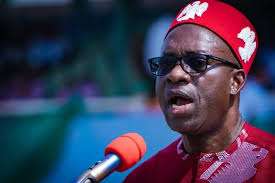
Why Political Office Holders Should Be Put On Minimum Wage – Soludo

The Governor of Anambra State, Charles Soludo, has advocated a drastic reduction in the cost of governance in Nigeria. The Governor lamented that the nation is broke but government and elected officials continue to live in denial and show off flamboyant lifestyles at the detriment of the masses. As a way to curb the developing crisis from escalating further, Soludo said political officeholders should be placed on the national minimum wage. The Anambra State Governor made the call on Wednesday while speaking at the special edition of The Platform, an event organised by The Covenant Nation to mark democracy day in Nigeria. Soludo expressed that Nigerians are hungry, broke and poor, but the ruling class continue to live extravagantly at the expense of the common people. “Let’s come clean and straight with Nigerians. Nigeria is very poor and broke but the lifestyle of government and government officials does not show it, especially with the obscene flamboyance in public display,” Soludo said. “The poor are hungry and impatient, let’s not annoy them more with our insensitivity. “In this case, I agree with reverend father Mbaka, who said elected governors should also earn minimum wage. I agree that we should be paid that so that we can feel that as well. “In Anambra, I have not received a kobo as salary since I assumed office. I have donated my salary to the state. “It is symbolic. It is not much. I think generally, the system is in denial. There must be some signalling, it is just the symbolism of this.” Soludo called for an end to wasteful spending in governance, stressing that elected officials must always remember they are in office based on public trust. “That is why I proposed reinventing the new code of conduct for public officers,” he said. “For the federal government, the actual projecting revenue comes to about N6,160 per Nigerian, per month. “For the states, except Lagos and a few states, most states have revenues amounting to less than N3,000 per resident, per month. “It is from this shares per citizen that we are expected to provide all the infrastructure, debt service, pay salaries and pensions, build schools and provide everything. “For each of our wasteful spending, let’s be conscious about the fact how many citizen share we are squandering. Once we lose this consciousness about the public trust we bear, the society dies irredeemably.”
Zamfara Government Bans Political Officers, Civil Servants From Granting Radio, TV Interviews

The government of Zamfara State has implemented a ban on political office holders and agency heads, prohibiting them from engaging in interviews, issuing statements, or broadcasting programs on radio, television, or social media without prior authorization. Media organizations within the state are also cautioned against airing any programs without approval from the Ministry of Information. The Commissioner of Information, Mannir Haidara, emphasized the ministry’s dedication to overseeing compliance with these regulations, ensuring accurate dissemination of government policies and information through radio stations. The statement reads: “The Zamfara state government has observed with dismay the attitudes of some individuals, political groups and heads of MDAs towards conducting radio, television stations and social media platforms interviews and programmes on state government’s policies and programmes without following the right channels”. “In an effort to checkmate the unwanted behaviour, the Zamfara state Ministry of Information and Culture hereby announce that henceforth no political office holder, group or head of any agencies is allowed to conduct any interview, issue statement or air a programme on radio, television stations or social media without seeking a permission from the authority”. “Moreover, the Ministry of Information and Culture is hereby calling on the media organisations based in the state to desist from conducting or airing any radio or television programmes on government’s policies for any individuals or group of people without the approval of the supervising Ministry or the Ministry of Information“. “The information ministry is highly committed to observing and monitoring the radio stations for compliance and ensuring that all Information passed to the general public on government and its policies are true and properly disseminated”.