How to Make Nigeria Work, If Still Possible

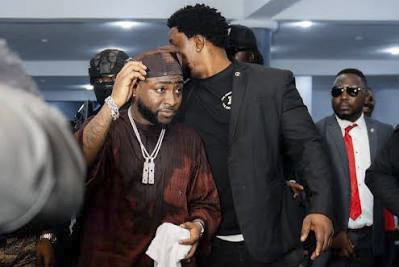
By Ugo Onuoha It will be difficult, probably impossible, to make Nigeria work the way it is presently structured and governed. In theory, we are running a federal system. In practice, it is a unitary structure where operatives in Abuja determine who gets what, how, when, and where. The Osun Example and a Flawed Federal System Until recently, Osun State, governed by the opposition Peoples Democratic Party (PDP), became the latest victim of this distorted arrangement. The Supreme Court had ruled in July 2024 that local government funds must be paid directly to councils, not through state governments. It also declared that only democratically elected councils are entitled to federal allocations. Yet, that judgment has largely been ignored. Some states have passed laws effectively nullifying it, and in many others, it remains business as usual. Ironically, the same federal government that sought the ruling, under President Bola Tinubu, has itself been accused of flouting it. For months, Abuja withheld Osun’s local government allocations, claiming that PDP-controlled councils were illegitimate. The state was forced to rely on Governor Ademola Adeleke and his nephew, musician Davido, who reportedly contributed funds to pay council workers’ salaries. When Osun challenged the federal government at the Supreme Court, the court struck out the case for lack of standing but condemned Abuja’s action as “illegal and egregious.” Both sides claimed victory, but Nigerians were left with the same lesson: partisan politics trumps governance. Politicians vs. Statesmen The Osun case typifies a larger truth, partisan politicians cannot build nations. They are fixated on winning the next election, not on laying enduring foundations. Any country dominated by politicians rather than statesmen will struggle on the lower rungs of global development. That, sadly, has been Nigeria’s reality since the military sacked the First Republic in 1966. Nation-Building: A Process, Not an Event Nigeria will not work until we are intentional about making a nation out of the country. Building a sustainable nation requires a shared vision that fosters unity, common values, and inclusive governance. It also demands: Without these, our quest for progress will remain an illusion. The Foundation Is Broken The biblical question in Psalm 11:3 asks: “If the foundations be destroyed, what can the righteous do?” Nigeria’s foundation, fractured by the 1966 coup and deepened by years of military rule, remains defective. The 1999 Constitution, hurriedly drafted by the Abdulsalami Abubakar junta, was designed to serve narrow interests—not the people. For nearly three decades, we’ve been trying to erect a nation on a bogus foundation. To move forward, Nigeria must start afresh, with a people-driven constitution that reflects true federalism and equity. A Case for Restructuring Many credible voices, including The Patriots led by Chief Emeka Anyaoku, have long called for a new national arrangement. Their proposals include: These ideas, if sincerely implemented, can provide a roadmap to rebuild Nigeria. Structural Inequities and Centralized Power The existing federal structure, largely created by military fiat, is riddled with inequities. For instance, the old Kano State was split into Kano and Jigawa, now boasting over 70 local councils combined—while Lagos, with a similar population, has only 20. This imbalance affects representation and resource distribution. Power is dangerously centralized in the presidency, making elections a do-or-die affair and fueling corruption. The figures involved in federal scandals have ballooned from billions to trillions of naira, yet Nigerians no longer express shock. The presidency has become a “golden calf”, an object of worship. Unchecked power breeds inefficiency, arrogance, and impunity. The signs are visible everywhere. The Way Forward To make Nigeria work, we must: Until these steps are taken, Nigeria will continue to move in circles—rich in potential, poor in leadership, and crippled by structure. In conclusion, Nigeria’s tragedy is not that it lacks talent or resources, but that it is burdened by a defective system and a political class unwilling to change it. The challenge before us is to summon the courage to rebuild from the ground up. Otherwise we will keep trying to place something on nothing and expecting it to stand. Ugo Onuoha is a journalist, public affairs commentator, and former Managing Director/Editor-in-Chief, Champion Newspapers Limited. He writes from Lagos.
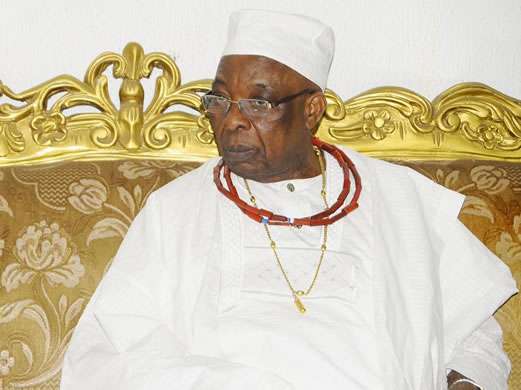
Osun monarch, Owa-Obokun of Ijesaland is dead

There is anxiety in Ijesaland over the health of the monarch, Owa Obokun of Ijesaland, Oba Adekunle Aromolaran.
Deadly Communal Clashes Erupt in Osun Leaves 8 Dead, Homes In Ruins

In a tragic turn of events, communal clashes between the residents of Ilobu and Ifon communities in Osun State have left about eight people dead, with several houses razed to the ground. The violence erupted on Thursday, leading to a significant loss of life, destruction of property, and a wave of fear and panic among the affected residents. The conflict escalated to a point where even security operatives found it challenging to access the embattled communities, and they remained stationed at the entrances. Sadly, some of those who lost their lives during the clashes were struck by stray bullets fired by the security forces deployed to quell the unrest. Chief Leke Ogunsola, the Otun-Jagun of Ilobu, speaking on behalf of the Ilobu community, revealed that four lives, including that of an innocent baby, were lost on their side during the crisis. Meanwhile, Prince Jide Akinyooye, representing the Ifon community, disclosed that numerous houses were set ablaze during the violent attack on their town. The root cause of the conflict was traced back to a land dispute exacerbated by a gazette that ceded portions of land belonging to Ifon to Ilobu during the tenure of former Governor Rauf Aregbesola. Tensions simmered, and despite efforts to avoid retaliation, the situation escalated to a dangerous level. In response to the dire situation, Governor Ademola Adeleke swiftly intervened, issuing a directive that prohibited residents of both communities from accessing the disputed land. He emphasized that anyone found on the contested territory would be arrested and prosecuted. The state government has assumed control over the disputed land, and the Governor has urged community leaders to come together to seek a peaceful resolution. The crisis has forced numerous residents of Ilobu and Ifon to flee their homes in fear for their safety. The situation has also prompted the evacuation of corps members serving in the affected areas by the state government. Security personnel, including soldiers, DSS operatives, and police officers, have been deployed to the entrances of the two communities to maintain order. The violence reached such a level that a new police patrol van was burnt by the warring factions, and several police officers were injured in the line of duty. The situation is particularly challenging, as the conflicting parties have accused the police of taking sides in the dispute. To curb further escalation, the Osun State government declared a curfew in the two affected local government areas of Irepodun and Orolu. This measure aims to restore peace, protect lives, and prevent further bloodshed as authorities work to find a lasting solution to the underlying issues fueling the conflict.
Amotekun arrests suspected cultist, burglar in Osun

Osun State Amotekun Corps, said it has arrested a suspected cultist in Osogbo and another suspected burglar in Ila-Orangun, Ila Local Government Area of Osun. Brig.-Gen. Bashir Adewinmbi, the State Commander of the corps, made this known in a statement on Friday, adding that the two suspects were arrested on Thursday. “Sodiq Adelabu, 20, a native of Osogbo, was arrested in Osogbo for allegedly being a member of a secret cult, engaging in cult-related activities and theft. “The suspect admitted to being a member of the Eiye Confraternity when interrogated. “The second suspect, Sunday Oluwasegun, 22, a native of Ila-Orangun, was arrested for breaking into a house and stealing in Ila-Orangun Town. “He was reported to have stolen some money and some home appliances before he was later arrested.” Adewinmbi said both suspects were arrested after complaints were lodged against them and their activities by patriotic residents of the state. He, therefore, called on residents of the state to always report suspicious activities and criminal suspects living among them to security agents. He assured them that their identity would be kept secret, encouraging them to join in the fight against crime and criminality in the state. He stated that the arrested suspects had, however, been handed over to the police for further investigation and prosecution.