FCT Council Polls: Between Political Triumph and Democratic Questions

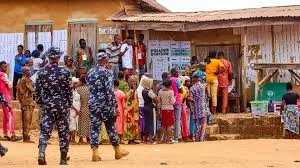
The APC’s sweeping victory in the FCT area council elections has been hailed by Minister Nyesom Wike as proof of democratic renewal under President Bola Tinubu. However, critics argue the results raise deeper questions about political dominance, opposition strength, and the true state of democracy in Nigeria’s capital.
All Eyes on Abuja as Area Council Polls Test New Electoral Law

Abuja is set for Area Council elections that will test Nigeria’s controversial new Electoral Act, signed into law just days before the polls.
Why Nigeria is not working

By UGO ONUOHA THE safe thing to do is to say that Nigeria is not working at its optimal best. But that will amount to playing the ostrich. Because the reality is that our country is not working, not at all, not even for the ruling political and economic elites who currently think that they are having a swell time. If only they knew how much more they would be better if the right things were to be done to make this country work for the majority of its citizens. Sadly, the understanding of our elites (and this is a wrong label for them) is limited, warped, myopic, and parochial. It has to be acknowledged that the roles of elites, whether political, economic, or intellectual, in nation-building anywhere can be a mixed bag of the good, the bad, and the ugly. The sad reality in our case is that the impacts of Nigeria’s elites on the country over time have gravitated between the bad and the ugly. Any semblance of the elites doing good to the society started and ended in the first republic, 1960-1966. In varying degrees the political elites in that republic represented by the numero uno, Dr. Nnamdi Azikiwe, Chief Obafemi Awolowo, and Sir Abubakar Tafawa Balewa, among others, were the elites who significantly positively impacted the country. Their impact was not just in wresting independence from Britain, but in growing the regions through healthy rivalry and dedication to serving the public good. In this category of service we had Dr. Michael Okpara (Premier of the Eastern region), Chief Dennis Osadebay (Premier of the Mid-Western region), Chief Awolowo (Premier, Western region), and Sir Ahmadu Bello (Premier, Northern region). They have not come any better since then. The first republic had its own drawbacks and a plethora of crises one of which led to the military coup and counter coup of 1966, and then to a bloody civil war. But in many respects that period could be described as Nigeria’s golden era. The respective political elites took governance seriously and drove the development of their regions. For instance, the Western region under Awolowo was renowned for the introduction of universal free education at the primary and secondary school levels, a policy which still resonates up till today and which transformed the lives of many, especially the indigent. It was also during that period that the Eastern region with Okpara at the helm was acknowledged as the fastest growing economy of any subregion anywhere in the world. Each region had something that was going for it. Many of the enduring institutions in the country currently can be traced back to that era including universities and teaching hospitals, stadiums, industrial layouts, housing estates, and many more. Of course, human capital formation through access to quality and affordable education at home and abroad remained unrivalled. We need to accept that the coups of 1966, and the long stretch of military dictatorships over about 33 years with civilian rule interregnums, took a heavy toll on the building of civil political culture. The lack of trust by the politicians in the military rulers compounded the problem. For instance, in the late 1990s when the last military dictator, Gen. Abdusalami Abubakar, promised to hand over power to civilians, not many people in the political class believed him. The nightmare of the shifting or fluid hand over dates of the military president, Ibrahim Badamasi Babangida, and the attempted transmutation of Gen. Sani Abacha from a military dictator to a civilian president made the political class doubt the sincerity of the juntas. In the wake of the unbelief of traditional politicians in the military’s transition programme ahead of the 1999 elections, some charlatans moved in and seized Nigeria’s political space. Motorpark touts, advance fee fraudsters [419ners], loafers, jetsams and floatsams, persons of dubious and questionable characters, and sundry elements moved in and filled the void. Has it not been proven that nature abhors vacuum. These characters got themselves elected into offices wherever the superintending military rulers of the transition, such as the presidency, had no preferred candidates. Early in this republic, a retired ranking police officer who was also a lawmaker said that many of his erstwhile colleagues in the national assembly [NASS] were fraudsters. He claimed that he had participated in probing and arraigning some of them in court. It was also during that period that some Nigerians fled from the United States and other places to Nigeria as fugitives. They contested and won elections mostly into governorship and legislative offices. Once inside government, they started looting the commonwealth, amassing wealth, and consolidating power. Overtime, more of the criminal types joined the early birds in their vice grip on politics, power, and government. Twenty – six years after the start of this dispensation, there are still criminals, especially advance fee fraudsters and fugitives from the law from the US embedded in Nigeria’s Three Arm Zone which houses the National Assembly, Presidency, and the Judiciary. The same applies in some governors mansions in many of our geopolitical zones and state legislatures. This is one other reason why Nigeria is not working. Yusuf Musa is the CEO of the Kaduna – based Centre for Contemporary Studies [CCS]. He wrote recently that “nations do not collapse merely because a global power intervenes” as American president, Donald Trump, has been threatening to do to Nigeria. He said that they collapse “because their internal foundations had weakened so badly that intervention (becomes) possible, profitable (and) convenient”. Musa submitted that vulnerable nations were usually first “hollowed out by their own internal contradictions and domestic mismanagement”. If Nigeria is at the precipice, and all indications are that it is, then the problem has to be down to lingering internal contradictions and gross mismanagement of its diversity by the successive ruling political elites. For instance, more than half a century after, the wounds of the Nigeria – Biafra civil war are still festering. Reconciliation has been difficult to attain simply because there
Ndigbo in the Crosshairs of ‘Days of Rage’ (2)

THE ‘Ides of March’ are now set for August. And that month is two days hence. Typical of Nigerians the ides of March have been re-branded and rechristened and restructured. Our own, if they actually happen, will not be for one momentous occasion. They are programmed to last for days, all of 10 consecutive days, from August 1. What a time to be alive.