Naira Freefall: FG To Receive $10bn Forex Inflow – Finance Minister

Naira Freefall: FG To Receive $10bn Forex Inflow - Finance Minister

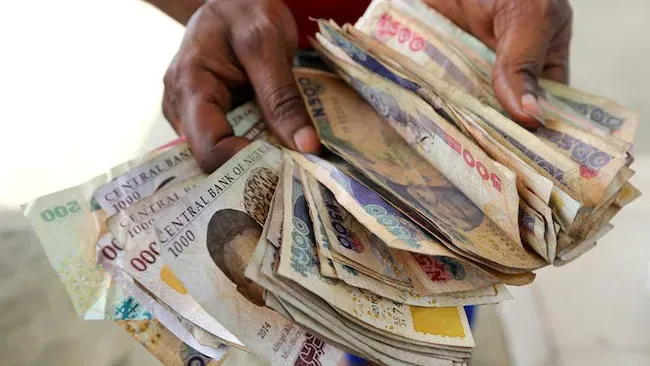
The fortunes of the naira may soon be reversed with the Finance Minister, Wale Edun assuring that about $10 billion naira is expected to flow into the economy in a matter of week Edun made this known during a panel session at the ongoing Nigeria Economic Summit Group (NESG) question and answer session concerning stabilizing the foreign exchange market and enshrining liquidity in the market. Since the unification of the foreign exchange market in June, the naira’s value has slumped by over 100 per cent on the parallel market. The current CBN management has introduced a slew of measures to provide liquidity but the chasm between the rate on the I&E window and parallel market continues to widen. The minister said, “in addition, from the supply of foreign exchange through NNPC, increased production, reduced expenditure, from transactions such as forward sales, from our discussions with sovereign wealth funds, that are ready to invest and provide advanced alongside that investment, there is a line of sight of $10 billion worth of foreign exchange in the relatively near future in weeks rather months.” The Minister further said President Tinubu has signed two executive orders geared towards ensuring liquidity in the forex market. He said, “Mr. President announced that he had taken measures to ease illiquidity in the forex market which we know is very problematic at this time.” “The market is illiquid; it’s not functioning properly because there is no supply and there are various reasons for that. The solution that the President has put on the table is that he has signed an executive order that effectively allows under forbearance all the cash that is in the domestic economy to legally come into the formal money supply” “Along with that, there is another executive order that allows domestic issuance of foreign currency instruments so that they will have the incentive to provide that foreign exchange from whatever source.”

Analysts Forecast Increased Pressures On Economy As Naira Depreciates By 23%

Has Mission To Save The Naira Begun?

With the naira losing 23 per cent value in the third quarter of 2023, plummeting from N770/$1 at the end of the second quarter to over N1000/$1 by the end of the third quarter at the parallel market, analysts expect further pressure on the currency in the fourth quarter of 2023. Meanwhile, the official exchange rate at the end of the third quarter was N755.27/$1, a noticeable drop from N769.25/$1 at the end of the second quarter. The widening gap between the official and unofficial rates reflects the persistent scarcity of foreign exchange in the country, as well as the divergent policies of the CBN and the market forces. The Central Bank of Nigeria (CBN) has blamed the forex backlog estimated at between $6 billion to $10 billion as the major reason for the currency depreciation. At the recent Senate confirmation of the CBN governor, Yemi Cardoso stated that he intends to establish the exact unsettled obligations and find ways to “take care of it” confirming that progress will not be made without clearing the backlog. He said it would be naive to think that the CBN will be able to make progress if it don’t handle that side of the foreign exchange. “But definitely, the immediate priority will be to verify the authenticity and extent of the unsettled obligation and once we do that, we need to look for a way to take care of it. The naira’s weakness has had negative impacts on the Nigerian economy, as it has increased the cost of imports, fuelled inflation, eroding purchasing power, and discouraged investment. According to the Head of Macro Strategy at FIM Partners UK Ltd, Charlie Robertson, the CBN may have to devalue the official rate again to align it with the market reality and conserve its dwindling external reserves, which fell from $34.1 billion at the end of June to $33.2 billion at the end of September. He noted that further devaluation might be avoided if the apex bank is able to meet its obligations to clear forex backlogs, adding that achieving this might require the government tap new loans from friendly countries. Stears Africa FX Monitor, a data and intelligence company, also has predicted a continued naira volatility. The company highlighted fiscal policies, external trade, and global market trends, including inflation rates, interest rates, policy events, and geopolitical factors as key factors affecting the naira’s performance. Fadekemi Abiru, Head of Insights at Stears, expressed concerns about the naira volatility. “The continued unpredictability of the naira underscores the importance of timely and informed decision-making for businesses and investors in Nigeria,” she said. The CBN had removed trading restrictions on the official market in June which drove the naira to a record low of N750 to the Dollar on the official market, down from the previous N477 to the dollar it traded for. This was the first time since 2016 that the naira had recorded a big fall on the official market before the CBN introduced a managed exchange rate in 2017.

Naira Depreciation, Cause of Hike In Drugs Prices, Not GSK Exit –NAFDAC

Naira Depreciation, Cause of Drugs Price Hike in Nigeria, Not GSK Exit –NAFDAC

The Director-General of the National Agency for Food and Drug Administration and Control (NAFDAC), Prof. Mojisola Adeyeye, has stated that the departure of GlaxoSmithKline (GSK) from Nigeria should not be held responsible for the rise in drug prices within the country. Adeyeye made this statement in response to speculations regarding GSK’s exit and its potential impact on drug prices in Lagos over the weekend. GSK, a British multinational pharmaceutical and biotechnology company, had announced its intention to cease operations in Nigeria back in August. The company had a longstanding presence in Nigeria, having been incorporated in June 1971 and commencing business the following year. Adeyeye explained that there were multiple factors contributing to the increase in drug prices. Firstly, she cited the depreciation of the Nigerian currency, the naira, as a significant factor. She noted that even before GSK’s planned exit, the prices of various commodities had been on the rise, and some of the products produced by GSK had become scarcer. From a regulatory standpoint, Adeyeye emphasized NAFDAC’s encouragement of local drug manufacturing. She clarified that GSK had collaborated with local manufacturers, indicating that they didn’t solely rely on imports for their products. She further elaborated that foreign exchange issues posed challenges for multinational companies. These companies generate funds locally, but repatriating these funds to their parent companies, where further developments occur, can be problematic due to foreign exchange restrictions. In summary, Adeyeye highlighted that while GSK’s exit had its own implications, it was just one of several factors influencing drug prices, with currency depreciation being a significant contributor to the overall increase.

Naira drops to new low of N923-950 per dollar

Supreme Court Affirms Old, New Naira Notes As Legal Tender 

The naira extended its slump in black-market trading as the nation’s dollar shortage deepened two months after the central bank moved to a more flexible exchange rate to encourage inflows. The naira weakened to N923 per dollar, compared with N917 on Wednesday.   Traders in Lagos said it worsened to an all-time low of N950 to one dollar at the parallel market on Thursday afternoon as against the N897 it traded at the previous day. At the official window, data showed that the naira closed at N782.38 per $1. The disparity is now N167.62/$1 one of the widest since the unification of the naira on June 14th, 2023. Banks have been unable to come up with the dollars to meet demand, and buyers are increasingly turning to the black market, widening the gap between the official exchange rate and the price on the street. On Tuesday, the naira plunged to a record low of N900/$1 on the parallel market on Tuesday, August 8, 2023, as demand for foreign currency outstripped supply with traders quoting the exchange rate as high as N900/$1 for “inflows” and N895/$1 for cash trades. The peer-to-peer market, where crypto-currency traders exchange forex, also saw the exchange rate soar above N900/$1. Meanwhile, in the official Investor and Exporter Window, the exchange rate closed at N774.78/$1 while the NAFEX rate was N776. The official market also faces supply constraints, with daily turnover averaging $80 million since July. Forex traders who attributed the depreciation of the naira to a scarcity of supply, said that there were more buyers than sellers in the market and that the situation was unlikely to improve anytime soon. When asked about the source of the increased demand, traders mentioned a diverse set of buyers, including importers, foreign travelers, and speculators. There are concerns among some traders that the state of depreciation is unlikely to improve as demand continues to rise unchecked. Forex analysts explained that there was a huge backlog of unmet forex demand in the official market, estimated at $8-10 billion. Some of this demand also spills over to the parallel market, as buyers struggle to find enough supply to meet their needs in the official market. The exchange rate between the naira and dollar has weakened by 16 per cent since the reunification of the exchange rate windows. This compares to a depreciation of 2.5 per cent between January 1 and June 14th. The exchange rate weakened by 22.9 per cent in the whole of 2022. The naira has been under pressure in the parallel market for several weeks, as the supply of forex from official sources remains inadequate. On July 1st, the beginning of the second half of the year, the exchange rate in the parallel market was around N772/$1. However, a surge in demand from various segments of the economy, such as importers, foreign travelers and speculators, has triggered exchange rate volatility.