Pardons, clemency, and the death of moral clarity

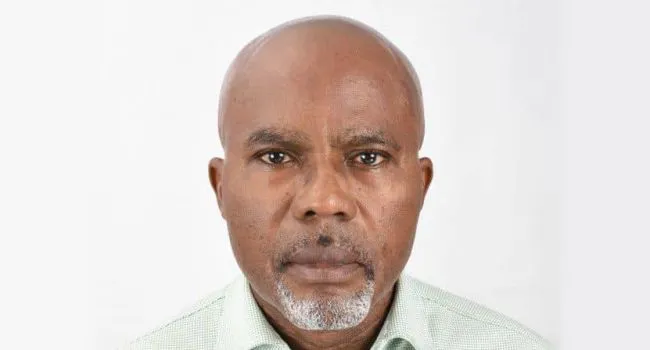
By UGO ONUOHA LATEEF Fagbemi is Nigeria’s attorney-general and minister of justice. He has been at the job since August 2023. He is a senior advocate, the equivalent of a King’s [formerly Queen’s] Counsel in the United Kingdom. He might have been a brilliant lawyer but his lawyering skills became more pronounced with his dexterity over election matters. My understanding is that he has had quite a few victories in high profile electoral disputes. And the crowning prize of his nose for winning election disputes was in 2023 when he led a team of other senior lawyers and a motley of nondescript attorneys to persuade the Supreme Court to rubber stamp the award of the presidency of Nigeria by the ‘Independent’ National Electoral Commission [INEC] to Alhaji Bola Ahmed Tinubu. It should be obvious that that win was what contributed in recommending him for the job of the top law officer of this country. We know that winning legal victories in court on election matters are often not strictly based on laws. Many of our judges are known to be corrupt. The additional qualification of Fagbemi was that he is Yoruba. In our country, being controversial comes with the job of being attorney-general and minister of justice. You are not expected to be at the service of Nigerians. You are the lickspittle of the president who appointed you. To be fair, Fagbemi is not alone. He is in the same boat as his predecessors. In some jurisdictions the attorney-general and the minister of justice are too separate individuals – the minister can be a partisan hack while the attorney-general is not. In our country, some advocates have been campaigning to separate the two offices. But the advocacies had been half-hearted at best. Even as recent as last year, there was a bill introduced in the House of Representatives by opposition lawmakers of the Peoples Democratic Party [PDP] to separate the ministry of justice and the office of the attorney-general. The bill introduced by Mansur Soro [Darazo/Ganjuwa federal constituency in Bauchi state), and Oluwole Oke of Osun state, was then said to be receiving ‘legislative input from the House Committee on Constitution Review chaired the Deputy Speaker, Benjamin Kalu’. The bill was designed to alter section 150 of the 1999 Constitution with the introduction of sub-section 1 to read’: “There shall be an Attorney-General of the Federation who shall be the Chief Law Officer of the Federation different from the person occupying the position of the Minister of Justice to be appointed by the President subject to the confirmation of the Senate”. In the same bill a sub-section to section 195 of the Constitution was proposed. The new sub-section should read, “There shall be an Attorney-General for each state who shall be the Chief Law Officer of the state to be appointed by the Governor, subject to the confirmation of the Governor”. Two things are possible with this bill. One, the bill is still alive awaiting the consummation of the alteration of the Constitution which has remained a work in progress since 2023, or that the bill fell by the way side. Two, the proponents had abandoned the bill in the wake of mass defections to the ruling All Progressives Congress [APC] by governors and lawmakers nationwide. The PDP is so decapitated that it is possible that the sponsors of the bill had jumped ship. And as a member of the ruling party you cannot be seen to be backing a bill that will offend the deity inside the Rock who is the owner of the party and the parliament. That will be the day. A similar move to separate the offices failed at the last hurdle in 2017 when the alteration couldn’t muster the concurrence of two-third of the 36 state assemblies. RELATED STORIES: ECHOES OF ‘IYA IHUKUDI’ IN TRADE FAIR DEMOLITIONS MARYAM SANNDA: FULL LIST OOF PRESIDENT TINUBU PRESIDENTIAL PARDON FALANA ASKS FG TO WITHDRAW, REVIEW PRESIDENTIAL PARDON LIST So Fagbemi, as the attorney-general and minister of justice, and as an apparatchik of the APC, has been working his socks off for the president, the APC, and Nigerians in that order. By the virtue of his office, he is the chief legal adviser to the president. When you work for Tinubu, especially as it pertains to politics, independence of mind is not a virtue that’s encouraged. You are better served if you can correctly read his mind and proceed to do such things that he has in mind. And so far Fagbemi appears to be good at it. Between Tinubu and Fagbemi, they have the Supreme [Cult] Court for its imprimatur as the need arises. That informed the approach to the Supreme Court by the duo to make the combined 774 local government areas as a federating unit in Nigeria along with the federal and state governments. Their lame argument was that the Constitution prescribed that the Councils should be financially autonomous, and so should receive their allocations directly from Abuja. Tinubu and Fagbemi conveniently ignored another constitutional provision which stipulated that the states shall superintendent the operations and activities of the local government areas within their jurisdictions. The duo expectedly extracted victory from the pliant justices of the Supreme Court. But for all intents and purposes, it appears so far to be a pyrrhic victory. State governors had continued to use Council allocations as slush funds. The easier and better thing to do would have been to delete the council areas from the Constitution, allow states to create as many local governments or whatever name they choose to call them, and administer and fund them. As part of duty as the chief legal adviser to Tinubu, Fagbemi is complicit in the constitutional aberration in the suspension and removal from office for six months of the elected governor, deputy governor, and lawmakers of the Rivers state House of Assembly. And the appointment of an obviously illegal Sole Administrator. A court in Abuja only ruled on technicalities after the