IReV Not An Election Result Collation System -INEC

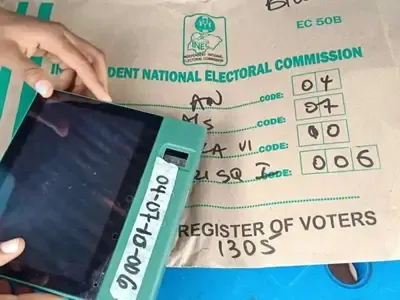
The Independent National Electoral Commission (INEC) says its results viewing portal is to enhance election transparency and not a result collation or transmission system. The INEC Director of ICT, Paul Omokore, gave the clarification in his presentation titled: “The role of BVAS, IReV for Bayelsa, Kogi and Imo Governorship elections” at a two-day capacity workshop for journalists on Monday in Akwanga, Nasarawa State. Omokore advised journalists and members of the public not to confuse uploading of PU results to INEC Result Viewing Portal (IReV) with electronic transmission of results. He said that INEC Bimodal Voter Accreditation System (BVAS) is only used to upload pictures of PUs results on form EC8A to IReV, which does not translate to electronic transmission of results. “Form EC8A is the result that we collated at the PUs. We use BVAS to snap this form and upload the same thing to the IReV portal for public viewing. “This is not a collecting system. It does not tally a system. What it does is to snap the EC8A which is the result at the polling unit and upload the same to the public view. That is all. “I know that 70 per cent of the populace think that the others have collected the figures. No. “All what it does is snapping the EC8A that the presiding officers have collected all the scores of the parties, signed and stamped and then sends this same picture to the IReV for public viewing. That is all. So it is not a collecting system,” he said. Omokore said that from inception of elections in Nigeria, results were transmitted manually, from the PUs to the collation centres. He said that technology deployment had proven to be an effective tool in achieving free, fair and credible elections. He said that while challenges were eminent, INEC had put in extra efforts to ensure that they were mitigated. “The role of BVAS is to ensure one-person-one-vote. “The role of the IReV Portal is to improve the openness and credibility of our elections,” he said. Ezenwa Nwagwu, who is also the Chairman, Partners for Electoral Reform, in his lecture titled: “Ethical Dilemma in Election Reporting: Navigating Bias, Balance and Promoting Transparency” urged journalists to uphold accuracy reporting. He said that the core issues in election reporting are Independence, unbiased and accuracy report by the media. “Accurate and transparent report is the only cure for fake news, which is the responsibility of the media,” Nwagu said. He advised the media to always investigate reasons behind some news being presented to the media by people with biased minds on electoral process and balance it with what the provision of the laws.
I’ll Appeal Tribunal Judgement Sacking Me, Says Gov Sule

Governor Abdullahi Sule of Nasarawa state says he will appeal the judgement of the Governorship Elections Petition Tribunal that invalidated his victory in the March 18 election on Monday. He acknowledged the tribunal’s decision as a temporary setback and expressed a commitment to learn from it and come back stronger. Governor Sule maintained that he remains in office until the Supreme Court decides otherwise, citing his legal right to appeal. He urged his supporters to remain calm and discouraged them from engaging in street protests or responding to opposition, especially on social media. The tribunal’s split judgment annulled Governor Sule’s election as a member of the All Progressives Congress (APC) and declared David Ombugadu of the Peoples Democratic Party (PDP) as the rightful winner. Justice Ezekiel Ajayi, the tribunal’s chairman, read the majority judgment in favor of David Ombugadu. Justice Chiemelie Onaga, another panel member, supported the lead judgment. Justice Ibrahim Mashi delivered the dissenting judgment, dismissing the petition filed by the PDP candidate and upholding Governor Sule’s declaration by the INEC.