Senate commends Tinubu, Akpabio, NFIU, Others Over Nigeria’s Removal from FATF Grey List

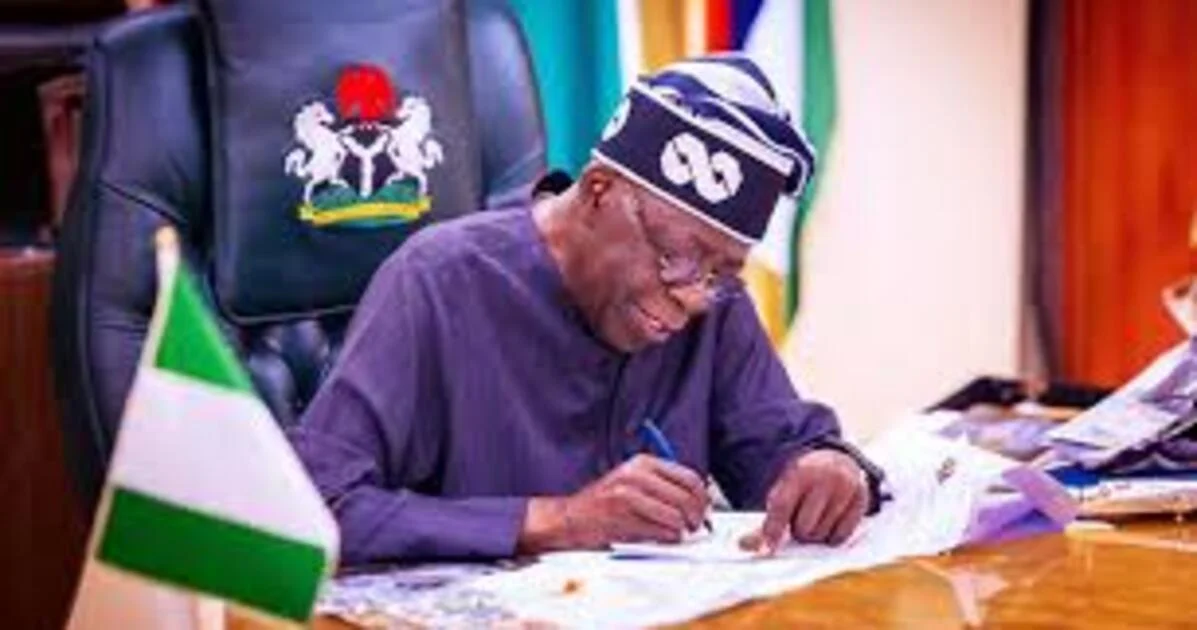
The Nigerian Senate on Tuesday passed a motion commending President Bola Tinubu for their roles in securing Nigeria’s removal from the Financial Action Task Force (FATF) Grey List. The motion was sponsored by Senator Emmanuel Udende (Benue North East) and brought under Matters of Urgent Public Importance pursuant to Orders 41 and 51 of the Senate Standing Orders, 2023 (as amended). Senator Udende’s motion was titled, “Need to Commend the Executive, the President of the Senate, the Nigerian Financial Intelligence Unit (NFIU), and Other Stakeholders for Their Efforts in the Removal of Nigeria’s Name from the FATF Grey List,” Others mentioned for commendation in the motion were the Senate President, Godswill Akpabio and key financial and anti-corruption agencies Presenting the motion, Senator Udende noted that Nigeria’s delisting by FATF was a major milestone reflecting the country’s success in addressing strategic deficiencies in its Anti-Money Laundering and Countering the Financing of Terrorism (AML/CFT) framework. He said the development demonstrates Nigeria’s renewed commitment to transparency, accountability, and global financial integrity standards. Udende recalled that Nigeria’s previous inclusion on the Grey List had exposed the nation to increased international monitoring, reputational risks, and reduced investor confidence. He attributed the recent delisting to “extensive reforms and coordinated policy actions” implemented by the Executive, National Assembly, and regulatory agencies. The Senate, in its resolution, commended President Bola Ahmed Tinubu, the President of the Senate, Senator Godswill Akpabio, the NFIU and the Economic and Financial Crimes Commission (EFCC) Others are the Independent Corrupt Practices and Other Related Offences Commission (ICPC), the Central Bank of Nigeria (CBN), and other stakeholders for their “tireless efforts” in strengthening Nigeria’s financial governance systems. Lawmakers expressed delight that the delisting has already boosted investor confidence and enhanced Nigeria’s credibility in the global financial community. They noted that Nigerian financial institutions would now enjoy smoother cross-border operations, improved remittance inflows, and reduced compliance costs. The Senate further observed that the development would have long-term economic benefits, including increased foreign direct investment, stronger regulatory stability, job creation, and enhanced trade competitiveness. In its resolutions, the upper chamber urged all relevant financial and law enforcement agencies to sustain the momentum by maintaining full compliance with international standards and preventing a relapse into the FATF Grey List. The Senate also mandated its Committee on Anti-Corruption and Financial Crimes to intensify legislative oversight and policy reviews to further strengthen Nigeria’s anti-money laundering framework.
Senate Swears In Ikpea, Nwachukwu as Senators for Edo, Anambra

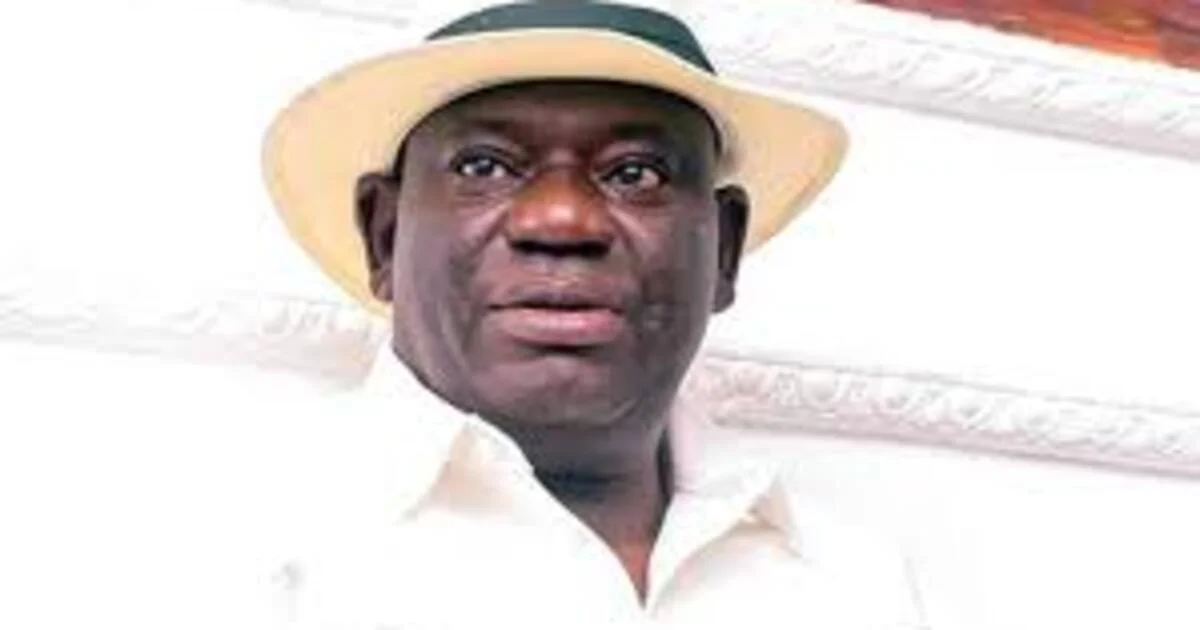
The Senate, on Wednesday, restored its full complement of 109 members with the swearing-in of Joseph Ikpea and Emmanuel Nwachukwu, representing Edo Central and Anambra South Senatorial Districts, respectively. Senators Ikpea of the All Progressives Congress (APC) and Nwachukwu of the All Progressives Grand Alliance (APGA) were inaugurated following the by-elections held in September to fill the vacancies created by the exit of Senator Monday Okpebholo, now Governor of Edo State, and the demise of Senator Ifeanyi Ubah in July 2024. The ceremony, presided over by Senate President Godswill Akpabio, saw the Clerk of the Senate, Emmanuel Odo, administer the oaths of office and allegiance to the new legislators. In his remarks, Akpabio described their election as a call to national service, urging them to familiarize themselves with the 1999 Constitution and the Senate Standing Orders (as amended in 2023) to effectively discharge their legislative responsibilities. “Today, you have been called to national duty. You are no longer senators of your political parties; you are senators of the Federal Republic of Nigeria,” Akpabio stated. He further assured the new senators of the support of their colleagues in settling into their legislative duties, saying, “Your colleagues who have been here will continue to assist you, so you will get used to the nuances of lawmaking.” Among dignitaries in attendance were former Delta State Governor James Ibori, former Edo State Deputy Governor Philip Shaibu, APGA National Chairman Sly Ezeokenwa, and several members of the House of Representatives from Edo and Anambra States.
NASS Clerk Clarifies Role in Natasha Akpoti-Uduaghan’s Suspension, Resumption Bid

The Office of the Clerk to the National Assembly has clarified its position in the controversy surrounding the suspension and attempted resumption of Senator Natasha Akpoti-Uduaghan, insisting it lacks powers to reinstate her without due process. In a statement signed by Bullah Audu Bi-Allah, Director of Information, on behalf of the Clerk, the office said it had been wrongly portrayed in some media reports and public commentary as obstructing the senator’s return. “The Clerk’s Office serves strictly as an administrative arm, providing support to the Senate in accordance with their resolutions, Standing Orders, and the Constitution of the Federal Republic of Nigeria, 1999 (as amended). The Clerk does not possess the authority to review, reverse, or interpret Senate decisions,” the statement read. Senator Akpoti-Uduaghan, representing Kogi Central, was suspended for six months by the Senate on March 6, 2025. Although she challenged the action in court, the Federal High Court did not invalidate the suspension, and the matter remains before the Court of Appeal. On September 4, 2025, she wrote to the Clerk, notifying of her intention to resume legislative duties. The Clerk explained that while she could have directed such communication to the Senate President as protocol demands, the matter was duly conveyed to Senate leadership. According to the Clerk’s Office, the Senate leadership maintained that the issue remains sub judice, and any change in her status must come from either a new Senate resolution or a definitive court order. “This communication was what the Clerk to the National Assembly conveyed in the letter, no more, no less. The Clerk is therefore not in a position to facilitate her resumption at this time,” the statement clarified. The office also expressed concern over a letter from Akpoti-Uduaghan’s legal representatives, M.J. Numa & Partners LLP, accusing the Clerk of overreach and threatening legal and disciplinary action. “While the office respects the right of all parties to seek legal redress, it must be stressed that the Clerk has at all times acted within lawful administrative limits, and in faithful observance of due process,” it stated. Reiterating that the decision on her resumption rests solely with the Senate, the Clerk emphasized that its role is limited to administration and not adjudication. “The public is urged to remain patient and allow the appropriate institutions including the Senate and the courts to discharge their constitutional responsibilities,” the statement concluded.
Constitution review: Ijaw agitates for creation of 2 additional states

As Nigeria battles to align the centripetal forces, the Ijaw National Congress (INC) has proposed the creation of two additional States. The proposed states the INC said should be carved out from Edo, Delta, Ondo, Bayelsa, Rivers, Cross River and Akwa Ibom states. Prof. Benjamin Okaba, Global President, INC, made the proposal in his memorandum at the National Assembly Constitution Review Public hearing for South South Zone, made available to the Nigerian Anchor, Abuja on Saturday. Okaba proposed that the two states, Toru-Ebe and Oil Rivers states be carved out of Edo, Delta Ondo as well as Rivers and Akwa Ibom respectively. “We reaffirm our demand for the creation of two additional homogeneous Ijaw states; Toru-Ebe comprising Ijaws in Delta, Edo and Ondo and Oil Rivers State made up of Ijaws in Rivers and Akwa-Ibom “We also propose additional 33 local government areas for Bayelsa, which currently has just eight. “The demand for the creation of the proposed Toru Ebe State is aimed at addressing long standing yearnings and aspirations of the people for justice, peace, stability, self-determination and development. “The territorial configuration of the proposed Toru Ebe state includes only ljaw clans in the present Delta, Edo and Ondo states. “These distinct yet culturally homogeneous clans of the Ijaw ethnic nationality and customary owners of all land living in a geographical contiguous territory of their own and have been deliberately balkanised into different political and administrative units in the country are the ones demanding for the creation of the proposed state,” he said. He noted that the oil revenue from the Ijaw areas in the three states accounted for the largest revenue accruing to the National Economy. According to him, in spite of the receipt of the 13 per cent Derivations Revenue by Edo, Delta, and Ondo, the Ijaw areas which are mineral producing have been denied any meaningful development. “Modern infrastructure social services such as schools, hospitals, portable water are near absent in Ijaw communities especially in Edo. “Ancient traditional tools are easily denigrated and denied office recognition and patronage. With the political fragmentation in place, it has been impossible for an ljaw man in Edo to become a mere ward councillor. “Because of the neglect there is a high level of rural- urban migration leading to the loss of indigenous cultural heritage.” The INC global president said that however, the Ijaw as inhabitants of this marshy and swampy terrain were blessed with abundant natural resources including oil and natural gas. He added that the proposed state with a population of about 2.7 million people have natural landscapes with beautiful beaches and lengthy coastline which could be annexed into a blue economy and tourism that would make it economically viable. “We also propose Oil Rivers State that comprises Ijaws in Rivers and Akwa Ibom. This area remains the most naturally blessed but environmentally degraded in the entire world, with massive oil explodes, gas flaring threatening the very survival of the people. “Just like our counterparts in Edo, the Ijaws especially in Akwa Ibom are left with no basic infrastructure, electricity, and healthcare services.There is no meaningful state and federal government infrastructure in these Ijaw communities. “Due to the long period of fragmentation many Ijaw communities face cultural extinction with some losing their native language and their traditions. With the creation of the Oil Rivers state, the rich heritage and environment of our people can be resuscitated. “The proposed Oil Rivers state with Isaka Town, located in the northern part of Okrika Local Government Area as capital is endowed with abundant natural and human resources such as vast mangrove forests, rich fishery and agricultural potentials, palm oil industry, tourism potentials, natural harbours and oil and gas resources (with over 30 major oil and gas fields, making it economically viable),” he stressed. Okaba further proposed an additional 33 local government areas for Bayelsa. According to him, Bayelsa’s contribution to Nigeria’s GDP is significant, thanks to its rich human and natural resources. As one of the largest oil and gas producing states in Nigeria, the state accounts for a substantial portion of the country’s oil production, estimated to be around 35-45% as of 2022. “In terms of GDP, the state’s contribution stands at $4.3 billion, with a GDP per capital of $1,773, according to 2020 rankings. “The state’s economy is largely driven by the petroleum industry, with crude oil and natural gas being major contributors. The state therefore, has a critical role in the actualisation of Mr President’s projection to meet up with OPEC quota of 2.06 barrels per day.” He said that it was however, worthy to note that in spite of the state’s significant contribution to the nation’s GDP, land and river mass and huge potentials for steady growth and development, it currently had only eight local government areas, which include Brass, Ekeremor, Kolokuma/ Opokuma, Ogbia, Nembe, Sagbama Southern Ijaw and Yenagoa. “We all know that eight LGAs for Bayelsa is a case of injustice in many ramifications in terms of federal resource allocation and fair representation. “Our other concerns include protection and remediation of its environment, federal resource contribution through resource control and payment of tax, true federal constitution with no unitary coloration. “We also want the re-integration of Ijaws vide the wholesale prosecution of the Ijaw struggle for self-determination which has lasted centuries.Improve the quality and quantity of representation,” Okaba further said. He also called for the restoration of true federalism, including fiscal federalism, Resource Control (100 per cent derivation) and devolution of power. He further proposed the alteration of Section 3 (1) of the 1999 Constitution (as Amended); Establishment of Regions, and proposed 10 federating units (federating states) by way of readjustment of the well-known and accepted six geopolitical zones in the country.
National Assembly commemorates Commonwealth Day 2025

Reaffirms commitment to democracy and global unity The National Assembly of Nigeria this Monday, joined Commonwealth nations worldwide to commemorate Commonwealth Day 2025. The theme of this year’s event is “Together We Thrive,” with emphasis on commitment to democracy, peace, and sustainable development. Observance highlighted Nigeria’s active role in the Commonwealth Parliamentary Association (CPA) and its dedication to fostering youth engagement and international cooperation. Delivering the keynote address on behalf of Honorable Abbas Tajudeen, Speaker of the House of Representatives, Mark Esset, Chairman, House Committee on Inter-Parliamentary Affairs, reaffirmed Nigeria’s commitment to the shared values of the 56-member Commonwealth. “The National Assembly remains dedicated to strengthening democracy by supporting policies that promote social and economic inclusion, human rights, and environmental sustainability. We will continue to engage in Commonwealth parliamentary dialogue to share best practices and learn from other nations to enhance our governance,” he stated. Hon. Esset highlighted Nigeria’s longstanding participation in the Commonwealth Parliamentary Association (CPA). He recalled that the country hosted the 56th Commonwealth Parliamentary Conference in Abuja in 2006. He noted that Nigeria remains an active player in Commonwealth affairs, with key representatives such as Hon. Tolu Sadipe serving as the West Africa Regional Representative and Hon. Mark Esset as the Branch Representative. He also commended Hon. Zainab Gimba, who recently completed her tenure as Chairperson of the Commonwealth Women Parliamentarians (CWP). The Speaker reiterated the National Assembly’s support for recognizing the CPA as an international organization rather than a UK-registered charity, noting that a bill to that effect has already passed in the UK House of Commons. He further expressed concerns about political instability in parts of Africa, particularly the resurgence of military rule and the displacement of citizens due to conflict. He called for stronger Commonwealth cooperation in upholding democratic principles and human rights. Another important highlight of the celebration was the presence of 60 students from four schools, reflecting the Commonwealth’s commitment to youth inclusion in governance. Hon. Esset called on the House Committee on Youth Affairs and the Directorate of Inter-Parliamentary Affairs to establish a framework for mentoring young people who participate in such events, encouraging their involvement in legislative activities. “Our young people are the future of our democracy. We must not only educate them on governance but also empower them through mentorship initiatives like the Legislative Mentorship Initiative (LMI),” he said. Delivering his remarks, Engr. B.A. Yero, Deputy Clerk of the National Assembly, who represented Clerk to the National Assembly, Kamoru Ogunlana, Esq., emphasized the significance of the Commonwealth Day celebration. “The theme ‘Together We Thrive’ reminds us that despite differences in geography, culture, and history, we share common aspirations for justice, equality, and progress. Addressing challenges such as climate change, insecurity, and economic instability requires collaboration,” he stated. He urged the youth to embrace teamwork and innovation, describing them as agents of positive change in Nigeria and the broader Commonwealth. As part of the observance, Elder Godwin Okon Ekpenyong, Secretary, Directorate of Inter-Parliamentary Relations and Protocol, delivered the King’s Commonwealth Day Message 2025, originally published on March 9. The message reflected on the 80th anniversary of the end of World War II, paying tribute to the 1.5 million Commonwealth soldiers who fought for global peace. The King emphasized the importance of international cooperation in promoting peace, human rights, and environmental sustainability. “In these uncertain times, the Commonwealth remains a unique platform where nations—large and small, young and old—come together as one family. Our greatest strength lies in our unity and shared responsibility for a better future,” the message read. The 2025 Commonwealth Day observance at the National Assembly reaffirmed Nigeria’s commitment to democratic governance, global cooperation, and youth empowerment. With strong parliamentary engagement, calls for unity, and a renewed focus on mentorship, the event embodied the spirit of “Together We Thrive,” inspiring a future built on shared progress and inclusivity.
How the courts stopped illegal suspension of legislators in Nigeria

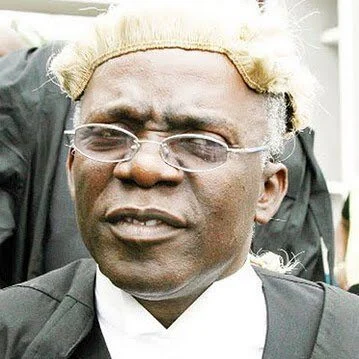
By Femi Falana, SAN 1.In 2010, our law firm (Falana & Falana’s Chambers) handled the case of Hon Dino Melaye & 10 other legislators who were suspended for accusing the Dimeji Bankole-led House of Representative of wallowing in corruption The Federal High Court declared the suspension of the legislators illegal and unconstitutional and ordered the payment of their withheld salaries and allowances. 2.In 2012, our law firm also handled the case of Honourable Rifkatu Danna, the only female member of the 31-member Bauchi State House of Assembly. Danna was suspended in June 2012 for allegedly making uncomplimentary remarks when she challenged the lawmakers’ decision to approve the relocation of the headquarters of Tafawa Balewa Local Government Area of Bauchi State. But the Bauchi State High Court declared her suspension illegal and ordered the Bauchi State House of Assembly to reinstate her and pay her withheld salaries and allowances. 3.In 2017, the Court of Appeal dismissed the appeal filed against the judgment of the Bauchi State High Court in respect of the illegal suspension of Honourable Rifkatu Danna. The Court upheld our submission to the effect that the suspension of the legislator constituted a breach of the right of the Bogoro Constutuency to be representated by her in the state house of assembly. The Court equally held that the decision of the House to withhold the salaries and allowances of the legislator was illegal as she was not an employee but an elected member of the Bauchi State House of Assembly. 4.In 2018, our law firm equally handled the case of Honourable Abdulmumin Jibrin, a member of the House of Representatives who was suspended for 180 days for accusing the Yakubu Dogara-led House of padding the 2016 national budget. The Federal High Court nullified the suspension and ordered the payment of the withheld salaries and allowances of the legislator. 5.Based on the case of the Speaker, Bauchi State House of Assembly v Honourable Honourable Rifkatu Danna (2017) 49 WRN 82 which is the locus classicus on the subject matter, the 2017 suspension of Senator Ali Ndume by the Bukola Saraki-led Senate was annulled by the Federal High Court. The case filed on behalf of the Senator his lawyer, Marcel Oru Esq. 6.In the same vein, the 2020 suspension of Senator Ovie Omo-Agege was declared illegal and unconstitutional by the Federal High Court. The case was filed on behalf of the Senator by Edward Omaga Esq. 7.Sometime in 2020, the Jigawa State House of Assembly suspended a lawmaker, Hon. Sani Iyaku, over alleged criticism of the state governor, Alhaji Muhammad Abubakar Badaru who was on a visit to Hadejia town for a wedding ceremony. Honourable Iyaku challenged his suspension in the Jigawa State High Court. The trial Judge, Justice Ahmed ruled that the action of the Assembly did not comply with order 15 rule 74 (2)(c) and (3) a, b of the state House of Assembly standing orders 2017 and therefore declared the suspension illegal, inappropriate, null and void. The court also directed that the defendant be paid his three months allowances withheld to the tune of N3 million. 8.On November 18, 2020, the Court of Appeal, sitting in Akure, Ondo State dismissed the motion for stay of execution filed by the state House of Assembly against the judgment of the High court reinstating the three suspended members of the state assembly. The Presiding Judge, Justice Folayemi Omoleye, queried the appellants for bringing a frivolous appeal before the court, directing that the lawmakers should be reinstated immediately to resume their legislative duties. 9.On August 13, 2024, the same court reinstated Hon. Iroju Ogundeji as the Deputy Speaker of the State House of Assembly. In a unanimous ruling, Justices Oyebisi Folayemi Omoleye, Frederick Oziakpono-Oho, and Yusuf Alhaji Bashir affirmed the decision made by Justice Akintan Osadebey, which reinstated the two-term legislator representing the Odigbo state constituency. 10.In the past five years, the High Court sitting in Lokoja, Kogi State, and the National Industrial Court nullified the illegal suspension of members of the Houses of Assembly of Kogi and Edo State respectively. 11.In March 2024, the Godswill Akpabio-led Senate suspended Senator Abdul Ningi (PDP; Bauchi) for three months for alleging that Nigeria’s 2024 budget was padded. The Senator instructed our law firm to challenge the suspension in the Federal High Court. We wrote to the leadership of the Senate to review the suspension in view of the illegality of the action. As we were preparing to challenge the suspension in the Federal High Court, the Senate recalled Senator Ningi and paid his withheld salaries and allowances. 12.In view of the definitive pronouncements of the several High Court and the Court of Appeal on the illegality of the suspension of elected members of legislative houses in Nigeria, the suspension of Senator Natasha Akpoti-Uduaghan is the height of legislative recklessness. The illegal suspension should be lifted without any further delay. Since the Federal High Court had restrained the Senate Ethics Committee from hearing the complaint against the embattled Senator pending the determination of the motion on notice the Senate ought to have stayed action in accordance with the rule of law. 13.Finally, the official impunity of suspending legislators at the whims and caprices of leaders of the federal and state legislative houses must not be allowed to continue in Nigeria.
Senate cmte recommends 6-month suspension for Natasha Akpoti

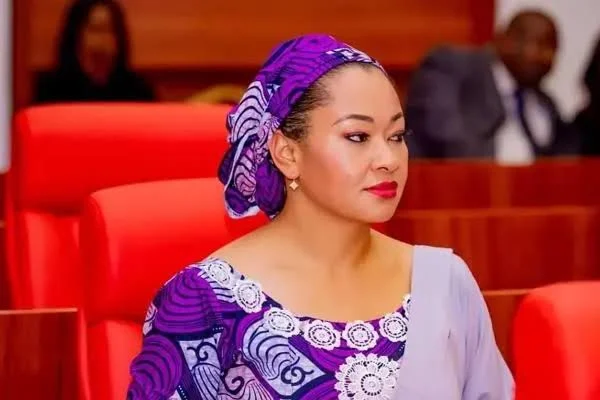
… to forefeit salary and all privileges The Senate Committee on Ethics, Privileges, and Code of Conduct has recommended a six-month suspension for Senator Natasha Akpoti-Uduaghan, citing violations of Senate rules. The committee, chaired by Senator Neda Imasuen, submitted its report on Thursday, urging the suspension to take effect immediately from March 6, 2025. According to the committee’s recommendations, Senator Akpoti-Uduaghan will be barred from entering the National Assembly premises during the suspension. Her office will be shut down and her salary and allowances shall be stopped during the period. Additionally, she will be prohibited from representing Nigeria in any official capacity as a senator. The committee also stated that the senator could be given the opportunity to submit a written apology, which may be considered if the Senate decides to review the suspension at a later date. The final decision will be made after a vote by the entire Senate, which could strip her of all legislative privileges for the duration of the suspension. Meanwhile, Senator Akpoti-Uduaghan has filed a new petition accusing Senate President Godswill Akpabio of sexual harassment. The petition, reportedly signed by her constituents, was presented during plenary on Thursday. When asked whether the case was before any court, she confirmed that it was not. In accordance with parliamentary procedure, the Senate referred the petition to the Committee on Ethics, Privileges, and Code of Conduct for investigation. The committee has been given four weeks to examine the allegations and report its findings. This is the second time Senator Akpoti-Uduaghan has raised similar allegations against the Senate President. A previous petition was dismissed on procedural grounds on Wednesday.
National Assembly Sends Investment Bill to Tinubu for Assent

The National Assembly has forwarded the Investments and Securities Bill (ISB) 2024 to President Bola Tinubu for approval. Osita Izunaso, chairman of the Senate Committee on Capital Market, shared this update during the Securities and Exchange Commission’s (SEC) budget defence in Abuja. The bill, already signed by Senate President Godswill Akpabio, is now with the executive for final approval. Tinubu is expected to sign it into law within 30 days. The committee has also urged the finance ministry to allocate ₦10 billion in the 2025 budget for investor education. Meanwhile, SEC Director-General Emomotimi Agama stated that the bill’s implementation is expected to begin on March 1. He credited the National Assembly’s support for recent market improvements, noting that Nigeria was among the top-performing markets in 2024. Agama also confirmed a reduction in government deductions from 50% to 20%, a move aimed at improving SEC’s financial performance. In 2024, SEC generated ₦26.9 billion in revenue, surpassing its projected ₦22.4 billion. After expenses and deductions, it recorded a net surplus of ₦2.5 billion. He added that market participants have shown higher compliance with regulations, leading to fewer penalties. The commission remains committed to ensuring transparency and accuracy in financial disclosures.
Reps Urge INEC to Conduct Bye-Elections for Vacant Seats

The House of Representatives has urged the Independent National Electoral Commission (INEC) to organize bye-elections for vacant seats in the National and State Houses of Assembly. This decision came after a motion was presented by Hon. Jafaru Leko, who represents the Dass, Tafawa Balewa/Bogoro federal constituency in Bauchi State. Lawmakers also directed the Committee on Electoral Matters to look into the delay and invite INEC leaders to explain the situation. Leko pointed out that since the 2023 general elections, several seats have become vacant due to resignations, deaths, or appointments of former lawmakers to executive roles. He referenced constitutional provisions that require INEC to conduct bye-elections within a month of any seat becoming vacant. Lawmakers expressed concerns that the delay in filling these seats is leaving some constituencies without representation, affecting legislative activities. They warned that such delays go against democratic principles and could weaken the electoral system.
Police Deny reports of missing 3,907 firearms

The Nigeria Police Force (NPF) has strongly refuted claims that 3,907 firearms are missing from its armouries’. The Force Headquarters described the allegations as misleading and based on outdated records. In a statement on Thursday, the police acknowledged past challenges, including attacks on armouries during civil unrest, leading to the loss of some weapons. However, they confirmed that efforts have been made to recover and account for them. The police clarified that the claim originated from a 2019 audit report by the Office of the Auditor-General of the Federation. The report mentioned unaccounted firearms, not missing ones. The Force explained that during audits, some weapons may not be in the armoury because they are in use by officers on duty. Additionally, the police stated that internal audits are conducted regularly to track firearms, and no significant discrepancies have been recorded. The Force assured the public of its commitment to transparency and accountability while urging media outlets to verify information before publication. A Senate Committee on Public Accounts is set to review the issue further in a hearing scheduled for February 17, 2025.