Emefiele Meets Bail Conditions, Freed From Kuje Prison

Former Central Bank of Nigeria (CBN) Governor, Godwin Emefiele, has been released from the Kuje Correctional Centre in Abuja after fulfilling the conditions for his bail. Adamu Duza, the facility’s spokesperson, confirmed this release on Saturday, stating that Emefiele regained his freedom on Friday, December 22. Emefiele, along with Sa’adatu Yaro, a CBN employee, and her company, April 1616 Investment, faced accusations of procurement fraud. The charges initially amounted to 20, but were later reduced to one by the federal government in November. The allegations against Emefiele centered on favouring Yaro by awarding contracts for the purchase of 43 vehicles totaling N1.2 billion between 2018 and 2020. These included various Toyota models and were purportedly obtained at inflated prices. Upon his arraignment, Emefiele pleaded not guilty to the revised charges. He had been in detention at the Kuje facility awaiting the court’s ruling on his bail application, which was granted on November 22 by a Federal Capital Territory High Court, setting bail at N300 million. The conditions required two sureties with properties in the Maitama district in Abuja. Emefiele’s legal issues began in June when the Department of State Services (DSS) arrested him following a suspension by President Bola Tinubu. Subsequently, in July, he faced charges related to “illegal possession” of firearms at a federal high court in Ikoyi and was granted bail at N20 million. This week, a federal government probe panel raised further allegations against Emefiele, accusing him of maintaining multiple foreign bank accounts and engaging in other financial misconduct during his tenure as CBN governor.
CBN Rescinds Ban on Cryptocurrency Transactions

The Central Bank of Nigeria (CBN) has retracted its prohibition on cryptocurrency transactions in Nigeria. This policy reversal was conveyed in a circular no. FPR/DIR/PUB/CIR/002/003, dated December 22, 2023, and signed by Haruna Mustafa, Director, Financial Policy and Regulation Department. Earlier, in February 2021, the apex bank had imposed a ban on cryptocurrency transactions in Nigeria, citing concerns over potential money laundering and terrorism financing risks, as well as the absence of regulatory measures and consumer protections. However, citing evolving global trends and regulatory developments, the CBN acknowledged the necessity of regulating Virtual Assets Service Providers (VASPs). This recognition aligns with the Financial Action Task Force’s (FATF) updated Recommendation 15 in 2018, which urged the regulation of VASPs to prevent misuse of virtual assets for illegal activities. The Money Laundering (Prevention and Prohibition) Act, 2022 also included VASPs within the definition of financial institutions. The new guideline issued by the CBN is aimed at providing clarity to financial institutions under its purview regarding their relationships with VASPs operating in Nigeria. Notably, this guideline supersedes previous directives, particularly circulars FPR/DIR/GEN/CIR/06/010 dated January 12, 2017, and BSD/DIR/PUB/LAB/014/001 dated February 5, 2021. Despite the lifting of the ban, the CBN reiterated that banks and financial institutions are still prohibited from directly engaging in trading, holding, or transacting in virtual currencies on their own accounts. Under the revised directive, banks and financial institutions are mandated to promptly comply. The CBN also reminded these entities of its previous circular, BSD/DIR/PUB/LAB/014/001 dated February 5, 2021, which urged them to identify and close the accounts associated with cryptocurrency transactions.
CBN Warns Against Counterfeit Notes

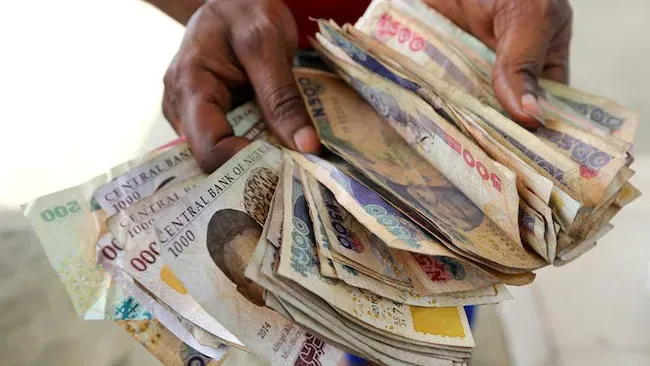
In light of Nigeria’s ongoing currency shortage, the Central Bank of Nigeria has issued a stern warning to the public regarding the prevalence of counterfeit Naira banknotes. Issuing a notice titled ‘Beware of Counterfeit Naira Banknotes in Circulation’ on Friday, the apex bank urged Deposit Money Banks, Financial Houses, Bureau de Change, and citizens to heighten their vigilance and adopt necessary precautions. The CBN emphasized its collaboration with law enforcement agencies to apprehend those involved in circulating fake notes, especially higher denominations, often used in transactions across major cities, notably in food markets and commercial centers. Quoting Section 20(4) of the CBN Act (2007) as amended, the bank highlighted the severe penalties, including imprisonment for not less than 5 years, for falsifying or counterfeiting Naira notes. The statement urged the public to report any suspected individuals dealing with counterfeit notes to the nearest police station or CBN branch. It further advised financial entities and the public to take stringent measures to halt the acceptance and circulation of fake notes. Meanwhile, concerns over Naira scarcity heightened in parts of Abuja, where Automated Teller Machines (ATMs) failed to dispense cash, exacerbating the challenges faced by residents in the nation’s capital.
Supreme Court Affirms Old, New Naira Notes As Legal Tender

The Supreme Court on Wednesday, ordered that the old N200, N500 and N1000 notes should continue to co-exist with the new notes as they continue to remain legal tender. The Apex court held that the order insists until the Federal Government put a process in place for its replacement or redesign after due consultation with relevant stake holders. The seven-man panel led by Justice Inyang Okoro, gave the ruling following an application by the FG, seeking for the court to grant an extension of time for old naira notes to retain in circulation as a legal tender. The FG also prayed the court to lift its March 3, order noting that the extension of time is necessary as it has not been able to print the volume of new notes that would enable a phase out of old currency before the December 31 order In the fresh application by the Attorney General of the Federation, AGF, Lateef Fagbemi SAN, the FG further explained that, should the Supreme court decline it’s request to extend the period of circulation of old notes, the country stands the risk of descending into another national, economic and financial crises as witnessed in the first quarter of the year when the naira redesign policy was being implemented under the former CBN governor, Godwin Emefiele. The Apex court, in a unanimous decision, allowed Fagbemi application in line with the March 3, ruling of the apex court which allowed the old notes continue to be legal tender till December 32, 2023. Recall that three states, Kaduna, Kogi and Zamfara were the first set of states that headed to the Supreme court, to challenge the naira swap policy announced by the CBN on October 26, 2022. However, after the Supreme court made its first restraining order in February 8, 2022, thirteen other states joined in the prayer as plaintiffs. Meanwhile, Edo, and Bayelsa states opted to join the FG as defendants. At the instance of the court, all the suits were consolidated into one for ease of hearing and determination. Specifically, the states were not pleased by the way and manner the naira swap policy was announced and implemented.
CBN’s Monetary Policy Committee Meeting And The Frenzy

The atmosphere in Nigeria’s financial sector is in a state of frenzy. Stakeholders are befuddled on why the apex bank’s monetary policy committee has not met. This is because the CBN had twice postponed the meeting under the leadership of its new Governor. The first postponement scheduled to hold shortly after the appointment of Mr. Cardoso and his four deputy governors, was obviously put on hold to enable them settle down. The reason could also be that the new management team needs time to study and digest President Tinubu’s 8-point agenda and current trends in the financial system to align them with his vision. Mr. Cardoso at the NASS screening had promised to ensure the independence of CBN. He also pledged to ensure that the CBN under his watch will play its role as a catalyst for growth, and adviser to the government. He said “his-CBN” will shy away from interloping responsibilities. It is also a common knowledge that President Tinubu had ordered a clean house of the Bank believed to have veered of its mandate under the immediate past governor. It is also a public knowledge and concern that the Naira has been under attack by speculators and rent seekers, a chronic headache for the Bank’s new helmsmen. Forex illiquidity has also become malignant. Thus, convening the MPC meetings amidst these challenges may not be an immediate priority rather they have been unobtrusively addressing and stabilizing the financial sector. The gains of these efforts are visible, though the parallel market is still chaotic. The postponement of what was supposed to be its last meeting for the year further heightens the palpable fear and uncertainties of the consequences of the MPC not meeting. Stakeholders’ fear cannot be dismissed as Nigerians battle economic hardship, rising food inflation and unbridled Naira depreciation. However, the CBN Act 2007 section 12 saddles the Committee to ensure price stability and support economic policy of the federal government. The Committee consists of the Governor as the chairman, the four deputy governors, two members of Board of Directors, two members appointed by the Governor, and two members appointed by the President to formulate monetary and credit policy. It is the highest policy making organ of the Bank responsible for reviewing economic and financial conditions in the economy. It also determines the appropriateness of policy applications in short to medium term, and regularly reviews Bank’s monetary policy framework, and adopt changes when necessary. The Act mandates the Committee to communicate monetary and financial policy decisions effectively to the public and must ensure the credibility of the model of transmission mechanism of monetary policy. It is to meet bi-monthly, except otherwise (as it is the case presently) or on emergency. Until the appointment of the present CBN Governor, the Committee had met four times under the last dispensation. It is also a public knowledge that boards of federal parastatals and agencies were dissolved by the President with many yet to be reconstituted. The CBN board is one of those dissolved and yet to be reconstituted, neither is it a public knowledge that the President has nominated his two candidates. Hence, the Bank presently does not have the required number to form a quorum, nor the Governor and his deputies have the constitutional mandate to overtly make certain monetary policy decisions without the approval of the Board. The concern by the public is normal particularly the way economic saboteurs have been attacking the Naira and manipulating the parallel forex exchange market. The concern is also noted considering the latest inflationary figure, 27.33%, released by the National Bureau of Statistics (NBS). But to allay the fears of the public, the Bank’s spokesman, Dr. Isa Abdulmumin had on the eve of the scheduled September MPC meeting issued a press statement to announce its postponement. He regretted any inconvenience the change in date may have caused the Bank’s publics. The hullabaloo over non-holding of the meetings may have been misplaced but expected. And with Nigeria’s current economic reality, it behooves the economic managers to be strategic in meeting economic saboteurs at their wits ends. Notable economists and financial technocrats have entertained worries over continuous postponement of the organ’s meeting. They believed it may further heighten economic uncertainties. Mr. Boluwafemi Agboladun, a chartered accountant, expressed fears that the silence from the Bank amidst economic turbulence is unsettling as no concrete reason was given for not holding the meetings. He was however quick to add that the strategy adopted so far by the new management of the Bank is yielding positive dividend. There is stability in the forex market, and Naira exchange rate is no longer volatile. The strategic management adopted by the CBN so far, he noted, is commendable, making currency peddler unsure of what next is coming out from the Bank. Agboladun also felt that the new CBN Governor may have decided to start the new year with his own monetary policy calendar after he would have gotten a clear heads-on of the fiscal direction to align it with his monetary policy philosophy. He stressed that, it is better for the CBN and the government to have a clear distinction in roles, unlike the muddled and overlapped responsibilities witnessed in the last administration. Feranmi Deepak, a public commentator, was not surprised that the meeting, though statutory, has suffered two postponements. He was only worried that the outcome of the meetings would have avail the public of the monetary policy direction of Mr. Cardoso, as it would have road mapped investment decisions by local and foreign investors. The CBN, he observed, may also be taking its time coming out with its agenda. This, he noted, may be due to the ongoing economic diplomacy drive of the President who has been unrelenting in his travels, marketing Nigeria. Therefore, the CBN, he said, “may be collating all he has been saying to the investing community to develop its monetary policy roadmap as government banker and advisor”. He was optimistic that the MPC meeting would assume
CBN Eyes Explicit Inflation-Targeting Framework To Enhance MP Effectiveness

The Central Bank of Nigeria (CBN) is set to adopt an explicit inflation-targeting framework to enhance the effectiveness of its monetary policy. The Governor, Central Bank of Nigeria (CBN), Mr. Olayemi Cardoso who disclosed this in Lagos while unveiling his policy direction at the Chartered Institute of Bankers of Nigeria (CIBN) bankers’ night, said that the details and requirements for this framework are currently being finalized alongside the fiscal authorities. He said the CBN will provide forward guidance, enhance transparency, and maintain effective communication with the public to anchor expectations and build trust among stakeholders. He said under the economic agenda of President Bola Ahmed Tinubu’s administration, the government has set an ambitious goal of achieving a Gross Domestic Product (GDP) of $1.0 trillion over the next seven years, with clearly defined priority areas and strategies. He said attaining this substantial target necessitates sustainable and inclusive economic growth at a significantly higher pace than current levels. The administration has already commenced this journey through fiscal reforms, including the removal of petrol subsidy and the unification of the foreign exchange market rate. On achieving President Bola Tinubu’s Agenda, he said Nigerian banks do not have sufficient capital in servicing a $1.0 trillion economy in the near future. He said the first step to be taking by the CBN will be directing banks to increase their capital while technology will continue to play a critical role in delivering financial services and enhancing financial inclusion. “Therefore, we must make difficult decisions regarding capital adequacy. As a first step, we will be directing banks to increase their capital,” he added. He stated that from his observation some licensees are operating outside the approved activities, breaching the boundaries set for them, insisting that any intentional or unintended non-compliance will be subject to sanctions, as operators have the responsibility to ensure that they are licensed for the activities they undertake. Speaking further he said “Concurrently, as we conduct a comprehensive review of the licensing framework for payment services, we will engage in extensive consultations to develop a new regulatory and compliance framework that is suitable for the technology-driven payment services sector. “Looking ahead for the industry, banks should reassess the responsible banking framework to ensure that the requirements are effectively integrated into their strategies. I am aware that some banks have made commendable progress in this regard. “The Central Bank of Nigeria is taking steps to enhance its in-house capacity so that it can assist other banks that still have progress to make in implementing their sustainability principles. The governor said the primary mandate of the CBN is to ensure price stability, in addition to other objectives such as issuing legal tender currency, safeguarding external reserves, promoting a sound financial system, and providing economic and financial advice to the government. He mentioned that In line with CBN strategy to refocus on its core mandate, the CBN will discontinue direct quasi-fiscal interventionist activities and instead utilize orthodox monetary policy tools for implementing monetary policy. According to him “Our monetary policies will aim to achieve price stability, foster sustainable economic growth, stabilize the exchange rate of the naira, and reduce interest rates to facilitate borrowing and investments in the real sector. In order to ensure the proper functioning of domestic and foreign currency markets, clear, transparent, and harmonized rules governing market operations are essential. “New foreign exchange guidelines and legislation will be developed, and extensive consultations will be conducted with banks and FX market operators before implementing any new requirements” The CBN governor pointed out that the major challenges affecting the nation’s economy include high and rising inflation, inadequate foreign exchange supply, depreciation of the exchange rate, limited external reserves, weakened output, and high unemployment. These challenges according to him have led to increased interest rates, discouraging investments in productive activities. He said within the banking system, high inflation has affected asset quality and solvency ratios. Additionally, the persistent depreciation of the naira poses a significant risk for domestic banks with foreign exchange exposures. He assured Nigerians that while it is indeed a formidable challenge, it is not insurmountable, adding that with the right policy measures, we can overcome these obstacles and pave the way for progress and prosperity. He said the removal of petrol subsidy and the adoption of a floating exchange rate, among other government policies, are anticipated to have positive effects on the economy in the medium-term. These measures are expected to enhance investor confidence, attract capital inflows, stimulate domestic investment, and ultimately improve the level of external reserves. Additionally, they are expected to contribute to the stabilization of the domestic currency. He said despite the challenging global and domestic macroeconomic environment, Nigeria’s financial sector has demonstrated resilience in 2023, with key indicators of financial soundness largely meeting regulatory benchmarks. He mentioned that stress tests conducted on the banking industry also indicate its strength under mild-to-moderate scenarios of sustained economic and financial stress, although there is room for further strengthening and enhancing resilience to shocks. He said although the banking sector demonstrated soundness and resilience, there is still much work to be done in fortifying the industry for future challenges. He said in recent years, the continuous decline in Nigeria’s crude oil production has further weakened our already inadequate economic diversification. This has led to a decline in government revenue and foreign exchange inflows, while simultaneously witnessing a growth in public expenditures and a deterioration in macroeconomic indicators, which has constrained our policy options. Consequently, we have seen the fiscal deficit and public debt increase, placing additional strain on external reserves and contributing to exchange rate instability.
CBN Mulls New Recapitalisation For Banks

The Central Bank of Nigeria (CBN) says it is planning to implement a new round of banking recapitalisation for the Deposit Money Banks (DMBs). Mr Olayemi Cardoso, the CBN Governor, announced this at the 58th Annual Bankers’ Dinner organised by the Chartered Institute of Bankers of Nigeria (CIBN) on Friday night in Lagos. The planned recapitalisation means that DMBs will be required to raise additional capital to meet the demands of Nigeria’s economy. Cardoso noted that President Bola Ahmed Tinubu in his Policy Advisory Council report on the national economy, had set an ambitious goal of achieving a Gross Domestic Product (GDP) of one trillion dollars by 2030, with clearly defined priority areas and strategies. According to him, it is important that banks have a role to play in the anticipated one trillion dollars economy by 2030. Cardoso said going by the huge developmental role the apex bank would want the banks to play in the next seven years, it had become imperative to demand their recapitalisation. To achieve the target, Cardoso said that Nigeria needed to experience a more rapid and inclusive economic expansion. “The administration has already commenced this journey through fiscal reforms, including the removal of petrol subsidies and the unification of the foreign exchange market rate. “Considering the policy imperatives and the projected economic growth, it is crucial for us to evaluate the adequacy of our banking industry to serve the envisioned larger economy. “It is not just about the stability of the financial system in the present moment, as we have already established that the current assessment shows stability. “However, we need to ask ourselves: Will Nigerian banks have sufficient capital relative to the financial system’s needs in servicing a $1.0 trillion economy in the near future? In my opinion, the answer is “No!” unless we take action. “Therefore, we must make difficult decisions regarding capital adequacy. As a first step, we will be directing banks to increase their capital,’’ he said. The CBN governor also announced the approval of another round of Open Market Operations (OMOs) to mop up excess liquidity from the banking system. OMOs are the main monetary policy instrument, through which the central bank buys or sells securities with financial institutions in the open markets, thereby influencing the amount of money in circulation and/or interest rates. Cardoso said, “An OMO auction was recently held with a stop rate of 17.5 per cent for the one-year tenor, attracting oversubscription of N350 billion. “Another round of OMO has been approved to further reduce excess liquidity. “Offering N108.1 billion worth of Treasury Bills with three tenors to the investing public, which can help reduce liquidity in the banking system and support government fundraising.’’ Cardoso said the apex bank would use its monetary policy tools to keep inflation low and stable. He said, “the Central Bank of Nigeria is committed to achieving monetary and price stability. This is not just a technical objective, but it has real-life implications for the well-being of our citizens. “Through targeted policies, transparent market operations, and coordination between monetary and fiscal authorities, we can ensure a more stable exchange rate, control inflation, and create an enabling environment for businesses and individuals to thrive.’’ He noted that the apex bank had taken steps to improve the effectiveness of its monetary policy tools and to strengthen the transmission mechanism so that its policy decisions have a greater impact on the economy Cardoso added that the ability of the monetary policy committee to influence the economy through its decisions had been weakened because the channels through which monetary policy was transmitted had become disrupted. The CBN governor said the apex bank was planning to make changes to the country’s foreign exchange regulations by developing new guidelines and legislation. He stated that banks and foreign exchange operators would be consulted before making any final decisions.
CBN Didn’t Liquidate New Banks, Clarifies NDIC

The Nigeria Deposit Insurance Corporation (NDIC) has explained its role in the 20 banks liquidated by the Central Bank of Nigeria (CBN). In a signed statement by the Director, Communication & Public AffairsBashir A. Nuhu, the Corporation stated that the report in various social media platforms was misleading. The statement reads: “The Nigeria Deposit Insurance Corporation (NDIC) wishes to address the recent misleading news reports circulating on various social media platforms under the headline “CBN Liquidates 20 Banks – NDIC (Names).” “Contrary to the misleading headline, we would like to clarify that the 20 banks mentioned in those reports were among the banks that had been previously closed due to the revocation of their operating licenses by the Central Bank of Nigeria (CBN) between 1994 and 2018. “The general public should be aware that the NDIC has fulfilled its commitment by paying the guaranteed sums owed to depositors. Additionally, the Corporation has made cumulative payments of liquidation dividends totalling N45.45 billion as of July 2023, representing amounts exceeding the guaranteed sums to depositors of the 20 banks. “In light of further recoveries from debtors of the liquidated banks, the Corporation has announced an additional N16.18 billion in liquidation dividends to be paid to depositors, creditors, and shareholders of the 20 banks in liquidation. It’s important to note that the liquidation dividend represents the amount in excess of the insured sums paid by the NDIC to depositors of a closed bank. This amount is derived from recoveries made from the realization of assets of failed financial institutions and covers payments to creditors and shareholders after the full payment to depositors of the defunct bank. The deposit insurer urge relevant stakeholders to visit any of its offices or access the claims page on our website, www.ndic.gov.ng, to download, complete, and submit the verification form along with the prescribed supporting documents. Submissions should be sent to the dedicated email: claimscomplaints@ndic.gov.ng, it said. The affected banks are; Liberty Bank, City Express Bank, Assurance Bank, Century Bank, Allied Bank, Financial Merchant Bank, Icon Merchant Bank, Progress Bank, Merchant Bank of Africa (MBA), Premier Commercial Bank, North South Bank, and Prime Merchant Bank. Others are Commercial Trust Bank, Cooperative and Commerce Bank, Rims Merchant Bank, Pan African Bank, Fortune Bank, All States Trust Bank, Nigeria Merchant Bank, and Amicable Bank in-liquidation.
No Plans To Re-Denominate Naira, Says CBN

The Central Bank of Nigeria (CBN) has insisted that it has no plans to re-denominate the Naira, saying such reports are misleading. According to a statement by the Director, Corporate Communications of the Apex Bank Dr. Isa AbdulMumin, he wondered why a narrative that had been refuted by the Bank continues to gain traction. “The attention of the Central Bank of Nigeria (CBN) has been drawn to the wide circulation of a text message suggesting that the Bank plans to redenominate the country’s legal tender, the Naira, with effect from January 2024. “We are concerned that this narrative, which we had refuted before now, appears to be gaining traction with several debates on the implication of such a policy for the Nigerian economy. “We wish to reiterate that the contents of the message are misleading,” it said. The Apex Bank noted that the “authors of the message, in their mischief, modified text eked from an old policy move by a previous CBN Governor in 2007 to make it appear recent. “For the avoidance of doubt, there is currently no plan by the Bank to restructure and redenominate the naira as it considers reforms”, according to laid down procedures in line with the provisions of the CBN Act, 2007. The regulator advised Nigerians to ignore the news report, “as it is speculative and calculated to cause panic in the polity.”
FX Policy: LCCI Tasks CBN On Creative Financing Options

The Lagos Chamber of Commerce and Industry (LCCI) have urged the CBN to adopt creative financing options for clearing the short to medium-term backlog of foreign exchange. LCCI noted that the new FX policy of the CBN unbanning the 43 items that were excluded from accessing FX at the official market is a market-friendly step towards unifying the exchange rates and is expected to curtail inflationary pressures in the short term. The body also said the policy change was expected to reduce the demand pressure on the parallel market and ensure there is a gradual convergence in FX market rates. The President/Chairman of Council, LCCI, Asiwaju Michael Olawale-Cole, said this in a statement at the weekend, adding that the policy would promote orderliness and professional conduct by all market participants to ensure market forces determine exchange rates on a willing buyer- willing seller principle. “The Chamber recommends that the CBN adopt creative financing options for clearing the short to medium-term backlog and establish a mechanism to address forex unification under the current system. “The Chamber believes the authorities must pursue the right monetary policy reforms to improve the investment climate and boost investor confidence. We call on the CBN to ensure transparency and accountability in banks’ foreign exchange dealings at the Investors & Exporters window”. Recall that the CBN recently lifted the forex ban on 43 items and also promised to intervene in the FX market from “time to time”. The apex bank had in 2015 restricted the items from accessing FX from the I&E window, saying they were “not valid for foreign exchange and could be produced in the country. Items affected include rice, cement, palm kernel, meat and processed meat products, poultry, soap, and cosmetics among others. But in a statement, the bank’s Director of Corporate Communications Isa AbdulMumin said the ban has been lifted. “As part of its responsibility to ensure price stability, the CBN will boost liquidity in the Nigerian Foreign Exchange Market by interventions from time to time. As market liquidity improves, these CBN interventions will gradually decrease,” the Thursday statement read. “As part of its responsibility to ensure price stability, the CBN will boost liquidity in the Nigerian Foreign Exchange Market by interventions from time to time. As market liquidity improves, these CBN interventions will gradually decrease.” “The CBN has set as one of its goals the attainment of a single FX market. Consultation is ongoing with market participants to achieve this goal,” CBN added.