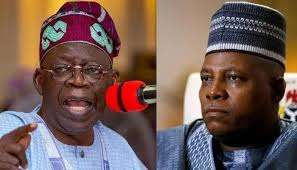
Cybersecurity Levy Targeted at Financial Institutions, Telecoms, Not Individuals, Senator Buba clarifies

Senator Shehu Umar Buba, the Chairman of the Senate Committee on National Security and Intelligence, has clarified that the recently imposed cybersecurity levy announced by the Central Bank of Nigeria (CBN) is not targeted at individuals or ordinary bank customers. The Senator who sponsored the amendment bill told Economic Confidential that the levy is aimed explicitly at financial institutions and telecom companies, the most vulnerable sectors to financial crimes and cyber fraud, to enhance cybersecurity measures and national security in the country. He noted that the relevant section of the Cybercrime Act is very clear about the businesses that are required to pay the levy, not the citizens. “The Act is very explicit about who is responsible for the payment, not Nigerian citizens or individuals. The relevant Section of the Cybercrime Act 2015 listed the businesses required to pay the levy: telecommunications companies, Internet Service Providers, Banks, Insurance Companies, the Nigerian Stock Exchange, and other Financial Institutions. “The organisations in the sectors have been listed in previous circulars by the Central Bank of Nigeria, especially in 2018. The new circular by the CBN further provided many exemptions.” Senator Buba also clearly explained the amount payable as a cybersecurity levy. “It is either 0.005 or 0.5% arithmetically. The figure in the principal act was 0.005 as a fraction, which was converted to the percentage that became 0.5% in the amendment. Therefore, the statistics in fractions and percentages are the same. The legislator highlighted that the passage of the amendment bill was a collaborative effort of various stakeholders. “The passage of the amendment bill was a collaborative effort involving the government, industry players, civil society, and academia in the contributions and active participation in the public hearing before and endorsement by the two chambers of the National Assembly. After rigorous processes, President Bola Ahmed Tinubu signed the bill into law in February 2024.” The Senator acknowledged the concerns of Nigerians, civil groups, and other stakeholders about the current economic situation but was reassured that implementing the cybersecurity law was not meant to punish citizens. He emphasised that the levy is a collective effort to protect national security and the economy, with the financial burden primarily falling on the specified businesses. The Cybercrime (Prohibition, Prevention, etc.) (Amendment) Act 2024, which President Tinubu signed into law in February, imposes a 0.5 percent (0.005) levy equivalent to half the value of all electronic transactions by the businesses specified in the Second Schedule of the Act. The levy will be remitted to the National Cybersecurity Fund, which the Office of the National Security Adviser (ONSA) shall administer. The circular announcing the levy also exempted some transactions from the cybercrime levy, including loan disbursements and repayments, salary payments, intra-account transfers, and other financial transactions.

President Tinubu Commissions Lithium Processing Factory in Nasarawa

President Bola Ahmed Tinubu, represented by the senate President, Godswill Akpabio, on Friday, unveiled a Lithium processing factory constructed by Avatar New Energy Materials Limited, a Chinese company. The event, held at Kama Otto in Nasarawa Local Government Area, exemplified a robust partnership between the federal government, the state, and private investors. Dignitaries at the event included the Nasarawa State Governor, Engr. Abdullahi Sule, Governor Usman Ododo of Kogi State, Minister of Solid Minerals Development, Dele Alake, federal lawmakers, former state leaders, and traditional rulers. President Tinubu, in his address, hailed the collaboration as a testament to Nigeria’s commitment to economic diversification. He emphasized the strategic significance of the Lithium Company, foreseeing its role in positioning Nigeria as a major player in the global Lithium market. Tinubu stated, “Realising the benefits of Lithium and other mineral resources, our administration will continue to pay particular attention to the maximum utilisation of the product for the benefit of our people.” Furthermore, he articulated the government’s aspiration for comprehensive value chain processing of Lithium and other minerals. Tinubu urged both domestic and international companies to engage with Avatar Company, emphasizing its pivotal role in Nigeria’s growth trajectory. Acknowledging the support received during the previous Presidential election, Tinubu expressed gratitude to the people of Nasarawa with the tangible contribution of the Lithium processing factory. He underscored the transformative impact of Nigeria’s participation in the production value chain of Lithium, heralding a new era of technological partnership and empowerment. Governor Abdullahi Sule commended President Tinubu and the local communities for their instrumental support in attracting such investment to Nasarawa. He highlighted the remarkable transformation of the region, previously plagued by security challenges, into a conducive environment for industrial development. The Minister, Dele Alake emphasized the profitability and feasibility of similar ventures, noting the increasing interest from investors. He advocated for robust protection of Lithium battery companies from foreign competition, citing their pivotal role in Nigeria’s economic resurgence.

Cybersecurity Levy Not Punitive – Sen Buba,

The Chairman of the Senate Committee on National Security and Intelligence, Senator Shehu Umar Buba, has addressed the controversy surrounding the proposed implementation of the Cybersecurity levy by the Central Bank of Nigeria (CBN). The levy is provided for in the Cybercrimes (Prohibition, Prevention, etc) (Amendment) Act, 2024. He clarified that the levy is not punitive as it has numerous exemptions to protect and relieve ordinary citizens, particularly the poor. According to him, the exemptions include salary payments, intra-account transfers, loan disbursements and repayments, and other financial transactions. Senator Buba said the amendments to the Cybercrimes Act were a collaborative effort with the National Assembly’s ICT and Cyber Security Committee. The committee also underwent a transparent public hearing process, receiving contributions from various stakeholders. Both Houses of the National Assembly unanimously passed it before President Bola Ahmed Tinubu signed it into law. Senator Umar emphasised that the provisions for the cybersecurity levy have been in place since 2015 but were delayed due to unclear interpretations and applications. “The Cybercrimes Act of 2015 has provisions for imposing a cybersecurity levy since its enactment, but the vagueness of Section 44 led to different interpretations until the 2024 amendments. The levy is 0.5%, equivalent to half a per cent of the value of all electronic transactions by businesses specified in the Second Schedule to the Act. “The amendments addressed crucial gaps in the Act and empowered the nation to implement the National Cybersecurity Programme effectively. They also seek to realign and empower the country to combat the inadequate funding and disruptive effects of cyber threats on national security and critical economic infrastructures,” he said. Senator Umar underscored the criticality of the cybersecurity levy’s implementation, stating that its prudent utilisation will bolster the nation’s capacity to evaluate, execute, upgrade, and fortify the security of national critical economic infrastructure, thereby safeguarding the nation’s cyberspace. The Committee commended the Office of the National Security Adviser and the Central Bank of Nigeria (CBN) for initiating the operationalising the cybersecurity levy, highlighting its benefits far outweigh its drawbacks. He expressed appreciation to the leaders and representatives of MDAs at the federal and state levels, as well as to all stakeholders who contributed to this effort’s success. While maintaining that the Committee’s mandate is to create laws that align with the aspirations of Nigerians, he appealed for public support, assuring that the policy will yield maximum benefits for citizens in the shortest possible time. Following the enactment of the Cybercrime (Prohibition, Prevention, etc) (Amendment) Act 2024 and under the provision of Section 44 (2)(a) of the Act, a levy of 0.5 per cent (0.005) equivalent to half per cent of all electronic transactions value by the business specified in the Second Schedule of the Act is to be remitted to the National Cybersecurity Fund, which the Office of the National Security Adviser shall administer. Though the announcement created controversy, the circular exempted some transactions from cybercrime levy. The exemptions included loan disbursements and repayments, salary payments, intra-account transfers within the same bank or between different banks for the same customer, intra-bank transfers between customers of the same bank, and Other Financial Institutions (OFIs) instructions to their correspondent banks. The exemption also applies to interbank placements, banks’ transfers to CBN and vice versa, inter-branch transfers within a bank, cheque clearing and settlements, and Letters of Credit (LCs). Others include banks’ recapitalisation-related funding only bulk funds movement from collection accounts; savings and deposits including transactions involving long-term investments such as treasury bills, bonds; and commercial papers; government social welfare programmes transactions, e.g. pension payments; non-profit and charitable transactions including donations to registered non-profit organisations or charities; educational institutions transactions, including tuition payments and other transaction involving schools, universities, or other academic institutions.  

Tinubu’s appointees are misfits and weak- Dikwa

The Dean of Borno Elders Forum, Prof Khalifa Dikwa, says members of the elite in the northern region of the country are unhappy with President Bola Tinubu because of his “misfit and weak appointees” as well as his “anti-people policies”. The political analyst, who featured on Channels Television’s Politics Today programme on Wednesday, said northern elite are “not happy because each of these policies affect the north entirely”. “Most of the appointees are either misfits or weak or to the wrong places,” the elder statesman said, adding that the appointments by the Tinubu administration are “lopsided”. Prof Dikwa said even “the southern elite should be annoyed because Nigeria is more than Lagos”. He further described as “provocative”, the 0.5% cybersecurity levy on electronic transactions recently introduced by the Central Bank of Nigeria (CBN), and asked the President to immediately order the apex bank to suspend the implementation of the new policy. “This is not the time, it’s wrong timing. Why are they provoking the people of this country? They have taken enough,” he said.

2027: Mega Party Prepares to Unseat Tinubu

Renowned political economist and former presidential candidate, Professor Pat Utomi, has announced plans for the formation of a new mega-political party aimed at unseating the ruling All Progressives Congress (APC) in the 2027 general elections.  Utomi, who criticized the current political landscape for its failure to deliver effective governance, emphasized the need for a drastic change.  The proposed party will merge two distinct groups: the ‘mea culpa’ cohort, consisting of former politicians acknowledging past failures, and the ‘new value’ cohort, comprising forward-thinking individuals from various political backgrounds.  Utomi highlighted the importance of promoting value-driven citizenship, integrity, and respect for the dignity of people.  “The nature and the structure of our politics is such that even good people, when they enter these existing political parties, will play to their interests,” Utomi explained.

More Woes For Nigerians As Presidency Moves To Increase VAT Rate

The current financial woes of the Nigerian is set to get worse as the Presidential Committee on Fiscal Policy and Tax Reforms has put forth a proposal to increase the current Value Added Tax (VAT) rate.  Mr. Taiwo Oyedele the chairman of the committee, has highlighted the need for this change during a policy exposure session.  Currently set at 7.5 per cent, the proposed adjustment aims to restructure the revenue-sharing formula, with states and local governments set to receive a larger portion.  Oyedele stressed the importance of ensuring transparency and neutrality in VAT collection, emphasizing that the burden should fall on the ultimate consumer.  To mitigate the impact on small businesses and the underprivileged, certain essential goods and services would remain exempt from VAT.  He said, “We are proposing that the federal government’s portion should be reduced from 15 per cent to 10 per cent. States’ portion will be increased, but they would share 90 per cent with local governments. “In 1986, we had sales tax collected by states. The military came up with VAT in 1993 and stopped sales tax, so they said it would collect VAT and return 15 per cent as cost of collection, and that is the 15 per cent charged today came about. But we think it is too much. So we must make it transparent and neutral, and this is what over 100 countries where they have VAT are doing. “Nigeria’s economy is more than 50 percent in services and if I just stop at this, many states will be broke because VAT collection will go down by more than 50 percent and it won’t even fly. “So we, therefore, need to adjust the VAT rate upward. We would ensure that it doesn’t affect businesses. The only thing is to look at basic consumption from food, education, medical services, and accommodation will carry zero per cent VAT. So, for the poor and small businesses, no VAT.”

Tinubu Returns To Nigeria 

SERAP, BudgIT, 34 Others Sue Tinubu Over Appointments Of INEC RECs

After a two-week absence from the country, President Bola Tinubu returned to Abuja early today, where he was greeted by top government officials.  Tinubu’s diplomatic journey commenced with an official visit to the Kingdom of the Netherlands on April 23, at the invitation of Prime Minister Mark Rutte. During his time in the Netherlands, Tinubu held discussions with prominent Dutch officials, including separate meetings with King Willem-Alexander and Queen Maxima. Additionally, he participated in the Nigerian-Dutch Business and Investment Forum. Following his engagements in the Netherlands, the President attended a special World Economic Forum meeting in Riyadh, Saudi Arabia, from April 28 to 29. The forum, themed “Global Collaboration, Growth, and Energy for Development,” convened leaders from various sectors to discuss global development strategies. However, after the conclusion of the summit on April 29th, the President’s whereabouts remained undisclosed, with the presidency providing no information while speculation arose regarding a potential private visit to Europe following his time in Saudi Arabia.

Tinubu Is Getting His Health Care In Nigeria – Minister Says

Minister of State for Health and Social Welfare, Tunji Alausa, has disclosed that President Bola Tinubu is getting some health care in Nigeria. Alausa made this known in an interview on Channels Television on Tuesday. Recall that President Tinubu is yet to return to Nigeria days after the World Economic Forum (WEF) in Saudi Arabia. The president’s absence has ignited concerns about his whereabouts among many Nigerians. However, the Health Minister said President Tinubu’s absence from the country is not due to medical reasons. According to him, Tinubu is well, healthy and leading Nigeria in the right direction, as against speculations that the president is sick. Alausa noted that the current administration is concerned about developing the healthcare system for Nigerians. He said, “Let me tell you, we are developing a healthcare system for Nigerians not for the President. We have 220 million Nigerians and that’s what Mr President wants. “We have a president that is well, that is healthy and leading the country in the right direction. The president is getting some of his care in Nigeria.”

Comedian Seyi Law knocks Tinubu government over Cybersecurity Levy

Comedian Seyi Law has taken to social media to knock the Tinubu administration over the new cyber security levy. The Central Bank of Nigeria (CBN) had issued a directive to all banks and financial institutions to implement a cybersecurity levy on banking transactions. This new levy, set at 0.5% of the value of all electronic transactions, was in response to the escalating concerns over cyber threats and follows the guidelines of the recently enacted Cybercrime (Prohibition, Prevention, etc.) (Amendment) Act 2024. Reacting to the development, Seyi Law wrote: “I hate when government agencies don’t speak up to the understanding of the citizens and allow wrong narratives to fester before tackling it. Cybersecurity level, according to the act, is 0.005%, and different figures from 0.5% to 3% are being thrown around. “A 0.5% charge in the Nigeria of today is in itself too much punishment on Nigerians. Are we trying to discourage banking transactions again and encourage cash keeping? @cenbank should revisit this abeg. “Stamp duty is something, and now this. It is unacceptable. @NGRPresident @officialABAT, let the poor breathe. When will the new minimum wage be announced and implemented? Some of your ministers need to look for another job. One year is here and we are counting”.

France Speaks On Plan To Set Up Military Bases In Nigeria

The French Government has said there are no discussions between France and Nigeria to establish military bases in the country. Recall that some eminent Northern leaders and Civil Society Organisations cautioned President Bola Tinubu against allowing the United States and the French governments to relocate their military bases from the Sahel to Nigeria. In a letter to Tinubu and the leadership of the National Assembly, the leaders urged the government to resist pressures from the US and France. They questioned the benefits of foreign military bases, particularly noting the lack of effectiveness in curbing terrorism in the Sahel region despite the presence of American troops and intelligence personnel in Niger. However, in an interview with The Punch, the Head of Communication at the French Embassy in Nigeria, Onyinye Madu, said there was no such plan to establish any military base in the country. Madu added that no discussions have taken place or are planned between France and Nigeria regarding the relocalisation of military bases. She said, “The French Embassy in Nigeria would like to point out that contrary to the claims made in the open letter quoted in the article, no discussions have taken place or are planned between France and Nigeria regarding the relocalisation of military bases.” Also, the Federal Government, on Monday, clarified that there were no discussions with foreign countries regarding the establishment of foreign military bases in Nigeria. The Minister of Information and National Orientation, Mohammed Idris, made the clarification in a statement he signed on Monday.