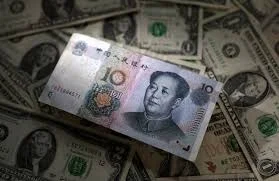
China’s currency, the renminbi (yuan), strengthened on Tuesday after the central parity rate was set 54 pips higher at 7.0602 per U.S. dollar, data from the China Foreign Exchange Trade System (CFETS) showed.
The daily fixing serves as a key reference point for the onshore yuan and is closely watched by markets for signals on currency policy and official guidance. Under China’s managed floating exchange rate system, the yuan is permitted to trade within a band of plus or minus 2 percent around the central parity rate in the spot foreign exchange market.
The central parity rate is determined each business day before the opening of the interbank foreign exchange market. It is calculated based on a weighted average of prices quoted by market makers, taking into account market supply and demand, movements in major global currencies, and changes in offshore yuan trading.
A stronger-than-expected fixing is often interpreted by investors as an effort to support the currency or to anchor market expectations, particularly amid volatility in global financial markets and shifting interest rate dynamics between China and the United States.
In recent months, the yuan’s performance has drawn heightened attention as traders assess the outlook for China’s economy, capital flows, and monetary policy stance. Movements in the daily fixing can influence onshore trading sentiment and short-term currency positioning, even as broader trends remain driven by economic fundamentals.
The yuan’s allowed trading band provides flexibility for market forces while enabling authorities to manage excessive swings, maintaining relative stability in the foreign exchange market.