Over 18 transmission towers vandalised in a January

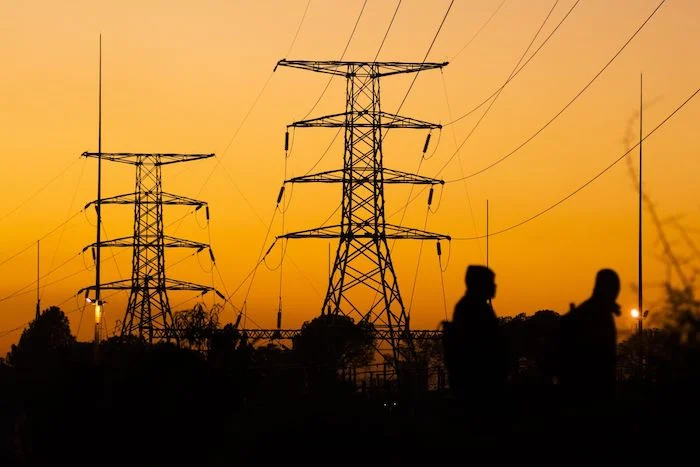
According to the Transmission Company of Nigeria (TCN) more than 18 transmission towers were vandalised between Jan 9 and Jan 14 across Rivers, Abia, and Kano states. Mrs Ndidi Mbah, General Manager, Public Affairs,  TCN said this in a statement in Abuja on Sunday. Mbah said that Mr  Emmanuel Okpa, General Manager, Transmission TCN’S Port Harcourt Region, reported that routine patrols by linesmen on Jan. 10,  uncovered damage to towers 171 through towers 181 and 184. She said that on Jan. 14, vandals targeted towers 146, 147, and 149 along the Owerri/Ahoada 132 Kilo Volt kV line in Rivers, removing base brackets and compromising the stability of the towers. “In Abia State, Mr  Azuh Lucky, Head of the Lines Department for the region, reported the theft of bolts, nuts, and structural members from towers 160 to 162 on the Alaoji/Umuahia 132kV line. ”Meanwhile, in Kano, towers 105, 106, and 107 along the Katsina-Gazoua 132/33kV transmission line were critically damaged by vandals on Jan. 9,  compromising their structural integrity and risking collapse. READ ALSO: Israel has killed 27 Palestinians since dawn ”In  the early hours of Jan.17,  vandalised 132kV underground transmission cables were discovered by TCN engineers near Millennium Park in Abuja. This affected power supply to the central area and its environs. ”These incidents pose a significant challenge to TCN’S operations as a company ” she said. She said that the company had bolstered security measures, increased lines patrol and the number of vigilante groups, and is also collaborating with security operatives. Mbah said that the company was appealing for the full support of every Nigerian, particularly those in communities hosting TCN’S installations. “Nigerians  must collectively recognise that the transmission network is our collective asset and essential for our socioeconomic development. ”The vandals and those who buy stolen materials are sabotaging the nation. All hands must be on deck to ensure the growth of the country’s power sector, which is critical to the development of our country ”TCN’s grid expansion plans are under tremendous strain due to the persistent vandalism of its installations,” she said. She said that the financial implications of constant repairs to vandalised transmission installations, along with the stress on the grid, were having adverse effects on TCNs grid expansion drive. ”This is a clarion call for everyone to join forces with TCN to put an end to this menace and safeguard our  electricity network,” Mbah said.

TCN Denies National Grid Collapse, Clarifies Saturday Power Outage

The Transmission Company of Nigeria (TCN) has denied reports of a national grid collapse on Saturday, calling the claims inaccurate. TCN’s General Manager of Public Affairs, Mrs Ndidi Mbah, made the clarification in a statement issued in Abuja on Saturday. Mbah explained that earlier on Saturday, at approximately 1:41 p.m., the Osogbo-Ihovour line tripped, followed by the tripping of the Benin-Omotosho line. She noted that these incidents only affected bulk power supply to the Lagos area. She further clarified that just before the tripping, total generation on the grid was 4,335.63 Megawatts (MW), and after the trippings, generation dropped to 2,573.23 MW, which indicated the grid did not experience a collapse. “The transmission line tripping affected Egbin, Olorunsogo, Omotosho, Geregu, and Paras,” She added that all had been restored except for the Benin-Omotosho 330kV line, which was still being worked on. Mbah emphasised that TCN was working hard to build a more robust transmission grid in spite of ongoing challenges. Related News: She also urged caution against the spread of misinformation, stressing the importance of disseminating accurate and verifiable facts. Accustomed to power outages due to national grid collapses and other faults, many Nigerians were quick to tally the counts yesterday, announcing that the national grid had collapsed for the 13th time in thirteen months, whereby, yesterday’s rumoured collapse would have been the first in 2025.

Overhaul Power Sector to Unlock Nigeria’s Economic Growth in 2025 – Rewane

Bismarck Rewane, the renowned economist and CEO of Financial Derivatives Company Limited, has emphasized the need for power sector reforms as a critical factor in achieving Nigeria’s proposed 4.6% economic growth rate in the 2025 budget. In an interview, Rewane shared his economic outlook for 2025, explaining his projection of 25% inflation, despite hopes for a significantly lower rate.  According to Rewane, inflation will persist due to factors such as slow GDP growth and the mismatch between money supply and goods production. However, he also suggested that inflation would ease gradually throughout the year, though it is unlikely to dip below 25%. “Inflation is beginning to moderate and will continue to decelerate, but it’s unlikely to meet the optimistic 15% target set in the 2025 budget,” Rewane stated. He predicts that inflation will decrease from 34.6% to 25% within a year, with a monthly easing rate of around 0.8%. Addressing the monetary environment, Rewane noted that a reduction in inflation could lead to a corresponding drop in the Monetary Policy Rate (MPR), potentially making the financial landscape more conducive for economic growth. Rewane also projected a Naira exchange rate of N1,550/$, based on the expectation that Nigeria’s economy would move closer to dynamic equilibrium.  This would reduce the misalignment between the official and parallel exchange rates, as well as between interest rates and inflation. However, the economist emphasized that without significant reforms in the power sector, Nigeria’s growth targets would remain out of reach.  Rewane underlined that resolving power sector challenges is vital for spurring productivity and ultimately ensuring the country’s economic expansion in the year ahead.

DisCos to halt charging customers for meter replacement

The Federal Government, through the Nigerian Electricity Regulatory Commission (NERC), has taken a firm stance against Distribution Companies (DisCos) that attempt to charge customers for replacing faulty or obsolete meters.  This directive stems from Order No. NERC/246/2021, which outlines the responsibilities of DisCos in maintaining and replacing meters within their network. Under the order, DisCos are required to replace defective meters at no cost to the customer, provided the damage was not caused by the customer.  The commission also prohibited the practice of moving customers with malfunctioning meters to estimated billing, stressing that such actions are not permissible under its regulations. NERC has urged affected customers to report cases where DisCos violate this order. It provided multiple channels, including phone lines and an email address, for lodging complaints.  The commission reaffirmed its commitment to ensuring that DisCos adhere to regulatory standards and warned that any violations would attract penalties. This move is part of NERC’s broader effort to protect consumers and ensure that electricity providers comply with industry regulations. 

Peter Obi Reacts to Power Grid Failures

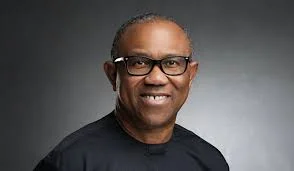
2023 Labour Party presidential candidate Peter Obi has voiced his concerns over the ongoing power grid failures in Nigeria, describing the situation as a national embarrassment.  In a Twitter post, he criticized the repeated collapses of the national grid, which have left many Nigerians without electricity.  He pointed out that these outages expose the weaknesses in the country’s power infrastructure and highlight failures in leadership and policy implementation. Obi questioned how long Nigerians must endure a system that fails to provide reliable electricity, a crucial element for a productive society.  He emphasized the importance of power supply for the economic transformation of the country, particularly for small and medium-sized enterprises (SMEs) that are vital for job creation and economic growth. He also compared Nigeria’s electricity generation capabilities with those of other African nations.  Despite being the fourth largest economy on the continent, Nigeria generates less than 10,000 megawatts of electricity, a stark contrast to South Africa and Egypt, which each generate over 40,000 megawatts.  Obi argued that this significant disparity in power generation illustrates deep-rooted governance issues that hinder the country’s growth and potential. Calling for immediate and comprehensive reforms, Obi stated that Nigerians deserve a government focused on measurable progress in development and the well-being of its citizens. ReplyForwardAdd reaction

Hoodlums Responsible For Recent Grid Collapse, Says Power Consumers Forum

Tragedy As Transformer Explosion Kills Many In Plateau

The Nigerian Power Consumers Forum (NPCF) has attributed the recent grid collapse in the country to sabotage by criminal elements who may not have the nation’s best interests at heart, according to a statement by Mr. Michael Okoh, the Convener of the NPCF. He stated that the grid collapse was not a result of a lack of capacity on the part of the power company but rather a case of deliberate sabotage by criminals. “The fire incident at the Birnin Kebbi transmission substation switchyard appears to be more of an act of sabotage on the national grid systems,” he declared. Okoh, citing power engineers with decades of experience, explained that it was highly unlikely for two power transformers situated a reasonable distance apart to catch fire simultaneously, as transformers are equipped with built-in protection systems. He suggested that saboteurs might have tampered with transformer components to disrupt the electricity flow. He pointed out that this was not the first time critical national infrastructure had been sabotaged, mentioning incidents such as oil theft damaging pipelines and hacking of power transmission towers. He expressed concerns that such incidents could tarnish the reputation of the Transmission Company of Nigeria (TCN). The grid collapse resulted from a fire at the Birnin Kebbi transmission substation and a line snap along the 330 kV Jebba – Kainji transmission line. These events caused nationwide power outages, which Okoh believed were intended to discredit TCN’s management. Okoh noted that Niger Republic received bulk power from a 150MVA lower transformer in the Birnin Kebbi substation, underscoring the substation’s importance nationally and internationally. He called for a thorough investigation to identify and bring the saboteurs to justice. The NPCF acknowledged TCN’s efforts in maintaining grid stability for over 400 days, including the deployment of new power transformers and projects aimed at improving electricity access. The forum urged TCN to continue investing in transmission networks and safeguarding substations against further sabotage.

TCN celebrates 400 days of non-national grid collapse

Nationwide Blackout As Electricity Grid Collapses Thursday

The Transmission Company of Nigeria (TCN) says the national grid operated for 400 days without collapsing. According to a statement signed by the principal Manager of Public Affairs TCN, Ndidi Mbah, it showed that the country is on the path to achieving stability in the electricity sector. Nigeria’s electricity generation has been between 4,000 to 5,000 Mega-Watts despite investments in the power sector. Last year, it crashed from the 6,336.52 megawatts recorded in 2021 to 5,346.82MW. In 2022, the National Grid collapsed eight times, with the last record to be in September.