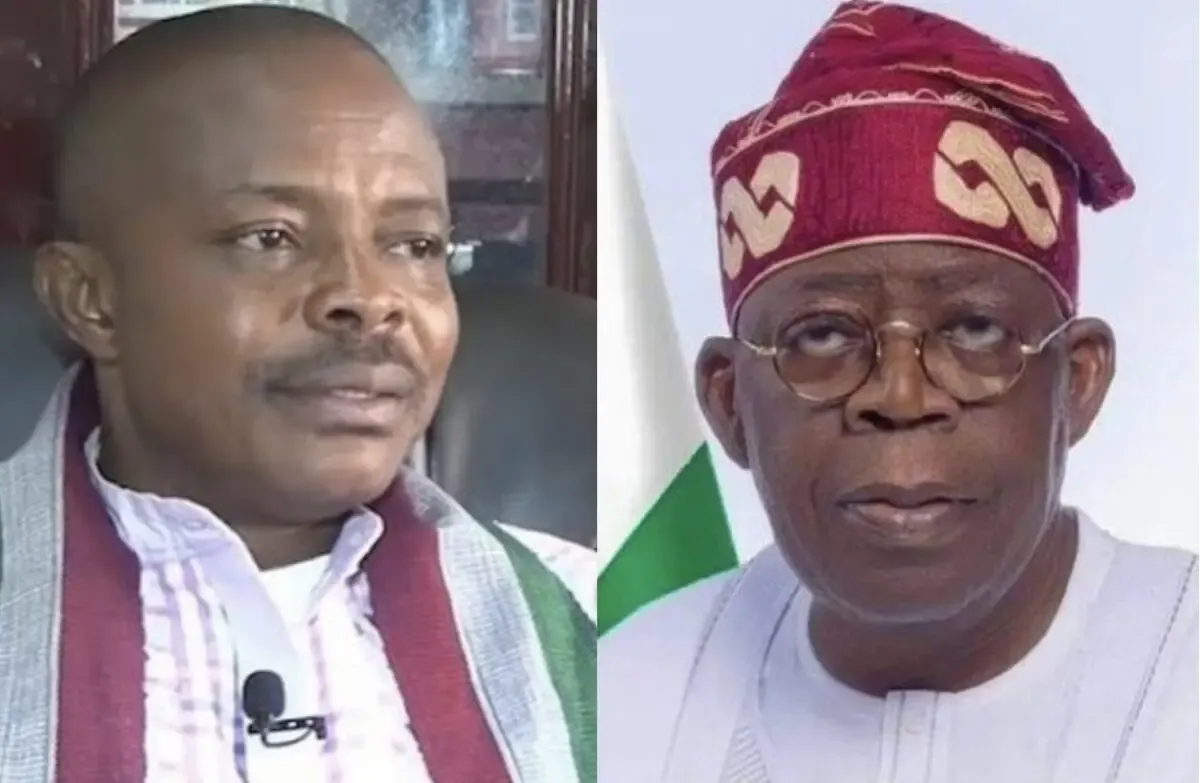
Looming Strike: NLC Criticises FG’s Lack of Progress on CNG Buses, Cash Transfers, Others

Amid the economic hardships triggered by the removal of fuel subsidies, the Nigeria Labour Congress (NLC) has expressed deep dissatisfaction with the apparent lack of commitment from the Federal Government to address its demands. Following an unsuccessful meeting with government officials on Monday, where both sides failed to reach an agreement to avert an indefinite strike, the NLC President Joe Ajaero spoke out about the government’s reluctance to address several critical issues during an appearance on Channels Television’s which was monitored by NIGERIAN ANCHOR. Among the NLC’s key demands are the need to mitigate the consequences of petrol price hikes, review the minimum wage, establish a viable roadmap for the adoption of Compressed Natural Gas (CNG) as an alternative fuel, rehabilitate the country’s refineries, and settle lecturers’ salary arrears. Ajaero expressed frustration, saying, “Even the issue as simple as cash transfer or bringing buses on the road, nothing has happened to them. So, it’s a lack of willingness, and we can’t muddle up all these issues. Then you call a minimum wage as wage award. If anybody is looking at the issue of wage award as minimum wage, then there’s confusion within that class of people.” He referenced a 2021 agreement on CNG vehicles reached with the then Minister of State for Petroleum, Timipre Sylva, highlighting that it was evident a million vehicles could be converted to CNG within three months. Ajaero criticized the Federal Government’s 2024 projection to deploy CNG buses for a more affordable mass transit system, questioning the delay, saying, “What is so peculiar about next year when these processes will start? Is it that there are no CNG vehicles that can hit the road, or we can’t have some stations, even with IPMAN saying that their filling stations are available?” Ajaero also criticized the Federal Government for its failure to meet the union’s demands despite having over four months to do so. The NLC is now preparing for an indefinite strike due to the ongoing economic difficulties in the country. “We agree that the Federal Government has had more than enough time for the past four months, and that even if there is a commitment, between now and the next four days, issues will be resolved,” Ajaero said. “And we hope that the minister [Simon Lalong] will work with us within these next few days to make sure we resolve the problem.” Regarding the possibility of resuming negotiations on Tuesday, Ajaero stated that if invited, the NLC would participate in the discussions.
Subsidy Removal, New School Year, and A Strangulating Economy

As a new academic season unfolds in 2023, Nigerian parents are grappling with the far-reaching consequences of the recent removal of petrol subsidies. The resulting increase in school fees and tuition costs has sent shockwaves through households across the nation. This article by our correspondent, VIVIAN MICHAEL, delves into the challenges faced by parents as they navigate the intricate web of the current economic situation while ensuring their children receive an education. The Annual September Dilemma: For many Nigerian parents, September has become a month of dread. It marks the start of the new academic year, ushering in a season fraught with financial implications. The return of millions of students to school after a long vacation compounds the pressure of back-to-school expenses, particularly for students progressing to higher grades. However, the academic year of 2023 bears an unprecedented burden. The removal of petrol subsidies by President Bola Ahmed Tinubu merely three months ago, coupled with the fluctuating value of the naira, has thrust parents into a financial dilemma. They are now expected to pay nearly double the fees they have grown accustomed to. As schools at all levels reopen nationwide, parents are grappling with the immense financial pressure they face. The hike in school fees and the escalating prices of essential items have exacerbated their struggles. Income levels have largely remained stagnant, and the country’s inflexible economy has exacerbated the hardship experienced by its citizens. Small-scale businesses, a significant source of livelihood for many, continue to be hampered by erratic power supply, forcing them to rely on costly fuel-powered generators. Adding to the woes, salaries have remained unchanged. To compound the situation, schools now require parents to provide bank payment evidence before admitting their children, further straining already stretched budgets. Uncertain Grace Periods and Financial Stress: Parents express concerns about whether schools will extend the customary grace period of two weeks after resumption before sending ‘defaulting’ children home. The mere thought of paying these escalated fees, along with the accompanying expenses for educational materials, is enough to elevate the blood pressure of many parents during this time. Private School vs. Public School Debate: Families with children in private schools criticize the government’s allocation of priorities. They argue that government schools lack essential instructional materials and motivated teachers, leading to the burden of exorbitant fees in private institutions. The prevailing sentiment is that those who desire the best education for their children do not patronize public schools due to their dire condition. Some parents have reacted to this predicament by transferring their children from private to public schools, where fees are substantially lower. Others have opted for schools with reduced fees. The Heart-Wrenching Dilemma of Roseline Agboola: Roseline Agboola, a 45-year-old civil servant and mother of three, shares her lamentations about the soaring cost of school fees as students prepare to return to school. She considers withdrawing her children from a private school due to the fee increase. However, a friend who teaches in a public school advises against it, citing inadequate facilities for a conducive learning environment. Roseline finds herself in a daunting situation, forced to struggle to pay the new fees, which have risen dramatically. Her predicament is echoed by many parents who, like her, rely solely on their salaries. Rita Obi’s Shocking Financial Reality: Mrs. Rita Obi, also a civil servant, is astonished by the drastic price increase for her two-year-old school bus service, which has risen from N15,000 to N35,000—a staggering 100% increment. While she acknowledges the economic challenges, Rita is disheartened by the unexpected surge in expenses, emphasizing the need for divine grace and enablement to cope. Ahmed Awofolu’s Frustration and Uncertainty: Ahmed Awofolu’s frustration is palpable as he grapples with the uncertainty of how to proceed. He contemplates sacrificing the quality of education by transferring his children to a more affordable school within walking distance or accessible via inexpensive transportation. Ahmed highlights the significant expenses associated with his children’s education, from tuition to books, school bus fees, excursions, and other miscellaneous costs. He is at a loss for a solution, expressing his reliance on divine intervention and miracles to navigate this challenging period. Olakunle Abiodun’s Plea for Government Assistance: Olakunle Abiodun, a parent with five children in school, appeals to the government for financial assistance. He acknowledges the difficulty of paying school fees for his children, particularly those in private schools. Abiodun’s family has resorted to paying fees in instalments to manage the financial strain. Ifeoma Asika’s Optimism Amid Economic Struggles: In the midst of these economic challenges, Ifeoma Asika, a small-scale businesswoman, shares her optimism. She acknowledges that both the high and mighty are experiencing similar hardships. Ifeoma emphasizes the need for resilience, believing that people will overcome these tough times and emerge stronger. She also shares her experience of enrolling all her children in school without undue stress by discovering a school with more affordable fees. The removal of subsidies and the economic challenges faced by Nigerian parents as they send their children back to school in 2023 paint a stark picture of their struggles. The increase in school fees, stagnant incomes, and rising costs of educational materials have placed an enormous burden on families. Some have opted to shift their children from private to public schools, while others grapple with the financial dilemma. Parents are making difficult decisions, contemplating sacrifices, and praying for miracles as they strive to provide their children with an education. They call on the government to consider subsidies or financial support to alleviate the strain. Despite the hardships, there is resilience and hope that Nigerians will overcome these trying times and emerge stronger in the end.
Shelve proposed warning strike, FG appeals to NLC

The Federal Government has appealed to the Nigeria Labour Congress (NLC) to suspend its proposed 2-day nationwide warning strike over economic hardship. The Minister of Labour and Employment, Mr Simon Lalong, made the call at a news conference on Monday in Abuja. The NLC in a communique issued at the end of its National Executive Council (NLC) said it would commence a 2-day nationwide warning strike from September 5 to September 6. The NLC also threatened to embark on indefinite nationwide strike within 14 working days or 21 days from when the communique was issued unless the Federal Government addressed the excruciating suffering of Nigerians. Lalong said that the appeal had become necessary in order to ensure robust line of communication with Nigerians and in particular the organised labour to forestall a breakdown of industrial peace. He noted that the planned industrial action would no doubt reverse some of the gains already made by the administration. According to him, in this context, it has become pertinent to appeal to the leadership of the NLC to suspend its intended two days warning strike. “As such action would be detrimental to the gains already being recorded on our course to securing a greater future for Nigerian workers and citizens at large. “Furthermore, I would request that the Comrade Leadership of the NLC gives this government some time to settle and address the issues on the ground holistically. “It should be realised that the Cabinet of this administration was only recently sworn in by Mr President and all cabinet members have hit the ground running by receiving briefings from their MDAs. “Therefore, the issues raised by the leadership of the NLC are some issues that I and the Minister of State for Labour and Employment are being briefed upon,” he said. The minister however reassured Nigerian workers that this government would never take them for granted nor fail to appreciate their support and understanding. He also said that this administration would continue to pursue policies aimed at massive employment generation in all sectors of the economy. Lalong added that this would enable government look into immediate challenges that have emerged out of its policies, saying “we cannot do this in an atmosphere devoid of industrial peace. He also said that as a Minister of Labour and Employment, he was yet to be served official communication of the NLC communiqué, following its NEC meeting as required by law. He further urged the NLC to do the needful by following laid down processes for handling such matters since the cabinet was on ground. He assured that all the issues raised by the NLC would be looked into one after the other. “Allow me to first express my sympathy and that of the government of President Bola Tinubu to Nigerians and in particular the workers. “That is over the challenges that have arisen from the removal of petrol subsidy and other policies of the government aimed at renewing hope for the future of our dear nation. “In light of these matters, I would like to reiterate my appeal to the leadership of the NLC to suspend the warning strike and subsequent future actions. “To allow us to work together to amicably resolve these issues rather than embark on actions that would further worsen the conditions of the citizens of Nigeria,” he said. He therefore announced that government would be meeting with the NLC by 3 p.m. on Monday (September 4)
Subsidy Removal: Extend palliatives to all industries, NACCIMA appeals to FG

The Nigerian Association of Chambers of Commerce Industry, Mines and Agriculture (NACCIMA) has appealed to the Federal Government to extend palliatives to all productive industries to cushion the effects of the removal of fuel subsidy. Its National President, Otunba Dele Oye, made the appeal at the 3rd Quarterly Council meeting of the association in Abuja. The Federal Government had announced N5 billion palliative for each state of the federation, including the Federal Capital Territory to ameliorate the rise cost of living arising from the removal of the petrol subsidy. Oye said that the removal of petrol subsidy was not only affecting consumers but also the productive industries. According to him, the removal of the petrol subsidy and the floating of the Naira currency have in one way or the other affected industries. “These affected both consumers and industries because every new policy has its own casualties. “So, in the long term, it is good for the country, but in the short term, you have to consider people who are wrongly affected so that the prices do not cause unusual inflation. “It is important that the government ensures that the palliatives also go to the industries,’’ Oye said. He added that it would take time for businesses to adjust to the new policy of Naira floating. “The short term is always a bit difficult for a lot of people, because it takes time to adjust for businesses to get to know the new policy and also to work with it.” NACCIMA boss said that providing loans at a single digit rate could provide certain cushioning effects to industries affected in the short term. “This is because it is from us we generate the money from the tax to sustain the economy. “So, government must focus and find a way to make sure that the palliative goes to every sector,’’ he said. In his remarks, Dr Al-Mujtaba Abubakar, President, Abuja Chamber of Commerce and Industry (ACCI) said that the business community also needed incentives to cushion the effects of the fuel subsidy removal and the depreciation of the Naira. Abubakar, who was represented by the Director-General of ACCI, Victoria Akai, also emphasised the need for stable power supply and harmonisation of tax to enable businesses thrive. According to him, the business community is in dire need of incentives that will cushion the effect of the fuel subsidy removal and the depreciation of the Naira. He urged NACCIMA president to liaise with relevant government agencies to press home the association’s demands such as stable power supply and harmonisation of tax among others. “I will like to commend the determination of the NACCIMA President to further deepen the relationship of NACCIMA and policymakers which I believe will go a long way to bring the much-needed relief to the business community,’’ Abubakar said.
Gov Inuwa rounds-off 1st phase palliative distribution to 420,000 vulnerable persons

*Acknowledges receipt of N2bn from FG Governor Muhammadu Inuwa Yahaya, CON says Gombe State has received N2 billion out of the N5 billion relief funds that the Federal Government allocated to states for the purchase of food items for distribution to vulnerable members of the public to cushion the effects of fuel subsidy removal. He however stated that the government awaits the receipt of the balance as well as the 1 billion Naira worth of maize which the Central Bank of Nigeria is selling to each state from the national strategic reserve. The governor disclosed this while speaking at round-off of the first phase of statewide palliatives distribution exercise embarked upon by his administration. He applauded the Federal Government for providing the relief funds to each state of the federation out of which 48% is a loan that will be paid back over a period of 20 months at N120,000,000.00 monthly starting from November this year. Assuring that his administration will ensure effective and judicious use of the funds, the Governor revealed that “We will set up a special committee under the Deputy Governor, Dr Manassah Daniel Jatau to ensure effective distribution of the FG’s palliatives to the deserving people of Gombe State”. Governor Inuwa also assured of his administration’s continued commitment towards addressing the plights of the people. “This exercise will continue, we will not relent in our efforts until our people are taken out of this difficult situation”, he stressed. He said the palliative distribution exercise was the 8th in the series of interventions carried out by his administration, adding that he will not relent in attending to the plight of his people. “I am not happy distributing palliatives to the people, I will rather be happy if every household in Gombe State would be able to meet their basic needs”, he added. “Our intention is to make sure that the palliatives we have provided reach the most-deserving people at the grassroots. We have provided an effective and efficient framework to achieve this by taking the exercise to the polling unit level. In every polling unit, 10 beneficiaries have been selected from making up the 30 thousand beneficiaries for this phase”, he noted. “Our ultimate target is to help not fewer than four hundred and twenty thousand (420,000) people in in this phase”, he added. He decried the lingering food crisis in the country, describing the ugly trend as a complex problem that calls for comprehensive solutions from all stakeholders, cautioning that distribution of palliatives from the government will only provide a temporary relief. “Despite series of palliatives distribution from the government, the problem of rising cost of food commodities persists, because that is not the way to go. Palliatives will not provide permanent solution to the problem. It is therefore pertinent on all stakeholders to find a permanent solution to the problem. He enjoined the beneficiaries to use the items judiciously, cautioning them about selling the items as this will defeat the intent of the exercise. “Use the fertilisers and insecticides on your farms to cultivate what can sustain your families and avoid selling them out. Look for potential places suitable for dry season farming and venture into irrigation agriculture. This is the way to go as we cannot continue to rely on handouts from the government”, he said. He used the occasion to call on famers in the state to avoid selling their farm produce during harvest period as the practice afflicts more hardships to the farmers and their families in the near future. Earlier in his welcome remarks, the Secretary to the Gombe State Government, Professor Ibrahim Abubakar Njodi thanked Governor Inuwa for his magnanimity in attending to the plight of his people at this difficult time. “It is out of his sympathy and magnanimity that Governor Muhammadu Inuwa Yahaya moved to rescue his people from the grab of economic difficulties”, he said, calling on people to continue supporting the polices and programmes of the government. In his address, the Executive Secretary, Gombe State Emergency Management Agency, SEMA, who is also the chairman state distribution committee, Abdullahi Haruna Abdullahi said the committee has succeeded in inaugurating the LG level teams and flagging off of the distribution exercise in all the 11 Local Governments Areas of the state. Mr Haruna promised to uphold the trust and confidence reposed in them by ensuring judicious distribution of the item across the state, explaining that the exercise will commence in earnest in every LGA that finished setting up its ward level committees. The chairman said, the Items distributed include bags of Fertilizer, insecticides, rice and spaghetti and will draw 10 beneficiaries from each polling unit in the state.
Katsina govt confirms receipt of N2bn palliative from FG

The Katsina State Government has confirmed the receipt of N2 billion out of the N5 billion palliative approved to the states by the Federal Government. Dr Bala Salisu-Zango, the state’s Commissioner for Information, Culture and Home Affairs made the clarification while reacting to insinuation that the federal government released N5 billion to the state. He said that: “The attention of the state government has been drawn to news going round in the media that N5 billion has been released to states by the Federal Government for palliative. “I wish to state that, Katsina State Government received only N2 billion for procurement of grain to be distributed to the citizens of the state”. Salisu-Zango said the state government had so far utilised N2 billion to procure 40,000 bags of rice for distribution to vulnerable persons in all the polling units across the state. He said the government would also utilise the next tranche of the fund from the federal government to purchase maize for distribution to deserving households. He warned that the state government would punish anyone found wanting in the palliative distribution exercise.
Nigerian Breweries hints of ‘moderate’ hike in beer price

The Nigerian Breweries (NB) has said that it is set to carry out a moderate adjustment to its current price regime. According to the company, the proposed exercise is due to the continued rise in the cost of production. NB has 19 high-quality brands (Heineken, Desperados, Maltina, Life, Amstel Malta, Gulder, Fayrouz, and Legend) produced by nine breweries and distributed nationwide. The removal of fuel subsidy by President Bola Ahmed Tinubu has led to an increase in transportation costs. A statement by the management of the company read in part: “We are aware of the memo in circulation issued by our Sales Director, Ayo Lawal on Tuesday, August 1, 2023, to all our direct customers notifying them of the upcoming review of prices of some of our SKUs, effective Thursday, August 10, 2023. “This notification to our esteemed trade partners is in keeping with our standard business practices, and commitment to business continuity for our customers. “We would like to use this opportunity, to clarify, that this is a moderate price adjustment planned on some of the SKUs of our brands, due to the continued rise in input cost.” The company assured all stakeholders of its unwavering commitment to excellent customer service delivery and consumer satisfaction.
Subsidy Removal: Organised labour in Nasarawa joins nationwide protest

The organised labour in Nasarawa State has joined the nationwide protest against the hike in the price of petrol in the aftermath of the Federal Government’s removal of fuel subsidy. The unions, consisting the Nigeria Labour Congress (NLC) and Trade Union Congress (TUC), led the protest march from Total Filling Station, Lafia, to the Office of the Deputy Governor, Dr. Emmanuel Akabe. Speaking at the event on Wednesday in Lafia, Comrade Ismaila Oko, NLC Chairman, called on the Federal Government to reconsider the action in view of the hardship being experienced by the workers and the masses. The NLC chair said that the Federal Government should immediately take measures that would improve the lots of Nigerians before things get out of control. “Since the subsidy was removed, workers now spend their entire salaries on transport fares to their offices. “Workers can no longer cater for the school fees of their children, feed their family members and meet up to other responsibilities in the family,” Oko said. On his part, Comrade Mohammed Doma, TUC Chairman, urged the government to act fast to address the fuel hike. He wondered why the citizens of a country that was producing petroleum would be buying petrol at an exorbitant price that the citizens could not afford. “Our salaries cannot take care of our transportation to our offices, we are suffering,” the TUC Chairman noted. The union submitted a protest letter to the Head of Civil Service, Ms Abigail Waya, who lauded them for conducting themselves peacefully. Waya said that already both the Federal Government and the Nasarawa government had constituted committees to work out palliatives for the citizenry. She promised to brief Governor Abdullahi Sule about their issues and to submit their letter to him.
Angry protesters pull down NASS Complex gate

*We’ll address your demands within 7 days- Senate The members of the organised Labour Unions protesting the removal of fuel subsidy on Wednesday pulled down the gates of the National Assembly in Abuja. The protesters numbering over 5,000, first converged at the Unity Fountain, Abuja, from where they matched to the Federal Ministry of Justice before proceeding to the National Assembly. However, following the failure of the security officials to adhere and open the gate to them, the angry protesters pulled down the gates and thronged into the assembly complex to vent their anger. The organised labour comprising the Nigeria Labour Congress (NLC) and Trade Union Congress (TUC) are currently protesting in the Federal Capital Territory, Abuja. Meanwhile, the National Assembly (NASS) has pledged to review and address the organised Labour demands within the next one week. The Senate President, Godswill Akpabio said this when organised labour took its mass protest to the National Assembly Complex where it submitted a list of its demands on Wednesday in Abuja. The mass protest was organised by the Nigeria Labour Congress (NLC) and the Trade Union Congress (TUC) over anti-poor and workers policies of the Federal Government. The protesters carried placards with inscriptions such as; “We condemn increase in school fees, “Stop importation of Petrol, Revive the Refineries,” and” Increase in price of fuel responsible for inflation, poverty among others. Akpabio, who was represented by Senate Chief Whip, Ali Ndume, assured the protesting workers that NASS was in support of their struggle. “We have keenly followed what is going on when we realized that there was a breakdown in the discussions between the Presidency and the NLC. I want to assure you that we will find a permanent solution to this. “Please give us one week and we will make progress and if you are not satisfied with the progress we are making, then you can take further action,” he said. He also said that a committee had been set up to look at the demands of organized labour. He added that by the close of the day or tomorrow, they will call the first meeting with labour to start the discussions and the engagements would continue. “We will do our best as your representatives to come out with solutions acceptable to you and realistic enough,” he said. Ndume also assured that the letter which contained their demands and terms of reference would be handed over to the leadership of the senate. Earlier, NLC President, Mr Joe Ajaero said the nationwide mass protest was to express workers’ frustrations and grievances about the anti-poor policies that had brought hardship to Nigerians. He added, ”For almost two months now, we have been engaged in discussions without fruitful motion. We got frustrated.” He, however, said that the demands of the labour include the immediate implementation of the resolutions jointly signed with organised Labour and government. Ajaero also called for the immediate reversal of all anti-poor policies of government including the recent hike in PMS price, school fees and VAT. He also urged the Federal Government to fix the country’s local refineries in Port Harcourt, Warri and Kaduna. According to him, release the eight months withheld salaries of the university lectures and workers. “Accord appropriate recognition and support to the Presidential Steering Committee and the work of its Subcommittees. “Also put a stop to in human actions and policies of government,” he added. Also speaking, Mr Festus Osifo, TUC President called for the reduction in the cost of governance. Osifo said that the governments was “insensitive to the plight of the masses.” “The Nigerian masses have been battered. They have gone through excruciating pains but in all of this, we have not heard what the President has to say about the cost of governance. “We want you in the National Assembly to show sacrifice. We want you to cut down your budget. “We want you to buy Nigerian made cars and not imported vehicles because you are creating jobs over there and importing poverty here. “We want you to show leadership because we elected you to work for us,” he said.
Subsidy Removal: Tinubu to release N200bn to rice, cassava farmers

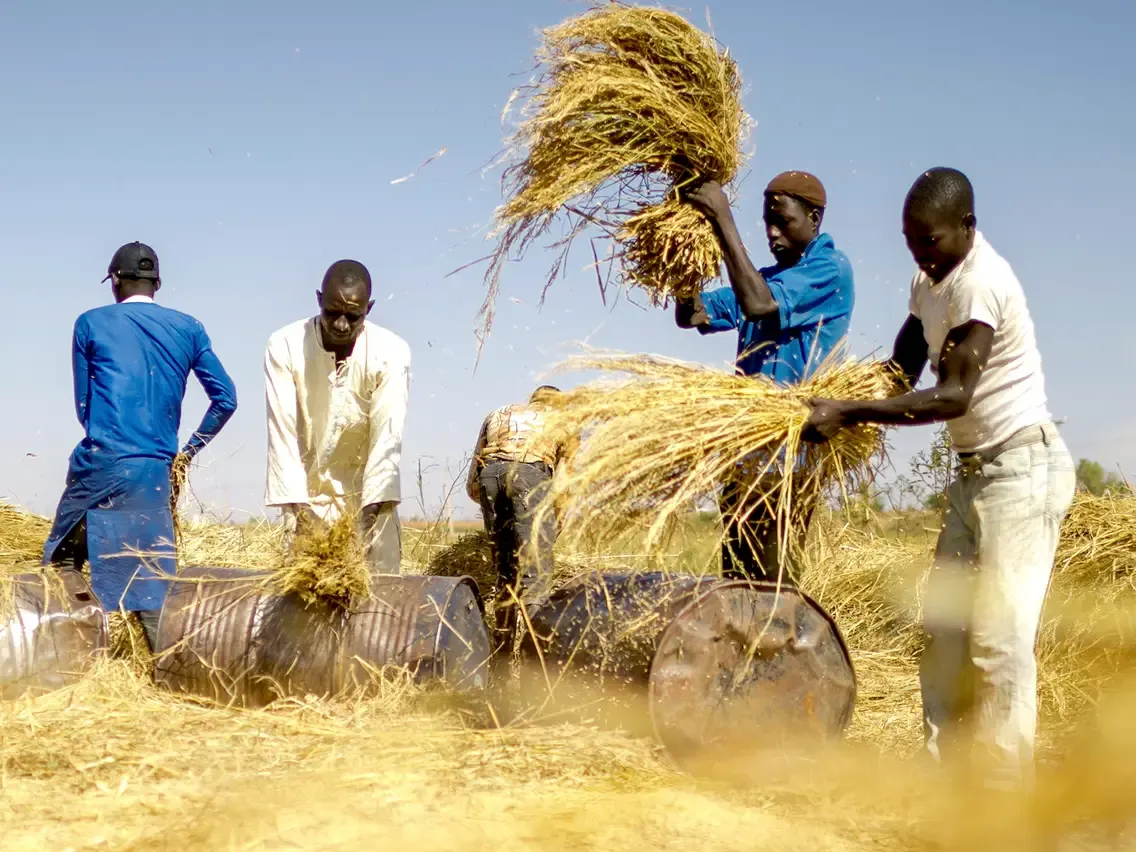
*To make grains, fertilizers available President Bola Ahmed Tinubu has disclosed that in a bid to cushion the biting effect of fuel subsidy removal, the federal government will be releasing the sum of N200 billion will be released to farmers to cultivate rice, maize, cassava, and wheat. President Bola Tinubu, who made the announcement in a national broadcast Monday added that the amount would be taken from the initial N500 billion approved by the National Assembly for the cultivation of 500,000 hectares of land across the country. According to the President in the broadcast monitored by Nigerian Anchor, the economy will overcome the present turbulence occasioned by the petrol subsidy removal. He further said that there will be an immediate release of grains and fertilizers to ease price increase that is hitting the pockets of Nigerians. “Our economy is going through a tough patch and you are being hurt by it. The cost of fuel has gone up. Food and other prices have followed it. Households and businesses struggle. Things seem anxious and uncertain. “I understand the hardship you face. I wish there were other ways. But there is not. If there were, I would have taken that route as I came here to help not hurt the people and nation that I love. To further ensure that prices of food items remain affordable, we have had a multi-stakeholder engagement with various farmers’ associations and operators within the agricultural value chain. “In the short and immediate terms, we will ensure staple foods are available and affordable. To this end, I have ordered the release of 200,000 Metric Tonnes of grains from strategic reserves to households across the 36 states and FCT to moderate prices. “We are also providing 225,000 metric tonnes of fertilizer, seedlings, and other inputs to farmers who are committed to our food security agenda. “Our plan to support the cultivation of 500,000 hectares of farmland and all-year-round farming practice remains on course. To be specific, N200 billion out of the N500 billion approved by the National Assembly will be disbursed as follows: “Our administration will invest N50 billion each to cultivate 150,000 hectares of rice and maize. N50 billion each will also be earmarked to cultivate 100,000 hectares of wheat and cassava,” the President assured.