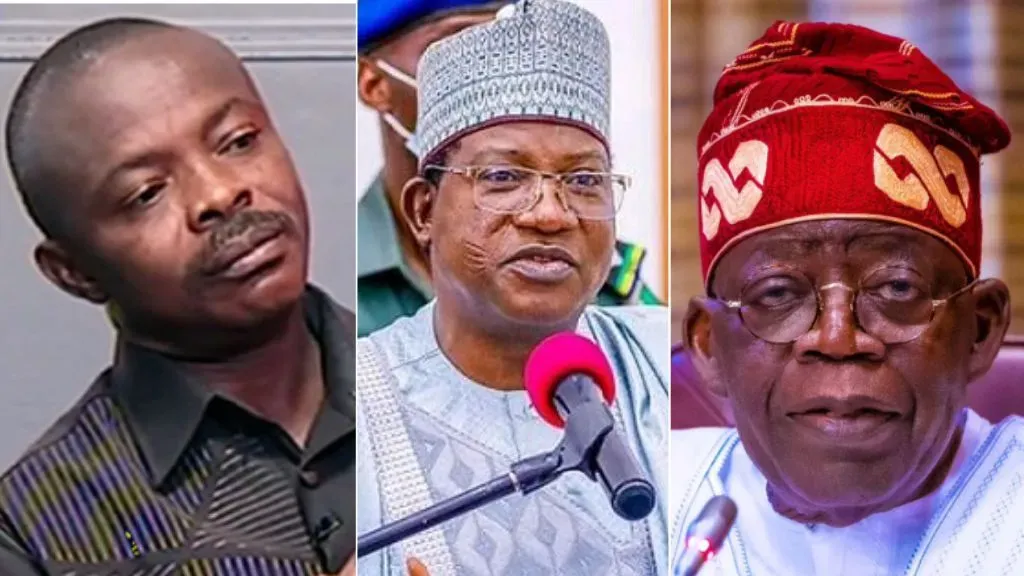
Tinubu Orders Ministers, Heads Of Agencies to Travel in Convoy of Three Vehicles, Five Security Personnel

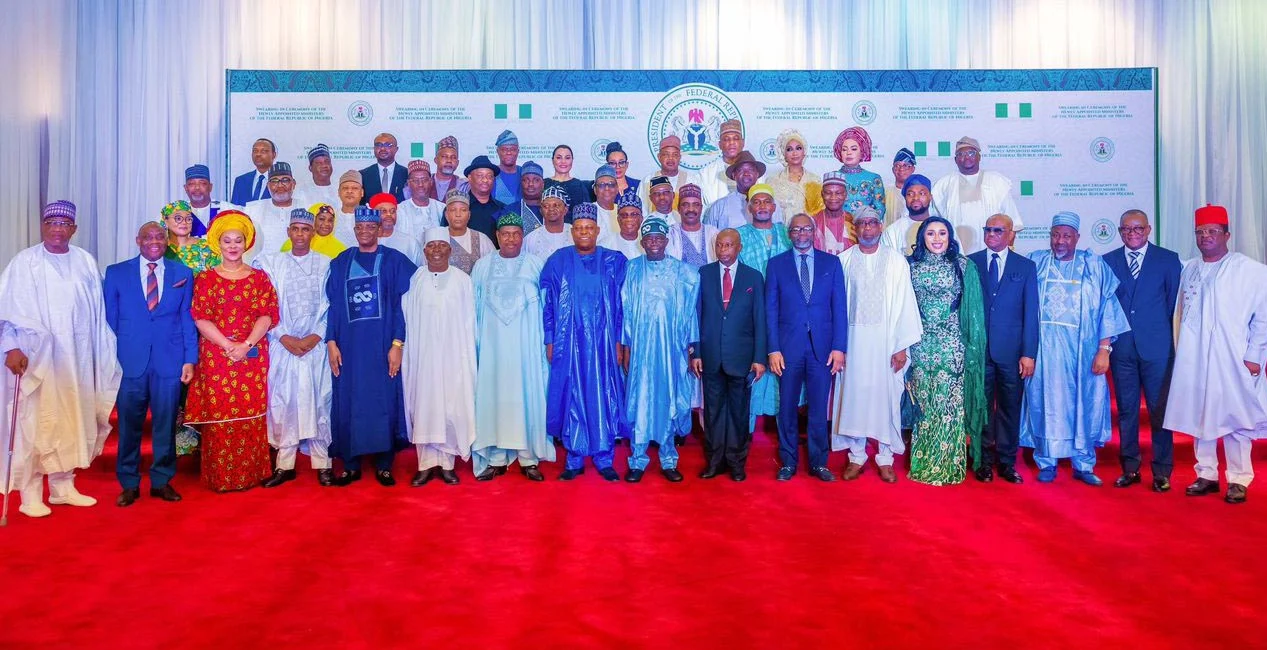
In a feeble effort towards cost cutting President Tinubu orders ministers and heads of agencies not to travel in a convey of more than three vehicles in their official convoys. A release by Bayo Onanuga, the Special Adviser to the President (Information & Strategy) on Thursday said this was a “reduction in cost of governance” measure by the Tinubu’s administration. The presidency added that Tinubu also ordered all ministers, ministers of state, and heads of agencies to have at most five security personnel attached to them. The security team would comprise four police officers and one Department of State Services (DSS) officer. The release said, “President Bola Tinubu has restricted Ministers, Ministers of State, and Heads of Agencies of the Federal Government to a maximum of three vehicles in their official convoys. No additional vehicles will be assigned to them for movement.” The cost-cutting measure was announced today in a statement signed by the President. In January this year, President Tinubu took significant steps to reduce government expenditure by reducing his entourage on foreign trips from 50 to 20 officials. For local trips, he reduced it to 25 officials. “He similarly reduced the Vice President’s entourage to five officials on foreign trips and 15 for local trips. In the directive issued today, President Tinubu also ordered all ministers, ministers of state, and heads of agencies to have at most five security personnel attached to them. The security team will comprise four police officers and one Department of State Services (DSS) officer. No additional security personnel will be assigned, he ordered. “President Tinubu instructed the National Security Adviser to engage with the Military, Paramilitary and Security Agencies to determine a suitable reduction in their vehicle and security personnel deployment. “All affected officials are expected to comply with these new measures immediately, underscoring the urgency and seriousness of these changes.”

Subsidy Has To Go – Dangote To Nigerian Government

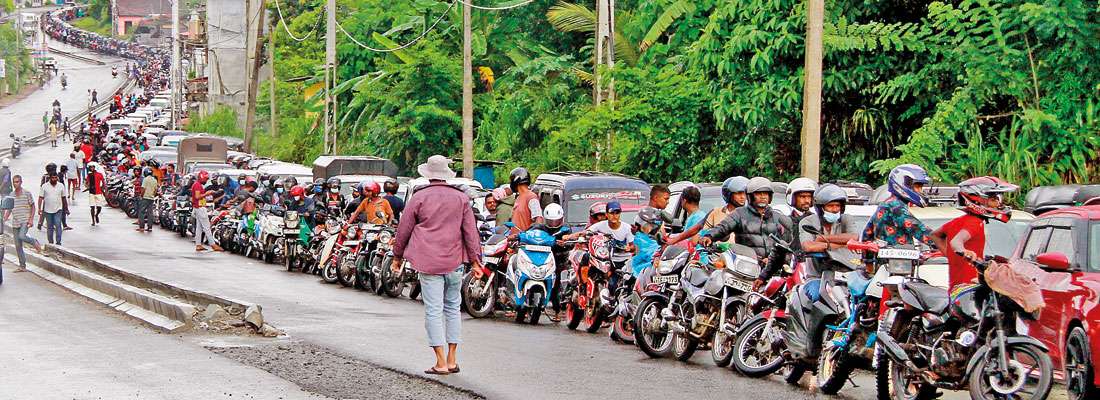
As Nigerians grapple with prohibitive pump price of petrol and consequent spiraling inflation, Alhaji Aliko Dangote, the President and Chief Executive of Dangote Refinery, repeats the call for removal of fuel subsidy. The businessman asserted that the removal would determine the actual petrol consumption in the country. Speaking in a 26-minute interview with Bloomberg Television in New York on Monday, he confirmed ownership of two oil blocks in the upstream sector with an expected production date of next month. Dangote also stated that fuel production from his $20bn mega refinery in Lagos will help ease pressures on the naira. Speaking further, he noted that ending petrol imports will have a huge upside in easing currency pressures. According to him, “Subsidy is a very sensitive issue. Once you are subsidising something then people will bloat the price and then the government will end up paying what they are not supposed to be paying. It is the right time to get rid of subsidies. “But this refinery will resolve a lot of issues out there, you know, it will show the real consumption of Nigeria, because, you know, nobody can tell you. Some people say 60 million litres of gasoline per day. “Some say, it’s less. But right now, if you look at it by us producing, everything can be counted. So everything can be accounted for, particularly for most of the trucks or ships that will come to load from us. We are going to put a tracker on them to be sure they are going to take the oil within Nigeria, and that, I think, can help the government save quite a lot of money. I think it is the right time, you know, to remove the subsidy.” On whether the subsidy will make the refinery viable, Dangote said, “Well, you see, we have a choice of either one. We produce, we export, and when we produce, we sell locally. But we are a big private company. And yes, it’s true, we have to make a profit. We build something worth $20bn so definitely we have to make money. “The removal of subsidies is totally dependent on the government, not on us. We cannot change the price, but I think the government will have to give up something for something. So I think at the end of the day, this subsidy will have to go.”

FG Moves To End Electricity Subsidy

Nigeria’s Power Minister, Adebayo Adelabu, has announced an end to electricity subsidies, citing a national debt of 1.3 trillion naira to GenCos and 1.3 billion dollars owed to gas companies. Adelabu in a press conference on Wednesday revealed that despite a budget allocation of 450 billion naira for subsidies this year, the ministry requires over 2 trillion naira to sustain the subsidy program. As part of the proposed changes, state governments will now be permitted to independently generate power to supply their states. Addressing the recurring issue of grid collapses, Adelabu attributed these incidents to various factors including gas shortages, aging infrastructure within the grid, limited capacity to evacuate generated power, and the destruction of power stations in the North-East region. He further disclosed that the Transmission Company of Nigeria has shelved over 100 projects due to contract variations caused by fluctuations in forex rates. Consequently, the company will refrain from awarding new contracts until existing projects are completed. In a bid to address power challenges in remote areas, Adelabu announced a budget allocation of over 50 billion naira in 2024 for the construction of mini grids. Adelabu issued a stern warning to electricity distribution companies (DisCos), cautioning that those found negligent in their duties risk having their licenses revoked. In a move to bolster security for power infrastructure, the minister revealed reaching out to the National Security Adviser, Nuhu Ribadu, for assistance in providing adequate security measures.

FG Moves To Avert Planned Strike, Meets Organised Labour In Aso Rock

FG Moves To Avert Planned Strike, Meets Organised Labour In Aso Rock

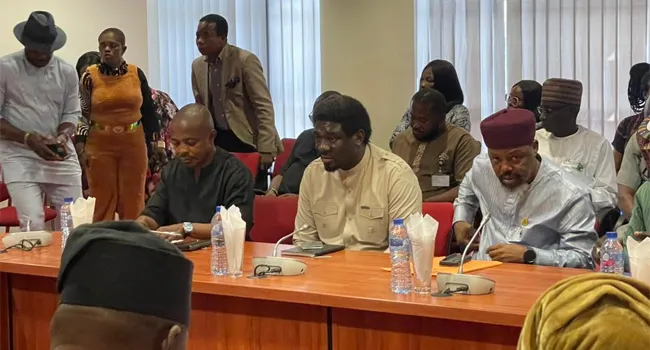
In an effort to avert a nationwide strike scheduled for October 3, the Federal Government has initiated discussions with organised labour at the Aso Rock Presidential Villa in Abuja. This meeting, orchestrated by the Chief of Staff to the President, Femi Gbajabiamila, has drawn the participation of several ministers. Last Tuesday, leaders of the Nigeria Labour Congress (NLC) and the Trade Union Congress of Nigeria (TUC) jointly declared their intent to commence an indefinite strike on October 3. Following a resolution of their internal differences, which led to a two-day warning strike by the NLC without the participation of TUC, the unions also called upon their state chapters to mobilize for protests across the nation. Two days later, during a meeting of the National Executive Council chaired by Vice President Kashim Shettima, a plea was made to the organised labour to reconsider their planned strike action. Plateau State Governor, Caleb Mutfwang, who addressed reporters at the Presidential Villa last Thursday, appealed to the leadership of organised labour to exercise patience and allow more time for dialogue. Mutfwang revealed that the welfare of Nigerian workers would be a focal point in President Bola Tinubu’s inaugural Independence Day address to the nation on Sunday. In response to the plea made by the National Executive Council, the President’s Chief of Staff convened this meeting to resolve the ongoing industrial dispute with organised labour.

Independence Day: Benue Govt Purchases 100 Buses to Mitigate Subsidy Removal Effects

Independence Day: Benue Govt Purchases 100 Buses to Mitigate Subsidy Removal Effects

The Benue Government says it has procured 100 buses to be handed over to the Benue Links, the state-owned transport company to cushion the effects of the subsidy removal on petrol. Governor Hyacinth Alia stated this in a radio and television broadcast as part of activities to mark Nigeria’s 63rd Independence Anniversary in Makurdi. Alia said he was aware of the sufferings of the people following the removal of fuel subsidy and other harsh economic realities in the country. “Our good people of Benue, I share the pains most of you are going through; and I assure you that your resilience and patience would not be in vain as this administration continues to reposition, as well as strengthen our institutions for good governance. I want to assure you that succour is on the way. “In the meantime, we have purchased 100 buses to be handed over soon to Benue Links, the state-owned transport company, to provide affordable transportation to the public. “In addition, plans are underway to distribute N50,000 each, to market women across the state, to enhance their petty trade businesses. “Our lofty visions, policies and strategies for good governance cannot be achieved in a society bereft of security of lives and property,” he said.Alia added: “No society thrives in the face of wanton killings, kidnapping, banditry, communal conflicts, and so forth.“The independent anniversary is a moment for us to salute our heroes past. It took valour, sacrifice and cohesive nationalistic onslaught for them to actualise our country’s political freedom. “It is important to thank the Almighty God for preserving us amidst several storms, some of which at some point within the last 63 years, threatened our very own existence as a country.“While we reflect in retrospect, it is equally pertinent for us to examine where we are, and look to the brighter future that lies ahead of us, especially in a State like ours that possesses allthe potentials of peaking us in the comity of states.”

Shelve Planned Strike, Tinubu, Sultan Beg NLC, TUC

Shelve Planned Strike, Tinubu, Sultan Beg NLC, TUC

President Bola Tinubu has appealed to the labour unions to give government more time to address the issues bedeviling the country. The Nigeria Labour Congress (NLC) and the Trade Union Congress (TUC) have fixed October 3rd to embark on an indefinite strike following the removal of fuel subsidy by the Federal Government and the attendant hardship it has brought on Nigerians. Tinubu, who was represented by the Deputy Senate President, Sen. Barau Jibrin, at a public lecture to mark Nigeria’s 63rd Independence Anniversary on Friday in Abuja, announced that the Federal Government is determined to address the socio-economic challenges facing Nigerians. Whilst urging them to sheathe their swords “in the interest of the masses”, Tinubu said his government was doing everything within its power to bring succour to Nigerians. “I want to emphasise as well that this government is new and the government is doing all within its powers to make sure it brings succour to the entire people of this country. “Government has already gone ahead to provide N500 billion to states to cushion the effects of subsidy removal. The President enjoined members of the unions to consider dialogue as the best way to resolve the issues. “The Sultan also talked about the issue of strike by the NLC. Please, on behalf of the President and the entire government, this is not the time for strike. It is too early. “Please let’s dialogue, let’s get together, let’s understand ourselves and let us look at the prevailing situation in the country,” he said.  Earlier in his remark, Alhaji Sa’ad Abubakar, the Sultan of Sokoto and President-General, Supreme Council for Islamic Affairs (NSCIA), had appealed to labour unions to shelve the nationwide strike slated to commence on Tuesday. Abubakar urged Labour not to embark on the industrial action but continue to dialouge with the Federal Government. He emphasised the need for dialogue to find solutions to the issues “instead of embarking on a strike”. “I am an advocate of dialogue because strikes don’t solve problems; they make them worse. Our leaders must tighten their belt, the common man is suffering. “I don’t think this government will just decide to make life bad for the people; as leaders and elders, we will always call on stakeholders not to embark on journeys that will make life worse for the common man. “I don’t think government can take it upon itself to make life unbearable for the common man, let’s give them chance and see what they can do,” he said. According to him, strike will add more problems to the existing economic situation. “If people are on strike, there wouldn’t be electricity, water, hospital and transportation system. “Please, let’s reach out to our brothers and sisters who are clamouring to go on strike. They should have a rethink,” Sultan appealed.

No Going Back On October 3 Strike, NLC Insists

No Going Back On October 3 Strike, NLC Insists

The Nigeria Labour Congress (NLC) says it has reached no agreement with the Federal Government to call off the planned indefinite strike for October 3, insisting that the planned industrial action will still continue. Mr Benson Upah, Head of Information and Public Affairs in NLC said this in a statement on Thursday in Abuja. It would be recalled that the NLC and the Trade Union Congress (TUC) had at the end of the joint National Executive Council meeting declared an indefinite strike beginning from Tuesday to press home their demands. Upah was reacting to a statement allegedly issued by Mr Olajide Oshundun, Director, Press and Public Relations in the Ministry of Labour and Employment. Upah said there were some inconsistencies in the statement which include the proposed strike and the illegal occupation of the secretariat of the National Union of Road Transport Workers (NURTW). “Accordingly, we find it necessary to make clarifications. Firstly, we do not have any agreement with the government to suspend the planned strike action. “Neither do we have any date for a meeting with the government that may lead to the suspension of the proposed strike. “While we do not intend to demean or minimise the office of the Honourable Minister of Labour and Employment, this matter is beyond the Ministry. “This should have been obvious to them during our most recent meeting,” he added. He, therefore, commended the role played by the Minister of Labour and Employment, Mr Simon Lalong in securing the release of the executives of the NURTW from unlawful, illegal police detention. Upah added: “We take exception to the ministry describing these executives as factional leaders. “They were lawfully elected into office. We still find it necessary to advise the police and those elements behind their travails to desist from this despicable and shameful conduct. “They are advised to retrace their steps. If democracy is to be of meaning to us, then we should resist the urge or temptation for impunity. Enough is enough.”

Subsidy Removal Has Reduced Nigeria’s Fuel Consumption By 33% –Minister

Subsidy Removal Has Reduced Nigeria’s Fuel Consumption By 33% –Minister

The Minister of State for Environment, Kunle Salako, has said that the courageous decision by Bola Tinubu’s administration to remove fuel subsidy has reduced the country’s consumption rate by about 33 percent. Salako said on the sidelines of the 78th session of the UN General Assembly in New York, that the action has reduced the emission generated by petrol. “The singular action has reduced Nigeria’s consumption of petrol by 33 per cent, reduced the level of emission generated by Nigerians,” he said. “The courageous decision to remove subsidy from petroleum is furthering climate action by Nigeria. “I had highlighted this development in some of the meetings I attended or represented the President and at the meeting of Committee of African Heads of State and Government on Climate Change and at the meeting of Commonwealth Ministers of Environment and Climate. “Nigeria participated in the meeting of Committee of African Heads of State and Government on Climate Change where I represented President to pass a resolution to adopt the Nairobi Declaration for final vetting by the meeting of AU. “The first meeting of Commonwealth Ministers of Environment and Climate in which the Ministers decided to approach the 28th Conference of Parties in Dubai come late November to early December with common front of pushing for better financing for climate action. “I represented Nigeria at the meeting, and I established that President Bola Ahmed Tinubu by taking the courageous decision to remove subsidy from petroleum is furthering climate action by Nigeria. “It has also focused the attention of Nigeria at corporate and individual levels to renewable energy,’’ he said. Earlier in his statement delivered to the “High Level Event for Nature and People: from Ambition to Action”, on behalf of the President, Salako said achieving the world’s ambitious conservation targets, like 30×30, would require that we all do more to prioritise nature finance. 30×30 is a global target to protect 30 per cent of the planet for nature by 2030. “Last year, at COP15, the world agreed to fully close the nature finance gap and set a near term target of delivering at least $20 billion in international finance to the Global South by 2025. “Last month in Addis, African countries came together and issued a declaration that underscored the importance of these nature finance targets. “Nigeria would like to urge all countries to increase their efforts on this issue and to work with us to ensure that the world follow through on these crucial finance commitments. “This is our vision for the future, and we invite everyone to act and envision solutions that will preserve nature for future generations,’’ he said. According to him, as a responsible State Party to several Multilateral Environmental Agreements (MEAs), including the Convention on Biological Diversity, Nigeria is doing its utmost to promote transformation actions. The minister said that Nigeria was doing its best to promote transformations actions that are commensurate with the scale of the biodiversity crisis. “We are exerting these efforts within our own country in addition to supporting countries in our Sub-region to increase their capacity in this regard,’’ he said. In addition, Salako said that he attended Blue Leaders High Level Meeting, where in his statement, he said Nigeria was doing its best to promote transformation actions that were commensurate with the scale of the biodiversity crisis. He told the leaders that Nigeria was exerting these efforts within the country in addition to supporting countries in our Sub-region to increase their capacity in this regard. “This is an ambitious goal, a goal shared by the Blue Leaders and by ECOWAS countries, including Nigeria. “The high sea is an essential part of the marine ecosystem which plays critical role in maintaining the health of our planet and people. “Nigeria being the country with the longest coastline in West Africa understands the adverse effect of unregulated high sea and is therefore committed to the agenda of the ‘BBNJ’ Treaty. “Prompt ratification of the newly adopted high seas treaty is an essential means to reach this goal. We must urgently ensure that the treaty is ratified and implemented,’’ he said. He announced that through Nigeria’s rallying efforts, the 55 member States of the African Union have reached a consensus to support ratification of the earliest feasible date, the new international ocean treaty for the high seas, as enshrined in Addis Ababa Declaration. The declaration was adopted at the 19th ordinary session of the African Ministerial Conference on the Environment (AMCEN-19, August 2023). “Let us be bold for Oceans Conservation together and join African region to promptly ratify the new treaty,’’ he said.

Rising Oil Prices Good For FG, Bad For Nigerians, Says Rewane

Rising Oil Prices Good For FG, Bad For Nigerians, Says Rewane

Goldman Sachs has predicted oil price will likely rise to $100 again, citing lower production output from the Organization of Petroleum Exporting Countries (OPEC), amongst others. Chief Executive Officer of Financial Derivatives Company (FDC) Limited, Bismarck Rewane, says it will only increase revenue to governments but will not benefit Nigerians. “Globally, oil prices trade at $95/b and are projected to hit $100/b by year-end due to supply shortages. While government revenue, Federal Account Allocation Committee (FAAC) could increase in naira terms, Nigeria’s reliance on imported energy products (LPG, diesel, petrol and kerosene) amid a falling naira means higher food and transport costs, exacerbating inflationary pressures”, said Rewane in a statement Sunday. He said, these will be major considerations for the MPC at its next meeting, whenever that will be. Nonetheless, we expect the MPC to remain hawkish. Rewane in its FDC Prism Sunday however said, some form of looking inward could solve Nigeria’s economic woes. “Viable options would be improving the value addition of top agricultural traded products like cashew and cocoa, as well as mineral resources like steel. More importantly, Nigeria needs to show its political will, improve access, and encourage local businesses, particularly SMEs, to participate in the AfCFTA by removing non-tariff barriers, he said. Also meanwhile, oil and gas companies keep reporting meaty profits and investors are rediscovering their love of hydrocarbons. At the recent World Petroleum Congress (WPC) in Calgary, oil executives and government officials both warned against the continued push to discourage investment in new hydrocarbon production. “There seems to be wishful thinking that we’re going to flip a switch from where we’re at today to where it will be tomorrow,” Exxon’s chief executive said during the event. “No matter where demand gets to, if we don’t maintain some level of investment industry, you end up running shorter supply which leads to higher prices,” Darren Woods also said. This is exactly what we are currently witnessing in Europe and the United States. Because of the transition push, oil producers are being extra cautious with production growth. Also, they are prioritizing shareholder returns to keep shareholders on, so it pays for them to be cautious. In Europe, the supermajors are being squeezed by windfall profit taxes, activist pressure, and increasingly restrictive legislation, so they are turning elsewhere. Shell is tapping billions of potential barrels in Namibia, and Total is considering a $9billion commitment to oil exploration in Suriname. Meanwhile, Nigeria’s oil output could increase to 2.1 million barrels per day by December 2024 after the country secured $13.5 billion in investment pledges over the next twelve months from oil majors. The companies agreed to invest a total of $55.2 billion by 2030 – including the $13.5 billion over the next twelve months – to lift crude production, according to a statement from the president’s office.Nigeria’s oil output stood at 1.18 million bpd in August 2023, according to the Organisation of Petroleum Exporting Countries (OPEC), meaning production would nearly double by the end of next year. Nigeria is the top oil producer in Africa but large-scale oil theft has over the years cost the country billions of dollars, while dwindling investment in the sector has also curtailed output.The losses from theft and a lack of new projects have reduced oil exports sharply, eroding foreign currency earnings in Africa’s biggest economy.

Subsidy Removal: Infrastructure Bank To Provide Funding For CNG buses

Subsidy Removal: Infrastructure Bank To Provide Funding For CNG buses

As part of efforts to ease the hardship occasioned by the removal of petrol subsidy, the Infrastructure Bank has promised to provide funding for the Compressed Natural Gas (CNG) Mass Transit. According to the bank during a visit to the Permanent Secretary of Special Projects Dr. Okokon Udo Ekanem, part of the strategy will include collaborative efforts towards advancing sustainable infrastructure development. The team headed by Director in the Bank, Andrew Nweke, said the bank is committed to supporting the Federal Government in mitigating the effects of fuel subsidy removal through the promotion of Compressed Natural Gas (CNG) Mass Transit. According to him, the bank had dedicated funds towards financing CNG mass transit. Compressed Natural Gas (CNG) has emerged as a cleaner and more sustainable alternative to conventional fuels, offering significant economic and environmental benefits. He said TIB’s proactive stance in this endeavour aligns with its broader mission of fostering sustainable infrastructure development in Nigeria. Also speaking, the Acting Managing Director of the Bank, Mrs. Nkiru Chime, highlighted some of TIB’s achievements in the transport sector through the Move Nigeria Scheme (MNS). She said the bank has played a pivotal role in facilitating economic progress, adding that since the inception of the MNS, ithas disbursed about N47bn, resulting in the distribution of over 4,500 vehicles across all geopolitical zones. The scheme, she added, has created over 10,000 employment opportunities consequently and has contributed to the Gross Domestic Product through the transport sector. The transport sector contributed about 1.35 per cent to Nigeria’s GDP in the second quarter of this year. Chime added that the Move Nigeria Scheme (MNS) has become synonymous with TIB’s commitment to transforming the nation’s transportation landscape. By facilitating access to financing and resources, she said MNS has empowered numerous entrepreneurs and businesses to acquire vehicles, thereby stimulating economic activities across various sectors. According to her, the decision to allocate funds for the promotion of CNG Mass Transit underscores TIB’s responsiveness to the evolving energy landscape and its dedication to environmentally friendly and cost-effective transportation solutions.