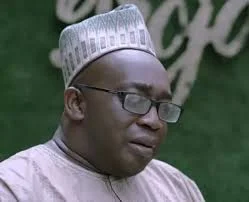
We support You, Tinubu assures Okonjo-Iweala

President Bola Tinubu has assured Dr. Ngozi Okonjo-Iweala of the support of the government and people of Nigeria following her re-election as the Director-General of the World Trade Organization (WTO).  The development economist, who made history in 2021 as the first African and the first woman to lead the WTO, will continue in her role for another four years beginning September 1, 2025.  President Tinubu expressed his pleasure at Dr. Okonjo-Iweala’s unanimous reappointment, highlighting it as a testament to the global trust in her leadership.  He recognized her dedication to advancing multilateral trade and fostering sustainable global economic growth.  Her work has played a key role in strengthening the WTO’s position as a vital organization for inclusive development. PLEASE READ: Nigeria to Conduct Population Census in 2025 In his statement, Tinubu emphasized Nigeria’s commitment to supporting the WTO’s mission for a fair and equitable trading system.  As a member of the WTO, ECOWAS, and the African Continental Free Trade Area (AfCFTA), Nigeria will continue to back the efforts to ensure that trade practices are inclusive and beneficial for all nations.  He assured Dr. Okonjo-Iweala of Nigeria’s ongoing support as she moves forward with her reforms aimed at improving global trade relations and cooperation.

Despite rejection by Neighbours, Nigeria Seals €300m Deal with France

Even as former colonies disengage from her choking hold, President Tinubu is in a warm embrace with France, signing, on Thursday in Paris, two agreements worth over €300 million. Presidential resources reveal that the deal is aimed at advancing critical infrastructure and food security in Nigeria.  The agreements were formalized during President Bola Tinubu’s state visit to France, which included a key economic forum at the Palais des Élysée in Paris.  The event brought together leaders from both countries, including business executives, governors, and top officials, to discuss the future of their partnership. The agreements focus on several key sectors, including agriculture, transportation, healthcare, and renewable energy, with the goal of addressing pressing challenges and fostering sustainable growth across Nigeria. Nigeria’s Minister of Finance, Wale Edun, and French Minister of Economy, Finance, and Industry, Antoine Armand, signed a Letter of Intent outlining plans for collaboration in these critical areas.  The package will be distributed across Nigeria’s geopolitical zones, ensuring that all regions benefit from the financial and technical assistance. READ ALSO: Game Up, Yahaya Bello is Abandoned by Beauty Queens and Movie Stars – Shehu Sani In addition, the financial cooperation will support Nigeria’s ambitious development projects in urban infrastructure, MSMEs, and food security.  As part of the deal, the French Development Agency (AFD) committed to funding agro-logistic hubs and other initiatives to improve energy access, agriculture, and small business support.  The cooperation will also focus on enhancing educational opportunities, especially in STEM fields, to better prepare Nigeria’s workforce for future challenges.

Tinubu’s Tax Reform Bills: The Beginning of Fiscal Federalism?

Not a few notable figures from the northern part of the country have expressed vehement opposition to the four tax reform bills proposed by President Bola Tinubu. Apart from the resistance to the piece of legislation by senators Abdul Nigi and Ali Ndume from Bauchi and Borno States, respectively, the greatest salvo yet, was delivered by Governor Babagana Zulum of Borno state who has raised alarms about the potential consequences of the proposed tax reform bills.  Governor Zulum warned that the legislation, advancing rapidly through the National Assembly, could severely harm the economic prospects of the North and other regions of Nigeria. He compared the swift legislative action on the tax bills to the prolonged process of the Petroleum Industry Bill, which took nearly two decades to pass.  He cautioned that the bills, if enacted, could hinder development efforts, including the ability to pay salaries in Northern states. The governor argued that the tax reforms would disproportionately affect certain regions, particularly in the North, as well as parts of the South West and South East. He expressed concern that the bills were being pushed through with little regard for their long-term effects on the country’s future. Zulum’s opposition may have been informed by the general intent of the bills which represents a significant shift in the manner of the distribution of VAT revenue. The new laws tend to mark the beginning of the much clamoured call for fiscal federalism as it provides for the allocation of VAT revenues based on the states where goods and services are consumed rather than pooling them centrally for redistribution as done for proceeds from the sale of oil and other national assets. Mr. Zacch Adedeji, the Federal Inland Revenue Service (FIRS) Chairman argued at a forum that the proposed sharing arrangement aligns VAT with its nature as a consumption tax. On the contrary, the north being largely agrarian, produces most cereals and other produce for the food and industrial raw materials needs of the country. Yet they do not benefit from VAT, even though the finished products are taxed. It is this mismatch or anomaly that may have been inflaming passions. Governor Zulum, however, emphasized that his opposition to the bills did not equate to opposition to the current administration but rather a plea for reconsideration.  He also stated that some individuals may be misleading President Bola Tinubu into thinking the North does not support his government.

Tinubu Appoints Jami’u Abiola as Senior Special Assistant  

In an unending orgy fresh appointments, President Tinubu’s bloated cabinet bulges further with the naming of Jami’u Abiola as another assistant. The son of the late politician and businessman, Chief MKO Abiola, Jami’u steps in as Tinubu’s Senior Special Assistant on Linguistics and Foreign Matters.  The appointment, effective from November 14, 2024, was announced by Segun Imohiosen on behalf of the Secretary to the Government of the Federation.   READ ALSO: Federal Government to Continue Borrowing Despite Rise in Revenue The role aligns with the guidelines of the Certain Political and Judicial Office Holders (Salaries and Allowances, etc) Act 2008, as amended.  Before this position, Jami’u served as Special Assistant on Special Duties in the Office of the Vice President.   In his new capacity, Jami’u will collaborate with the Federal Ministry of Foreign Affairs to apply his expertise in handling foreign matters and linguistic affairs.

National ID: NIMC to Launch New Card with New Opportunities for Nigerians

The National Identity Management Commission (NIMC) has disclosed that it has completed arrangement to issue new national identity card with capabilities for financial access and job opportunities. The new multipurpose identity card will offer Nigerian citizens access to key government services, including social interventions, and provide an easier pathway to secure loans through recognized financial institutions. READ ALSO: Nigeria’s GDP Growth Rate Contradicts Harsh Realities – CUPP The card’s integration into the financial system will support efforts to bring more Nigerians into the formal banking sector, addressing long-standing gaps in financial inclusion.  By linking to a person’s financial history, the card will also help generate reliable credit scores, allowing users to gain access to loans with financial institutions and government programs. Additionally, the new ID card will play a critical role in employment. It will be required for individuals applying for both public and private sector jobs, ensuring that job seekers are verified citizens with transparent records.  Employers will be able to verify applicants more confidently, reducing the risks associated with hiring. The NIMC has partnered with banks nationwide, making it possible for Nigerians to easily apply for the card at local branches.  READ ALSO: More Drama as Yahaya Bello’s Fraud Trial Resumes With the process decentralized, citizens can expect to obtain their cards without hassle, which will soon be available to all eligible Nigerians.

Omokiri Has Outdone Himself With His Economy On Full Rebound Statement

Wale Alonge, Dadeland, Miami, US-based Nigerian writer and political commentator.

This most valuable asset of a policy analyst, a social influencer and political commentator is credibility. No one respects a lapdog whose mouth is in his principal’s ass leaking his or her sh!t. This Omokiri guy has built a reputation as an unapologetic supporter of the president. Many allege that he has in fact turned it into a cottage industry from which he is smiling all the way to the bank. This is mere speculation but a reasonable one at that. No doubt the president’s reform policies were a much needed tough chemotherapy for the unsustainable Nigerian economy that was on the throe of total collapse from the metastasis of corruption, budgetary indiscipline, oil subsidy and an artificially juiced foreign exchange regime that were bleeding life out of the economy while a few were profiteering like bandits. However it is beyond ridiculous and absurd for anyone to say that the Nigerian economy is on full rebound. That is beyond the pale for even an Omikiri. How ridiculous can Omokiri get to include the statistics of the number of life-streaming of Wizkid’s recent album as a metric for the rebound of country’s economy. Spotify is a global music streaming entity whose subscribers are global. By the way,not all Spotify subscribers are paid subscribers. Spotify offers free subscriptions with advert. I am also a great supporter of President Tinubu, not because he has already turned the economy around. Only time will tell. The legacy of most transformative leaders often come after their tenure has long elapsed when historians look back. That is likely to be the case for President Tinubu who I strongly believe history will judge as one, a transformative leader, if he remains committed to his reform agenda putting the interest of the country above every other consideration. I support him for his courageous leadership. Every president before him knew that our economy was heading toward the abyss of the apocalypse with endemic corruption, budgetary indiscipline, the oil subsidy scam and juicing up our foreign exchange to enrich the well connected while bleeding out and hemorrhaging our economy. They were just too lily-livered to pull the plug. They chose to prioritize their personal political expediency over the future of this country and of generations yet unborn. President Tinubu is not a saint. No one qualifies for the sainthood after playing in the mucky water of Nigerian political pigs pen. He however, has shown the courage to do the needful to safe the country. READ ALSO: NNPCL Uncovers Plot by Mischief Makers to Demarket PH Refinery President Tinubu needs to call Omokiri to order and let the country know that he has his three-person presidential communication team and that Omokiri is not one of them. Like I have said before, there is no better spokesperson for this president than himself. As he busies himself choreographing the reform agenda, he must combine it more and more with his equally important role as encourager, motivator, truth-teller and empathizer-in-chief. The communication role of great leaders is often an underrated but often a most important function. Nigerians know how they feel. They live daily in the reality of the painful economic reform agenda. No amount of sweet-talking Omokiris and his unhinged propaganda machine can make them unfeel their daily reality. It is the job of the president and his team to continue to encourage, reassure and motivate the citizens by their soothing words, their action, and life style of prudence to keep holding on, bear the pain and that a bright glorious future lies behind the dark gloomy cloud. Adewale Alonge, PhD, is Founder & President, Africa Diaspora Partnership for Empowerment and Development. www.adped.org

PH Refinery: Tinubu Celebrates Restart, Urges Action on Others

The jinx has been broken, President Bola Tinubu congratulates the Nigeria National Petroleum Company Limited (NNPCL) for restarting the old Port Harcourt refinery, 28 years after the nation’s refineries topped production. As of today, November 26, 2024, the loading of refined petroleum products from the facility shall commence.  This achievement follows the efforts of former President Muhammadu Buhari, who initiated the refinery’s overhaul, and was supported by the African Export-Import Bank’s financing. The President also commended NNPCL’s Group Chief Executive Officer, Mele Kyari, for his leadership in overcoming obstacles during the process.  He called on NNPCL to quickly focus on reviving the Warri and Kaduna refineries, alongside the second Port Harcourt plant, to boost domestic production and strengthen Nigeria’s position as an energy hub.  READ ALSO: This move, along with private sector involvement, is expected to enhance the country’s refining capacity. President Tinubu reaffirmed his commitment to restoring Nigeria’s refineries, aiming to address the longstanding issue of the country’s reliance on imported refined products despite being a major oil producer.  He also emphasized the importance of integrity, accountability, and focus in the execution of national projects, aligning with his administration’s Renewed Hope Agenda for economic prosperity and energy security. The old Port Harcourt refinery, situated in Nigeria’s oil-rich Niger Delta region, has been in operation since 1965, but later became moribund for several years.

FG To Continue Borrowing Despite Rise In Revenue

Despite the appreciable rise in revenue, the Federal Government has insisted that borrowing remains necessary to fund key policies.  Finance Minister Wale Edun and Budget Minister Atiku Bagudu disclosed this at a recent Senate meeting, where they outlined plans for managing Nigeria’s fiscal challenges in the coming years. Edun recognized the improvements in the country’s revenue collection but emphasized that these gains would not be enough to fully fund the government’s ambitious development agenda. He noted that additional loans would be required to support a range of initiatives, including infrastructure projects and essential social services such as healthcare and education. In particular, Edun highlighted the need for borrowing to address social safety nets designed to assist the most vulnerable Nigerians.  READ ALSO: EBONYI STATE GOVERNOR SUSPENDS TWO COMMISSIONERS, OTHERS He stressed that the government’s borrowing strategy would be aimed at ensuring sustainable economic growth, with a clear focus on meeting both immediate and long-term needs. Bagudu, for his part, pointed out that the government’s borrowing plans are designed to cover a deficit in the ₦35.5 trillion 2024 budget, which includes provisions for tackling poverty and promoting economic productivity.  He also referenced Nigeria’s long-term development goals, including increasing the GDP per capita to $33,000 by 2050, a vision that will require careful financial planning and, at least in the short term, more borrowing. While this strategy reflects the government’s determination to push forward with its development goals, it also raises concerns about the sustainability of Nigeria’s increasing national debt and the potential impact on future generations. Analysts argue that such borrowing must be committed to funding projects with capacity for repaying the loans.

VAT, vassal states and restructuring (2)

“Almost two years since his hare-brained twin policies, market forces are yet to fully determine the prices of petroleum products and the price of the Naira… The irony right now is that there are claims that the country is turning the corner, and that good days are on the horizon. Tinubu says so.” THERE are too many things wrong with the regime of Nigeria’s president, Alhaji Bola Ahmed Tinubu. For 18 months since the advent of the administration, it has been a case of stumbling from one problem to the other. The tragedy is that almost all the challenges that this regime has been grappling with were self-inflicted. It started off with an ill-conceived petrol subsidy removal, and it followed that almost immediately with allowing the national currency, the Naira, to be floated. Both policies turned out to be disastrous because the so-called petrol subsidy payment persisted in an opaque manner, and subsidizing the Naira did abate. Recently, the state oil corporation, the Nigerian National Petroleum Company Limited (NNPCL) insisted that it will continue to import petroleum products in spite of the existence of a domestic producer, Dangote Refinery and Petrochemical Company, Lagos, which said that it has the capacity to satisfy domestic consumption for petroleum products. Dangote’s 650,000 barrels of crude oil per day production should on full stream produce 50 million litres of petrol and 15 million litres of diesel per day. READ ALSO: THREE TRAGICALLY KILLED AFTER GOOGLE MAPS DIRECT CAR ONTO UNFINNISHED BRIDGE Experts estimate that petrol consumption in Nigeria should not exceed 35 million litres per day. But corruption puts it much higher, sometimes for as high as 70 million litres per day. This outrageous figure is not strange because Nigeria is widely acknowledged as a crime scene – a country hurting in the hands of its supposed care-givers. Private importers who work at the behest of collaborators inside the government have been known to ‘import’ shiploads of petroleum products without the ships being sited anywhere near the country’s territorial waters, not to talk of discharging any products. But such ‘importers’ file claims with excellent shipping documents, and collect hundreds of millions of dollars from the public treasury. NNPCL does the same. Then a cartel hijacks the little litres of petrol that were in truth brought in, ferrying such to neighbouring countries in 33000-litre trucks and in broad daylight where they make a kill. Nigeria has clearly delineated borders with its neighbours. We have all manner of tax-payer paid government officials at those borders. But the trade booms. Currently, an investigative reporter has been reporting on the daily massive smuggling of 50kg bags of rice into the country with the active involvement of immigration top shots. He has been doing so with video evidence. Last week the journalist reported that the leader of the smugglers was accorded a red carpet reception at the Abuja headquarters of the Nigeria Immigration Service. His reports have not been disputed and nothing has happened to the economic saboteurs. Back to the issue at hand. Alhaji Tinubu takes responsibility for his misadventures on petrol and Naira. Almost two years since his hare-brained twin policies, market forces are yet to fully determine the prices of petroleum products and the price of the Naira. Whilst the NNPCL moderates the prices of petroleum products especially petrol by importing and fixing different pump head prices for different parts of the country, the Central Bank defends the Naira through regular sales of the United States dollars to the bureaux de change, and through the aggressive mopping up of  Naira in circulation. The policies are obviously not working. The price of petrol at over N1000/litre is not sustainable. It has ruined the economy and will inflict more damage with the regime’s insistence that it will stay the course. Nigerian families are worse off. Bloomberg, an American news organization reported last week that about two -third of Nigerian households can barely manage to feed once a day. And the quality of the meal is suspect. Their report was drawn from the latest statistics from the Nigeria’s National Bureau of Statistics (NBS). PLEASE READ: NIGERIA, THREE OTHER COUNTRIES GO LIVE ON ECOWAS E-Certificate The irony right now is that there are claims that the country is turning the corner, and that good days are on the horizon. Tinubu says so. The central bank governor says the same. Finance minister who is also the coordinating minister for the economy sees the same signs of economic recovery. Even the national security adviser, yes the NSA, who should have his hands full with widespread insecurity pervading the land, parrots the same message of visible economic turn around. But they are the only people who see economic recovery on the horizon. And they all share one thing in common – they all binge on the public treasury. I wager that none of them had been to a gas station to buy either petrol for the government SUVs (armour- plated and bomb-resistant brands) that they are driven in or to purchase diesel to fire government – owned electricity generators in their residences which also are built and tastefully furnished with taxpayers money. It is not strange, therefore, that they are separated from reality and the daily grind of the majority of Nigerians. The case of the NSA is particularly painful and pathetic. Daily, he joins the security agencies including the secret police otherwise called the Directorate of State Services (DSS), the regular Police, the Civil Defence Corps, the Armed Forces, among others, to run political commentaries on the state of the country. In place of combating insecurity, what the NSA does is to warn non-state agents terrorizing Nigeria to know that Tinubu is not known to lose any battle. Is he for real? The man cannot be, and should not be, a national security adviser even in a banana republic. What our rulers are doing is beyond talking up the economy, they are deliberately deceiving Nigerians. Any sign of economic recovery must

Tinubu Reshuffles University Leadership Over Alleged Irregularities

President Bola Tinubu has ordered a leadership overhaul at two federal universities following allegations of irregularities in appointments and governance.   At Nnamdi Azikiwe University, Awka, Anambra State, the President removed Vice Chancellor Prof. Bernard Ifeanyi Odoh, Registrar Mrs. Rosemary Ifoema Nwokike, and dissolved the institution’s Governing Council.  The council, chaired by Ambassador Greg Ozumba Mbadiwe, was accused of appointing an underqualified vice chancellor without adhering to procedural guidelines.  Reports suggest that the council’s actions sparked tensions between the university’s Senate and its management.   Similarly, Tinubu dismissed Engr. Ohieku Muhammed Salami, Pro-Chancellor and Chairman of the Governing Council of the Federal University of Health Sciences, Otukpo, Benue State.  Salami faced allegations of misconduct, including the unlawful suspension of the Vice Chancellor and threats directed at officials of the Federal Ministry of Education, despite warnings to reverse his actions.   The Federal Government reaffirmed its commitment to maintaining adherence to laws governing educational institutions, urging university councils to focus on fostering stability and upholding standards in their operations.