President Tinubu Arrives Lagos for Christmas, New Year Holidays

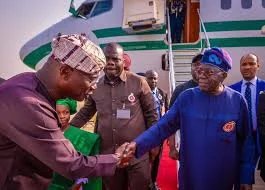
President Bola Ahmed Tinubu touched down in Lagos on Wednesday, December 18, at exactly 3:23 pm, marking his arrival for the Christmas and New Year celebrations. He landed at the Presidential Wing of the Murtala Mohammed International Airport after fulfilling his duties in Abuja, where he presented the 2025 Appropriation Bill to a joint session of the National Assembly for consideration. Upon his arrival in Lagos, the president was warmly welcomed by a host of dignitaries, including Governor Babajide Sanwo-Olu, his deputy, Dr. Femi Hamzat, as well as members of the state cabinet. In addition, leaders of the ruling All Progressives Congress (APC) in Lagos were present to greet the president. The festive season has brought President Tinubu to his home state for a well-deserved break following his recent busy schedule in the nation’s capital.
John Mahama Visits Tinubu Ahead of Inauguration

John Dramani Mahama, Ghana’s president-elect, made a courtesy visit to Nigeria’s President Bola Tinubu at the Presidential Villa in Abuja on December 16, 2024. The meeting, which took place on Monday, was part of Mahama’s visit to Nigeria before his official inauguration as Ghana’s president on January 7, 2025. Mahama, who emerged victorious in the 2024 Ghanaian elections, was welcomed by President Tinubu and his wife, First Lady Oluremi Tinubu, who also appeared in the photos shared on social media. ALSO READ: FG’s N120bn Bond Auction Begins Today The images, posted by Olusegun Dada, Tinubu’s special assistant on social media, captured the cordial interaction between the two leaders. Mahama’s political career includes serving as Ghana’s vice president from 2009 to 2012. Following the untimely death of President John Atta Mills in 2012, Mahama ascended to the presidency, where he served until 2017.
SYRIA AND NIGERIA AT HISTORY’S CROSSROADS

“Syria’s a classical case of a country that first died in the hearts and minds of its people long before the erosion started manifesting in the physical. It was decades in the making and it was obvious except to those who benefited from the rot. It is about the same thing in Nigeria with the country falling apart in the eyes of everybody except in the eyes of the ruling elite. The demise of a country begins with the erosion of its people’s sense of identity, purpose and connection to the homeland.“ SYRIA is an enigma. It has always been from ancient times including the era preceding the writing of the Holy Bible by some inspired persons. We will have to contend with time and space if we tried to explore the enigmas of that country in detail. In spite of its current travails, Syria remains a mystery notwithstanding its rich history, cultural diversity, and fractious, indeed, tumultuous politics. It might as well be that the aforementioned traits are the reasons for the mystery of that Middle East country. Well before Damascus, the capital of this historic country fell last week to the many rebel groups that besieged it, it had been losing territory inch-by-inch and day-by-day. But the loss of territory on its own does not necessarily lead to the demise of a country or to a regime change. A country or a regime dies faster when there’s a disconnect with the citizens. That was the lot of Bashar al-Assad who suddenly fled from Syria after his family had ruled the country with iron fists for more than half a century. Syria’s a classical case of a country that first died in the hearts and minds of its people long before the erosion started manifesting in the physical. It was decades in the making and it was obvious except to those who benefited from the rot. It is about the same thing in Nigeria with the country falling apart in the eyes of everybody except in the eyes of the ruling elite. The demise of a country begins with the erosion of its people’s sense of identity, purpose and connection to the homeland. The clear implication is that the decline of a country is not just a physical or economic phenomenon, but a psychological and emotional one too. There’s no doubt that a country’s strength and resilience are deeply rooted in the collective consciousness of its citizens. When people lose faith in their country, its institutions, and its values, the very fabric of that country is bound to unravel. This was, probably still is, the case with Syria. And it speaks to the situation in Nigeria today. Is our country at risk, given the manifest disconnect between Nigeria’s ruling elite and sections of its population, especially the majority of the younger generation who feel disaffected by the direction the country is headed? Is implosion inevitable given the obduracy of our rulers? Can it yet be headed off? Is anything being done now or has anything been done in the last 25 years of the fourth republic to salvage the country or are more grievous things being done to savage it? Time will tell. “…when a country dies in the souls of its citizens, as appears to be the case of Syria under the successive Assad family regimes, and as it seems to be applying to Nigeria, it leads or can lead to a range of negative consequences. It can trigger social unrest and violent agitations as happened in Syria that have led to the fall of the regime and an uncertain future for the country. Citizens become increasingly frustrated, resort to protests, unrest and violence as Nigeria has been witnessing…To many fellow citizens, the Renewed Hope mantra of the Tinubu regime is a bad joke.” Let’s attempt to speak to why the fall of the Assad regime in Syria and the uncertainty about the future of that country should be of concern to Nigeria, Nigerians and their rulers. As in Syria but for different reasons, there’s a significant and growing loss of national pride because many Nigerians no longer feel a sense of pride and ownership of their country. It’s increasingly becoming a case of ‘us versus them’. As in Syria also there were things that hitherto held our people together in the past. Now there’s a disconnect from whatever is left of the things that could be considered as values and principles that used to define us. A significant portion of Nigerians are emotionally detached from the country, including from its history, culture, and traditions. You may do well to ask that teenager or tweenager (children in their 20s) next to you who is not an heir to a plum political office or to private wealth what they feel about our country. Kemi Badenoch, leader of the opposition Conservative Party in the United Kingdom, is a typical diaspora Nigerian who holds the citizenship of another country. She has been in a spat with Nigeria’s vice president Kashim Shettima over comments she made about Nigeria. She represents a typical diaspora Nigerian – acute frustration with the state of our country. It’s baffling that Shettima chose to interject in Kemi’s expression of frustration. My people would say that ‘onaghi adinma ka madu di ka ihe ejiri ko ya onu’. You don’t need to behave like a mad person just because someone said that you are mad. The only way Shettima can shame Kemi is for him to be an example of altruistic leadership in our country. For now we’ll ignore Kemi’s expressed Yoruba bonafide and her slur in distancing herself from a part of the country and their sectarian contribution to Nigeria’s lingering insecurity. Could this be a pointer that Nigeria is actually dying in the hearts and minds of its citizens? And when a country dies in the souls of its citizens, as appears to be the case of Syria under the successive Assad family regimes, and as
President Tinubu urges ECOWAS colleagues to emulate Ghanaian peaceful election

In a humble act of statemanliness President Bola Tinubu, the beneficiary of the highly discredited 2023 Nigerian election has commended Ghana’s recent peaceful elections, describing it as a model of democratic maturity. President Tinubu who spoke while opening the 66th Ordinary Session of ECOWAS on Sunday in Abuja, urged other African leaders to draw inspiration from the Ghanaian example. “I urge all of us in the region to learn from this good democratic practice and prioritise our country’s national unity to ensure political stability of the region so that this manner of peaceful transition becomes the culture of democracy not only in West Africa but also in the entire Africa continent,” he stated. “Despite the challenges of interrupted democratic governance in some West African countries, the region has continued to record democratic gains. Just a week ago, on December 7 2024, Presidential and Parliamentary elections took place in Ghana, the second-largest democracy in our region,” Mr. Tinubu reminded the gathering of Heads of State of Governments of West African countries of which he is the chairman. PLEASE READ: Government Raises Duty Tour Allowances, Others for Public Officials “One of the leading candidates who happens to be the incumbent Vice President, His Excellency Mahamudu Bawumia, together with the leadership of the ruling party, New Patriotic Party (NPP), conceded defeat and accepted the outcome of the Presidential election by congratulating the President-elect, His Excellency, John Dramani Mahama of National Democratic Congress (NDC) for his victory, even before the official announcement of the election results. “This gesture, as it happened in Nigeria in 2015, demonstrates political maturity and respect for the will of the people of Ghana,” President Tinubu stressed. In a press statement, the Special Adviser to the President on Information & Strategy, Mr. Bayo Onanuga praised President Akufo-Addo for the electoral feat. President Tinubu, in his second term as ECOWAS Chair, highlighted achievements from his first term, to include strides in regional integration, economic growth, conflict resolution, and counterterrorism efforts. He said the ECOWAS Trade Liberalisation Scheme (ETLS) and Common External Tariff (CET) have strengthened trade and economic cooperation. “Similarly, regional infrastructure projects such as the West African Gas Pipeline, the West Africa Power Pool, and modernising key border posts with advanced equipment and joint border operations utilising state-of-the-art technology have significantly enhanced connectivity and promoted greater regional integration. “Furthermore, our efforts in stabilising our region through peacekeeping missions currently in the Gambia and Guinea Bissau, as well as previous operations in Liberia and Sierra Leone, have demonstrated our capacity to act decisively in the face of adversity. President Tinubu said the ECOWAS Regional Action Plan on the Fight Against Terrorism has provided a comprehensive framework to combat violent extremism and enhance regional security. As ECOWAS nears its 50th anniversary in 2025, President Tinubu urged member states to recommit to the bloc’s founding ideals of economic integration, peace, and prosperity. “As a regional community, we must maintain our fundamental responsibility: to protect our citizens and create an enabling environment where they can prosper. “As leaders, we know that security is not a luxury but a necessity. Equally, enhancing the living standards of our people is not an aspiration but an obligation,” he said. The Presidents of Cote d’Ivoire, Ghana, The Gambia, Guinea Bissau, Liberia, and Senegal attended in person alongside the Vice President of Sierra Leone, the Finance Minister of the Benin Republic, the Minister of foreign affairs of Togo, and the Ambassador of Cape Verde to Nigeria. ALSO READ: Zamfara Bombungs Linked to Lakurawa Terrorists The President of the ECOWAS Commission, Dr Omar Touray, commended Nigeria for paying 100 per cent of its community levy for 2023 and substantial remittances for 2024, reflecting Nigeria’s leadership and commitment under President Tinubu. “For the first time in 19 years, Nigeria has paid 100% of its community levy from 2023. I’m therefore pleased to announce that on Friday, December 13, 2024, Nigeria paid N85 billion and $54 million, representing 100% of the 2023 levy and the 2024 levy up to July 2024. “We all agree that this payment underscores the leadership and commitment of President Tinubu, the government and the people of Nigeria to our community. At a more personal level, it represents confidence in the management I have been privileged to lead since 2022. He encouraged other member states to meet their financial commitments diligently.
Sanusi Speaks On Sealing Of Kano Palace By Security Operatives

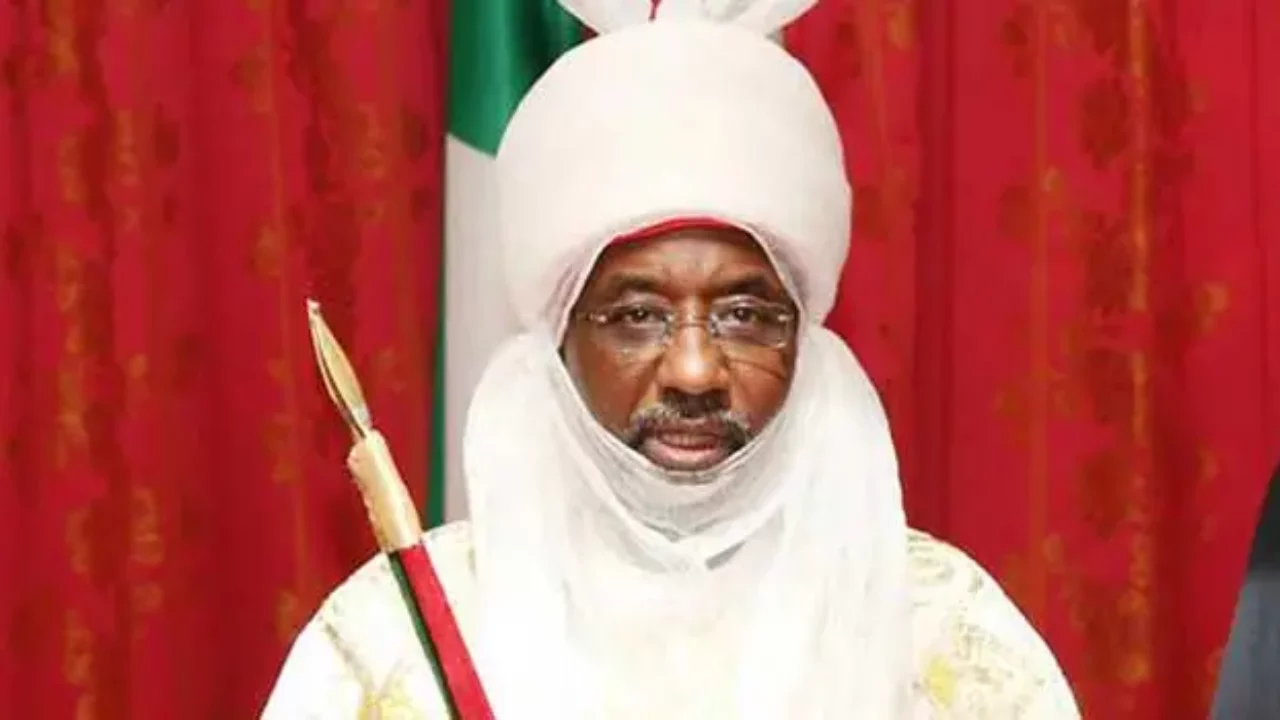
The 16th Emir of Kano, Muhammadu Sanusi II, has expressed confusion over the recent blockade of the Gidan Rumfa Palace in Kano, which took place last week. Despite the police and Department of State Services (DSS) blocking the entrance and restricting movement, the reasons for the action remain unclear. Sources revealed that the blockade might be linked to the appointment of Munir Sanusi as the new District Head of Bichi or a planned discussion on controversial tax reforms. PLEASE READ: FCCPC Uncovers Smuggled Sub-standard Sugar in Nigeria The Kano State Government has criticized the Federal Government for the security action, but the Emir emphasized that it should not distract from the important affairs of the palace. Speaking to a delegation from Bichi, Sanusi reassured the people that the event would be rescheduled, and the District Head would be installed peacefully. He urged Bichi residents to remain calm and peaceful, reflecting on his personal connection to the area where he spent much of his childhood vacations. Sanusi, who has deep ties to the Bichi community, highlighted the area’s peaceful nature and strong educational and religious values. He also mentioned the respect the people have for the Wambai Abubakar, further reinforcing his belief in the unity of the Bichi people.
Reps Push for Urgent Action on Cash Scarcity

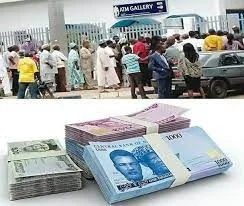
Even as analysts wonder if this was some way of combating spiraling inflation by cutting currency in circulation, the national assembly has urged the Central Bank of Nigeria to take urgent steps to curtail biting cash scarcity. To be precise, the House of Representatives, yesterday called on the apex bank to take swift action to alleviate the growing economic burden on citizens. During a plenary session, lawmakers emphasized the disruptive effects of the crisis, which has hindered access to funds for daily transactions, leaving many Nigerians stranded. PLEASE READ: Shettima Knocks Badenoch for Nigeria Comment Rural communities, particularly reliant on cash transactions, have been hardest hit, as they lack alternatives like digital payments. The current situation stems from a 2022 CBN directive limiting cash withdrawals to N500,000 for individuals and N5 million for corporate entities. Despite this policy, banks reportedly cap withdrawals at much lower amounts or fail to disburse cash entirely. Meanwhile, Point of Sale (POS) operators seem to have unrestricted access to cash, often reselling it at inflated rates. Lawmakers voiced concerns about the disconnect between commercial banks and POS agents and called for immediate intervention to prevent the situation from escalating, especially with the festive season approaching. To address the issue, the House has tasked its Committee on Banking Regulations with investigating the cash shortage and reporting back within a week, while directing the CBN to resolve the scarcity urgently.
Tinubu Revises South East Development Commission Board

President Tinubu has presented a revised list of the leadership nominations for the South East Development Commission for Senate approval. The reshuffle, revealed on December 6, replaces several key nominees while retaining some from the initial lineup. Notable changes include Dr. Emeka Nworgu replacing Emeka Atuma as chairman. The board now features Stanley Ohajuruka as Executive Director of Finance, Toby Okechukwu as Executive Director of Projects, and Chief Sylvester Okonkwo as Executive Director of Corporate Services. READ ALSO: Tax Reform Bills: North Restrategises as Regional Crisis Looms Two new executive directors, Chidi Echeazu and Dr. Clifford Ogbede, have also joined the board. While the managing director position remains with Mark C. Okoye, former board member Donatus Eyinnah Nwankpa has been removed. The revised list increases the board’s size from 15 to 16 members, signaling a broader scope for development initiatives. The nominations await Senate confirmation, marking the next phase in establishing the Commission as a platform for regional growth.
Tinubu Makes key Appointments in Education, Devp’t Agencies

President Bola Tinubu has announced leadership changes in three key educational and development agencies likely to placate sectional interests. He has named new heads for the National Universities Commission (NUC), Nigerian Educational Research and Development Council (NERDC), and New Partnership for Africa Development (NEPAD). Additionally, Fatima Umaru Shinkafi’s role as Executive Secretary of the Solid Minerals Development Fund (SMDF) has been renewed. Prof. Abdullahi Yusuf Ribadu, an expert in veterinary reproduction, will now lead the NUC. PLEASE READ: ASUU to FG: Scrapping Education Tax Will Ruin Tetfund, Public Universities Ribadu previously held leadership positions as vice-chancellor at two Nigerian universities. Meanwhile, Prof. Salisu Shehu, known for his work in educational psychology, has been appointed to oversee the NERDC. His background includes founding the School of Continuing Education at Bayero University, Kano, and serving as vice-chancellor at Al-Istiqamah University. NEPAD’s new National Coordinator is Jabiru Salisu Abdullahi Tsauri, a specialist in international diplomacy and public administration. His extensive experience in governance and legislative matters is expected to enhance the agency’s performance. In the mining sector, Shinkafi’s reappointment to the SMDF solidifies her role in advancing initiatives like the Presidential Artisanal Gold Mining Initiative. A previous announcement of Yazid Shehu Umar Danfulani’s appointment to SMDF was withdrawn, citing no vacancy in the role. These appointments are seen as part of Tinubu’s efforts to position experienced professionals in key roles to drive the nation’s development.
Senate to probe N8.4 Trillion Claimed by NNPCL as Subsidy Funds

…Approves Medium Term Expenditure Framework (MTEF) and Fiscal Strategy Paper (FSP) The Senate has mandated an investigation into allegations that the Nigerian National Petroleum Company Limited (NNPCL) illegally withheld N8.48 trillion as claimed petrol subsidies. The allegation was made by the Revenue Mobilisation, Allocation and Fiscal Commission (RMAFC). The investigation, which will be conducted by the Committees on Finance, Petroleum (Upstream), Petroleum (Downstream), and Gas, will also address findings by the Nigeria Extractive Industries Transparency Initiative (NEITI) report. The NEITI report alleged that NNPCL failed to remit $2 billion (N3.6 trillion) in taxes to the Federation Account. The Senate further directed its committees to verify the cumulative amount of unremitted revenue from the sale of Premium Motor Spirit (PMS) by NNPCL between 2020 and 2023. Additionally, the committees will scrutinize revenue remittance agreements involving NNPCL, Nigerian Liquefied Natural Gas (NLNG), and Immigration Services. Also, ahead of the 2025 budget presentation by President Bola Ahmed Tinubu, the Senate on Tuesday approved the 2025–2027 Medium Term Expenditure Framework (MTEF) and Fiscal Strategy Paper (FSP). This decision follows the adoption of a report presented by the Senate Joint Committees on Finance, and National Planning & Economic Affairs, chaired by Senator Sani Musa (APC, Niger East), during plenary. The Senate made notable projections for the 2025–2027 period:Exchange rate: N1,400 to $1 for all three years.Oil benchmark prices: $75 per barrel in 2025; $76.2 in 2026; & $75.3 in 2027.Domestic crude oil production: To Increase from 1.78 million barrels per day (bpd) in 2024 to 2.06 million bpd in 2025; 2.10 million bpd in 2026, & 2.35 million bpd in 2027.GDP growth rates: 4.6% (2025), 4.4% (2026), and 5.5% (2027).Inflation rates: 15.75% (2025), 14.21% (2026), and 10.04% (2027). The Federal Government’s proposed 2025 budget is projected at N47.9 trillion, with retained revenue of N34.82 trillion. New borrowings of N9.22 trillion will be split between domestic and foreign sources. The capital expenditure is set at N16.48 trillion, statutory transfers at N4.26 trillion, and sinking funds at N430.27 billion. During the debate, Senator Solomon Adeola (APC, Ogun West), chairman of the Senate Committee on Appropriation, highlighted the Federal Government’s Compressed Natural Gas (CNG) initiative as a potential game changer. “With functioning refineries and the CNG initiative, the demand for foreign exchange will drop. For instance, traveling from Benin to Lagos costs about N130,000 with petrol, but with CNG, it’s less than N48,000,” Adeola said. Senator Yahaya Abdullahi (PDP, Kebbi North), a former Senate Leader, emphasized the need for support to manufacturing industries to meet MTEF projections. Commendations and Next Steps Senate President, Godswill Akpabio lauded the joint committees for their thorough analysis and work on the MTEF/FSP document. Fielding questions after the plenary, Senator Sani Musa expressed confidence in the achievability of the projections and underscored the importance of ongoing consultations on tax reform bills. “The issue of tax reform requires wider consultation. It’s not about regions; it’s about what benefits all Nigerians,” Musa stated. The stage is set for President Tinubu’s presentation of the 2025 budget to the National Assembly later this week. READ ALSO: WHY WELL MEANING NIGERIANS MUST SUPPORT THIS LGA ELECTION
Our central bank governor is angry. Really?

OLAYEMI Cardoso is the governor of the Central Bank of Nigeria (CBN). I was made to understand that he came to the job with intimidating credentials. Some of his traducers will dispute this by saying that his hands-on banking experience is thin and that he was essentially a once-upon-a-time chairman of an international bank with only one branch. And that one branch shared a building with the bank’s headquarters somewhere in Victoria Island in Lagos. I think the name of that institution is City Bank. It has to be acknowledged though that it was, still is, a global brand. But Cardoso’s experience, whether thin or thick, did not fetch him the top CBN job. What did it for him was his connection to Nigeria’s president, Alhaji Bola Ahmed Tinubu. He had worked for Tinubu in the president’s previous incarnation as the governor of Lagos state between 1999-2007. Cardoso is not alone in this regard. Virtually everybody who is anybody and who is occupying any significant position in this regime has been a ‘boy’ or acolyte of the president. Cardoso as the CBN governor has done a few other things since he was installed to succeed the former hack who occupied that office. Godwin Emefiele was a disaster who in addition to economic management ineptitude and administrative failings diminished the office of the CBN governor almost beyond redemption. Emefiele, it was, who as a sitting CBN governor made a grab for the presidency of Nigeria. He threw his hat into the ring in the contest for the presidential ticket of the All Progressives Congress (APC) political party. He was a card-carrying though closet member of the ruling party. The man who reappointed him to office for a second term, former president, Maj.-Gen Muhammadu Buhari, said much later that Emefiele did not break any law. Buhari, who turned out to be Nigeria’s affliction, may yet be right but in which sane clime would a serving central bank helmsman dive in such a reckless manner into the murky waters of partisan politics and walk away scot-free. Well, he has not walked away unscatted though he appears to be facing political persecution from Tinubu who appears to feel that the ex-CBN governor threw huddles on his way to Aso Rock Villa through the sudden currency recoloration in the heat of the 2023 campaigns. PLEASE READ: CBN to Sack 1000 Workers, Offers N50bn as Incentive Package Expectedly, Cardoso had his hands full in terms of house cleaning when he assumed office. In addition, he had a couple of petty bills to pay including the backlog of unremitted foreign currency revenues of international airlines. Apart from minor distractions such as the above and occasional claims of accretion to the country’s foreign reserves (up to $40bn now from about $36bn though no mention is ever made of any portion of the sum that may be encumbered), the new sheriff in the apex bank has preoccupied himself solely with raising interest rates. For Cardoso, mindless raising of interest rates with its deleterious effects on other areas of the economy is the only tool in his box to rein in galloping inflation which now stands at over 33% (food inflation is actually about 40%}, and arrest the rapid and precipitous decline in the value of the Naira. The current street value of the Naira is $1/N1,740. For the 2024 national budget the federal government projected that $1USD would exchange for N800. The projection was off target. Even the economically illiterate knew then that the benchmark was a non-starter. The $1/N1,400 provided for in the 2025 budget may still fall through the cracks. In spite of Cardoso’s best efforts in digging in neither inflation nor exchange rate stability has been achieved. And he has been on these for one and a half years. Just like the chief executive officer of the Nigerian National Petroleum Company Limited (NNPCL), Mele Kyari, and the completion of refineries’ turnaround maintenance, Cardoso has missed all the targets he had set for himself on inflation reduction and Naira stability. For a distraction, the CBN governor has turned his attention to populism. Christmas and New Year celebrations are around the corner. Under Emefiele the experience of Nigerians during the festive season in 2023 was both horrible and horrific. To be sure the trauma started from October of that year. Nigerian banks virtually froze the bank accounts of ordinary folks and created a situation where it was easier for a camel to pass through the eye of a needle than for Citizen Ugochi to withdraw any cash from her bank account. In frustration some Nigerians visited their anger at automated teller machines (ATMs) and destroyed a couple of them. Others laid siege to bank premises and held workers hostage. Indeed some bank staff had to use a ladder to scale the fence to escape from the angry mob. We also witnessed situations where customers who managed to force their way into banking halls but could not be availed with desperately needed cash resorted to stripping themselves stark naked as a mark of protest. Of course, the videos of naked bodies with exposed genitalia went viral. The acute cash hoarding by the CBN in connivance with money deposit banks eased up a little soon after the February/March 2023 general elections. But the problem was not addressed in a systematic and deliberate manner. It has lingered on. Getting cash out from the bank accounts of ordinary folks has remained a nightmare for about two years, either from over the counter or from the ATM. PEASE READ: Tax Reform Bills: Tinubu Shuns National Consensus for Radical Policy Proposals Last weekend at the Chartered Institute of Bankers Annual Dinner, Cardoso told Nigerians, probably over mouth full of delicacies, that we should report to the CBN any difficulties in withdrawing cash from bank branches or from ATMs. This must have come as a shock to many ordinary folks because this has been their experience since before Cardoso assumed office. That statement from