FG Reverses Sack, Returns Prof. Ujah as FUHSO VC

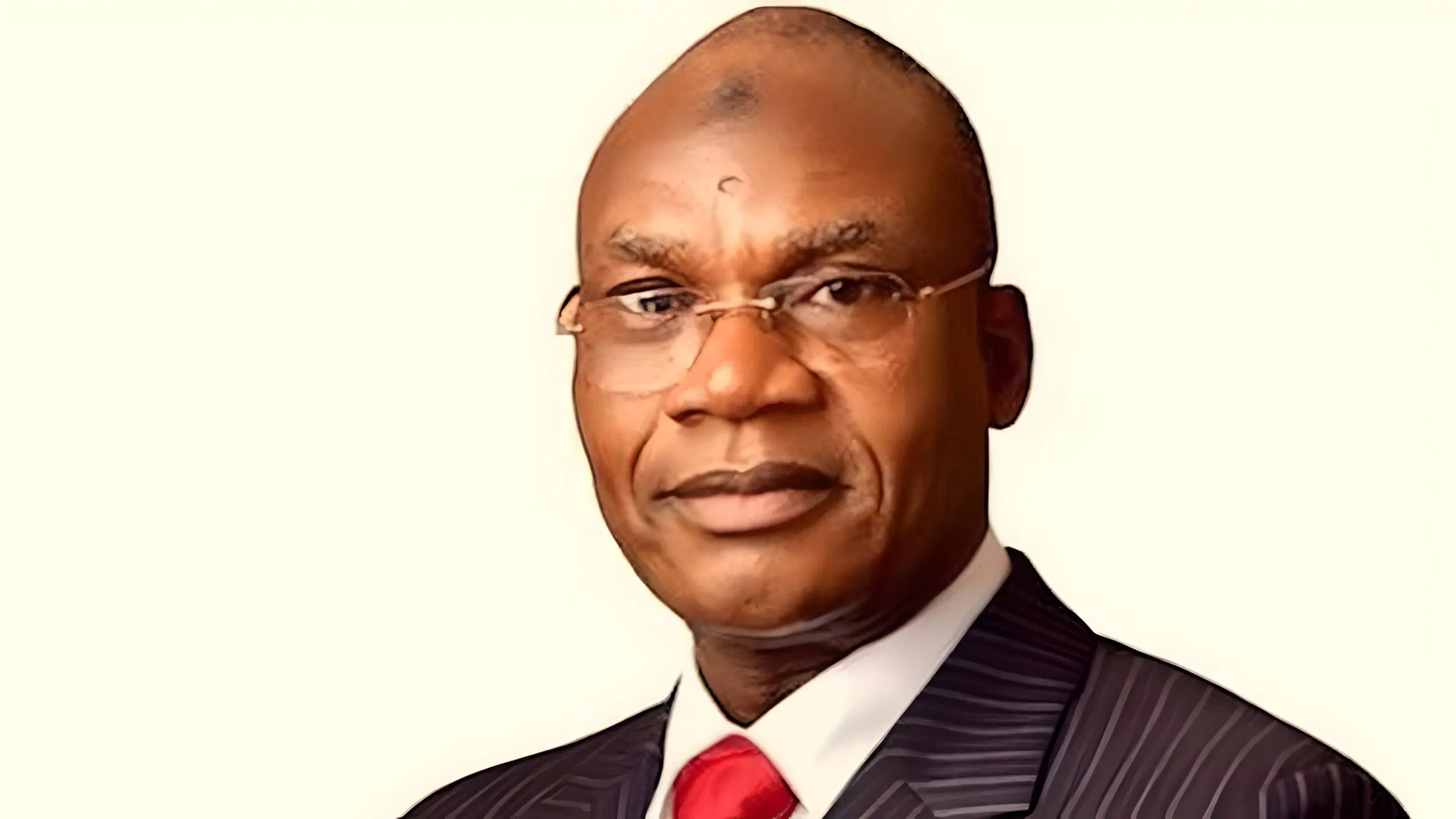
The supervising Federal Ministry of Education has finally intervened to halt the messy fight between the second Governing Council and the Management of the Federal University of Health Sciences Otukpo (FUHSO), which led to the suspension of the Vice Chancellor, Professor Innocent Ujah on October 17, 2024. In a letter last Friday, November 1, the Permanent Secretary of the Ministry, Dr. Nasir Sani Gwarzo reversed the decision of the Governing Council which suspended the Vice Chancellor at a meeting where he was absent. The Permanent Secretary also directed that Professor Ujah be reinstated as Vice Chancellor to complete his term of office which ends on November 6. Dr. Gwarzo asserted in the letter that, “The Ministry notes that both the Vice Chancellor and the 2nd Council of FUHSO were wrong in one way or the other in managing the affairs of FUHSO which culminated in the suspension of the Vice Chancellor.” “The Ministry regrets the deterioration of the official relationship between the 2nnd Council of FUHSO with the suspended Vice Chancellor (Professor Innocent Ujah),” the letter read. The Permanent Secretary went further to affirm that the frosty relation between the two organs of the management of the institution “stunted the smooth running of the university.” THE BACKGROUND: Benue Varsity Suspends Pioneer VC Over Alleged Misconduct The letter was addressed to the Pro-Chancellor and Chairman of the Governing Council of the University. It was a reply to the Chairman’s letter dated October 31st, 2024, titled: SUSPENSION FROM OFFICE AS VICE-CHANCELLOR, PROF. INNOCENT A. O. UJAH.” The Ministry observed that even though it is within the statutory powers of the Council to suspend the Vice Chancellor, the 2nd Council acted outside the provisions of the University (Miscellaneous Provisions) Act 1993, especially section 3(13) “which requires that in the event of vacancy in the office of the Vice Chancellor, the Council shall appoint an Acting Vice Chancellor on the recommendation of the Senate.” ,
Human Capital Development: Vice President Shettima Launches HCD 2.0 Strategy

Enam Obiosio In a gathering that underscored Nigeria’s commitment to human capital transformation, Vice President Kashim Shettima recently addressed members of the Steering Committee of the Human Capital Development (HCD) Programme at the State House, Abuja. The event marked the launch of HCD 2.0, a comprehensive strategy aimed at advancing health, education, and economic inclusion for every Nigerian. He emphasized that HCD 2.0 is not merely an initiative but a national commitment to foster a healthier, more educated, and inclusive society. “This day is more than a milestone; it is the beginning of a new phase,” the Vice President declared, highlighting the significance of the new strategy. “We have laid a strong foundation, and now, we officially launch the second phase of the Human Capital Development strategy—HCD 2.0.” This next phase, Vice President Shettima noted, represents a strengthened blueprint and a vision for Nigeria’s future that addresses the evolving challenges in healthcare, education, and economic inclusivity. Vice President Shettima recounted the journey leading up to this moment. In 2018, Nigeria faced a stark reality when its global ranking in human capital development revealed significant deficits in health, education, and employment. To counter these challenges, the Nigerian government introduced HCD 1.0, establishing foundational structures and rallying stakeholders from across the nation in pursuit of a unified goal: a healthy, educated, and productive Nigeria by 2030. The HCD 2.0, however, is designed to build upon this groundwork by adapting to the rapidly shifting global landscape. The strategy seeks to establish an equitable healthcare system, promote inclusive education, and ensure financial accessibility. “Our aim is to ensure that no Nigerian is left behind as we move toward a more inclusive, sustainable society,” he said. One of the core pillars of HCD 2.0 is creating a modern, equitable healthcare system accessible to all Nigerians, regardless of their location or economic circumstances. Vice President Shettima also ighlighted the introduction of digital health platforms, innovative financing, and climate-resilient practices as essential components of this improved healthcare model. “We envision a system that reaches every Nigerian,” he affirmed. Education remains another key focus. He emphasized that HCD 2.0 aims to foster a functional education system with a strong emphasis on digital literacy, gender equity, and financial accessibility. By prioritizing Science, Technology, Engineering, and Mathematics (STEM) education, technical and vocational training, and practical skills, the government is preparing Nigerians for a world increasingly driven by technology and green industries. With the rise of digital economies, HCD 2.0 seeks to bridge Nigeria’s digital divide and boost financial inclusion nationwide. Through fintech solutions, online banking, and digital payment systems, the government is creating pathways for every Nigerian to actively participate in the economy. “Our approach encompasses cross-cutting themes that are essential to the long-term impact of this programme,” Vice President Shettima remarked, emphasizing the interconnected nature of health, education, and economic inclusion. A critical component of HCD 2.0 is its broad governance framework, designed to foster collaboration between federal and state leaders, private sector partners, civil society, and development agencies. He affirmed that the Steering Committee, chaired by himself and including prominent public and private sector leaders, would oversee the implementation and ensure the efficient rollout of the strategy. Vice President Shettima lauded the contributions of the Core Working Group, the Private Sector Partners Group, and the National Champions Forum—a coalition including traditional rulers, youth ambassadors, and advocates for human capital development. Together, these groups will monitor progress, inspire engagement, and work tirelessly to deliver measurable results. As Nigeria inaugurates HCD 2.0, the Vice President set forth ambitious yet attainable targets. By 2030, Nigeria aims to rank among the top 80 countries on the Human Capital Index, reaching a score of 0.6. “These metrics represent more than just numbers; they signify real change in the lives of our people,” he said, pointing to improved healthcare access, enhanced educational outcomes, increased employment opportunities, and a more resilient society. Vice President Shettima’s speech was also a call to action for all Nigerians. He urged policymakers, community leaders, and citizens to recognize the stakes and rally behind the HCD 2.0 initiative. “This is our moment to shape the Nigeria we envision,” he concluded, extending a vision of a Nigeria that stands strong, united, and prepared to meet future challenges. As Nigeria embarks on this transformative journey, the HCD 2.0 strategy promises to bring the country closer to a future where every citizen can thrive in a society that values health, education, and economic inclusion. With this initiative, Nigeria reaffirms its commitment to nurturing the potential of its people and securing a legacy of progress and opportunity for future generations.
War against Drug abuse hots up as NASS seeks Parents’ Inclusion

The National Assembly Thursday stepped up the war against drug abuse and trafficking by seeking for inclusion of parents in the battle. Call for parents’ inclusion in the war by the National Assembly came from its joint committee on Drugs and Narcotics during one day sensitization programme organised in collaboration with National Association of Nigerian Drugs Monitoring ( NANDRUM). In his speech at the event themed : ” Parents Inclusion in the Fight Against Drug Abuse and Reckless Behaviours “, the President of the Senate and Chairman of the National Assembly , Godswill Akpabio, said involvement of parents in the fight very necessary and critical . Akpabio who was represented by the Deputy Leader of the Senate , Senator Lola Ashiru , said the epidemic of drug abuse and trafficking, should be tackled right from the home fronts led by Parents. ” Getting parents involved in the fight against drug abuse is taking the battle to the basis and tackling the menace right from the home front since those indulging in it, come from different homes before hitting the streets as drug addicts or traffickers . ” The theme of today’s sensitization programme on the dangers of drugs abuse , is very apt and very necessary for effective fight against the menace of drug abuse . “The fight against drugs abuse is indeed , a fight for our posterity requiring parents to be on the front lines being the guiding force in their Children’s lives . ” I urge all parents to take up this mantle of responsibility with unwavering determination sice the greatest gift any parent can give to Children is not riches but the spirit of adventure, the virtue of integrity and the gift of courage . ” Let us equip our children with the required tools they need to navigate life ‘s challenges without falling victim to the perils of drug abuse “, he said . In his remarks , on behalf of Chairmen , Senate and House of Representatives Committee on Drugs and Narcotics , Mallam Isa Garba , said the sensitization programme was collaboratively organized to step up the fight against drug abuse .
Call for new presidential jet for VP Shettima, “Insensitive” – Peter Obi

Labour Party presidential candidate in the 2023 elections, Peter Obi, has criticized a call for a new jet for Nigeria’s Vice President, Kashim Shettima, calling it “insensitive” amidst the country’s economic struggles. The former Anambra state governor stated that Nigeria’s challenges, such as extreme poverty, unreliable power grid, and failing businesses, should be the priority of the country’s leaders and not luxury. He urged leaders to focus on essential trips and prioritize selfless service to uplift Nigeria’s development and welfare. “We are today among one of the eleven worst-governed African nations in the last 10 years. “We are also among the 20 most hungry nations in the world, with our people facing worsening mass poverty, extreme hunger and starvation. “Our nation remains the poverty capital of the world, with our per capita income crashing further from $1700 in 2023 to $1109 this year. Are these not the issues that should be prioritized by committed leaders?” Obi queried. Using Indonesia as an example, Obi stated: “It was not until 2014 that Indonesia, with sustainable economic growth of over 6% annually for the past 10 years, adding about 50% to both her GDP and GDP per capita, decide to buy a Presidential jet, used by both the President and Vice President. “The Vice President travels mostly in the country’s national airline, Garuda Indonesia. And since we have recently undeservedly bought one, it should be used on essential, inevitable trips of the President and Vice President. “I appeal to the President, Vice President, and our public office holders that our present precarious situation calls only for minimal and highly contributory inevitable travels. “It is time to sit down and find solutions to our litany of challenges for the wellbeing of the people and the development of our country. Nigeria will rise again if the leadership can commit to selfless service.”
Scrapping Of Niger Delta Ministry: Asari Dokubo Disagree with Tinubu

Mujahid Asari Dokubo, former President of the Ijaw Youth Council Worldwide, has openly condemned the Nigerian government’s recent decision to dissolve the Niger Delta Ministry, highlighting this move as part of a long-standing trend of overlooking the region’s interests. Dokubo, a vocal advocate for the region, argued that the removal of the ministry represents a setback for the people of the Niger Delta, who have historically struggled for recognition and fair access to resources derived from their land. In his remarks, Dokubo explained that the Niger Delta Ministry was initially established as a response to the demands of local communities who sought a dedicated institution to address their unique developmental challenges. This ministry, he noted, had come into existence through significant sacrifices made by various Niger Delta communities, which include the Ijaw and Ogoni, in the pursuit of better resource management and regional development. Alhaji Dokubo, who spoke on a TV breakfast show, also voiced his discontent with the current classification of the Niger Delta, which he believes has been diluted over time to include regions outside the Niger Delta’s core geographical area. He expressed disappointment that such political changes undermine the ministry’s original purpose, making it more challenging to secure the resources and development needed for genuine Niger Delta communities. While addressing whether the ministry was dissolved due to inefficiency, Dokubo rejected this reasoning, pointing to systemic corruption as a broader issue across Nigeria, rather than one specific to the Niger Delta. He concluded by emphasizing the need for laws that genuinely support the Niger Delta, while expressing frustration over the lack of substantial development frameworks in the country.
US President, Joe Biden Phones Tinubu

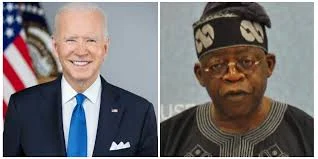
President Bola Tinubu yesterday, received a phone call from the US President, Mr. Joe Biden. The call took place at about 4pm, Nigerian time and lasted for about 30 minutes. This was disclosed by the Minister of Foreign Affairs, Ambassador Yusuf Tuggar, while briefing state House Correspondents about the development. The discussion centered about the recent release of the Head of Finance Crime compliance at Binance, Tigran Gambaryan. Tuggar said, “The call was about the collaboration between the two countries with regards to law enforcement and law enforcement agencies as well as the release of one of the suspects of the crypto currency exchange company that you are all aware of. “Mr President also thanked the US for the partnership and collaboration in numerous areas with regards to security in Africa and West Africa as as whole. President Biden assured President Tinubu that this is a partnership because the future of the world reside in Africa and as such, the partnership is important. “The leaders also discussed the issue of permanent seat in the United Nations security Council and Biden assured the the united States is committed to seeing Africa having a permanent seat and does not see why one of those seats should belong to Nigeria.”
The missing minister and cabinet reshuffle for ‘on your mandate choristers’

NO serious leader, (Nigeria’s president, Alhaji Bola Ahmed Tinubu, does not qualify as one because he is a ruler), hibernates in two European capitals, first in London (UK), and then in Paris, France, or in any foreign country for that matter, for a very simple and routine task of changing his or her ministers. My recollections may have failed me at this moment, but I do not recall since 1999 when any past president – Olusegun Obasanjo (1999-2007), Musa Yar’Adua (2007-2010), Goodluck Jonathan (2010-2015), and Muhammadu Buhari (2015-2023), going away from the country for weeks on an alleged working vacation to rest and plot on how to sack the persons who are working at his pleasure back home. Not even Yar’Adua nor Buhari who were unfortunately sick for parts of their presidential tenures (Yar’Adua actually died in office midway into his first term) travelled abroad to plot how to sack their ministers. Tinubu’s supporters will have a contrary opinion, but this president is an unserious, and certainly a tired fellow. The state of Tinubu’s state has been obvious for decades including while he was the governor of one of Nigeria’s wealthiest states, Lagos, between 1999 and 2007. Those who were close to him back then knew this and whispered about their concerns on the man who is now president. The late Yinka Odumakin was an admirer of Tinubu until he stopped being one, and became his fiercest critic. He, perhaps, more than anybody else, dealt body blows on Tinubu including questioning everything about the Alhaji long before others added their voices. But today is not about Nigeria’s president who has no verifiable and ‘certifiable’ information about much of his life until the 1970s. Officially he claims to be in his 70s. Unofficially, he’s said to be in his 80s. Age is a mere number. So it may not matter much. But truth matters. Among the known unknowns are his blood parents, his siblings if any, his primary school(s), his secondary school(s), his university education (fortunately, depending on where you stand in the country’s sharp and deep political divide, there may soon be a Bola Ahmed Tinubu University in Abia state in the heart of the Igbo nation), his certificates, his employment records bar one, among other puzzles. The president epitomises the word puzzle but not the one of Melchizedek, the high priest in the Judeo-Christian legend who was reputed to have no origins. All unknowns about Tinubu are actually known, though not admitted. Achoba ihe buru-uzo ruo ala, egbuo oba mmiri. If you are interested in killing an abominable animal or reptile, then deal with the crocodile. It is the chief of evil doers. But for the pains and privations inflicted on hapless citizens, the regime of this president aka T-Pain has been a joke. After months of assailing Nigerians with the threats of cabinet reshuffle, the administration finally did so last week. As expected it turned out to be a distraction. For a start, the cabinet change was unnecessary; and the method of effecting it smacks of illiteracy. Before we proceed further let’s quickly put one important issue behind us. If there was any need to sack any minister, the first to go should be the minister of petroleum resources, whoever that may be. Why? Next to Nigeria’s president in the savaging of the economy in the past 17 months is the petroleum resources minister. The minister failed to warn the president on May 29, 2023, on the foolishness and the dire consequences of his ‘subsidy is gone’ proclamation at the onset of the regime. Since then everything has fallen apart. If the economy is in tailspin (and it is), it’s down to ‘subsidy is gone’. If inflation, especially food inflation, is going through the roof (and certainly it is), it’s down to ‘subsidy is gone’. If about 150 million compatriots (the number could be far more), are living below the poverty line, ‘subsidy is gone’ is implicated. The same petroleum resources minister who should be first in the line for firing is also complicit in failing to quickly arrest the ongoing and brazen industrial scale theft of barrels of our crude oil. It has to be acknowledged, however, that there have been recent claims that the hemorrhaging in that area appears to be abating. Even if the claims are true, it would still amount to too little too late. The minister should have been sacked long before the cabinet reshuffle. This same minister who is still sitting pretty in the federal executive council of the federation also superintends the Nigerian National Petroleum Company Limited (NNPCL). Year-on-year studies have shown that this government oil behemoth consistently ranked amongst the most corrupt public institutions in the country. NNPCL has the dubious distinction of spending tens of billions of dollars in the past 10 years, at the minimum, executing turn around maintenance of the country’s four refineries, with no results. None of the four refineries – two in Port Harcourt, one each in Warri and Kaduna – has contributed even one litre of any petroleum products for domestic consumption in more than one decade in spite of the billions allegedly invested in their rehabilitation. In half of the years of their interminable turn around maintenance, an individual had spent about $20 billion to construct and commission what is reputed and reported to be the largest single train refinery and petrochemical company in the world. Yet, the minister who it must be said inherited the mess was not affected by the cabinet reshuffle. It is easy and attractive to conclude that the minister who supervises NNPCL has not lifted a finger in the nearly two years that he has been in office because the mess may be beneficial to him. Under a previous petroleum resources minister, the NNPCL boss promised, and gave specific dates for the completion of the maintenance works on the refineries, and their restreaming. He kept none of the promises, not even after moving the goal posts over
President Tinubu reshuffles cabinet, nominates Bianca Ojukwu, 6 others, Minister

In a massive revamp of the Federal cabinet, President Bola Tinubu sacks five ministers, nominates 7, merges two ministries and scraps one. The reforms were encapsulated in what the presidency refers to as “eight far-reaching actions to reinvigorate the Administration’s capacity for optimal efficiency.” The action also entailed the reassignment of 10 ministerial portfolios, merger of two ministries and the scrapping of the Ministry of Sports. In a release titled, “Statement on the Restructuring of Ministries and Ministerial portfolios,” sighted by the Nigerian Anchor, the five ministers to be discharged are: Professor Tahir Mamman (Education), Dr. Jamila Bio Ibrahim (Youth Development), and Barr. Uju-Ken Ohannenye (Women Affairs). The other Ministers to be discharged are Lola Ade-John (Tourism Development) and Abdullahi Muhammad Gwarzo, Minister of State, Housing and Urban Development. The Ministerial nominees Bianca Odinaka Odumegwu-Ojukwu, Minister of State, Foreign Affairs; Nentawe Yilwatda for appointment as Minister of Humanitarian Affairs and Poverty Reduction. Other nominees and their portfolios are: Muhammad Maigari Dingyadi, Minister of Labour and Employment; Dr. Jumoke Oduwole, Minister of Industry, Trade and Investment; Idi Mukhrar Maiha, Ministry of Livestock Development; Rt Hon. Yusuf Abdulahi Ata, Minister of State, Housing and Urban Development; Suwaiba Said Ahmed (PhD), Minister of State, Education. Ministers re-assigned new portfolios are Dr. Morufu Olatunji Alausa, formerly Minister of State for health, now assigned the Ministry of Education and Dr. Doris Uzoka Anite, formerly Minister of Trade and Investment, now Minister of State, Finance. Others are Sen John Owan Enoh who is now reassigned to Minister of State, Trade and Investment, following the scrapping of the Ministry of Sports where analysts say he underperformed. Also re-assigned are: Hon Dr. Tanko Yusuf Sununu; Minister of state, Education, now Minister of State, Humanitarian Affairs and Poverty Reduction; Barr. Bello Muhammad Goronyo, Minister of State, Water Resources, now Minister of State, Works; Hon Abubakar Eshiokpekha Momoh, Minister of Niger Delta Development, now Minister of Regional development. Now re-assigned as Minister of Women Affairs is Hajiya Imaan Suleiman-Ibrahim, formerly Minister of State, Police Affairs, while Maigari Ahmadu, formerly Minister of State, Steel Development is now re-assigned to Minister of State, Regional Development. Also appointed… In his ever-burgeoning cabinet, President Tinubu also brought on board his long time ally and former Minister of Sports, Sunday Akin Dare as Special Presidential Adviser on Public Communication and Orientation. Chief Dare, it was stated, shall operate from the Ministry of Information and National Orientation. Also appointed is Mr. Shehu Dikko, who shall function as the Chairman of the resurrected National Sports Commission.
Tinubu scraps two ministries, merges others

President Bola Tinubu has scrapped the Niger Delta Ministry and the Ministry of Sports Development. Special Adviser to the president on Information and Strategy, Bayo Onanuga, disclosed this in a post on his official X handle on Wednesday. He said the decisions were taken at the meeting of the FEC in Abuja. According to him, “there will now be a Ministry of Regional Development to oversee all the regional development commissions, such as the Niger Delta Development Commission, North West Development Commission, South West Development Commission, North East Development Commission”. He also stated that the National Sports Commission will take over the role of the Ministry of Sports henceforth. During the FEC meeting, the president also approved the merger of the Ministry of Tourism with the Ministry of Culture and Creative Economy. Observers of governmental affairs opine that the creation of the new Ministry of Regional Development was anticipated following the recent creation of regional development commissions with some still to be announced. Already, legislative works are at advanced stages preparatory to the creation of North Central Development Commission and South East Development Commission to round off one development commission each for the six geopolitical zones of the country.
New Vocational Subjects Added to Nigeria’s Education System

Starting January 2025, the Nigerian government will introduce 15 new trades into the country’s Basic Education curriculum, aiming to provide practical skills to students in primary and junior secondary levels. This decision, approved by the National Council on Education, is part of a broader strategy to make education more skill-oriented and adaptable to current economic demands. The curriculum now includes subjects like Basic Digital Literacy, Robotics, plumbing, bakery services, GSM repair, and agricultural practices such as beekeeping and poultry farming. Schools across the country, both private and public, will begin preparations, which include training teachers and improving infrastructure to support these subjects. This educational update is designed to align learning with real-world skills, allowing students to choose entrepreneurship paths and gain practical knowledge. The government believes these changes will prepare graduates to become self-sufficient and economically active, ultimately strengthening the nation’s workforce and economy. A similar update for Senior Secondary Education is expected to launch by December 2025. ReplyForwardAdd reaction